
Counter uncrewed aerial systems (urban) sandbox 2027
IDEaS is seeking solutions that can detect, track, and identify micro and mini uncrewed aerial systems (UAS) in an urban environment. From July 26 to 30, 2027, demonstrate your cutting-edge technology in the heart of downtown Ottawa, Ontario.
Compete for “Diamond in the Rough” prizes!
Game-changing solutions may be eligible for $1.75 million in total prize money
What IDEaS provides
- five days of access to a full counter uncrewed aerial systems (CUAS) urban test environment in Ottawa, Ontario.
- on-site interaction with representatives from the Department of National Defence (DND) and the Canadian Armed Forces (CAF) as well as security partners from the United States Secretariat for Special Operations, Royal Canadian Mounted Police (RCMP) and others.
- $1.75 million in total prizes for the most promising solutions.
What innovators bring
- advanced prototypes capable of detecting, tracking; and identifying our micro and mini UAS
- high calibre solutions to outsmart our team’s drones
The challenge
Background and context
The rapid increase in the availability, affordability, complexity, and capabilities of UAS continues to pose growing threats to the Department of National Defence (DND), the Canadian Armed Forces (CAF), and our defence and security partners. Proposed counter-UAS solutions to address this challenge must consider not only current threats, but also emerging ones, as well as the means to detect, track, and neutralize them
Desired outcomes
The objective is to identify solutions capable of detecting micro and mini uncrewed aerial systems (UAS) in an urban environment, with the potential to be integrated into broader command and control systems.
Areas of interest
We are open to receiving all types of solutions; however, technologies and concepts that are new, different, and show strong potential for future development will be of greater interest than those that largely duplicate existing solutions. Detection methods that are substantively different from existing approaches are preferred, to fill a niche within a layered, multi-capability CUAS approach. Current known detection methods include, but are not limited to:
- radar-based detection
- acoustic detection
- radio frequency (RF) signal detection
- optical detection
Priority may be given to the following technology areas, based on demonstrated performance. However, solutions that improve existing technologies are also of interest.
- beyond visual line-of-sight capabilities
- low-cost sensor networks
Consult the full guide before submitting your application.
Applicant Guide for the Counter Uncrewed Aerial Systems (CUAS) Urban Sandbox 2027
July 26-30, 2027
Ottawa, Ontario
Seeking innovative CUAS solutions for urban environments
The Department of National Defence (DND) and the Canadian Armed Forces (CAF) are seeking CUAS solutions capable of detecting micro and mini uncrewed aerial systems (UAS) in urban environments, with the ability to integrate into broader command and control systems.
Drone threats continue to evolve, requiring ongoing advancement in countering capabilities.
Multiple CUAS initiatives are currently underway within DND/CAF. Companies that have applied to or participated in previous DND/CAF-led CUAS exercises remain eligible to apply. The selection process will consider potential overlaps between activities.
Applicants are encouraged to review this guide in full prior to preparing and submitting their application.

Table of Contents
- CUAS 2027 (Urban) - Eligibility
- CUAS 2027 (Urban) - How to Apply
- CUAS Sandbox experience
- Demonstrations and testing activities
- Innovator Orientation – Sunday, July 25, 2027
- Early setup requests
- CUAS 2027 (Urban) “Diamond in the Rough” Prizes
- After the Sandbox
- Future CUAS Sandbox activities
- Application Evaluation and Selection
- Qualification Process
- Test Plans
- Responsibilities
- Funding
- Additional requirements and information
- Annex A – CUAS 2027 (Urban) Sandbox - Challenge
- Annex B – CUAS 2027 (urban) - Evaluation of scientific and technical risk
- Annex C – CUAS 2027(urban) Sandbox - “Diamond in the Rough” prizes
- Introduction
- Eligibility
- Evaluation and Selection Process
- DIR evaluation and criteria
- Mandatory Criteria
- Point-Rated Criteria (PRC)
Important: In the event of any discrepancy between the information in the downloadable documents and the IDEaS website, the downloadable documents take precedence unless otherwise indicated.
CUAS 2027 (Urban) - Eligibility
Who can apply
Applications are open to individuals, academia, not-for-profit organizations, and industry of any size, as well as provincial, territorial, and municipal organizations.
Federal government departments and agencies, as well as federal Crown corporations, are not eligible to submit applications under this Call for Applications (CFA).
Foreign companies are eligible to apply; in previous sandboxes, up to 50% of selected participants were based outside Canada.
While sandboxes are not limited to Canadian-developed products or solutions, the level of Canadian content in each application will be considered as part of the strategic selection process.
Policy on Sensitive Technology Research and Affiliations of Concern
On February 14, 2023, the Government of Canada announced enhanced measures to strengthen research security and protect Canada’s research ecosystem, institutions, and intellectual property.
To support these objectives, the IDEaS program uses the Sensitive Technology Research Areas and Named Research Organizations tools as part of its participant eligibility process. Accordingly, applicants must declare any affiliations with Named Research Organizations in Section 9 (Terms Relating to Applying to and Participating in the Sandbox) of the Sandbox Application and Participation Agreement. Companies that do not meet the applicable requirements may not be eligible to participate in the Sandbox.
Any additional research security validation is conducted only after a company has been provisionally selected. Details of this process will be provided to successful applicants in their acceptance letter.
While the policy focuses on grants and funding with universities and research institutions, the IDEaS program utilizes the policy and its tools of Sensitive Technology Research Areas and Named Research Organizations to ensure that companies selected to participate in the CUAS 2027 Sandbox meet the spirit of that policy with its two-step validation process detailed below. Companies that do not meet this requirement may not be eligible to attend the Sandbox.
In a practical sense, aside from answering the questions in Section 9 of the Application and Participant Agreement for CUAS 2027 (Urban) Sandbox, implementing this security validation is only done on the companies after they are provisionally selected to attend the Sandbox and will therefore be detailed in their acceptance letter.
Validation process
Step 1: Determine if the selected solution’s technology advances any sensitive technology research area.
- If the proposed solution will not aim to advance any of the listed Sensitive Technology Research Areas, no further steps are required under this policy. Solutions that will merely use an existing technology are not included in this policy.
- If the proposed solution will aim to advance any of the listed Sensitive Technology Research Areas, companies must attest that they are not affiliated with, or in receipt of funding or in-kind support, from any of the institutions on the list of Named Research Organizations.
Step 2: Check Sandbox participants affiliations
All companies selected to attend the Sandbox must review the list of Named Research Organizations. If a company is affiliated with, or in receipt of funding or in-kind support, from one or more of the institutions on that list, they may be required to terminate those connections to continue as a participant in the Sandbox.
Previous Participation in CUAS Activities
Given the importance of CUAS, multiple DND/CAF CUAS activities are underway, including initiatives under the IDEaS program, which may overlap in scope.
Companies that have previously applied to, participated in, or been invited to DND/CAF CUAS activities remain eligible to apply to CUAS 2027 (Urban), including with the same technology or updated versions of it.
The following conditions apply:
- Applicants must declare any previous or ongoing demonstrations of the proposed technology, or variants thereof, to DND/CAF in Section 9 of the CUAS 2027 Sandbox Application and Participant Agreement. Where applicable, applicants should describe changes made since previous demonstrations and explain why the technology should be reconsidered.
- Participation in, or selection for, previous CUAS activities does not confer any advantage or disadvantage during the evaluation and selection process.
- Prior demonstrations and any resulting observations may be considered as part of the overall selection process for CUAS 2027 (Urban).
Technology Readiness Level (TRL)
IDEaS must ensure that proposed solutions are sufficiently mature to support near-end-state demonstrations and testing in a simulated environment (sandbox), as expected by DND/CAF. Additional information on Technology Readiness Levels (TRLs) is available at: Technology Readiness Levels (TRLs).
At a minimum, at the time of application, your solution must meet one of the following conditions:
-
Have successfully completed the work and validation testing associated with TRL 5 (Validation – refined integration of applications and/or concepts to confirm validity).
Or
- Have successfully completed the work and validation testing associated with TRL 4 (Proof of concept – basic integration of applications and/or concepts to demonstrate viability) AND include a reasonable plan to achieve TRL 5 included in your application prior to March 10, 2027.
Failure to achieve TRL 5 by that date may constitute grounds for rescinding any Sandbox participation offer. The letter of provisional acceptance will outline the requirements and process for demonstrating compliance with the TRL 5 requirement.
CUAS 2027 (Urban) - How to Apply
New application portal
IDEaS is transitioning to the Defence Innovation Portal (DIP) to receive submissions from the innovator community for this challenge.
Application process
-
Register for a DIP account (if you already have one skip to step 4)
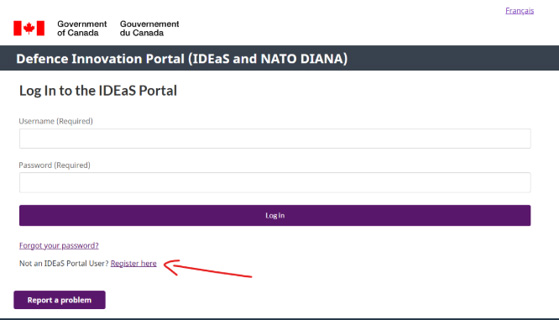
- After you submit your registration request, you will receive an email confirming that your request is under review.
- Once your request is approved, you will receive your login credentials by email.
-
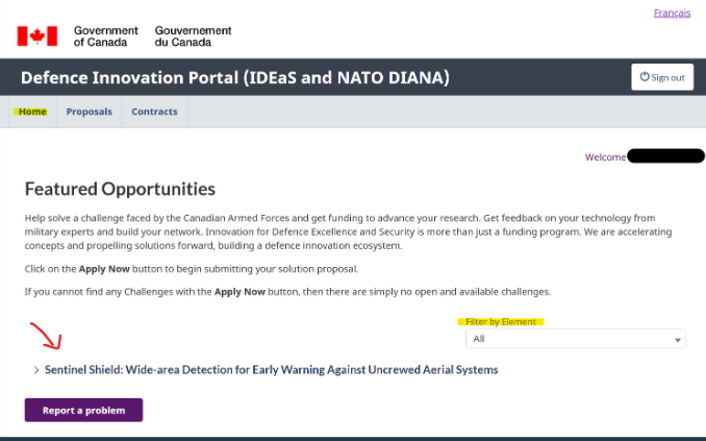
Log in to the Defence Innovation Portal (DIP) and select the challenge of interest from the “Featured Opportunities” list.
-
Click Apply Now and begin drafting a proposal in response to the challenge.
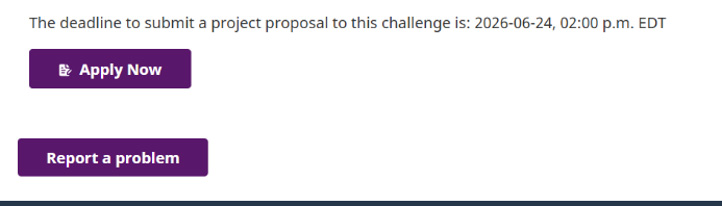
Important: You may save proposals as drafts and return to them at any time before submission. Once a proposal has been submitted, it cannot be edited. If you need to make changes after submission, you must submit a replacement proposal.
Submitting a replacement proposal
-
Select the challenge of interest.
-
Select Apply Now.
-
At the top of the proposal form, select Replacement Submission.
-
Enter the reference number of the proposal being replaced. This reference number is included in the submission confirmation email.
Note: Draft and submitted proposals can be accessed through the Proposals tab after logging in to the Defence Innovation Portal (DIP). Draft proposals may be edited until they are submitted.
-
Submit your application
Submit your application through the Defence Innovation Portal (DIP) before the deadline:
December 1, 2026, at 2:00 PM EDT.
Required documentation
Note: Some browser-based PDF viewers may not display forms correctly. If you experience issues downloading and opening the following PDF forms, save the file to your computer before opening it and ensure you are using a supported PDF reader.
-
Application and Participant Agreement for the Counter-Uncrewed Aerial Systems (CUAS) 2027 (Urban) Sandbox (DND 6069): Multiple-choice short answer series of questions used to describe your solution. The questions are the technical criteria used for evaluating your application to attend the Sandbox. The instructions, scoring metrics and weight factors are included within the form.
-
Company and solution overview (PowerPoint format): Provides DND/CAF with a brief description and photographs of the company and their technology to create a compendium of the applying companies and solutions. It will also be used to create briefing packages for visitors to the Sandbox and other communications purposes.
Once completed, send to IDEaSSandboxes-environnementsprotegesIDEeS@forces.gc.ca
-
Test plan: Tells us what you are proposing to show us during your time in the Sandbox, enabling us to ensure that your plan aligns with the intent of the Sandbox, and that the Sandbox is suitably equipped and ready for your arrival.
-
Application for Spectrum Supportability (DND 552) (required if your solution emits radio frequency (RF) energy): If your solution emits any RF energy you must submit this form as part of your application package. DND/CAF will use it to determine if the RF usage is supportable in the Sandbox. See Section 6 of the Application and participant agreement (DND 6069) for additional details and technical assistance on this topic, as well as the DND 552 form itself.
-
Photograph of your solution in its operational configuration
-
High-quality JPEG
-
Maximum 15 MB
-
16:9 aspect ratio
-
-
Video demonstrating your solution in operation (to substantiate your TRL level)
-
Maximum 3 minutes
-
Real footage (no simulations or virtual renderings)
-
Format: MP4 or MOV
-
Resolution: 1080p
-
After submitting your application
After submitting your application and the required documents through the Defence Innovation Portal (DIP), send an email to: IDEaSSandboxes-environnementsprotegesIDEeS@forces.gc.ca
Include your submission details in the email so that we can verify receipt and confirm that your application package is complete.
You will receive a confirmation email once your application has been received and downloaded by the IDEaS Sandbox Team.
When will I be notified if I am selected to attend the Sandbox?
Applicants will be informed by email of their evaluation results and selection status approximately four to eight weeks after the Call for Applications (CFA) closes.
Selected applicants will be provided five business days to accept their invitation to participate in the Sandbox, allowing several months for planning and preparation before the event.
Should a selected applicant decline an invitation, withdraw from the process, or otherwise become unable to participate, DND/CAF may offer the available space to another qualified applicant, subject to the same selection process and sufficient time remaining before the Sandbox begins.
CUAS Sandbox experience
Overview
Successful applicants will be invited to demonstrate their solutions at the CUAS 2027 (Urban) Sandbox in Ottawa, Ontario, from July 26 to 30, 2027.
We will provide a well-equipped and fully staffed test environment specifically designed for that challenge with such things as airborne targets, imagery, data collection and operational scenarios, as well as work and storage space, security, etc.
Each selected company will be allocated up to five days of testing. Testing will take place concurrently with multiple companies. For CUAS 2027 (Urban), innovators will have the option to use a mesh network configuration, enabling simultaneous testing of sensors across multiple locations. The precise details of the Sandbox may be adjusted depending on the technologies selected to attend. Up to $20,000 in funding per company to offset your costs of attending the Sandbox and additional monetary prizes for promising technologies will be available.
We also provide on-site military, Royal Canadian Mounted Police (RCMP), US Department of Defence Secretariat for Special Operations (SSO) (formerly IWTSD), Capability Development and Innovation and DND/CAF science experts, as well as other government safety and security potential users, to give innovators observational feedback on their solutions.
There are no fees to the innovator for using the Sandbox.
Innovators operate their own prototypes for their desired test and demonstration plan, receiving on-site immediate feedback from our end users. It is not a contest with multiple innovators publicly competing and an isolated panel of judges. Instead, we are seeking proactive continuous one-on-one engagement.
Collectively, this CUAS Sandbox provides a venue for:
- Innovators to refine and develop their prototype during and after the Sandbox, including iterative testing and on-site improvement while concurrently receiving direct feedback from DND/CAF/RCMP/SSO.
- DND/CAF/RCMP/SSO personnel to learn about the state of possible future upcoming solutions to the challenge, potentially influencing future DND/CAF acquisition decisions.
- Selected allied military and security partners to DND/CAF may also be present, expanding the exposure an innovator may receive during and after the Sandbox.
- Interaction and discussion with others in the field of work.
Sandbox process
- The CFA is usually published six to nine months in advance of the Sandbox.
- An evaluation and selection process determines which innovators are accepted.
- After selection, DND/CAF/RCMP and the selected innovators complete their pre-Sandbox preparations, shipping and travel to attend the Sandbox.
- The Sandbox is conducted.
- Post-Sandbox reporting and administration with each innovator is completed.
Facilities and DND/CAF support and resources
DND and the CAF will provide the following at no cost to participants:
-
Four types of test locations are anticipated, understanding that these may be adjusted depending on the
technologies selected to attend (see the section on safety and privacy below):
- Ground level, mid-level balcony on a high-rise building, high-level balcony on a high-rise building, and rooftop.
- If your technology is something that requires a different test location, please include that in Section 6 of the Application and participant agreement for CUAS 2027 (urban) Sandbox (DND 6069) and in your test plan.
- Various UAS targets operated by our Red Team, representative of those encountered in the operational scenarios.
- Successful applicants are expected to demonstrate their technology’s ability to detect and track the Red Team.
- Iterative testing and demonstration to improve your technology.
- Feedback from DND/CAF/RCMP/IWTSD to customize and adjust your test plan on the fly.
- A test area of suitable boundaries and airspace control for the planned activities, including the operation of the Red Team drones and limited electronic signals. Precise details and sizes will depend on the proposed solutions that are selected for the Sandbox, commensurate with safety, environmental and other considerations. Lockup facilities for each participant’s equipment.
- Office space to work, including phones and WIFI.
- Data collection equipment if feasible and subject to the type of solution.
- Limited photography/video services.
- DND/CAF/RCMP/SSO will provide observers for each test. Participants will receive all test data, photographic and video imagery, as well as any pertinent feedback for their solution, subject to any security classifications and approvals that may arise.
- Lunches and coffee breaks.
- If requested in Section 6 of the Application and participant agreement for CUAS 2027 (urban) Sandbox (DND 6069). Additional resources may be made available at DND/CAF’s sole discretion on a case-by-case basis.
Safety and privacy considerations
As the Sandbox is intended to be conducted in an open and active urban centre (as opposed to an isolated and closed test range), there will be additional scrutiny and validation to ensure that the demonstrations are conducted in a safe manner and that the detectors used are selected and operated with appropriate considerations for bystander privacy. For example, optical systems may require a unique test area or operating restrictions to ensure bystander privacy is maintained.
Any such restrictions are impossible to detail in advance as they will be dependent on the technology selected. Section 6 of the Application and participant agreement for CUAS 2027 (urban) Sandbox (DND 6069) “Test Plan, Hazards and Limitations”, provides additional details on how this will be considered during the application and selection process.
Demonstrations and testing activities
Selected innovators are given up to five days of testing time at the Sandbox. Applicants can indicate their preferred dates to attend in the Application and participant agreement for CUAS 2027 (urban) Sandbox (DND 6069); however, the precise dates given to each participant are at DND/CAF’s sole discretion and are non-negotiable.
For CUAS 2027 Urban, innovators will have the option to use a mesh network configuration, enabling simultaneous testing of sensors across multiple locations. Innovators who wish to make use of this opportunity are encouraged to provide details on their proposed mesh network architecture, including any important technical features or considerations (e.g., power distribution) that could affect site logistics. Innovator sensors may be installed near each other (e.g. ground level at corner of intersection to allow for field of view of two intersecting streets). However, innovator primary test stands are isolated from each other.
Our military, RCMP, SSO and DND end users and science experts interact with each innovator during your testing, including daily debriefs and a final debrief upon completion of your testing.
The Sandbox Red Team will fly the same flight patterns and schedule them daily based on Urban Area Defence and Urban Point Defence operating scenarios, adjusting the schedule dependant on weather and other unforeseen circumstances.
The test plan template contains a more detailed description of the likely scenarios that will be available. Final test plans will be designed through consultation with the selected participants to exhibit the capabilities and explore the limitations related to each technology. Actual target UAS will be subject to change based on availability.
Data collected from the target UAS and the participant’s solution will allow the calculation of range, accuracy and time, to be used as performance outputs and reports for both the DND/CAF, as well as the participant. Participants only see demonstrations, results and reports of their own technology.
Participant schedule
A detailed schedule will be developed with each selected participant before the Sandbox. While schedules may vary based on individual testing requirements, participants should plan for the following:
- Arrive at your hotel before Day 1.
- Flight testing is expected to take place from 8:00 a.m. to 4:00 p.m. Mountain Daylight Time (MDT) (subject to confirmation).
- Optional night testing, where approved, is expected to take place on Tuesday July 27 from 9:00 p.m. to 2:00 a.m. Mountain Daylight Time (MDT) (subject to confirmation).
- Lunch and refreshment breaks will be provided on-site to maximize testing time.
- Equipment must be secured before departing the test site each day.
Final day activities
- All testing will conclude by 4:00 p.m.
- Participants will receive a verbal debrief from Sandbox subject matter experts. Test data and written feedback will be provided subsequently.
- All equipment and personnel must depart the test site by 7:00 p.m.
Participants may depart Ottawa at their discretion following completion of Sandbox activities.
Night testing opportunities
CUAS 2027 (Urban) will be conducted primarily during daylight hours. However, limited night-time testing may be available to participants who can demonstrate a clear operational need.
Following selection, DND/CAF and the RCMP will review requests for night testing and assess them on a case-by-case basis. In considering a request, the following factors will apply:
- Applicants may indicate their interest in night testing in the test plan submitted with their application.
- There must be a meaningful testing objective that cannot be adequately assessed during daytime operations.
- Where daytime results can reasonably predict night-time performance, additional night testing will generally not be supported.
- Subject to operational requirements and approvals, night testing may:
- take place at a different location within the Ottawa area to address safety or operational considerations; and
- occur between 7:30 p.m. and 10:00 p.m. (to be confirmed).
The Government of Canada will make reasonable efforts to accommodate approved requests; however, final approval and scheduling of all night-time testing remain at the sole discretion of the Government of Canada.
Innovator Orientation – Sunday, July 25, 2027
Innovator Orientation is planned for Sunday, July 25, 2027, the day before testing begins. (Subject to confirmation)
What to expect
Innovator Orientation will include:
- a security briefing;
- introductions to the IDEaS Sandbox team and assigned data collector;
- a tour of the test sites; and
- an opportunity to unpack and set up equipment, where a test stand is available.
Because technologies vary significantly in size, complexity, and transportation requirements, setup arrangements will differ between participants.
Early setup requests
Some participants may require additional time to unpack, assemble, or calibrate equipment before testing begins. While this is not normally possible due to site turnover requirements between participants, the Government of Canada may consider reasonable requests on a case-by-case basis.
Requests are more likely to be supported when:
- setup activities will not interfere with other participants;
- equipment can be safely accommodated at the proposed setup location;
- any off-site setup can be completed without compromising movement to the final test site; and
- the system requires substantial reassembly following shipment (for example, vehicle-mounted systems).
Requests are less likely to be supported for systems that can be assembled quickly at the test site or that require reconfiguration after relocation.
The Government of Canada will make reasonable efforts to accommodate legitimate operational requirements; however, approval of any early setup activities remains at its sole discretion.
CUAS 2027 (Urban) “Diamond in the Rough” Prizes
The Diamond in the Rough prizes are awarded for CUAS innovations tracking towards success with good growth potential and impact to receive financial non-repayable grants. With consideration to the potential and impact, prizes will be awarded for up to the following notional amounts. Final prize amounts will be established to align with the developmental potential of the selected technologies:
- 1st Place $1,000,000
- 2nd Place $500,000
- 3rd Place $250,000
Please refer to Annex C for the detailed description, criteria and selection processes.
After the Sandbox
Following the Sandbox, each participant will receive a written report summarizing DND/CAF observations related to their solution.
DND/CAF/RCMP and its partners will also review the results of the Sandbox to assess progress toward addressing the challenge and to inform future activities, including force development, capability planning, procurement considerations, and innovation priorities.
Participation in the Sandbox, including successful demonstrations, does not imply any commitment by DND/CAF, the RCMP, or other partners to pursue additional activities, funding, procurement, or engagement with a participant or solution.
Participants are encouraged to use the feedback, observations, and data obtained during the Sandbox to support the continued development of their solutions
Future CUAS Sandbox activities
DND/CAF continues to explore additional opportunities to assess and advance CUAS technologies through future Sandbox activities and other innovation initiatives.
While planning for future CUAS activities is ongoing, including broader CUAS Sandbox opportunities, no decision has been made regarding a subsequent urban-focused CUAS Sandbox. Future requirements will be assessed following completion of CUAS 2027 (Urban).
Application Evaluation and Selection
Sandbox Criteria vs. Operational Requirements
Sandbox criteria vs end-state operational requirements: The criteria used for this sandbox represent the limitations and desired characteristics to prioritize and select the accepted participants to the Sandbox only. They do not represent final operational requirements for any current or future DND/CAF procurement program which may be quite different.
Evaluation criteria and scoring
- The multiple choice / short answer questions in the Application and Participant Agreement for the Counter-Uncrewed Aerial Systems (CUAS) 2027 (Urban) Sandbox (DND 6069) are used for describing your solution and evaluating your application to attend the Sandbox. Many of the questions are for descriptive purposes only and are not criteria and are not scored. Those that are scored and used as criteria are clearly marked as such, including its specific scoring metrics.
- The evaluation method and total score calculations are explained on Page 3 of the form.
- The list of the technical criteria and their relative weighting factors is on Page 4 of the form.
- A solution that does not achieve a Pass on all mandatory criteria in Section 1 of the form will not proceed further in the evaluation process and will not be selected to attend the Sandbox.
Eligible solution categories
Our other CUAS sandboxes were for the full CUAS challenge and included the categories: Detect only, Defeat only, and Detect and Defeat.
For regulatory and other safety reasons, CUAS 2027 (urban) does not permit the demonstration of defeating target drones in an urban environment.
Consequently, even if a defeat component is available within an applicant’s submitted technology, only the demonstrations from a detection perspective are being considered.
Qualification Process
Following the evaluation of all technical criteria, applications that meet the eligibility requirements described earlier and achieve a “Pass” on all mandatory criteria and all minimum mandatory scores (if any) are placed into the pool of qualified applications. There is no minimum overall score required.
Read the Criteria section for a full description of all criteria and how they are scored. Acceptance into the pool of qualified applications does not constitute an invitation to participate in the Sandbox. Applications that do not qualify for the pool will not receive any further consideration for attending the Sandbox.
Scientific and technical risk assessment
- In seeking innovative solutions, the IDEaS program is open to high-risk, untested approaches, provided they are supported by reasonable substantiation and demonstrate the potential for high impact in addressing the challenge. High risk without corresponding potential benefit is of less interest.
- For CUAS 2027 (urban), once a technology is identified for potential selection, the evaluation team will
determine whether a full science and technology risk assessment is required.
- If the selection decision is clear regardless of the level of risk, no further assessment is required, and the selection process will proceed.
- If the selection decision is uncertain due to identified risks, a full risk assessment may be conducted, as described in Annex B. The results will be factored into the final selection decision.
Participant Selection for the Sandbox
- All qualified applications in the pool will proceed to be considered against the standardized IDEaS Strategic Selection Parameters (SSP) as described here.
- Applicants do not provide any additional information to respond to these parameters. They only provide the information as described in the Application and Participant Agreement for the Counter-Uncrewed Aerial Systems (CUAS) 2027 (Urban) Sandbox (DND 6069). Selection of the applications is at the sole discretion of the Challenge Steering Committee.
- Applications that achieve a full technical score are not guaranteed selection for participating in the Sandbox.
The Committee will consider the evaluation results of the applications and examine the distribution of selections against the following parameters, listed below in no order:
- Alignment with priorities: Aligns with current and emerging departmental and/or Government of Canada priorities.
- Alignment with RCMP/DND/CAF: Aligns and integrates within the RCMP/DND/CAF, i.e., the solution integrates with departmental military systems, doctrines and standard operating practices.
- Operational investment: Considered worthwhile for investing operational resources (e.g., personnel, equipment, data, budget, etc.) to implement the solution.
- Distinction of solution: Does not duplicate previous/existing/planned work of Canada and its Allies known at the time of evaluation.
-
Strength and risk of Application: The strength of an individual application and the
related risk, represented by:
- The solution’s point-rated scores as described in the Application and Participant Agreement for the Counter-Uncrewed Aerial Systems (CUAS) 2027 (Urban) Sandbox (DND 6069) including the cumulative score and scoring on individual criteria; and
- The risk assessment as described above, including Annex B, if applicable.
- Impact: The application’s potential to be a disruptor in the field of the Challenge and/or S&T domain.
- Type of solution: Allows DND/CAF to select a balance across solution categories, methodologies and various applicable military environments.
- Industrial and Socio-Economic benefits to Canada
Multiple applications from the same company
The guiding intent is that a company gets a single demonstration period at the Sandbox, even if they submit multiple applications for different technologies. To achieve this effect, all applications a single company submits will initially be evaluated and considered for selection independently; however, once any one of those applications is selected:
- All other applications from that company will be disregarded until such time as all other applications from all other companies have been considered.
- Unless an exemption is made based on the Strategic Selection Parameters, the demonstration period for the company will not exceed the already established five-day maximum for any single participant, and only with time permitting and subject to DND/CAF’s approval, demonstrations of the company’s other technologies may be permitted.
Multiple submissions from one applicant are permitted, provided the solutions are thoroughly different from each other and not simply a variation of the same method or technology. Each solution must be submitted with its own complete application package. The determination of the degree of difference and acceptability of each additional submission shall be at the sole discretion of DND/CAF.
After a company is selected and invited to attend the Sandbox for a specific technology, it will be allocated several Sandbox days to conduct its demonstration. If the company submitted multiple applications, it may be permitted to bring its other technologies for additional demonstrations but without any increase in total Sandbox days. Permitting such additional demonstrations shall be at the sole discretion of the Government of Canada.
Invitations and participation confirmation
The selected applicants will receive a formal letter of invitation via email to participate in the Sandbox and will then have five business days to accept the invitation and any supplemental terms and conditions it may include.
Note that:
- The basic terms and conditions for attending each Sandbox are specified in Section 9 of the Application and Participant Agreement for the Counter-Uncrewed Aerial Systems (CUAS) 2027 (Urban) Sandbox (DND 6069).
- Additional supplemental terms and conditions may be imposed because of the evaluation of an individual application. For example, there may be a special safety protocol imposed due to the nature of an applicant’s solution and the desired testing/demonstration.
Should a selected applicant not accept their invitation, or withdraws their acceptance, or is removed from the Sandbox, additional offers to other applicants may be made under the same selection process at DND/CAF’s discretion and providing sufficient time is available before the Sandbox commences.
Technology substitutions and changes
Once a company has accepted their invitation, the company is expected to focus on and first demonstrate the technology they were selected for, even if additional demonstrations of other technologies are included. If the selected technology in whole or in part is no longer being demonstrated at the Sandbox, the company must advise IDEaS of such changes in advance of the Sandbox, the reasons, and any proposed substitutions or mitigations.
At IDEaS’ sole discretion, the offer to participate in the Sandbox may be rescinded. This is to ensure that there continues to be a demonstration of sufficient value to Canada.
Test Plans
Effective and efficient use of the Sandbox is enabled when the proposed demonstrations and testing are:
- Collaboratively optimized between RCMP/DND/CAF and the participant attending the Sandbox.
- Safely possible within the Sandbox’s environment and provided resources.
- Relevant to the challenge.
- Of interest to RCMP/DND/CAF.
To enable that determination, each applicant must submit their completed test plan as part of their application:
- The test plan template includes detailed instructions on any constraints and restraints for developing a proposed plan.
- The test plan will be evaluated as a Pass/Fail criteria, as per
Section 6 of the Application and Participant Agreement for
the Counter-Uncrewed Aerial Systems (CUAS) 2027
(Urban) Sandbox (DND 6069). RCMP/DND/CAF will be the sole authority for
final approval of the participant’s test plans:
- If portions of a proposed test plan are not acceptable to RCMP/DND/CAF, the offer of acceptance to attend the Sandbox may impose changes to the test plan that the participant must accept if they agree to attend the Sandbox.
- After a participant is selected, additional refinement and detailed scheduling of the proposed test plan may occur to optimize use of the Sandbox for each participant. Such changes will remain within the overall intent of the original plan.
- Final approval of all test plans will be at the sole discretion of RCMP/DND/CAF.
Responsibilities
- Read and accept all Terms and Conditions in Section 9 of the Application and Participant Agreement for the Counter-Uncrewed Aerial Systems (CUAS) 2027 (Urban) Sandbox (DND 6069).
- It is emphasized that participants agree to abide by all reasonable safety and security protocols that may be imposed during the Sandbox. Participants are responsible to ensure they and their equipment meet and follow all entry or transit requirements imposed by all applicable authorities for their itinerary to arrive at the Sandbox location ready to commence their demonstrations on schedule.
- Participants are responsible for arranging all transportation, shipping, food (except lunch at the Sandbox site), and lodging of all their equipment and personnel to, from and during the Sandbox.
- Participants are responsible for all maintenance, tools, parts and technical support required for their solution during the Sandbox.
-
Participants must complete all required tasks in accordance with
Section 9 of the Application and Participant Agreement for
the Counter-Uncrewed Aerial Systems (CUAS) 2027
(Urban) Sandbox (DND 6069), including:
- Pre-Sandbox activities: administration and planning
- On-site activities during the Sandbox: safety and demonstrations
- Post-Sandbox activities: administration
- These tasks will be refined with each participant once their participation in the Sandbox has been confirmed.
- Failure to complete required tasks within the established timelines may result in removal from participation in the Sandbox.
DND/CAF will be responsible for all pre-Sandbox coordination with the participants, the provision and functioning of the Sandbox, and the post-Sandbox administration. Note that much of this is conducted by the DND/CAF contractor for organizing the Sandbox events. Participants can expect to be contacted by the contractor after accepting an invitation.
Funding
Travel and participation funding
Funding provided for travel, accommodations, living, shipping and consumables DND/CAF is providing the test environment at no cost to participants; however, DND/CAF recognizes there are costs incurred by participants to attend the Sandbox. All companies who participate in the Sandbox will receive $20,000 CDN, regardless of actual costs https://www.njc-cnm.gc.ca/directive/d10/en.
Additional requirements and information
Definitions
Innovators: The innovation community at large.
Applicants: Those innovators that complete and apply to a specific Sandbox when it is offered.
Applications: The information form(s) submitted by an applicant for a specific Sandbox.
Participants: Applicants who have been selected, received, and accepted a confirmed invitation to attend an actual Sandbox. Note that a participant is the organization and may send multiple personnel to a Sandbox.
Test Environment: The physical or virtual environment in which demonstrations are conducted.
Technology Readiness Levels (TRLs)
- TRL 1: Identification—basic principles and/or properties are observed.
- TRL 2: Definition—practical applications and/or concepts are formulated.
- TRL 3: Observation and Analysis—analytical and/or laboratory research and/or experiments are undertaken.
- TRL 4: Proof of Concept—basic integration of applications and/or concepts to demonstrate viability.
- TRL 5: Validation—refined integration of applications and/or concepts to confirm validity.
- TRL 6: Simulated Demonstration—near-end-state solution is demonstrated and tested in a simulated environment.
- TRL 7: Real-World Demonstration—near-end-state solution is demonstrated and tested in an appropriate real-world environment.
- TRL 8: Qualified Solution—end-state solution is completed and refined through testing.
- TRL 9: Proven Solution—final solution is implemented and proven successful.
Intellectual property
The participant retains full ownership and control of the solution being demonstrated and its intellectual property. See additional detail on the IDEaS FAQ page.
Security requirements
A formal security clearance to participate in the Sandbox may be required. Participants will always be under appropriate escort while on DND/CAF property.
Access to the Sandbox test site may impose certain physical, communication and electronic restrictions on participants, which will be detailed prior to the participants’ arrival at the Sandbox.
Participants will need to provide lists and descriptions of all personnel and equipment being brought to the Sandbox for security screening purposes. The following information will be required once a participant is selected:
- Copies of passports and birth certificates; and
- Visit clearance requests.
Participants will need to permit security verifications and background information on their personnel that attend the Sandbox. If the security process reveals that a particular person will not be permitted to attend the Sandbox, discussions, alternatives and mitigations will be discussed with the participant to try and resolve the issue(s). If the issues cannot be resolved, the invitation to attend the Sandbox may be withdrawn.
Security screening criteria will depend on, in part by innovator residence and proposed Sandbox venue.
For any participants whose proposed solution includes controlled goods (see section below), additional security aspects may be imposed, if necessary, on a case-by-case basis.
Controlled goods
The participant must identify any Controlled Goods used in its proposed solution to the DND/CAF. Controlled Goods are defined in the Defence Production Act, and the Controlled Goods List is contained in the Schedule (section 35) of the Act.
If Controlled Goods are used in the proposed solution, participants must identify and confirm that they are registered in the Controlled Goods Program with Public Services and Procurement Canada (PSPC) or are excluded or exempt from registration in the Controlled Goods Program, with an explanation of the exclusion or exemption. Visit the Controlled Goods Program website for more information.
Insurance
Participants selected for the Sandbox are required to obtain and maintain Commercial General Liability (CGL) Insurance throughout the duration of their participation.
Insurance requirements are determined in accordance with the Treasury Board Policy on the Planning and Management of Investments and the Directive on the Management of Procurement. These instruments provide the Government of Canada framework for managing procurement risks, including contractor liability and insurance considerations.
Where applicable, the following minimum levels of Commercial General Liability insurance are generally associated with the corresponding contractor liability limits:
- For limitations of liability of $2 million or less, a minimum of $2 million CGL insurance per occurrence may be required.
- For limitations of liability greater than $2 million and up to $10 million, a minimum of $5 million CGL insurance per occurrence may be required.
- For limitations of liability greater than $10 million and up to 120 million, a minimum of $10 million CGL insurance per occurrence may be required.
Applicants should note that the specific insurance requirements applicable to selected participants will be identified in the Participant Agreement and any associated contractual documentation.
Liability
The Participant is liable for any damage caused by the Participant, its employees, subcontractors, or agents to Canada or any third party. Canada is liable for any damage caused by Canada, its employees, or agents to the Participant or any third party.
Canada and the Participant agree that no limitation of liability or indemnity provision applies to this CFA unless it is specifically incorporated in full text in this CFA.
Damage includes any injury to persons (including injury resulting in death), or loss of or damage to property (including real property) caused because of or during the Sandbox.
RCMP/DND/CAF assumes no responsibility for the maintenance, repair, loss, theft, or damage to any Participant-owned materiel, equipment, software, tools, or other property during or arising from participation in the Sandbox.
Subject to Section 9, Participants are fully responsible for insuring their own personnel, equipment, property, and activities.
Official languages
Consistent with the Government of Canada's obligations under the Official Languages Act, participants may submit responses and engage in consultations in the official language of their choice (English or French). All submissions will be assessed without regard to the official language used.
Access to Information
All applicant consultations and related correspondence may be documented and are subject to the Access to Information Act. Applicants should clearly identify any information submitted that is considered confidential, proprietary, or commercially sensitive. Canada will make every reasonable effort to protect such information in accordance with applicable legislation and Government of Canada policies. However, information submitted may be subject to disclosure requirements under the Access to Information Act. Confidential or proprietary information may be shared, on a need-to-know basis, with Government of Canada employees, contractors, or independent consultants participating in the evaluation, administration, or delivery of the Sandbox.
Photo and Video Release Forms
Prior to the start of Sandbox activities, Participants may be required to complete the IDEaS Photo and Video Release Form for Individuals and/or the IDEaS Photo and Video Release Form for Entities, as applicable.
IDEaS Program Surveys
As a condition of participation in the IDEaS program, Participants may be required to respond to short follow-up surveys for up to two years following completion of the Sandbox event. Survey results may be used to support IDEaS program performance measurement, reporting, evaluation, and continuous improvement activities.
Public Affairs and Communications
The Government of Canada retains the right to make primary Sandbox-related announcements. Following Sandbox selection, the Government of Canada and the Participant shall consult with one another regarding any proposed news releases, media announcements, or public communications relating to the Sandbox. The purpose of this consultation is to provide sufficient notice of planned communications and, where appropriate, allow the parties to coordinate messaging, determine mutually agreeable announcement dates and locations, identify spokespersons, and prepare joint communications materials.
Enquiries
All enquiries and other communications related to this CFA must be directed exclusively to the CFA authority identified in the following section.
CFA Authority
Robert Chaloux
Manager – Sandboxes
Department of National Defence, Defence Research and Development Canada
Innovation for Defence Excellence and Security Program (IDEaS)
Email: IDEaSSandboxes-EnvironnementsprotegesIDEeS@forces.gc.ca
Annex A – CUAS 2027 (Urban) Sandbox - Challenge
Challenge Overview
Challenge requirements vs end-state operational requirements
Disclaimer: Please note that the descriptions, characteristics and criteria used for this challenge represent the limitations and desired characteristics to prioritize and select the IDEaS-accepted solutions for the Sandbox. They do not represent final operational requirements for any current or future procurement program.
Challenge statement
The DND/CAF and its defence and security partners (RCMP, Public Safety, etc.) are seeking CUAS solutions that can detect micro and mini UAS in an urban environment with systems that can be integrated into the broader military command and control systems.
Note that the overall CUAS challenge includes both detecting and defeating UAS in all environments (not just urban); however, for regulatory and other safety reasons, CUAS 2027 (Urban) does not permit the demonstration of defeating target drones in the Ottawa urban test environment. Consequently, even if a solution includes detecting and/or defeating UAS in other environments, the focus of the challenge and selections for this sandbox is on detection in an urban environment.
Strategic Context
Background and context
The UAS landscape is rapidly evolving. The rapid increase of availability, affordability, complexity and capabilities of UAS systems is posing increasing threats to the DND/CAF and our Defence and Security partners. Potential adversaries are also adapting UAS designs to evade current CUAS capabilities, by reducing the UAS visibility, minimizing radio-frequency emissions, increasing autonomy, operating at higher velocities, etc., thus rendering the current CUAS approaches obsolete.
Proposed solutions to this challenge should consider not only what is available and a threat today, but also emerging UAS and CUAS capabilities and how they might be detected and/or exploited tomorrow.
CUAS was identified as one of the priorities in Canada’s 2017 defence policy Strong, Secure, Engaged (SSE) which stated: “As the development of remotely piloted systems increases… Canada will require the appropriate capabilities to identify and defend against these burgeoning threats” (page 73). Due to the importance of this challenge, the CAF is in the process of establishing a strategic level Joint CUAS Office (JCO) for coordinating with the Canadian Army (CA), Royal Canadian Navy (RCN), Royal Canadian Air Force (RCAF), Canadian Special Operations Forces Command (CANSOFCOM), and our allies and partners. The information presented in this IDEaS CUAS challenge represents a blending of characteristics of interest to one or more of the services, as well as the RCMP.
The RCMP has an enduring responsibility for protecting Canadians from threats in a domestic environment, including security at major events such as the G7, Olympics, and VIP protection, including CUAS. The RCMP also works with their international security partners (such as the research and development network with New Zealand, Australia, United Kingdom and United States), which includes assorted technology test and demonstration events.
Current CAF and Partner Interests
Related CAF Projects and Initiatives
The following CAF projects have a direct interest in CUAS systems and the results of this challenge:
Canadian Forces Land Electronic Warfare Modernization (CFLEWM)
CFLEWM is upgrading the Army’s Mobile Electronic Warfare Teams in Light and Armoured platforms. While dedicated CUAS capabilities are out of scope for CFLEWM, a beneficial outcome would be to understand how
multi-role EW Sense and Attack capabilities can contribute to the CUAS fight and
how dedicated CUAS sensors could be integrated into the EW sensor network.
Land Intelligence, Surveillance and Reconnaissance Modernization (Land ISR Mod)
Land ISR Mod is investigating capabilities that can provide sensor systems for the purposes of targeting. This project is mandated under SSE: Canada’s Defence Policy –
Initiative #42 and is funded. This project is in Options Analysis transitioning
to Definition.
Counter Uncrewed Aerial Systems (CUAS)
A specific CUAS initiative is investigating CUAS systems capable of defending critical infrastructure, vehicles and personnel from micro and mini UAS. This project is not funded at this time and consequently an intended date for any future procurement cannot yet be stated.
UAS sizes considered for the challenge
Micro and mini UAS. For the purposes of this challenge, the following definitions are used:
Micro UAS with typical characteristics of:
- < 2 kg.
- up to 200 ft Above Ground Level (AGL).
- normal mission radius of 5 km Line of Sight (LOS).
- operating at high speeds up to 200 kph.
Mini UAS with typical characteristics of:
- 2-15 kg.
- up to 3000 ft AGL.
- normal mission radius of 25 km LOS.
- operating at high speeds up to 200 kph.
CUAS Detection Methodologies of Interest
The primary methodologies for detecting UAS can be broadly categorized as follows:
Active detection
Active detection involves transmitting a signal to detect, locate, track, or identify a UAS. Examples include radar and other sensor technologies that emit energy into the environment. Depending on the technology employed, active detection systems may increase the risk of revealing the location of the sensor or transmitter.
Passive detection
Passive detection involves detecting, locating, tracking, or identifying a UAS using emissions, signatures, or environmental effects generated by the UAS itself. Examples include visual, radio-frequency, acoustic, infrared, and other sensing technologies. Passive detection systems may offer the advantage of concealing the location of the sensor.
CUAS challenge outcomes
Essential Outcomes
Aside from addressing the challenge in an overall sense, there are no specific detailed essential challenge outcomes at this time.
CUAS desirable outcomes
DND/CAF is open to receiving all types of solutions with variable outcomes that are not restricted to the following list; however, the desirable outcomes on this list are of particular interest and solutions that address these in whole or in part have an increased likelihood of being selected to attend CUAS 2027 (Urban):
Desired Operational Capabilities
DND/CAF is interested in solutions that address one or more of the following operational capabilities. Applicants are not required to address all capabilities; however, solutions that demonstrate the ability to satisfy multiple capabilities may be of greater interest.
Integration with External Command and Control System.
The UAS threat is only one of many threats that DND/CAF and its partners must monitor and respond to in a layered operational environment. While a standalone CUAS system may provide valuable detection capabilities, its operational utility is significantly enhanced when the information it generates can be integrated into broader Command and Control (C2) systems.
Without such integration, additional personnel and processes may be required to manually transfer information between systems, reducing both operational efficiency and effectiveness.
It is desirable that proposed systems, sensors, and technologies are interoperable with, or adaptable to, digital protocols and architectures already in use by the CAF. This will facilitate the seamless integration of new technologies, support the sharing of critical operational information throughout all levels of command, contribute to a common operating picture, and potentially enable remote control and management of deployed capabilities.
CAF protocols currently in use include:
- Joint Range Extension Application Protocol (JREAP-C) J-Series messages;
- Variable Message Format (VMF) K-Series messages;
- Cursor on Target (CoT) messages; and
- Sensing for Asset Protection using Integrated Electronic Networked Technology (SAPIENT).
Solutions that support open architectures, standardized interfaces, and data interoperability are of particular interest.
Operation in Contested Electromagnetic Environments
Modern operating environments may include significant electromagnetic congestion and deliberate electronic attack activities.
It is desirable that proposed solutions continue to operate effectively in contested electromagnetic environments where radio-frequency interference, electronic jamming, spoofing, loss of communications links, and degradation or loss of navigation and timing signals may occur.
Applicants should describe any capabilities, features, or design approaches that improve system resilience, reliability, and operational effectiveness under such conditions.
Safe Use in Urban Areas
The urban operating environment presents unique safety considerations due to the proximity of civilians, critical infrastructure, vehicles, communication systems, and public services.
It is desirable that proposed solutions can be safely employed in densely populated urban environments and in close proximity to bystanders, including during:
- Public gatherings;
- Sporting and cultural events;
- Political events;
- Major international summits; and
- VIP protection operations.
Applicants should identify any safety, regulatory, communications, electromagnetic, privacy, or operational considerations associated with the use of their solution in an urban environment.
Mobility and Rapid Deployment
Operational requirements may necessitate the rapid deployment of CUAS capabilities from a home location to sites across Canada and internationally.
It is desirable that proposed solutions:
- Can be rapidly transported and deployed to locations across Canada and the world;
- Require minimal setup, calibration, and support infrastructure upon arrival;
- Can be quickly established and made operational by deployed personnel; and
- Can rapidly pack up, relocate, and be re-established at another tactical location within the same operational area.
Applicants should describe any logistical requirements associated with transportation, deployment, operation, and sustainment of the proposed solution.
Swarm Detection and Tracking of UAS
The increasing availability and affordability of UAS technologies has enabled the use of multiple drones operating simultaneously and cooperatively.
It is desirable that solutions demonstrate the ability to:
- Detect multiple drones operating at the same time;
- Distinguish between individual drones within a group;
- Maintain tracks on multiple airborne objects simultaneously; and
- Support the monitoring and assessment of coordinated or swarm-based activities.
Applicants should describe any limitations regarding the maximum number of simultaneous targets that can be detected, tracked, classified, or identified.
High-Speed Drone Detection and Tracking
Emerging threats increasingly include highly manoeuvrable and high-speed drones, including First Person View (FPV) systems.
It is desirable that proposed solutions demonstrate the ability to:
- Detect and track high-speed drones;
- Maintain tracking during aggressive manoeuvres;
- Minimize target-track loss during rapid changes in speed, direction, or altitude; and
- Provide timely alerts to operators and command elements.
Particular interest exists in solutions capable of detecting and tracking FPV drones and other rapidly evolving threat systems that may provide limited warning times.
Tethered Drone Detection and Tracking
DND/CAF recognizes the growing use of tethered UAS that receive power, data, or both through a physical connection to a ground-based tether station.
Tethered drones present unique challenges for CUAS operations because they may generate limited radio-frequency emissions, may not rely on wireless command-and-control links, and may not be susceptible to electronic jamming methods commonly used against conventional UAS.
When very thin fibre-optic tethers are used, the tether can be as long as 30 kilometres in length.
It is desirable that proposed solutions demonstrate the ability to detect and track:
- Tethered UAS;
- Fibre-optic tethered UAS;
- Associated tether infrastructure; and
- The tether itself, where feasible.
To detect this type of threat, methods that rely primarily on radio-frequency emissions may be less effective. However, the tether itself may provide opportunities for innovative detection techniques. Applicants are encouraged to consider approaches that detect the drone, the tether, or other associated signatures generated by the tether system through visual, electromagnetic, acoustic, infrared, or other sensing methods.
Note: Tethered target drones will not be used during Sandbox demonstrations for safety reasons. However, the capability to detect and track tethered UAS remains an area of significant interest to DND/CAF, the RCMP, and other defence and security partners.
Annex B – CUAS 2027 (urban) - Evaluation of scientific and technical risk
Purpose
In seeking innovative solutions, the IDEaS program is open to high-risk untested solutions, provided such solutions come with reasonable substantiation and a high impact to addressing the challenge at hand. High risk without high reward is of less interest.
When the Risk Assessment is Applied
This full process is only undertaken for a specific solution when the selection decision is in doubt due to the risk. To enable that aspect of the selection process, the following risk assessment profile is used as an overall assessment of the technical feasibility and risk of the solution successfully performing to the extent described by the applicant.
Applicant Responsibility
Consequently, it is the quality and completeness of the applicant’s responses throughout their application that provide the applicant’s opportunity to influence the risk assessment. Incomplete or unreasonable explanations will tend to increase the risk level.
Risk Assessment Considerations
The risk assessment reflects a combined consideration of:
- What has already been proven through testing? Were the solution’s levels of performance and characteristics successfully tested to substantiate the description? To emphasize, untested does not mean unacceptable, and it is fully expected that concepts and prototypes will be untested in many areas.
- If not tested, how reasonable were the provided substantiations for the claimed yet untested descriptions?
- From a technical perspective and given those substantiations, what is the resultant likelihood for the solution not achieving its described performance levels or characteristics?
- What would be the consequence to the solution’s effectiveness be in addressing the challenge, if that likelihood occurs?
- With that likelihood and consequence, what is the overall scientific and technical risk?
Use of the Risk Assessment Results
The risk evaluation is based on the information provided throughout the application process. No additional specific risk information is provided by the applicant. There is no point score for this risk assessment. Instead, the results are used during the strategic selection process, as described in the Applicant Guide.
Risk evaluation criteria
Question 1: Testing to Date
How often were the described levels of performance and characteristics supported by successful and repeatable testing?
- Fully untested
- Mostly untested
- Mixed tested and untested
- Mostly tested
- Fully tested
Question 2: Reasonableness of Substantiation
How reasonable was the provided substantiation to support the described level of performance or characteristic when testing was not yet done, not successful or not repeatable?
- Extremely unreasonable. Substantiations were almost always unreasonable or not present, based on unproven or untested principles that do not align, or even contravene, known science and technology principles.
- Mostly unreasonable. Substantiations were usually unreasonable or not present, and while not fully misaligning or contravening known science and technology principles, did not provide an adequate explanation as to why that outcome would be possible.
- Generally reasonable. Substantiations were generally reasonable and present, generally remaining within touch of the boundaries of accepted science and technology principles, even if stretching those boundaries to a reasonable extent.
- Mostly reasonable. Substantiations were often reasonable and present, generally remaining within the boundaries of accepted science and technology principles.
- Extremely reasonable. Substantiations were almost always reasonable, based on principles that are well understood and accepted using well-established science and technology principles.
Risk Table 1. Resultant Likelihood of Not Achieving the Described Performance and Characteristics
| Derived from the intersection of
Question 1 (Testing to Date) and Question 2 (Reasonableness of Substantiation). |
||||||
|---|---|---|---|---|---|---|
|
From Question 2 Reasonableness of substantiation for untested characteristics |
Extremely unreasonable | Moderate | Moderate | High | Extreme | Extreme |
| Mostly unreasonable | Low | Moderate | High | High | Extreme | |
| Generally reasonable | Low | Moderate | Moderate | High | High | |
| Mostly reasonable | Negligible | Low | Moderate | Moderate | High | |
| Extremely reasonable | Negligible | Negligible | Low | Moderate | Moderate | |
| - | Fully tested | Mostly tested | Mixed | Mostly untested | Fully untested | |
| From question 1: Testing to date | ||||||
Note: The likelihood rating determined from Risk Table 1 is used in Risk Table 2, together with the consequence assessment from Question 3, to determine the overall Scientific and Technical Risk.
Question 3: Consequence
For those performance levels or characteristics that are less likely to be achieved, what would be the collective consequence to the solution's effectiveness in the operational scenarios if they are not achieved?
- Extreme. The inability to achieve those levels would collectively and significantly impede the solution’s overall claimed operational scenario effectiveness, to the point of it losing applicability to the challenge.
- High. The inability to achieve those levels would collectively and significantly impede the solution’s overall claimed operational scenario effectiveness, to the point of it losing applicability to the one or more of the claimed scenarios.
- Medium. The inability to achieve those levels would collectively degrade the solution’s overall claimed operational scenario effectiveness, but it would still have some applicability to some of the claimed scenarios.
- Low. The inability to achieve that those levels would collectively have minimal impact to the solution’s overall claimed operational scenario effectiveness.
- Negligible. The inability to achieve that those levels would collectively have virtually no impact to the solution’s overall claimed operational scenario effectiveness.
Risk Table 2. Resultant Scientific and Technical Risk
Note: Derived from the intersection of the likelihood determined in Risk Table 1 and the consequence assessment from Question 3.
| Consequence from question 3 | Extreme | Significant | Major | High | Severe | Severe |
|---|---|---|---|---|---|---|
| High | Moderate | Significant | Major | High | Severe | |
| Medium | Low | Moderate | Significant | Major | High | |
| Low | Negligible | Low | Moderate | Significant | Major | |
| Negligible | Negligible | Negligible | Low | Moderate | Significant | |
| - | Negligible | Low | Moderate | High | Extreme | |
| From Risk table 1 above: Likelihood | ||||||
Note: The result from Risk Table 2 is the
overall assessment of a solution’s
“Scientific and technical risk.”
Annex C – CUAS 2027(urban) Sandbox - “Diamond in the Rough” prizes
Introduction
The Diamond in the Rough (DIR) prizes recognize Counter-Uncrewed Aerial Systems (CUAS) innovations demonstrated at the Sandbox that have the potential to make a significant impact in the field of CUAS, demonstrate promising progression toward operational maturity, offer substantial growth potential, and show a credible ability to overcome current limitations. Prize recipients will receive a non-repayable grant, with total prize funding of up to $1,750,000.
The objective of the DIR prizes is to encourage continued investment in promising CUAS technologies that could contribute to future operational capabilities for the Department of National Defence (DND), the Canadian Armed Forces (CAF), and the Royal Canadian Mounted Police (RCMP). The emphasis is on recognizing technologies with exceptional future potential rather than identifying a single system as the only or best solution.
The DIR prizes are intended to recognize CUAS innovations that:
- demonstrate meaningful potential to create an impact in the field of CUAS;
- demonstrate strong potential for continued growth and improvement;
- exhibit a credible path toward higher levels of operational maturity;
- demonstrate and clearly identify their current limitations through testing;
- show credible potential to overcome those limitations through further development;
- are of continuing interest to DND, the CAF, or the RCMP; and
- align with the Strategic Selection Parameters described in this Guide.
Prize funding will be awarded as follows:
- 1st Place $1,000,000
- 2nd Place $500,000
- 3rd Place $250,000
The decisions of the CUAS Committee regarding the selection of DIR prize recipients are final. There is no appeal process.
Eligibility
Eligibility for the Diamond in the Rough (DIR) prizes is determined through a post-selection, pre-Sandbox process.
Innovators who are not eligible for the DIR prizes, or who choose not to participate in the DIR prize process, remain fully eligible to attend and participate in the Sandbox. Participation in the Sandbox is not contingent upon participation in the DIR prizes.
To be eligible to receive a DIR prize, an innovator must satisfy all of the following requirements:
- Be selected to attend the Sandbox.
- Be a legal entity duly incorporated and validly existing in Canada prior to the commencement of the
Sandbox. For the purposes of this requirement, the commencement date is the first day of the Sandbox,
regardless of the date on which a particular participant is scheduled to demonstrate.
- International applicants may be eligible provided they establish a legal entity duly incorporated and validly existing in Canada before the commencement of the Sandbox.
- For Canadian or international applicants that were not incorporated in Canada at the time of their original Sandbox application, incorporation may be completed between selection and the commencement of the Sandbox, provided sufficient time is allowed to complete the process.
- Submit a DIR application by the deadline established by the Sandbox team, anticipated to be approximately one month prior to the commencement of the Sandbox.
- The participant must conduct actual demonstrations at the Sandbox. If no demonstrations are conducted, they are not eligible, regardless of cause unless excepted as described under the Extenuating Circumstances that Impact Demonstration Conditions and Outcomes section below.
The following resources may assist applicants seeking to establish a Canadian legal entity:
- Starting a business - Canada.ca
- Registering your business with the government - Canada.ca
- Opening a Canadian Bank Account for Non-Canadians - Opening a bank account - Canada.ca
Examples of eligible legal entities duly incorporated and validly existing in Canada include:
- Canadian universities and educational institutions chartered in Canada;
- Incorporated Canadian not-for-profit organizations or associations;
- Incorporated Canadian for-profit companies, organizations, or associations; and
- Provincial, territorial, or municipal government organizations.
The following entities are not eligible, regardless of any other status:
- Federal and provincial Crown corporations; and
- Government entities at any level of any country other than Canada.
Evaluation and Selection Process
The evaluation and selection of DIR prize winners consist of four stages.
Stage 1 – Initial Sandbox Application
- Applicants submit an application to participate in the CUAS 2027 (Urban) Sandbox, as described throughout this Applicant Guide.
- Applications are evaluated and participants are selected to attend the Sandbox.
- Only applicants selected to attend the Sandbox proceed to Stage 2.
Stage 2 – Pre-Sandbox DIR Application
- Following selection to attend the Sandbox, participants will be invited to apply for the DIR prizes.
- Participation in the DIR prize process is voluntary.
- Participants wishing to compete for a DIR prize must complete a short DIR application template responding to the applicable DIR evaluation criteria.
- The DIR application template will be provided following Sandbox selection and must be submitted by the date specified by IDEaS, anticipated to be approximately one month prior to the commencement of the Sandbox. A precise date will be communicated by IDEaS in advance.
Stage 3 – Demonstrations and Evaluations at CUAS 2027 (Urban)
- Demonstrations at the Sandbox will be evaluated by Sandbox observer teams.
- All Sandbox participants that applied to participate in the prizes will be evaluated against all Diamond in the Rough criteria described below.
- Evaluators may consider:
- information submitted during the original Sandbox application and evaluation process;
- information provided in the DIR application; and
- observations and evaluations conducted during Sandbox demonstrations.
- Participants that achieve a Pass on all mandatory DIR criteria will proceed to Stage 4.
Stage 4 – Selection of DIR Prize Winners
DIR prize winners will be selected from among the participants who successfully completed Stage 3.
Selection decisions will take into consideration:
- the evaluation results against the DIR criteria;
- all information submitted throughout the Sandbox process, including the original Sandbox application and DIR application; and
- the Strategic Selection Parameters described in this Applicant Guide.
Where a tie exists and cannot be reasonably resolved through the application of the Strategic Selection Parameters, the CUAS Committee may divide the cumulative value of the tied prize positions equally among the tied participants.
For example, if first and second place remain tied after all evaluation and selection considerations have been exhausted, both participants may be declared tied for first place and each may receive one-half of the combined value of the first- and second-place prizes. The third-place prize and the total prize funding awarded will remain unchanged.
Prize selections and winner announcements will be made as soon as practicable following the conclusion of the Sandbox.
All decisions of the CUAS Committee regarding DIR prize evaluations, selections, rankings, and awards are final. There is no appeal process.
DIR evaluation and criteria
The following table provides the criteria that will be used for the DIR evaluation.
Criteria design
The criteria are designed to equitably accommodate a wide range of technology types and operational applications across different layers of the CUAS spectrum and at different TRLs. It cannot be as simple as “who has the longest range” as doing so would not be equitable to technology types designed for the short-range layer of CUAS defense, or those only designed for detecting and not defeating UAS, etc. Consequently, the criteria are broad-based rather than just specific performance areas and numbers.
Extenuating circumstances that impact demonstration conditions and outcomes
Variations in weather conditions and other factors outside of the innovator’s control can influence the demonstrations conducted at the Sandbox. It would be unfair to compare one innovator’s performance in ideal conditions, against another who experienced more challenging conditions as they were at the Sandbox during a different week, with substantively different and impactful conditions (high winds or heavy rain for example).
To account for this, where applicable, possible and reasonable, the evaluations of the criteria for each innovator may include allowances for such factors to the extent possible to enable an equitable evaluation of all participants, and only if such factors:
- would make an appreciable difference to the evaluation; and
- were outside the responsibility and control of the participant. Typically, these will be restricted to
the environmental conditions, or variations in the Red Team of targets available. Issues such as
solution reliability or design would not typically be included, nor would the inability to demonstrate
something due to an equipment shipping issue or other administrative/logistical factor caused by the
participant or an agent or contractor engaged by them.
- The decision to apply or not apply any such evaluation allowances is at the sole discretion of Canada.
Mandatory Criteria
Criteria Scoring
- Each Mandatory Criterion (MC) is evaluated on a Pass/Fail basis.
- Applicants that do not achieve a Pass on MC-1, MC-2, and MC-3 will not proceed further in the evaluation process.
- Each Point-Rated Criterion (PRC) is evaluated on a scale of 0 to 100 points, as described in the applicable criterion.
- During the final selection of Diamond in the Rough (DIR) prize recipients, consideration may be given to both the cumulative score achieved across all Point-Rated Criteria and the scores achieved on individual criteria.
MC-1 Eligibility – Business Status
Prior to commencement of the Sandbox on July 26, 2027, eligible recipients of prizes must be a legal entity duly incorporated and validly existing in Canada.
The date of Sandbox commencement is the Sandbox's first day, regardless of the date any specific company is scheduled to demonstrate.
This requirement need not be in place at the time of Sandbox application.
Pass
The innovator has provided proof prior to the commencement of the Sandbox that they are a legal entity of at least one of:
- Canadian universities and educational institutions chartered in Canada.
- Incorporated Canadian not-for-profit organizations or associations.
- Incorporated Canadian for-profit companies, organizations, or associations.
- Provincial, territorial, or municipal government organizations.
International applicants may be eligible, provided they meet this requirement with a legal entity duly incorporated and validly existing in Canada.
Fail
The innovator has not provided proof of at least one of the above list.
Helpful Resources
The following may be of assistance:
- Starting a business - Canada.ca
- Registering your business with the government - Canada.ca
- Opening a Canadian Bank Account for Non-Canadians - Opening a bank account - Canada.ca
MC-2 Eligibility – Ownership of the Solution's Intellectual Property (IP)
DIR prizes are intended to reward innovators with promising growth potential to further develop their solution, which is only possible if the prize winner owns the IP of the solution.
In that context:
- A DIR prize will only be awarded to a company if they own the IP of the solution and meet all other requirements.
- This does not prevent a partnership of companies submitting a single solution and attending the Sandbox as a team.
- Any division of any prizes amongst any partners is at the lead company's discretion.
- It is recognized that a solution may contain multiple sub-components and the innovator's company may not own the IP of each sub-component, but to receive a DIR prize they do need to own the IP of the overall solution and the integration of all sub-components.
Pass
The company that applied and was selected for the Sandbox owns the IP of the solution.
Fail
The company that applied and was selected for the Sandbox does not own the IP of the solution.
MC-3 Eligibility – Demonstrations Were Conducted at the CUAS 2027 (Urban) Sandbox
The conduct of a demonstration does not mean that the demonstration was successful; it just means the demonstration was conducted.
Pass
Sufficient demonstrations were given to enable a reasonable evaluation of the solution.
Fail
- Insufficient demonstrations were given to enable a reasonable evaluation of the solution; and
- There were insufficient circumstances to enable a projected evaluation, as described in the section Extenuating Circumstances that Impact Demonstration Conditions and Outcomes.
Point-Rated Criteria (PRC)
Participants selected to attend the Sandbox will be invited to submit a Diamond in the Rough (DIR) application. The DIR application is expected to be approximately 4 to 6 pages in length and provides participants with an opportunity to respond to the Point-Rated Criteria described below.
Note: References to “other solutions” include all solutions known to Canada from any source. Unless otherwise stated, this is not limited to the solutions participating in the Sandbox.
PRC-1 Creating Impact in the Field of CUAS
To develop an assessment of the solution’s impact in the field of CUAS, evaluators will consider the following sub-criteria.
PRC 1.1 How Unique is the Solution’s Method?
Scoring
0 points - Multiple other solutions use the same method.
25 points - Other solutions use similar methods, but there are some minor improvements to
this solution.
50 points - Other solutions use similar methods, but there is a major unique aspect to this
solution.
75 points - The solution is mostly unique, with some minor similarities to other
solutions.
100 points - The solution is a first of its kind.
PRC 1.2 How Well Did it Perform Relative to What its Method Would Be Expected to Achieve, and How Advanced its TRL Is?
The TRL establishes the bar for where the current level of performance at the Sandbox would be expected for a solution.
If the TRL is lower, weaker performance is to be expected so a higher score can be given if the potential for improvement at higher TRLs seems evident.
If the TRL is already higher, better performance is expected at the Sandbox, so the scoring would reflect that.
Scoring
0 points - Not particularly well.
25 points - Somewhat well.
50 points - Moderately well.
75 points - Quite well.
100 points - Extremely well.
PRC 1.3 Is it Filling a Gap in CUAS Operations that Other Solutions are Not Adequately Addressing?
Scoring
0 points - No. There are many other solutions already sufficiently meeting this operational
effect.
25 points - Somewhat. There are a few but not many solutions in the same space. This
solution would only offer marginal improvements beyond what the other solutions already do.
50 points - Partially. There are other solutions with similar operational effects, but the
level of effectiveness is less than ideal and an additional solution working in this area is of good
value.
75 points - Mostly. There are a few other effective solutions in this space with some minor
shortfalls that this solution seems to be capable of addressing.
100 points - Yes. The solution is addressing a niche of CUAS that very few, if any, other
solutions are sufficiently addressing.
PRC-2 Demonstration of Solution Limitations
DIR prizes are for funding technologies that with further investment and development can be substantively improved beyond current limitations.
Evaluating that aspect requires demonstration of current limitations.
If no limitations are shown and boundaries are not pushed and exceeded, the awarding of a DIR prize is in doubt.
For a DIR prize, the Innovator is expected to include test profiles that push their technologies beyond limits to the point of failure to adequately detect or defeat the target.
Such demonstrations to failure could cover all the characteristics included in the Sandbox application form; however, emphasis for this DIR evaluation will be on the following capability areas:
- Maximum effective ranges and altitudes.
- Speed of response or detection.
- Maximum speed of target and extent of target maneuverability.
- Target types.
- Dealing with concurrent targets (swarms).
The evaluator will consider the collective demonstrations conducted and assess to what extent the limitations of the technology were demonstrated and understood.
If the limits of the technology could not be reached because the limiting factor was the test environment or other conditions beyond the control of the company rather than the technology, the evaluator should award the points as if the limits were reached.
Scoring
0 points – No understanding
- The demonstrations were fully within the capabilities of the solution. The solution seemed to be capable of doing better but the innovator was not demonstrating to the point of failure.
- We have no understanding of the solution’s limitations.
25 points – Marginal understanding
- The demonstrations were mostly within the capabilities of the solution, but a few limitations were shown.
- The solution seemed to be capable of doing better in most areas.
- We have a marginal understanding of the solution’s limitations.
50 points – Some understanding
- The capability areas were an even mix of demonstrated limitations and limitations that were not reached.
- We have some understanding of the solution’s limitations.
75 points – Good understanding
- The limitations of the solution were mostly demonstrated.
- We have a good understanding of the solution’s limitations.
100 points – Excellent understanding
- The limitations of the solution were fully demonstrated to the point of failure.
- We have an excellent understanding of the solution’s limitations.
PRC-3 Two-Year Growth Plan
Typically, the lifecycle for many solutions follows a developmental path with a slow start for initial iterations followed by a period of accelerating cycles of developments with major improvements or leaps in performance and production efficiency, culminating in a flattened plateau as the limits of that methodology are reached and further growth slows.
DND/CAF is interested in solutions with a strong growth potential.
Describe your plan for the solution’s growth over the next two years commencing after the Sandbox (to December 2028), including:
- An overview of the planned work.
- Substantiation for, and by how much, its performance is reasonably expected to increase.
- Expected TRL as of March 10, 2027.
The described growth must be substantively different and an improvement.
The evaluation will consider if the proposed growth of the solution is of interest and relevance to DND/CAF.
Scoring
0 points – Of negligible interest.
25 points – Of low interest.
50 points – Of moderate interest.
75 points – Of high interest.
100 points – Of extreme interest.
PRC-4 Capacity to Execute the Two-Year Plan
Describe, explain and substantiate the company’s capacity to execute the described two-year growth, including:
- Management;
- Technical development;
- Testing; and
- Production.
Scoring
0 points - No reasonable explanation of such capacity was evident.
25 points - Some capacity was evident, but the substantiation was weak, lacking in sufficient specifics to give confidence the work could be achieved as described.
50 points - A reasonable capacity was evident, likely sufficient to meet the major objectives, but with some risk.
75 points - A reasonable capacity was evident, sufficient to meet major objectives with little capacity risk.
100 points - A fully reasonable and substantiated capacity was evident, sufficient to meet the major objectives and with capacity allowances included to accommodate unexpected issues.
Strategic Selection Parameters - Industrial and Socio-Economic benefits to Canada
- The Strategic Selection Parameters will continue to be used during the DIR selection process as described in this Guide. This includes the existing strategic parameter of Industrial and Socio-Economic Benefits to Canada. This remains a strategic selection consideration, is not mandatory, and is not numerically scored.
- For CUAS 2027, there is no fixed mandatory level of such benefits. However, in light of evolving Government of Canada policy considerations related to Buy Canadian, these benefits will be emphasized and carefully considered by the selection committee. Applicants demonstrating greater Industrial and Socio-Economic Benefits to Canada may be viewed more favourably than applicants demonstrating lower levels of such benefits. This does not automatically exclude applicants with lower levels of Canadian Content, as the other Strategic Selection Parameters and all evaluation criteria remain part of the overall selection process.
- In the original Sandbox application form, Section 7 – Industrial and Socio-Economic Benefits to Canada, applicants were able to describe the level of Canadian Content directly associated with their solution up to the date of application. That information will be considered during the DIR selection process.
- In addition, because the funding provided through a DIR prize is forward-looking, the selection committee will also consider the future Industrial and Socio-Economic Benefits to Canada that may result if an applicant were to receive a DIR prize.
Future Industrial and Socio-Economic Benefits to Canada
As part of the DIR evaluation and selection process, applicants are invited to describe the future Industrial and Socio-Economic Benefits to Canada that may result from receiving a DIR prize.
With consideration to PRC-3 (Two-Year Growth Plan), applicants should describe how receipt of the $1,000,000 first-place DIR prize could contribute to future Canadian benefits.
Applicants should provide:
- An estimate of how much of the $1,000,000 prize would be expected to be spent directly in Canada, including a breakdown of the major categories of anticipated expenditures, where applicable; and
- Any additional information describing the future Industrial and Socio-Economic Benefits to Canada that may result from receiving the DIR prize.
Examples may include:
- research and development activities;
- creation or retention of Canadian jobs;
- partnerships with Canadian organizations;
- domestic production and manufacturing;
- development of Canadian supply chains;
- export opportunities; and
- other benefits to Canada's economy, innovation ecosystem, defence industrial base, or society.
Note: Information provided in this section may be considered alongside information submitted in PRC-3 and elsewhere throughout the Sandbox and DIR evaluation processes. Applicants should ensure that the information provided in this section is consistent with, and supports, the growth plan described in PRC-3 (Two-Year Growth Plan).
Applicants should provide their response in the designated response field within the DIR application form.
Definitions for Canadian Content and Canadian Value-Added
The following definitions apply when completing the Canadian Content table and describing the future Industrial and Socio-Economic Benefits to Canada associated with a potential DIR prize.
Definition of Canadian Goods
A Canadian Good means:
- A good wholly manufactured or originating in Canada; or
- A product containing imported components that has undergone sufficient change in Canada in a manner that satisfies the definition specified under the Canada-United States-Mexico Agreement (CUSMA) Rules of Origin.
For the purposes of this definition, the reference to "territory of the Parties" in the CUSMA Rules of Origin is to be interpreted as "Canada".
Reference: Memorandum D11-5-17 - Canada-United States-Mexico Agreement (CUSMA) Rules of Origin
Definition of Canadian Services
A Canadian Service means a service wholly provided by natural persons located in Canada. Canadian Services include construction services.
Definition of Canadian Value-Added
Canadian value-added means:
In relation to services
- A Canadian Service; or
- The proportion of a service contract performed by natural persons located in Canada.
In relation to goods
- A Canadian Good; or
- The value of the portion of a good produced in Canada; or
- The difference between the dutiable value of imported goods and the selling price, taking into account value added by manufacturers and distributors.
Canadian Value-Added may include costs incurred in Canada associated with:
- Research and development;
- Sales and marketing;
- Communications and manuals;
- Customization, modifications, installation, and support;
- Warehousing, distribution, and logistics; and
- Training and after-sales service.
Optional Supporting Information - Future Industrial and Socio-Economic Benefits to Canada
If desired, provide any additional information describing the future Industrial and Socio-Economic Benefits to Canada that may result if your organization were to receive the $1,000,000 first-place DIR prize.
Applicants should limit their response to a maximum of one page.
How to apply
Important - New application process
All applications must be submitted through the DIP. Applications submitted by any other means will not be accepted.
A DIP account is required before you can submit an application. If you do not already have a DIP account, you are encouraged to create one well in advance of the application deadline to allow sufficient time for account registration and access.
Application process
Step 1 – Review the Applicant Guide
Read the Applicant Guide before preparing your application. It explains the challenge requirements, eligibility criteria, evaluation criteria, submission requirements, and the application process.
Step 2 – Complete the following required documents
- Application and participant agreement for the counter uncrewed aerial systems (CUAS) 2027 (urban) sandbox (DND 6069) [PDF - 148KB]
- Company and solution overview
- Test plan
- Application for spectrum supportability (DND 552) [PDF - 117.3KB]
- Instructions – how to fill the DND 552 form [PDF - 343KB]
Note: Some browsers may not support all features required by the PDF forms. If you receive an error message or are unable to complete a form, download the file to your computer and open it using Adobe Acrobat Reader. If you continue to experience difficulties, contact us at IDEaSSandboxes-EnvironnementsprotegesIDEeS@forces.gc.ca and we will provide a copy of the form directly.
Step 3 – Submit your application
Log in to your Defence Innovation Portal (DIP) account, complete the required information, upload the documents listed in Step 2, and submit your application before the deadline.
Eligibility
Eligible applicants include:
- individuals
- academia
- not-for-profit organizations
- industry
- provincial, territorial, and municipal organizations
- companies outside of Canada
Not eligible:
- federal government departments and agencies
- federal Crown corporations
Companies from outside of Canada:
Sandboxes are not limited to Canadian-made products or solutions; however, the level of Canadian content in each application will be considered during the strategic selection process.
As part of the application process, applicants must declare any affiliations with Named Research
Organizations to comply with the Government of Canada’s Policy
on sensitive technology research and affiliations of concern.
The IDEaS program applies this policy, along with its tools related to Sensitive
technology research areas and Named
research organizations, to ensure that selected companies comply with its intent. Companies that do
not meet these requirements may not be eligible to participate.
Deadline
Proposals must be submitted no later than December 1, 2026, at 2:00 PM EDT.