
Abitibi-Témiscamingue–Nord-du-Québec Business Office:
Tailoring support to people’s needs
Through its 12 business offices connected to their regions, CED works directly with businesses and communities across Quebec, supporting their development while taking into account the realities of each region.
Below is the Abitibi-Témiscamingue–Nord-du-Québec Business Office.
A key role in a territory with contrasting realities
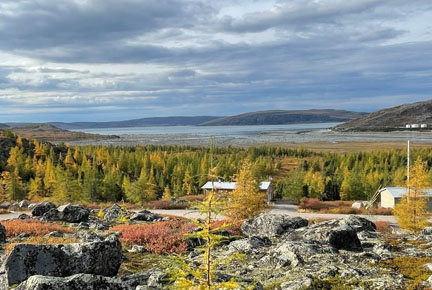
In a territory covering nearly 60% of Quebec’s land area and representing 3% of its economy and 2.3% of its population, the Abitibi-Témiscamingue–Nord-du-Québec Business Office (BO) plays a strategic role. Its team supports the businesses, organizations and 30 Indigenous and Inuit communities spread across two regions with distinct realities.
Composed mainly of single-industry regional county municipalities (RCMs), this vast territory is characterized by an economy centred on the mining sector and the exploitation of natural resources such as agriculture and forestry. It is also marked by low population density (approximately three inhabitants/km²) spread across 128 municipalities, most of which have fewer than 1,000 inhabitants.
In this corner of Quebec, significant investments in mining projects and the presence of major contractors create considerable business opportunities for SMEs supplying mining goods and services.
In terms of challenges, the region is affected by trade tensions between Canada and the United States, the housing crisis, labour shortages in some remote areas, limited communications infrastructure and heavy economic dependence on natural resources sectors, which can be cyclical. For entrepreneurs and communities, these challenges are so many opportunities to demonstrate creativity and adaptability.
Local expertise driving innovation
The region’s know-how and its ability to transform its traditional sectors are among its assets. Local SMEs, often created to meet the needs of major contractors, come out ahead by offering specialized services and exporting their expertise through international markets. Some have even secured prestigious contracts, including one to treat the New York City subway system’s wastewater.
To support economic development, the BO team works with key partners—the Secretariat to the Cree Nation Abitibi-Témiscamingue Economic Alliance, the Sociétés d’aide au développement des collectivités, the Associations touristiques régionales, the Association forestière de l’Abitibi-Témiscamingue, 48e Nord (ORPEX), the Université du Québec en Abitibi-Témiscamingue and local chambers of commerce—to provide assistance and guidance tailored to the specific needs of communities and businesses.
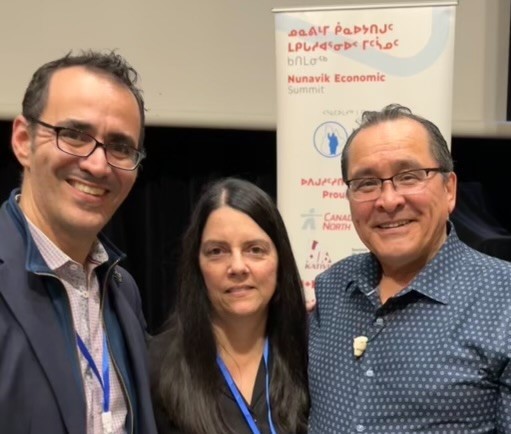
The BO also helps non-profit organizations that support businesses in strategic sectors, particularly through events such as the Foire gourmande de l’Abitibi-Témiscamingue et du Nord-Est ontarien and the Nunavik Economic Summit.
Personalized support
The team’s members are very familiar with the realities faced by local residents and businesses. They respond quickly to the varied needs of their clients, whether they are entrepreneurs, volunteers, or non-profit managers. These professionals take the time to sit down with them, listen to them and guide them in their efforts.
As Sandra Lafleur, Regional Director of the BO, points out, “We can’t say we know the needs of people and businesses just because we’ve talked to one person. We can’t serve the territory well without going there. And we can’t contribute to the prosperity of a region without listening to those who live there.”
The team does not simply wait for contribution applications: it anticipates them. “We adapt to the realities of communities and businesses, and we take the time to build relationships of trust. Outreach and networking are essential,” she adds.
This proactive approach results in a sustained presence in the field, even in the most remote locations, allowing for a detailed understanding of the issues specific to each community. It is also manifested through targeted flexibility for Indigenous and Inuit projects, taking into account local economic and social realities.
Projects that transform communities
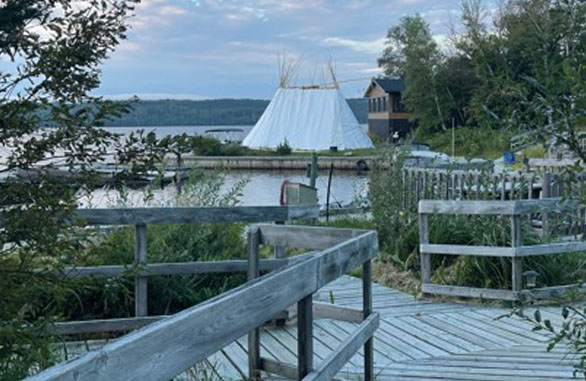
The support provided by the BO and its partners has tangible impacts in communities, including Indigenous communities. In Kipawa, Témiscamingue, the Katakag Adawewigamig ice cream parlour attracts tourists, encouraging them to extend their stay and stimulating the local economy. In Lac-Simon, Ateliers KJP — an electronic equipment recycling initiative — helps young adults from the Nation Anishnabe integrate into the workforce. In Nunavik, Nursuti promotes regional economic vitality. These projects reflect a sincere commitment to lasting economic reconciliation.
It is this approach — both strategic and human‑centred — that makes the Abitibi‑Témiscamingue–Nord‑du‑Québec Business Office an indispensable player in the region’s economic development. Its close-knit, versatile team is proud to make a difference each day for the people and businesses across the vast territory it serves.