
Bio-Bon: From the heart to the stomach
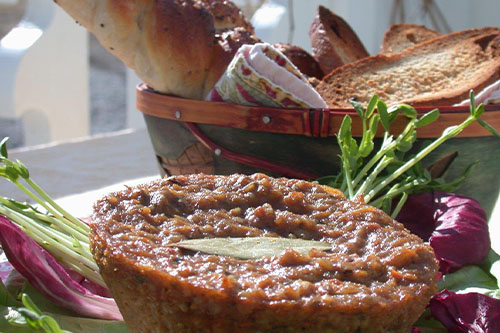
In Coaticook, in the Cantons-de-l’Est, a food processing business is blending industrial efficiency with human warmth. Founded in 2003 by Pasquale Beauvais, Bio-Bon has made a name for itself in Quebec with its organic veggie pâtés, sustainable approach and deeply human corporate culture. With support from CED, the business has been able to take a new step: Completely modernizing its plant and automating its manufacturing processes.
Summary
Business: Bio‑Bon inc.
Number of employees: 9 + 2 collaborators
Region: Cantons‑de‑l’Est
Program:
Regional Economic Growth through Innovation
(REGI) – Productivity, digitization and expansion
This CED support has made it possible: to acquire and install production equipment and an integrated management module; carry out the leasehold improvements required to refurbish the plant; and hire a consultant.
Bio-Bon’s DNA: Proximity and humanity
“Feeding the people is a source of pride,” says Bio-Bon Founder Pasquale Beauvais with enthusiasm.
Born out of an artisanal project, her business is now a recognized player in organic food processing. It specializes in vegetable pâtés carefully prepared from local ingredients, 77% of which are certified organic by Ecocert Canada. But behind its production lies a broader mission: to foster fair and lasting human relationships.
Pasquale Beauvais has always valued closeness: friendships with suppliers, attentive listening to employees and community support. This approach has shaped the business and guided its every decision, including when it was time to undertake the biggest transformation in its history.

co-owners, Bio-Bon
Structuring for growth: The leap into industry
To boost the business’s growth and structure its operations, Lahbib Aissaoui officially joined the management team and became co-owner in 2019. His arrival helped reinforce governance and support the business in its industrial transformation.
After years of cautious growth, Bio-Bon undertook a complete metamorphosis: redesigning its plant to obtain FSSC 22000 certification, a demanding standard that attests to food safety in production environments. This project marked a transition from being an artisanal operation to a structured, certified producer, with a dual objective: gaining access to major food chains and initiating a move towards export markets.
The process required the implementation of an ISO system: drafting procedures, strengthening traceability, conducting audits, training staff, and more. This industrial metamorphosis was not driven by growth alone; it also guaranteed food safety, quality and sustainability. “It’s no longer a step we’re climbing up—it’s a ladder!” sums up Pasquale, aware of how far they have come.
This evolution, however, would not have been possible without the commitment and collaboration of the entire Bio-Bon team, whose involvement was crucial at every stage of the project.
Assistance that changed the game
Bio-Bon made its industrial shift thanks to the key support of CED, which gave the business the breathing room it needed to plan, execute and consolidate its transformation despite the pandemic.
“CED gave us the most precious thing: time. When you’re not rushing, you do things the right way,”
highlights the entrepreneur.
This flexibility, combined with technical guidance, had a structuring effect. The scale-up was successful. The supply chain was strengthened. Confidence in the business’s capabilities grew, allowing it to tighten ties with regional economic development players and paving the way for sustainable growth.
A team culture that makes all the difference, especially in times of crisis
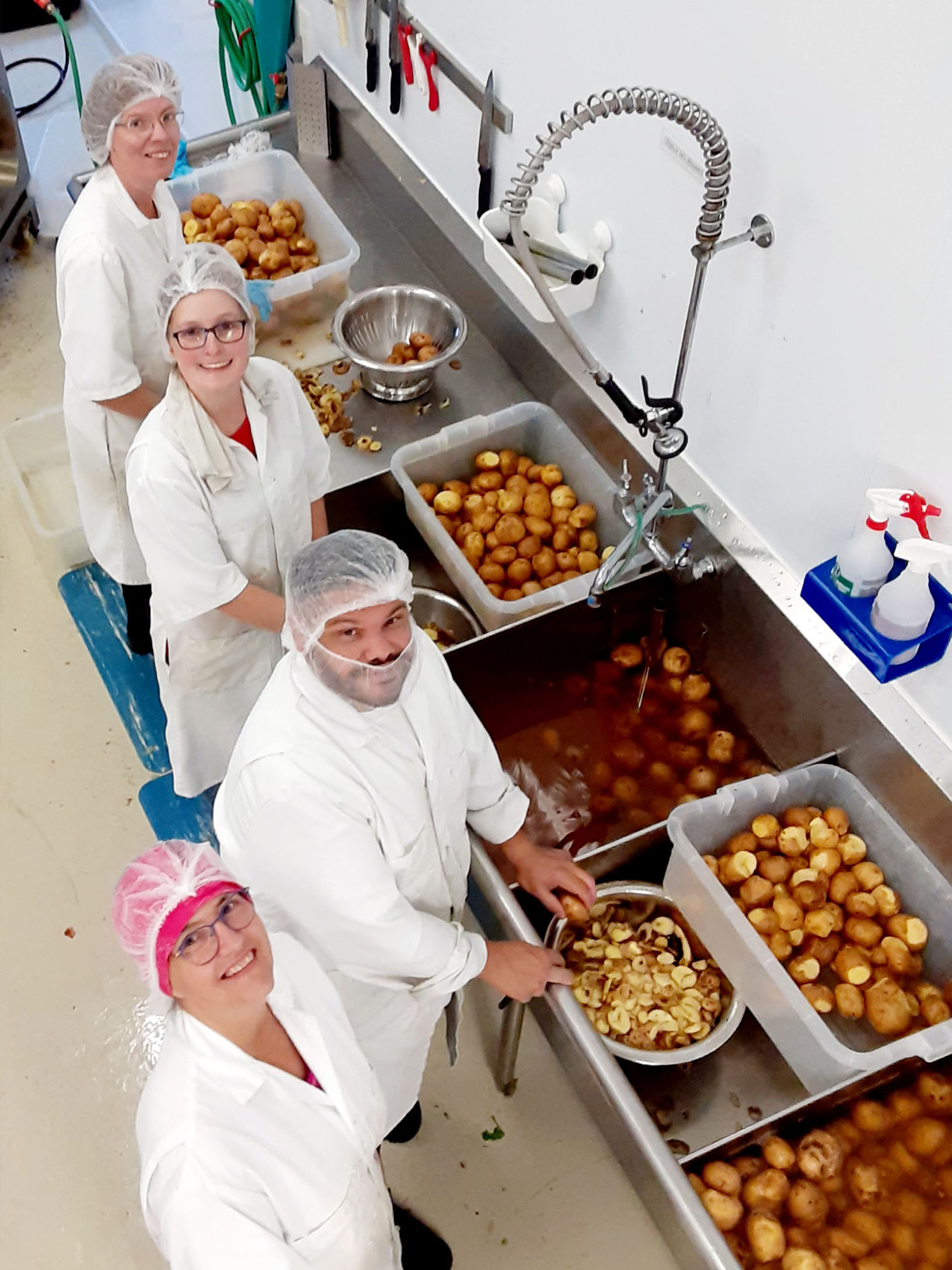
Behind the machinery is a mostly female team drawn together in a family-like atmosphere. Decisions are made collectively in team meetings and the best ideas often come “from the floor.” “It’s the people on the production team who come up with the best ideas,” the entrepreneur notes, proud of her staff’s resourcefulness and autonomy.
To support this independence, Bio-Bon offers training to everyone: First Aid, stress management and digital skills. Pasquale laughs as she remembers some of her early days: “I learned how to send emails in 2014!” Work-life balance is not just a slogan; it is an integral part of the management model. And when the unexpected happens, solidarity naturally kicks in.
When the pandemic hit, Bio-Bon lost a significant portion of its sales in the HRI (hotels, restaurants and institutions) sector. A hard blow, but not a defeat. The business adapted: It hired staff for outreach, strengthened its local sales and built regional partnerships to pool storage and supply. It also made use of its new storage space to buy in bulk, stabilize costs and avoid stock shortages.
This difficult period highlighted the strength of the business’s culture and its deep regional roots. Team spirit, solidarity and adaptability enabled Bio-Bon to meet these challenges while maintaining close relationships with its clients and suppliers. Several concrete gestures speak to this commitment, including a case where a client’s refrigerator broke down and the business spontaneously resent her products at no cost.
Sustainable development: Beyond organic
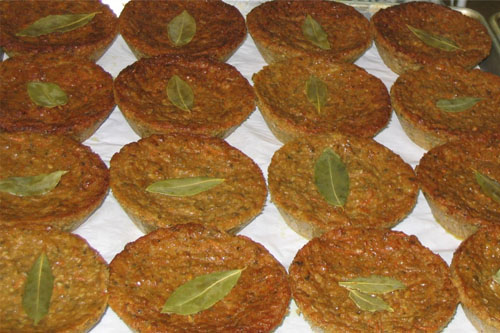
Because being “good” goes beyond flavour, environmental commitment is naturally at the heart of Bio-Bon. In line with its sustainable development policy, the business aims to strike a balance between the economic, social and environmental spheres. For example, it measures its direct greenhouse gas emissions (diesel, natural gas and electricity) with the goal of eventually offsetting them. It also trains employees in good waste management and fuel-efficient driving, replaces Styrofoam boxes with fully recyclable ones, and prioritizes the local sourcing of organic ingredients, thereby contributing to the development of a more circular and respectful food chain. And this approach is not merely symbolic; it is strategic. It strengthens the brand’s image, as well as its performance and regional presence.
Growing without losing its essence
Today, Bio-Bon stands out for both its growth and its social commitment. The business relies on partnerships grounded in friendship, listening and reciprocity, creating a real community with its suppliers and clients.
Thanks to these efforts, it can now set its sights on major distributors, a dream that is becoming more tangible with interest from chains like Sobeys, IGA and Metro. As the business prepares to climb up a new step—to access major grocery chains, followed by markets outside Quebec—it does so with confidence in a proven business model. “We’re moving forward, but never at the expense of our values,” concludes Pasquale, who sees this as an opportunity to feed more people and, above all, to continue doing it well.