
Kiima: Revolutionizing the cosmetics industry
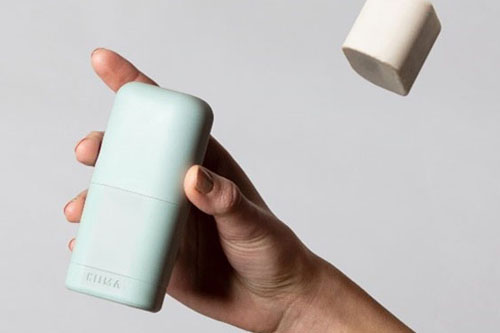
In an industry—cosmetics—where 120 billion packaging units are thrown away each year, no one had yet tried to find a widely applicable sustainable solution to the problem of waste. Kiima chose an unexpected angle: start with a small, commonplace, ubiquitous object that is nonetheless highly polluting: deodorant.
Summary
|
Business name: Siotal inc. (Kiima) This CED support has made it possible: to increase the business’s production capacity and implement a marketing strategy. |

Tackling the issue of waste
The Montréal start-up thus set an ambitious target for itself to revolutionize the cosmetics industry. Nothing less! And how did it plan to achieve this? By tackling its primary problem at the source: the issue of waste.
Horrified by the terrible image of a sector that, every year, sends billions of units to landfill, Kiima co-founders Samuel Lemire-Dupont and Jenny Essiambre decided to take another look at these products we all use, from the foundation up, if you please: their design.
Kiima’s vision would thus focus on aesthetics, functionality and, above all, sustainability. The search was on to reduce the sector’s environmental impact. What object made of hard plastic—at first glance commonplace but with the potential for a significant impact—could be reconsidered in order to begin to transform an entire industry? What everyday product is used everywhere on the planet and takes—did you know—300 to 400 years to break down in nature? Deodorant.
A philosophy of useful beauty
Jenny, an interior designer by training, would steer branding, artistic direction and product creation. For his part, Samuel would bring his expertise in industrial automation and international representation. This combination gave rise to a deodorant applicator thought through to last 10 years; a target that requires not only great robustness, but also a certain aesthetic dimension. Because at Kiima, even if design is at the heart of their approach, it is not a question of beauty for the sake of beauty. The aim was to demonstrate that personal care products do not have to be disposable, and this represents a transformation that is not only cultural, but also industrial.
Combined with this approach was a key innovation: Kiima not only manufactures refillable applicators but is also developing an entire ecosystem. The business collaborates with partners in the cosmetics industry around the world who design refills adapted to the applicator’s format, making it possible for customers to choose from a variety of natural deodorants developed based on various areas of expertise.
And for those who make their own deodorant, Kiima has also designed a “handmade” mould enabling the creation of a homemade refill, reinforcing the idea that each of us can become a changemaker.
A local innovation with global reach
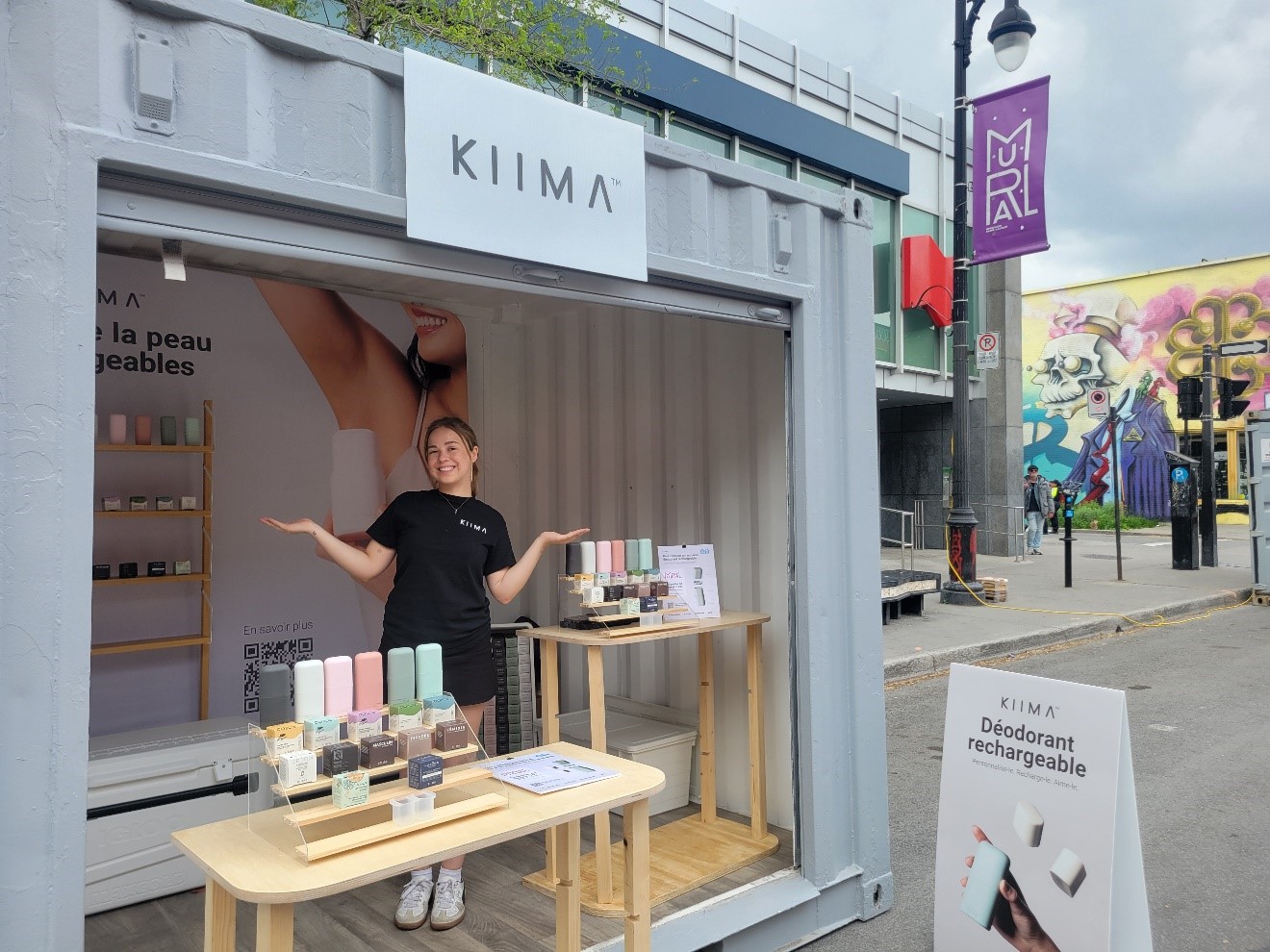
When CED came onto the scene, Kiima was in a crucial phase: The business had to finance the mould for its next product, a refillable lip balm. But it also had to finalize a round of equity fundraising, maintain its rhythm of innovation, and support its international development. The government assistance came not just at the right time, but also in the right form: structured, flexible financing in two components, enabling the business to secure its financial plan while also pursuing growth.
Samuel shares that he found at CED a genuine willingness to support local innovative businesses, including those that contribute sustainable solutions. And he really emphasizes this point:
“the guidance was human, collaborative, coherent, far from administrative clichés.”
Thanks to its unique positioning, Kiima experienced rapid growth. In under two years, it deployed its products at hundreds of points of sale, including Jean Coutu, Avril and Simons, and accelerated its growth internationally. The business sells its products in Quebec, Canada and also abroad, including in Italy, Spain and the U.S. This international presence is built directly on its partnership model: Its applicators are manufactured here, yes, but since its refills are produced by several international brands, the business is building a network of mentors and allies to help it adapt to demanding markets.
Paving the way

Kiima is not content with offering a new product: It proposes changing consumer habits. Its approach aligns with functional economy principles, where a use is sold rather than an object. This vision guides the business in all that it develops and in its continuous improvement strategy. The target is clear: stay ahead of a market that will at one point want to adopt the same principles.
Samuel is confident that Kiima’s strength comes from both product quality and its capacity to evolve. The business is constantly honing its designs based on real usage volumes, client feedback and its internal expertise in sustainable packaging—an expertise that seems today to be unmatched in Quebec for refillable deodorants.
The coming years will be marked by new product launches, the consolidation of international markets and ongoing improvements. Kiima has the ambition to become a business that, through its design and vision, outright transforms its sector, an industry where circularity could become the norm rather than the exception.
For its co-founders, each well-designed product represents a part of the solution. And CED is proud to have helped propel this business forward as it places Montréal on the global map of eco-design thanks to a deeply considered gesture that is absolutely necessary.