
Get the facts on the front-of-package nutrition symbol
Download the alternative format
(PDF format, 1.51 MB, 3 pages)
Organization: Health Canada
Published: January 2026
Why some foods don't have the symbol
Join Emily, a registered dietitian, and her client Alex on a grocery store tour as they explore why certain products are exempt from Canada's front-of-package nutrition symbol labelling regulations. This story will help you get the facts on why some foods don't have a symbol, so you can make informed choices when shopping.

Image description
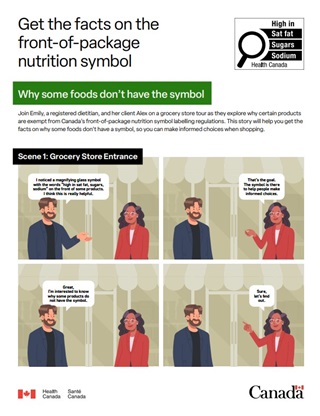
In this scene 1 image, Emily and Alex are at the entrance of the grocery store. Their exchange goes as follows:
- Alex: "I noticed a magnifying glass symbol with the words "high in sat fat, sugars, sodium" on the front of some products. I think this is really helpful."
- Emily: "That's the goal. The symbol is there to help people make informed choices."
- Alex: "Great, I'm interested to know why some products do not have the symbol."
- Emily: "Sure, let's find out."
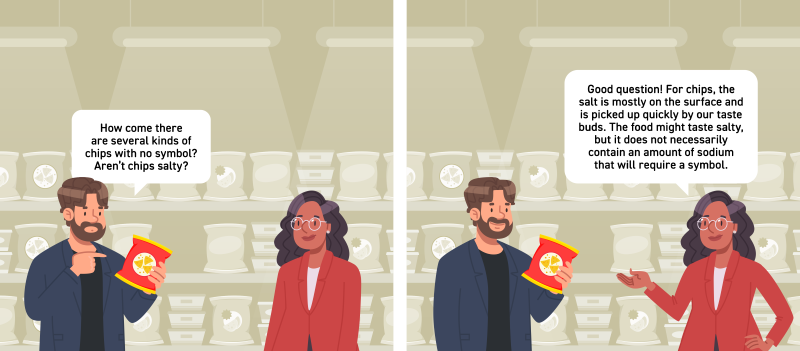
Image description
In this scene 2 image, Alex picks up a bag of chips without a symbol. Emily is standing next to him. Their exchange goes as follows:
- Alex: "How come there are several kinds of chips with no symbol? Aren't chips salty?"
- Emily: "Good question! For chips, the salt is mostly on the surface and is picked up quickly by our taste buds. The food might taste salty, but it does not necessarily contain the amount of sodium that will require a symbol."
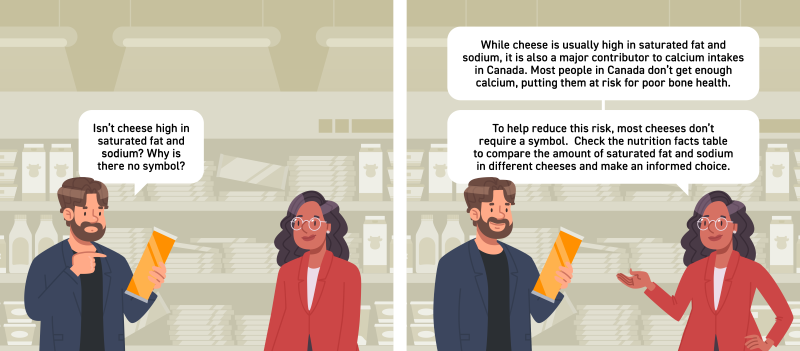
Image description
In this scene 3 image, Alex inspects a block of cheese without a symbol. Emily is standing next to him. Their exchange goes as follows:
- Alex: "Isn't cheese high in saturated fat and sodium? Why is there no symbol?"
- Emily: "While cheese is usually high in saturated fat and sodium, it is also a major contributor to calcium intakes in Canada. Most people in Canada don't get enough calcium, putting them at risk for poor bone health. To help reduce this risk, most cheeses don't require a symbol. Check the nutrition facts table to compare the amount of saturated fat and sodium in different cheeses and make an informed choice."
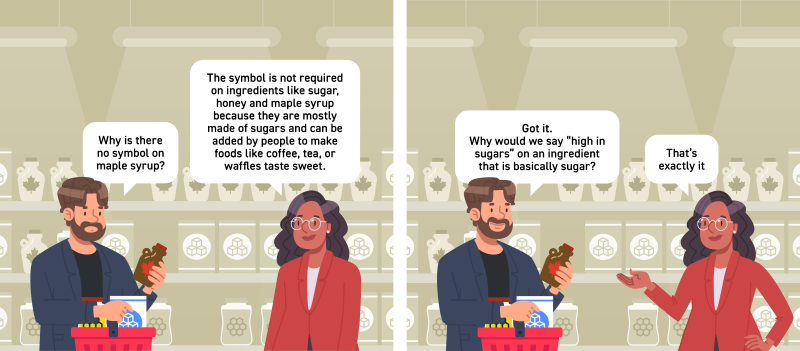
Image description
In this scene 4 image, Alex looks at packages of sugar, honey, and maple syrup without a symbol. Emily is standing next to him. Their exchange goes as follows:
- Alex: "Why is there no symbol on maple syrup?"
- Emily: "The symbol is not required on ingredients like sugar, honey and maple syrup because they are mostly made of sugars and can be added by people to make foods like coffee, tea, or waffles taste sweet."
- Alex: "Got it. Why would we say "high in sugars" on an ingredient that is basically sugar?"
- Emily: "That's exactly it."
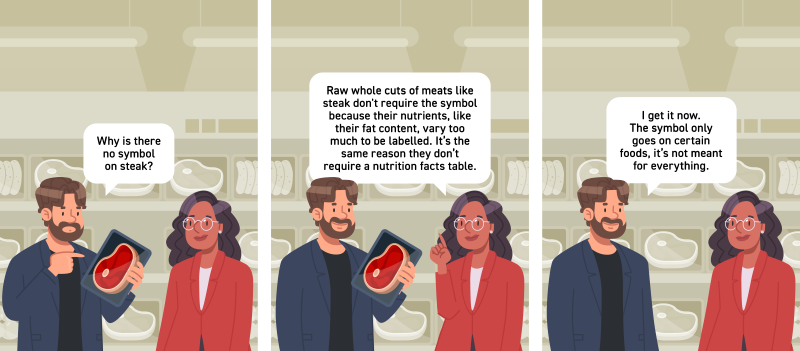
Image description
In this scene 5 image, Alex picks up a package of steak without a symbol. Emily is standing next to him. Their exchange goes as follows:
- Alex: "Why is there no symbol on steak?"
- Emily: "Raw whole cuts of meats like steak don't require the symbol because their nutrients, like their fat content, vary too much to be labelled. It's the same reason they don't require a nutrition facts table."
- Alex: "I get it now. The symbol only goes on certain foods, it's not meant for everything."
Learn more about the front-of-package symbol at Canada.ca/front-package-labelling.