
Briefing book for the Clerk of the Privy Council 2025
[ * ] An asterisk appears where sensitive information has been removed in accordance with the Access to Information Act and Privacy Act.
Clerk's Office
Cover letter to Michael Sabia
Monday, June 30, 2025
As requested last week, please find enclosed the following documents to assist you in your transition as Clerk of the Privy Council and Secretary to the Cabinet:
- A four-month calendar of key events, including those being led by the Prime Minister and those potentially for you in your role as Clerk;
- Cabinet forward agenda information;
- A list of upcoming important decisions; and
- Briefing material related to projects of national of interest, as well as on the negotiations with the United States.
The package also includes a draft of proposed concepts for the September 3-5 Cabinet retreat. I have not yet engaged with the Prime Minister’s Office (PMO) on these concepts. Let me know if you would like to provide direction on this before we engage with PMO.
Finally, included in the materials is additional background material proactively provided by PCO Deputy Secretaries.
Do not hesitate to reach out to me if there is any other material you would like to receive before your arrival at PCO next Monday. We would also be pleased to organize priority briefings for you.
Sincerely,
[ * ]
Eric Bélair
Acting Deputy Secretary,
Plans and Consultations
Privy Council Office
email: eric.belair@pco-bcp.gc.ca
cell : [ * ]
Overview of forthcoming key dates, meetings and events
July:
- July 1 – Canada Day
- July 7 – [ * ]
- July 9 – Presentation at Ministerial CoS Retreat
- July 10 – Chair all-day meeting of Committee of Senior Officials
- July 15 – [ * ]
- July 16-17 – First Nations Summit, Ottawa, ON (TBC)
- July 17 – Comptrollership Senior Leaders Forum (TBS)
- July 21 – [ * ]
- July 22 – FPT meeting of Clerks and Cabinet Secretaries (Huntsville, ON)
- July 23-25 – Inuit (ICPC) Summit, Inuvik, NT (TBC)
- July 29 – GG Canadian Leadership Conference / National Executive Committee Meeting
August:
- August 1 – [ * ]
- August 7 – Métis Summit, Ottawa (TBC)
- August 24-30 – PM Trip to Europe, Trip confirmed, locations and dates pending
- August 28 – [ * ]
September:
- September 1 – Labour Day
- September 3-5 – Cabinet Planning Forum, Greater Toronto Area, ON (Date/location TBC)
- September 3-5 – Assembly of First Nations, Winnipeg, MB
- September 4 – Invitation to Changing Fortunes Roundtable, Calgary (AB)
- September 9-11 – Caucus Retreat, Edmonton (AB)
- September 10 – Invitation to attend DM Outreach, Calgary, (AB)
- September 15 – House of Commons returns
- September 18 – [ * ]
- September 23 – Senate returns
- September 23-26 – United Nations General Assembly, New York, U.S.
- September 30 – Truth and Reconciliation Day
- September 30 – Speaker at C.D. Howe Fall Roundtable (TBC) (Date in October TBC)
October:
- October 7-9 – Open Government Partnership Summit, Spain
- October 8-9 – [ * ]
- October 13 – Thanksgiving
- October 16 – Present award(s) at HR Excellence Award Ceremony (TBC)
- October 16-18 – Arctic Circle Assembly, Reykjavik, Iceland
- October 20 – NL Election
- October 22-23 – Berlin Global Dialogue, Germany [ * ]
- October 23-25 – Inaugural Conference of Indigenous Jurists, New Zealand [ * ]
- October 26-28 – ASEAN Partners Summit, Malaysia [ * ]
- October 28-30 – Nordic Council, Sweden [ * ]
- October 31-Nov 1 – APEC Leaders Meeting, South Korea [ * ]
[ * ]
[ * ]
Arrival of Michael Sabia as Clerk of the Privy Council and Secretary to the Cabinet
Introduction to the Public Service
- On June 11, 2025, the Prime Minister announced the Clerk of the Privy Council and Secretary to the Cabinet, John Hannaford, will retire from the public service, effective July 4, 2025, and that he will be replaced by Michael Sabia, effective July 7, 2025.
- Following the announcement, communications options have been developed for Mr. Sabia’s introductory message to the public service.
Options (see Annex A)
- An introductory message from Clerk Sabia to all Public Service, a message from Clerk Sabia to PCO staff & signed social media posts - Recommended option – This approach is consistent with previous Clerk transitions
- Social media posts would accompany the message. Posts would be signed from Clerk Sabia
- An introductory message from Clerk Sabia to all Public Service, a message from Clerk Sabia to PCO staff & unsigned social media posts
- Social media posts would accompany the message. Posts would be welcoming Clerk Sabia and be un-signed
- Social media posts only
- Posts could be signed by Clerk Sabia (introducing himself) or un-signed (welcoming him to the Public Service)
Next steps
- Headshot – A headshot should be booked with the visual communications team upon Mr. Sabia’s arrival in office so updates can be made to PCO InfoNet and Canada.ca.
- Video to the public service in the fall – For consideration, a video could be filmed with Mr. Sabia before the House returns in September. The video could serve to further his introduction as Clerk to all public servants.
- PCO Townhall – A Townhall could be scheduled for PCO staff in the fall. This would give Mr. Sabia the opportunity to address PCO staff directly, hold a brief Q&A and provide more details around his vision for the upcoming year.
- In the weeks following Mr. Sabia’s arrival as Clerk of PCO, Corporate and Clerk’s communications team will work with his office to establish a regular touchpoint to review upcoming communications activities, as well as provide advice and support.
Product timelines
| Product | Planned date | Approvals required |
|---|---|---|
| Introductory email message from the new Clerk to all public servants and PCO | Week of July 7, 2025 | Clerk’s Office |
| Post message to all PS on the PCO Intranet | Week of July 7, 2025 | N/A |
Bio and new headshot* of Clerk Sabia posted on PCO website and external websites:
|
Week of July 7, 2025 | Clerk’s Office |
| Un-signed Thank you/Departure post for Clerk John Hannaford (X, Instagram and LinkedIn) | July 4, 2025 | Corporate and Clerk Comms |
| Un-signed welcome post for Clerk Michael Sabia (X, Instagram and LinkedIn). Or signed introductory post by Clerk Sabia, see Annex A. | Week of July 7, 2025 | Signed post would require Clerk’s Office approval. If using un-signed posts Corporate and Clerk Comms to approve. |
Annex A - Clerk introductory message options
Option A (Recommended option)
| Date | Approach | Messages | Distribution | Social media posts | Images for social media (English and French) *Alt text Required |
|---|---|---|---|---|---|
Week of 7 July |
Introductory message from Clerk Sabia to all Public Service, message from Clerk Sabia to PCO staff & signed social media posts |
Message to all public service: Dear Colleagues, I am honoured to have been asked by the Prime Minister to serve as the Clerk of the Privy Council, Secretary to the Cabinet and as head of the public service. The public service is a key pillar in our democracy - serving the Government of the day to uphold peace, order and good Government. The past five years have seen tremendous change for the public service - from the pandemic to the changing world order - and Canadians owe a dept of gratitude to those who have served with distinction through these times. I am privileged to play a part in what you do for this country every day. I want to thank my predecessor, John Hannaford, for his leadership. His emphasis on what it means to be a public servant, with values and ethics as the guidepost in your day-to-day work, will be an important foundation to confront the challenges ahead. The Clerk’s Call to Action, introduced by Ian Shugart and carried forward by both Janice Charette and John, means we are building a public service which reflects the diversity of Canadians we serve. These are complex times – a changing geopolitical environment that calls for Canada to reset its relationships around the world and to build a stronger Canada. To meet the moment, the Government has set a clear agenda, focused on building a resilient, prosperous, and autonomous economy, ensuring safety and security of Canadians and our country, and demonstrating fiscal responsibility in our operating expenses. The Government’s ambitious agenda offers us an opportunity to transform how we work in our continued service to Canadians. As you may know, I have had the privilege in my career of working in both the public and private sectors. I have always been driven by a sense of purpose to have a real impact and make a difference. I believe that to seize the moment, we need two things: focus and determination. Our determination comes from within. It comes from you. I’m confident in your professionalism, your skills, your creativity, your passion, and your ability to deliver. It will take all of us, working together, to deliver and with your support, I look forward to what we will accomplish. Thank you, PCO all-staff message: Dear Colleagues, It is with immense honour and humility that I take up this mantle and assume the three roles that encompass this position: Deputy Minister to the Prime Minister, Secretary to the Cabinet, and head of the public service. I want to thank my predecessor, John Hannaford, for his leadership as Clerk. In an era of polycrisis and rapid change, he focused on rebuilding the foundations of the institution of public service. The renewed dialogue on values and ethics drove home what it means to be a public servant. What it means to serve democracy and live up to the values of respect for people, excellence, integrity, and stewardship. The strength of a non-partisan, professional and representative public service, and of PCO, in providing stability through times of transition was evident during the past year. This is not my first time walking these distinguished halls, having served as the Deputy Secretary of Plans under Clerk Paul Tellier. I come to this position with great respect for your work, and great eagerness to do real things that make a real difference. PCO is the beating heart of government decision-making. Everything that passes through Cabinet passes through you first. You are vital in delivering on the Government’s agenda: building a resilient, prosperous, and autonomous economy, ensuring safety and security of Canadians and our country, and demonstrating fiscal responsibility in our operating expenses. Your work therefore touches every aspect of Canadians’ lives. It shapes our country’s presence on the international stage, and how we work with like-minded partners to address pressing challenges like climate change, or find ways to responsibly innovate with emerging technologies such as artificial intelligence. You are instrumental in addressing the great challenges of our times as you, yourselves, play your important challenge function. I look forward to working with you, and seeing your dedication, excellence and creativity in action. I know that I will be able to count on your support and advice as we advance the Government’s priorities, and that I will be able to count on you as colleagues as we navigate through whatever opportunities or challenges may come our way. Thank you, |
To Deputy Heads from Clerk Sabia’s inbox To Internal Comms Contacts for amplification from the Clerk/DepClerks positional mailbox |
X: “I am honoured to serve as Clerk of the Privy Council and to play a part in the delivery of the Government of Canada’s top priorities.” LinkedIN and Instagram Story: “I am grateful for the opportunity to serve as the new Clerk of the Privy Council and Secretary to the Cabinet. As the head of the public service, I look forward to making a real difference in the lives of Canadians and GC employees. Together we will build on the momentum and continue to drive accountability for transformative change.” -Clerk Sabia |
Alt Text
|
Option B
| Date | Approach | Messages | Distribution | Social media posts | Images for social media (English and French) *Alt text Required |
|---|---|---|---|---|---|
Week of 7 July |
Introductory message from Clerk Sabia to all Public Service, message from Clerk Sabia to PCO staff & un-signed social media posts |
*Same as above |
To Deputy Heads from Clerk Sabia’s inbox To Internal Comms Contacts for amplification from the Clerk/DepClerks positional mailbox |
X: “Today, Clerk Sabia assumes his new role as the head of the federal public service supporting the delivery of the Government of Canada’s top priorities.” LinkedIN and Instagram Story: “Join us in welcoming to Michael Sabia, as the 26th Clerk of the Privy Council and Secretary to the Cabinet! Today, Clerk Sabia assumes his new role as the head of the federal public service supporting the delivery of the Government of Canada’s top priorities.” |
Alt Text
|
Option C
| Date | Approach | Messages | Distribution | Social media posts | Images for social media (English and French) *Alt text Required |
|---|---|---|---|---|---|
Week of 7 July |
No introductory Message from Clerk Sabia, only social media posts (either signed or un-signed) |
No message |
To Deputy Heads from Clerk Sabia’s inbox To Internal Comms Contacts for amplification from the Clerk/DepClerks positional mailbox |
Signed: X: “I am honoured to serve as Clerk of the Privy Council and to play a part in the delivery of the Government of Canada’s top priorities.” -Clerk Sabia LinkedIN and Instagram Story: “I am grateful for the opportunity to serve as the new Clerk of the Privy Council and Secretary to the Cabinet. I look forward making a real difference in the lives of Canadians and GC employees. Together, we will build on the momentum and continue to drive accountability for transformative change.” or Un-signed: X: “Today, Clerk Sabia assumes his new role as the head of the federal public service and will oversee the delivery of the Government of Canada’s top priorities.” LinkedIN and Instagram Story: “Join us in welcoming to Michael Sabia, as the 26th Clerk of the Privy Council and Secretary to the Cabinet! Today, Clerk Sabia assumes his new role as the head of the federal public service supporting the delivery of the Government of Canada’s top priorities.” |
Alt Text
|
Office of the Deputy Clerk and Deputy Minister of Intergovernmental Affairs
Bill C-5 (as passed in the HOC)
Plain language summary of amendments
Bill C-5 – Overview of Part 2 amendments made in the House of Commons
| Clause/ Section |
Amendment [ ] | What does this mean for the Bill? |
|---|---|---|
Clause 4, Preamble |
Whereas Parliament recognizes that it is in the interests of Canada’s economy, sovereignty and security, including its energy security, to urgently advance projects throughout Canada, including in the North, that are in the national interest, including projects that
|
This amendment recognizes in the preamble that national interest projects could create good paying, unionized jobs. The national interest regime itself does not regulate economic or employment aspects of these projects such that this amendment does not impact implementation of the Act. |
Clause 4, section 2 |
New Definition |
This is part of a series of interlinked amendments that introduce Parliamentary oversight of implementation of the Building Canada Act, including over executive functions that are not typically subject to consideration by Parliament, such as: detailed information disclosure about decisions designating projects and technical, expert-based conditions for mitigation of impacts on the environment and Indigenous rights. As set out in section 62(1) of the Emergencies Act, the Commitee will include representation from both the House of Commons and Senate. |
Clause 4, New section 4.1 |
[4.1 (1) The Governor in Council may, by order, for the purposes of section 5, define national interest. (2) In order to promote transparency and predictability, an order made under subsection (1) must set out specific criteria that must be met by the proponent of a project in order for the project to be found to be in the national interest. (3) If an order is not made within 15 days after the day on which this Act comes into force, the Minister must, within five sitting days of the end of that period, cause to be tabled in each House of Parliament a report that sets out the reasons for the delay and the expected timeline for the making of the order.] |
This amendment would require that a definition and specific criteria for national interest projects be published by order of the Governor in Council shortly after the Act comes into force. Any definition under this section will need to interact with the factors already set out under section 4. |
Clause 4, ss. 5 (1) |
5 (1) If the Governor in Council is of the opinion that a project is in the national interest, the Governor in Council may, on the recommendation of the Minister, by order, amend Schedule 1 to add the name of the project and a [brief detailed] description of it, including the location where it is to be carried out. |
This amendment would increase the details provided in Schedule 1 with respect to each project listed. These details would now be required in Schedule 1 of the Act and would also need to be published in the national interest project registry established under new s 5.1. Should project details need to be amended, Schedule 1 of the Act would also require amendments through a Governor in Council order. |
Clause 4, new ss. 5 (1.1) |
[(1.1) Before adding the name of a project to Schedule 1, the Governor in Council must cause a notice of 30 days, that includes the name and description of the project, to be published in the Canada Gazette and must consult with the government of the province or territory in which the project will be carried out, and obtain its written consent if the project falls within areas of exclusive provincial or territorial jurisdiction.] |
This amendment requires a 30-day notice period before a national interest project is listed in Schedule 1 of the Act, consultation with the relevant province and territory as well as written consent if the project is within exclusive provincial or territorial jurisdiction. In practice, the Government has been clear the intent is not to impose projects on provinces, and seeking consent from a province or territory in these instances should not impede implementation of the Act. |
Clause 4, ss. 5(2) |
(2) The Governor in Council is not authorized to make an order under subsection (1) [while Parliament is prorogued or] dissolved or after the fifth anniversary of the day on which this section comes into force. |
This amendment limits the ability for the Governor in Council to determine that a project is in the national interest and by Order add the project to Schedule 1 to those periods of time when Parliament is sitting. |
Clause 4, new ss. 5(6.1) |
[(6.1) Before recommending that an order be made under subsection (1), the Minister must be satisfied that |
This amendment requires the Minister responsible for the Building Canada Act to be satisfied that the proponent and others responsible for a project have not committed previous violations of the Conflict of Interests Act and that public office holders that could have a conflict of interest related to the project recuse themselves under that Act. Implementation of this provision will require a mechanism by which Minister could seek this information from proponents, and for Minister to ensure Cabinet colleagues who may be conflicted are recused from Cabinet deliberation. The Minister responsible for the Building Canada Act may not reasonably know all private sector actors responsible for a project at the time of listing, and this can change over time. |
Clause 4, new ss. 5(10) |
[(10) Within 30 days after an order is made under subsection (1), details of the project in respect of which the order is made must be published in the registry established under section 5.1. 5.1 (1) The Minister must establish and maintain a public registry of national interest projects that is made accessible to the public through the Internet. |
This amendment creates new requirements to establish a Registry under the Act and to disclose detailed information related to the project. Existing registries that are currently established under other federal laws, such as the Impact Assessment Act and Fisheries Act, will continue to apply to national interest projects. |
Clause 4, new par 7(2)(b.1) |
[(b.1) the Minister must undertake a national security review for all state-owned or foreign investments from hostile countries in any national interest project] |
This amendment requires the Minister responsible for the Building Canada Act to undertake a security review in relation to investments from hostile countries. This amendment will require interaction with and rely on the Minister responsible for the Investment Canada Act, which is the regime for restricting foreign investment for national security reasons. Rules under the Investment Canada Act would apply to national interest projects. |
Clause 4, new par 7(2)(d) |
[(d) the Minister must be satisfied that, with regard to any foreign investments in the project, all necessary measures have been taken to protect national security interests.] |
This amendment requires that the Minister be satisfied all necessary measures have been taken to protection national security with respect to foreign investments. Links to new clause 7(2)(b.1). |
Clause 4, new ss 7(2.1) |
[(2.1) For the purposes of consultations required under paragraph (2)(c), the Minister must ensure that a process is established that allows for the active and meaningful participation of the affected Indigenous peoples and that a report of the consultation process and results is made available to the public within 60 days after the day on which a document is issued under subsection (1).] |
This amendment would require the Minister to ensure a process is in place for active and meaningful Indigenous consultation (which is consistent with existing constitutional obligations) as well as to require reporting on the results of consultation. |
Clause 4, new ss. 7(9) |
[(9) If the national interest project has not been substantially started within five years of the issuance of the document, the document expires.] |
This amendment would revoke any project authorizations under the national interest scheme, via the conditions document, if the project has not substantially started within 5 years of issuance of the conditions document. This is consistent with the policy intent of the Act to advance national interest projects with urgency, and that projects have a high likelihood of successful execution at the time of listing. There is existing operational understanding under other federal laws regarding interpretation of ‘substantially begun’. |
Clause 4, new ss. (9) |
[(9) All documents and information used to issue the document must also be made public.] |
This amendment creates a broad requirement to disclose any information used to develop project conditions. |
Clause 4, new ss. 8(4) |
[(4) The Minister is not authorized to amend a condition under subsection (1) while Parliament is prorogued or dissolved or after the fifth anniversary of the day on which this section comes into force.] |
This amendment would limit the ability of the Minister to amend a condition related to a project authorization to those periods of time when Parliament is sitting. |
Clause 4, new s. 8.1 |
[8.1 (1) When the Minister establishes the conditions for issuing the document that is deemed to be each authorization that is specified in the document in respect of a national interest project under section 7, the Minister must make public (2) The document referred to in paragraph (1)(d) must include (3) The Minister must, not later than 30 days before the document referred to in section 7 is issued, make public the information set out in paragraphs 1(a) to (e). (4) The Minister must cause to be tabled a report containing the information set out in paragraphs (1)(a) to (e) in each House of Parliament and, at the request of 10 or more members of that House, must appear, to explain the Minister’s decisions in establishing the conditions, before the committee of Parliament designated or established for that purpose.”] |
This amendment creates a broad requirement to disclose information related to the development of project conditions. It specifies that detailed information, analysis and rationales must be disclosed. Some of this information is already required under other federal laws (such as the Impact Assessment Act or Fisheries Act), which will continue to apply to national interest projects, resulting in duplication. |
Clause 4, s. 21 |
21 [(1) Subject to subsection (2)], the Governor in Council may, by order, amend Schedule 2 to add, amend or delete the name of an Act of Parliament or a regulation or the reference to a portion of an Act of Parliament or a regulation. [(2) The Governor in Council is not authorized to amend Schedule 2 to add the name of any of the following Acts of Parliament or of any regulation made under any of those Acts, or a reference to a portion of any of those Acts or regulations: |
This amendment limits the addition to Schedule 2 of Acts to which the national interest project regime under Building Canada Act applies and in which any authorizations required for the project to proceed would be deemed approved. Schedule 2 lists federal laws with the most common to federal project approvals, and has the effect of providing a streamlined, single conditional approval upfront. The legislation does not exempt projects from those laws or alter requirements not related to discretionary project approvals. |
Clause 4, new ss. 21(3) |
[(2) The Governor in Council is not authorized to make an order under subsection (1) while Parliament is prorogued or dissolved or after the fifth anniversary of the day on which this section comes into force.] |
This amendment would limit the ability of the Governor in Council to add new Acts and regulations to the list under Schedule 2 (which sets out the federal laws under which project authorizations are granted) to those periods of time when Parliament is sitting. |
Clause 4, new ss. 22(2) |
[(2) The Governor in Council is not authorized to make regulations under subsection (1) while Parliament is prorogued or dissolved or after the fifth anniversary of the day on which this section comes into force. ] |
This amendment would limit the ability of the Governor in Council to make regulations, varying the application of federal law to a project, to those periods of time when Parliament is sitting. |
Clause 4, s. 23 |
The Governor in Council may make regulations |
This amendment removes the ability of the Governor in Council to make regulations exempting or varying provisions of the Building Canada Act for specific national interest projects, and maintains the ability for regulations generally for the carrying out of the Act (e.g. regulations that could provide greater clarity with respect to process steps and the role of the Major Projects Office). |
Clause 4, new ss. 23(2) |
[(2) The Governor in Council is not authorized to make regulations under subsection (1) while Parliament is prorogued or dissolved or after the fifth anniversary of the day on which this section comes into force.] |
This amendment would limit the ability of the Governor in Council to make regulations, for the purposes of carrying out the national interest scheme, to those periods of time when Parliament is sitting. |
Clause 4, new s. 23.1 |
[23.1 (1) Within 90 days after the end of each financial year, the Minister must cause an independent review to be conducted of the status of each national interest project that, in respect of each project, provides an assessment of the progress made on measurable outcomes, including in relation to timelines and budgets. (3) The Minister must publish the report on an Internet site that is available to the public within 10 days after the day on which it has been tabled in both Houses of Parliament.] |
This amendment is part of a series of interlinked amendments that introduce Parliamentary oversight of implementation of the Building Canada Act, including information about the status of project timelines and budgets. This amendment would need to be implemented in a way that allows protection of commercially sensitive business information. |
Clause 4, s. 24 |
[24 (1) The Parliamentary Review Committee is to review the Governor in Council’s and the Minister’s exercise of their powers and performance of their duties and functions under this Act and to report to each House of Parliament the results of its review at least once every 180 days while Parliament is neither prorogued nor dissolved. |
This amendment is part of a series of interlinked amendments that introduce Parliamentary oversight of implementation of the Building Canada Act, including over executive functions that are not typically subject to consideration by Parliament (i.e. the exercise of all powers, duties and functions of the Minister and Governor in Council), such as: detailed information disclosure about decisions designating projects and technical, expert-based conditions for mitigation of impacts on the environment and Indigenous rights. Amendments to the definition in s. 2, above, the Parliamentary Review Committee would be the committee established under the Emergencies Act. |
Clause 4, Schedule 2 |
[Deleting item 2 of Part 1 of Schedule 2] |
This would remove the Indian Act from Schedule 2. Paired with amendments to s. 21, above, this means that project authorizations under the Indian Act can never be brought under the streamlined process of the national interest scheme. Authorizations by the Minister of Indigenous Services are sometimes required for a project located on or crossing a First Nations reserve; for national interest projects, these authorizations would proceed outside the national interest scheme and will require coordination. |
Meeting of federal, provincial, and territorial Clerks and Cabinet Secretaries
Toronto, Ontario
April 24, 2025
2:00 pm – 4:30 pm ET
Record of discussion
Federal, Provincial, and Territorial (FPT) Clerks and Cabinet Secretaries met on April 24, 2025 in Toronto to discuss Canada-U.S. relations, and artificial intelligence (AI) and service delivery.
The meeting was co-chaired by the Clerk of the Privy Council and Secretary to the Cabinet, John Hannaford, and the Ontario Secretary of the Cabinet, Head of the Public Service and Clerk of the Executive Council, Michelle DiEmanuele. It was attended in-person by Dale McFee (AB), Raynelle Wilson (SK), Sarah Thiele (MB), David Bahan (QC), Judy Wagner (NB), Tracey Taweel (NS), Jamie Aiken (PEI), Justin Ferbey (YT), John MacDonald (NT), and Anna Fowler (NU), and virtually by Shannon Salter (BC). Alexandra Sutton, the Ontario Deputy Minister of Intergovernmental Affairs, and Chris Fox, the federal Deputy Clerk of the Privy Council, Associate Secretary to the Cabinet, and Deputy Minister of Intergovernmental Affairs, also attended.
Officials from the Privy Council Office acted as secretaries for the meeting.
[ * ]
AI and service delivery
- Facilitator: Dominic Rochon, Chief Information Officer, Government of Canada
Clerk Hannaford highlighted federal work to advance AI adoption in many areas and the need to do it at scale before introducing Deputy Rochon to facilitate the discussion. Deputy Rochon gave a brief overview of Canada’s actions, investments, policies, and strategies on AI over the past decade. He noted that improving service delivery is only one layer of AI use, and it is also important to enhance government operations. He also highlighted that Canada has been seeking partnerships with provinces and territories to launch the Pan-Canadian Public Sector AI Garage to develop a talent and training pipeline in the public service.
Clerks and Cabinet Secretaries from smaller jurisdictions noted struggles to adequately resource initiatives related to AI, and participants appreciated joint initiatives like the AI Garage that pool resources and allow all jurisdictions to progress faster. Regarding talent, Clerks and Cabinet Secretaries agreed that talent that works on AI needs to be flexible and agile, with the possibility of working for one jurisdiction to another depending on evolving needs and prioritized use cases. Clerks and Cabinet Secretaries also discussed the need for executives to become more familiar with AI tools and the important role of executive training and development in addressing this gap.
Clerks and Cabinet Secretaries agreed that enhancing government operations is important, such as translation and other use cases. The discussion noted that while advancing opportunities in service delivery in areas like health care could be impactful and generate excitement, it would be important to maintain staffing levels and be mindful of changes to long-established procedures. Clerks and Cabinet Secretaries agreed that AI tools need not be perfect in order to be useful, as human alternatives are also imperfect.
Clerks and Cabinet Secretaries also discussed challenges in building trust and comfort with AI tools, and the need to embed privacy, security, and access to information considerations in AI work to begin with. They also discussed challenges with scaling AI deployment due to the level of digital infrastructure investment needed to support modern technology, while at the same time maintaining support for existing critical legacy systems. The discussion also touched on governance, focusing on the need to make decisions centrally on how to prioritize the use of limited resources, while at the same time avoiding over-centralization as this can stifle innovation. The discussion also noted the importance of guiding the work of external academics or consultants, who may not fully understand the context of work in the public service.
Closing remarks
Clerk Hannaford thanked his counterparts for their contributions. He emphasized the benefits of continuing to collaborate to the extent possible regarding the Canada-U.S. relationship, and the need to continue to pursue solutions to challenges regarding AI. Secretary DiEmanuele invited the Clerks and Cabinet Secretaries to Huntsville, Ontario, for the next in-person FPT Clerks and Cabinet Secretaries meeting on July 22, 2025.
Biography of the co-Chair of Clerks and Cabinet Secretaries (ON)
Ontario (Co-Chair)
Michelle DiEmanuele

Michelle E. DiEmanuele was appointed Secretary of the Cabinet on June 20, 2021.
Michelle has spent her career in the public, broader public and private sectors leading large-scale service change and cultural transformation. A dynamic, people- and service-oriented leader, Michelle is known for her ability to lead large, complex organizations through periods of significant change and renewal, driving high levels of service and financial performance for consumers, the public and vulnerable populations through effective leadership.
Michelle built her career serving across multiple ministries, leading teams and files in the social, health and justice portfolios as well within central agencies. Michelle’s commitment to people-centered outcomes and her work with the most vulnerable in society include her role as Associate Secretary of the Cabinet, Deputy Minister of Human Resources, Chair of the Public Service Commission of Ontario, Deputy Minister of Government and Consumer Services and Secretary to the Management Board.
During this time, Michelle led the transformation of human resources, information technology and business services for the Ontario government, reforming them to a more modernized service delivery operation. She also served as interim CEO at the Ontario Lottery and Gaming Corporation (OLG), implementing 177 recommendations in the provincial Ombudsman’s report on the OLG, including the rollout of Ticket Checkers and the “sign your ticket” campaign. Michelle also led the renewal of public services through ServiceOntario, including the introduction of the first-ever “Money Back Guarantee” for government services in North America.
Michelle returned to the OPS in 2021 to serve as Secretary of the Cabinet after more than a decade as President and CEO of Trillium Health Partners (THP), one of the largest community-based acute care hospital networks in Canada. Among her accomplishments at THP, she led the largest voluntary hospital merger in Canada of Credit Valley Hospital and Trillium Health Centre, established the Institute for Better Health, forged a number of notable partnerships in the community to improve health care delivery and outcomes, created Partners Community Health and led the organization through a global pandemic. This was all while ensuring quality care and fiscal responsibility. Beyond her accomplishments in public service, Michelle has also served as Vice President of Branch and Small Business Banking, Retail Markets/Human Resources at CIBC, and Vice President of Human Resources and Organizational Development at Brookfield Properties Ltd.
She has also been recognized as a trailblazer and change leader from the Hall of Fame of Canada’s Top 100 Most Powerful Women, Top 40 Under 40, which includes the most influential in the first decade of this award. She is the recipient of Queen Elizabeth II’s Diamond Jubilee Medal, and the Order of Ontario. She’s also served on various public traded and private sector boards and councils, including the Toronto Police Services Board’s Transformational Task Force. She currently serves as a member on the Advisory Council to the Order of Ontario and she’s a Senior Fellow at the Munk School of Global Affairs and Public Policy at the University of Toronto.
In 2023, Michelle was bestowed with an honorary Doctor of Laws (Hon. LL.D.) from the Faculty of Community Services at Toronto Metropolitan University for her dedication to public service, community building and transformative leadership. She also holds a Bachelor of Arts in Political Science from the University of Waterloo and her Master of Arts in Political Science from the University of Toronto. Michelle is married with 2 grown children.
Overview of the Impact and Innovation Unit (PCO)
June 26, 2025
Memorandum for the Clerk of the Privy Council and Secretary to the Cabinet
c.c.: Nathalie G. Drouin
Impact and Innovation Unit: An overview
(For information)
Summary
- As part of my portfolio of responsibility, I oversee the Privy Council Office’s Impact and Innovation Unit (IIU). It is a specialized, purpose-built organization that is mandated to accelerate effective implementation of government priorities with Federal departments, agencies and external partners.
- This work is advanced by a multidisciplinary team of data, behavioural and social scientists with expertise in advanced data analytics and outcomes-based financing. The IIU is adept at rapidly translating its work into an applied context (e.g., informing policy development, supporting program design, strengthening communications strategies, etc.).
- This package includes an overview of three key programs of work that the IIU is leading to support current Government priorities.
- Driving regulatory efficiency for federal reviews of major projects - In support of implementation of Bill C-5 (One Canadian Economy Act), the IIU is applying its “sludge audit” methodology to identify inefficiencies, frictions, undue burdens, and areas of duplication in the federal regulatory review process for major projects. The audit will produce an assessment of the major areas of sludge and provide actionable recommendations, including legislative and regulatory amendments, to meet the goal of a 2 year decision timeline.
- Combatting foreign influence – through the Trust, Information and Digital Ecosystems Study (TIDES), the IIU is leading one of the world’s most comprehensive programs of applied behavioural science research examining trust in democratic institutions, stressors to trust (e.g., mis/disinformation, foreign interference, social fragmentation), and their impacts in a Canadian policy context. [ * ].
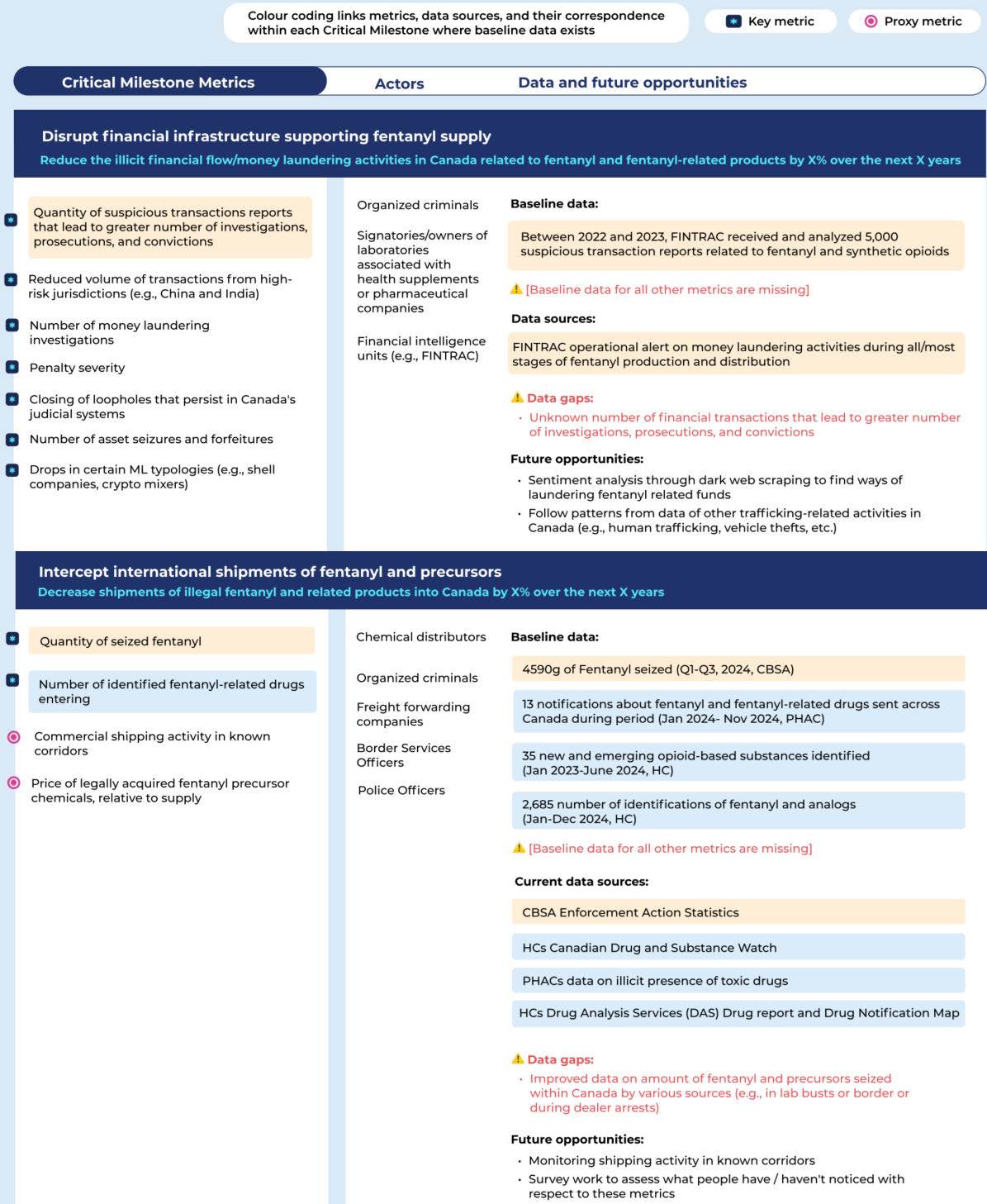
- Canada’s fight against fentanyl – in support of Canada’s Fentanyl Czar, the IIU is working to bridge disparate and disconnected data sources and activities from the RCMP, CBSA, FINTRAC, Health Canada, PHAC and others (including proxy data, where appropriate) to demonstrate systems level progress and return-on-investment against key indicators, and simultaneously build public confidence in federal actions.
- The IIU would be pleased to brief you or provide additional information at your convenience.
[ * ]
Christiane Fox
Deputy Clerk of the Privy Council
and Deputy Minister of Intergovernmental Affairs
Attachments (3)
Tab A: Using sludge audits to drive regulatory efficiency for major projects
Tab B: Rapidly evolving democratic vulnerabilities in a borderless information environment
Tab C: Canada’s Fight Against Fentanyl – Supply Side Journey Map
Using sludge audits to drive regulatory efficiency for major projects
Progress update: June 26, 2025
Project | Sludge audit on impact assessment and most common authorization processes
- IIU is applying our made-in-Canada sludge audit methodology to identify inefficiencies, frictions, undue burdens, and areas of duplication ("sludge") in the federal regulatory review process for major projects.
- The audit will investigate seven federal processes that can be required before projects initiate builds:
- Federal Impact Assessment process (led by IAAC)
- Fisheries Act Authorization (led by DFO)
- Canadian Navigable Waters Act approval (led by TC)
- Metal and Diamond Mining Effluent Regulations regulatory amendment (led by ECCC)
- Species at Risk Act permits (led by ECCC)
- Migratory Birds Regulations permits (led by ECCC)
- Disposal at sea permit (led by ECCC)
- The audit will produce an assessment of the major areas of sludge and actionable recommendations for removing or addressing these areas (including recommending legislative amendments) towards the goal of meeting a two-year decision timeline.
Progress | We have moved quickly with major advances across all steps
| Step description | Status |
|---|---|
| Map all steps of each process from user perspectives to produce detailed journey maps - complete | Developed journey maps for IA, FAA, CNWA, MDMER showing the work of public servants and Proponents |
| Estimate the time each process step takes and assess the degree of extra or unnecessary time and friction per step, by process and across all processes - in progress | Developed proposals for each process, reviewed and approved by public service executives |
| Assess the user experiences per step, by process and across all processes - in progress | Drafted all materials for data collection: draft maps, interview guides, and survey instruments |
| Prioritize the most problematic areas of sludge within each process and for the full set, along with key low-hanging fruit that could be easily addressed - in progress | Interim insights and findings are being reported; final sludge report with full prioritization forthcoming |
| Make evidence-based recommendations on how to improve or overcome inefficiencies and frictions - in progress | Interim insights and findings are being reported; final sludge report with results and recommendations forthcoming |
Progress by the numbers
- 2 databases reviewed and analyzed (Canadian Impact Assessment Registry and CGO Data)
- 4 process maps developed, tested, and finalized
- 65 interviews with public servants completed
- 25 executives
- 40 front-line and regional staff from across 4 departments and entities (IAAC, DFO, TC, ECCC)
- 8 interviews with external experts completed
- 10 interviews with Proponents from variety of sectors and regions completed, including:
- [ * ]
Emerging insights and early recommendations
[ * ]
[ * ]
[ * ]
[ * ]
[ * ]
[ * ]
[ * ]
Looking ahead: next steps and future work on implementation
Upcoming work to complete the sludge audit
June 20 – July 4:
- Finalizing interviews with front-line and regional staff to finalize journey maps
- Finalizing interviews with external experts and Proponents to identify sludge and areas for improvement
- We will have completed close to 100 interviews by the end of June; hoping for fewer to reach thematic saturation
- Key results and insights can be shared
July 7 – August 8:
- Survey goes out to public servants to develop quantitative estimates of sludge
- Survey data reviewed, analyzed
- Sludge assessments made
- Journey maps designed, with summaries from sludge assessments
- Key results can be shared
August 11 – September 19:
- Measures of direct and indirect costs produced
- Final design of all journey maps
- Integrating all findings and results with visualized map into single sludge report with recommendations for change
Annex
Methodology | Our sludge audits follow five major steps
| Step description | Key activities |
|---|---|
| Map all steps of each process from user perspectives to produce detailed user journey maps | Develop journey maps for both the proponents who apply and public servants who administer the processes |
| Estimate the time each process step takes and assess the degree of extra or unnecessary time and friction per step, by process and across all processes | Collect time data through user tests, qualitative studies, key informant interviews, or the collection and analysis of administrative data |
| Assess the user experiences and common confusions per step, by process and across all processes | As in the previous step, collect qualitative and quantitative user experience data from multiple sources |
| Prioritize the most problematic areas of sludge within each process and for the suite, along with key low-hanging fruit that could be easily addressed | Collate and analyze the data to produce a ranking of the most to least problematic sludge |
| Make evidence-based recommendations on how to improve or overcome inefficiencies and frictions | Produce and present a final sludge audit report including an estimate of potential time-savings or user experience improvements associated with each recommended change |
Rapidly evolving democratic vulnerabilities in a borderless information environment
Findings from a longitudinal study on the impacts of the US election period on Canadians’ democratic attitudes and perceptions that could impact the upcoming Canadian election.
June 2025
In this section
- Framework for TIDES data collection: Global democratic trends warrant investigation within the unique Canadian context
- A mixed picture: Strengthened national pride coincides with concerning views on our democratic society
- A captive audience: Where we exist online can be as deterministic as where we live physically
- Exploitable vulnerabilities: Enduring social division, fragmentation of consensus reality and concerns about Canada’s future
Framework for TIDES data collection: Global democratic trends warrant investigation within the unique Canadian context
TIDES longitudinal study timed with the US election
Launched in December 2022, the Trust, Information, and Digital Ecosystems Study (TIDES) is a national, multi-wave study on trust in institutions, stressors to trust (e.g., mis/disinformation, foreign influence), and their impacts in a Canadian context. The total sample (2022-2025) includes ~20,000 participants – the largest Canadian study of its kind.
In the context of the ‘Year of Elections’ – with roughly half of the world’s population voting in national elections in 2024 – TIDES designed Waves 6-8 as a distinct longitudinal study series, examining Canadians’ changing democratic outlook and trust in Canadian elections and institutions, timed with the 2024 US presidential election period.
To test our hypotheses around the impacts of these global electoral events and their spillover effects in a Canadian context, this study was designed to:
- Track changes among the same representative cohort of Canadians over a six-month period, using a longitudinal design.
- Monitor if and how events surrounding the US presidential election (e.g., potential contestation of results or political violence as seen in 2020/21, policy issues) would impact Canadian’s perceptions, values, and confidence in own 2025 election process.
Insights from this series offer operationally-relevant evidence on the 2025 Canadian federal election and other issues.

Text version
- Waves 1-5 (November 2022-August 2024) - Cross-sectional surveys
- Wave 6 (October 2024) - Pre-US election
- Wave 7 (December 2024) - Post-US election
- Wave 8 (February 2025) Post-US inauguration
We have been well-positioned to capture changing public sentiment alongside rapid shifts in the geopolitical landscape
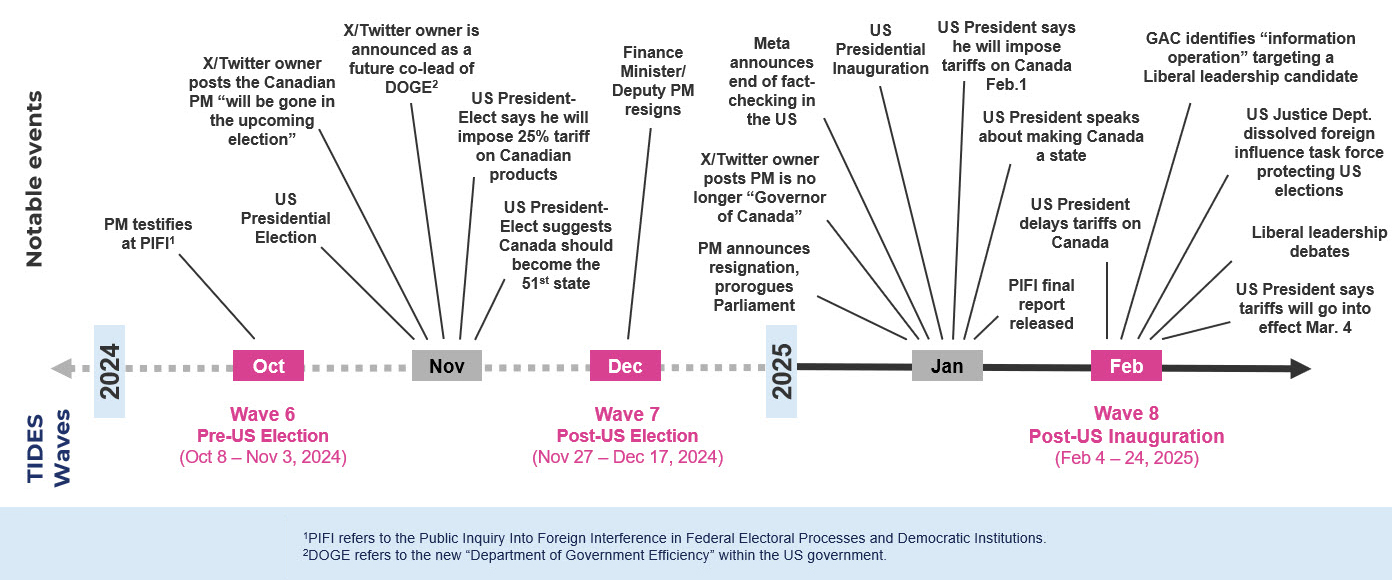
Text version
You can request an alternate format of this graphic. Please submit a request by email to info@pco-bcp.gc.ca and provide us with the title of the graphic and the alternate format you would like.
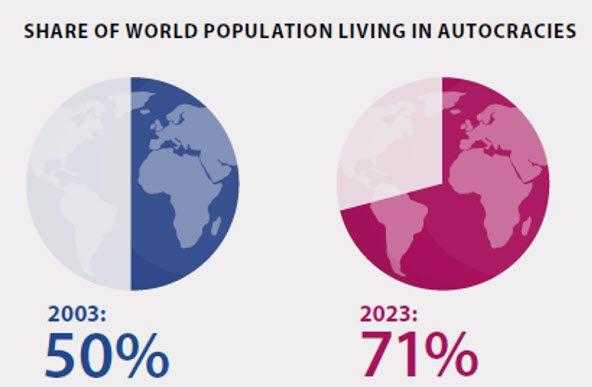
TIDES data on democratic vulnerabilities in Canada can be interpreted against a backdrop of global strain – for institutions and individuals
Complex forces are straining countries that value openness, freedom, and democracy.
- Progress realized during the “third wave” of democracy1 and ensuing post-Cold War period has stalled, calling into question assumptions on inevitable global liberalization.
- Countries that are trending towards measurably less freedom have outnumbered those trending towards greater freedom for 18 straight years2.
Recent events (e.g., 2024 US indictment of Russian state-owned media operatives involved with Canadian and American social media influencers) indicate that hostile actors are likely studying and seizing upon our vulnerabilities in a domestic context aiming to advance their own strategic objectives.
Shifting cultural values often precede democratic decline and the emergence of anti-democratic behaviour3. This is critical to understanding where citizens may be impacted by outside forces.
In an increasingly autocratic world, democratic rights and institutions have been rolled back to 1985 levels.
[ * ]
A mixed picture: Signals of strengthened trust and national pride coincide with concerning views on our democratic society
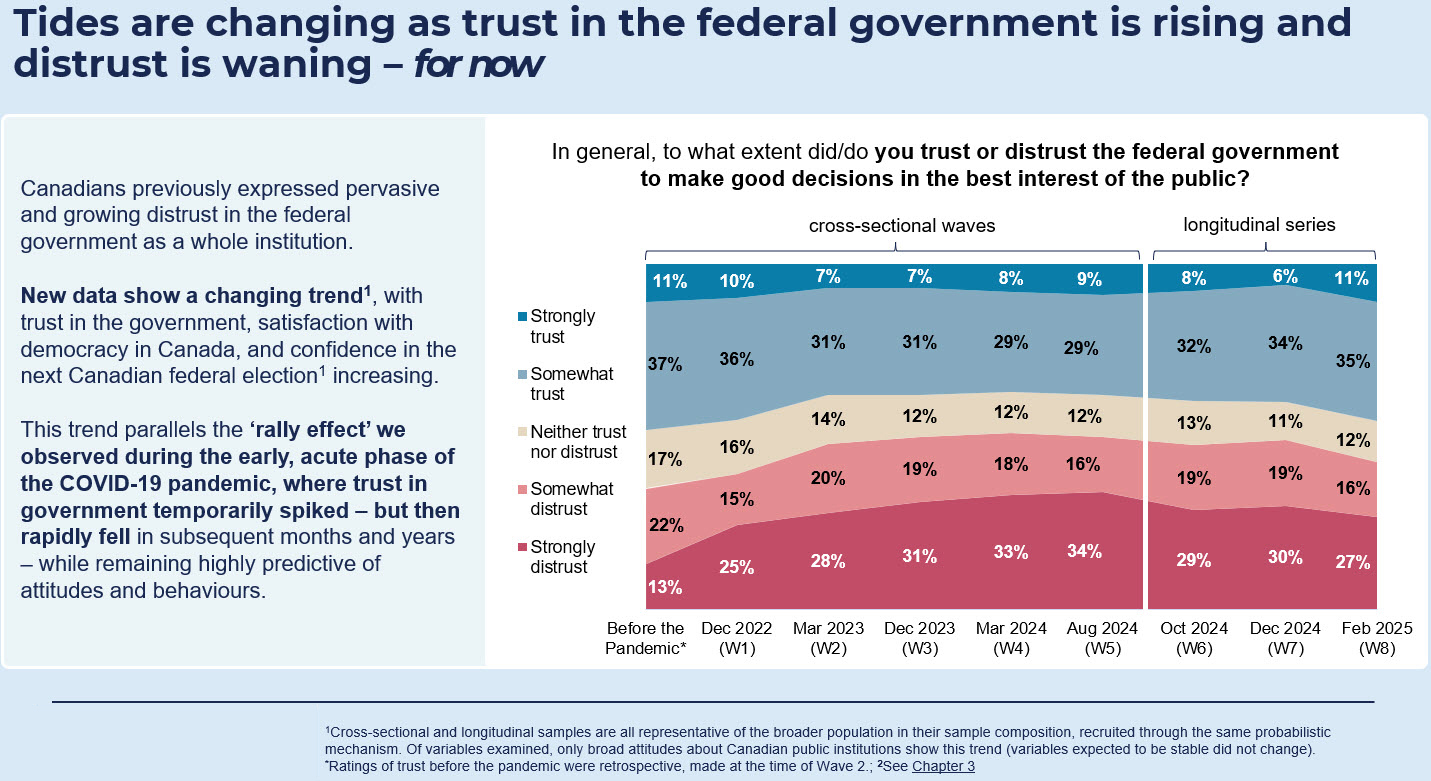
Text version
You can request an alternate format of this graphic. Please submit a request by email to info@pco-bcp.gc.ca and provide us with the title of the graphic and the alternate format you would like.
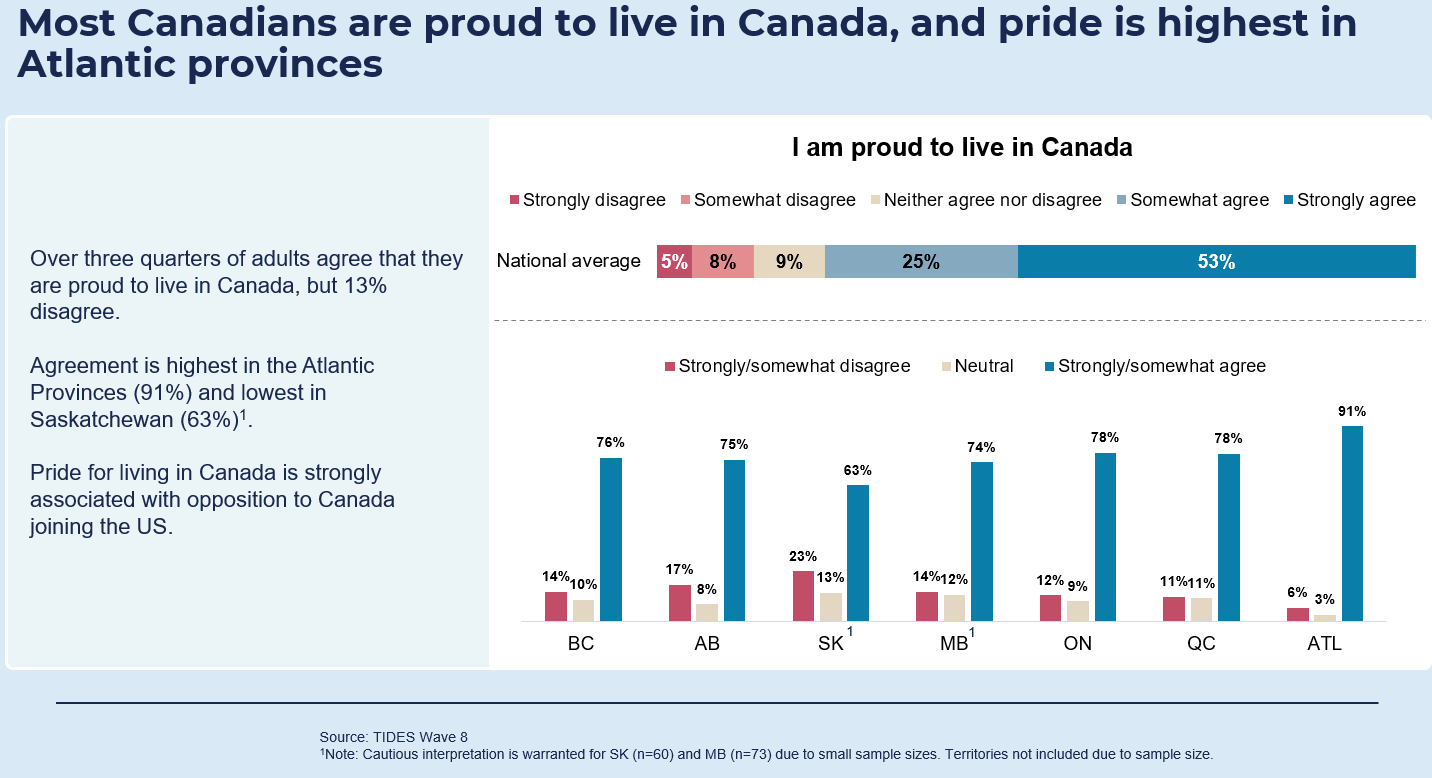
Text version
You can request an alternate format of this graphic. Please submit a request by email to info@pco-bcp.gc.ca and provide us with the title of the graphic and the alternate format you would like.
[ * ]
[ * ]
[ * ]
[ * ]
[ * ]
[ * ]
[ * ]
[ * ]
[ * ]
[ * ]
[ * ]
A captive audience: Where we exist online can be as deterministic as where we live physically
Adults in Canada pay as much attention to US politics as Canadian politics – and continue to do so at increasing rates post-inauguration.
In the last several months, most adults in Canada have consumed news on Canadian or American politics at least daily, with 11% (3.7 million adults) consuming more US than Canadian news.
Both Canadian and US political news consumption increased following the US Presidential inauguration, reflecting an increasingly turbulent news cycle.
Canadians report relying more heavily on Canadian than American mainstream news media. Still, they also report using internationally-owned (especially US) social media platforms4.
In the past month, how often have you consumed news (e.g., read, listened to, watched) related to each of the following?
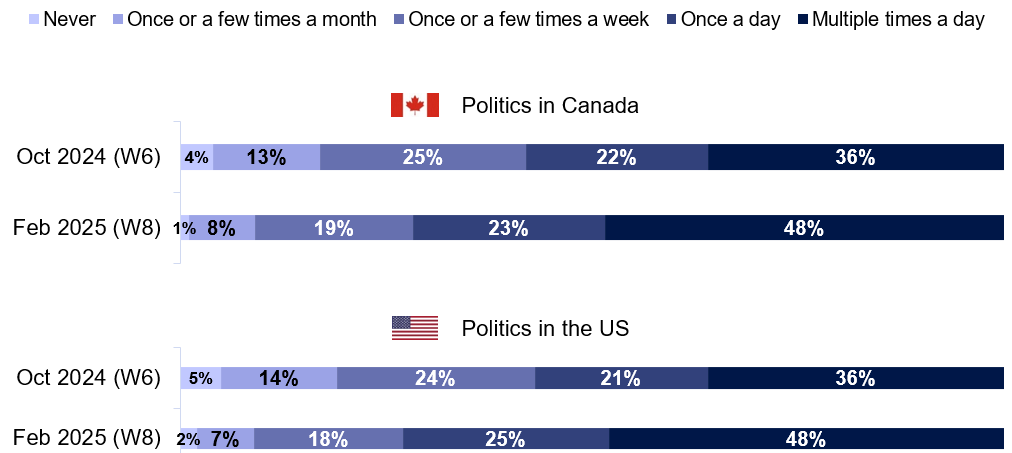
No significant changes between TIDES Waves 6 & 7.
Text version
You can request an alternate format of this graphic. Please submit a request by email to info@pco-bcp.gc.ca and provide us with the title of the graphic and the alternate format you would like.
Our conventional response to all media, namely that it is how they are used that counts, is the numb stance of the technological idiot. For the ‘content’ of a medium is like the juicy piece of meat carried by the burglar to distract the watchdog of the mind.
The medium is the message.
The Medium is the Message
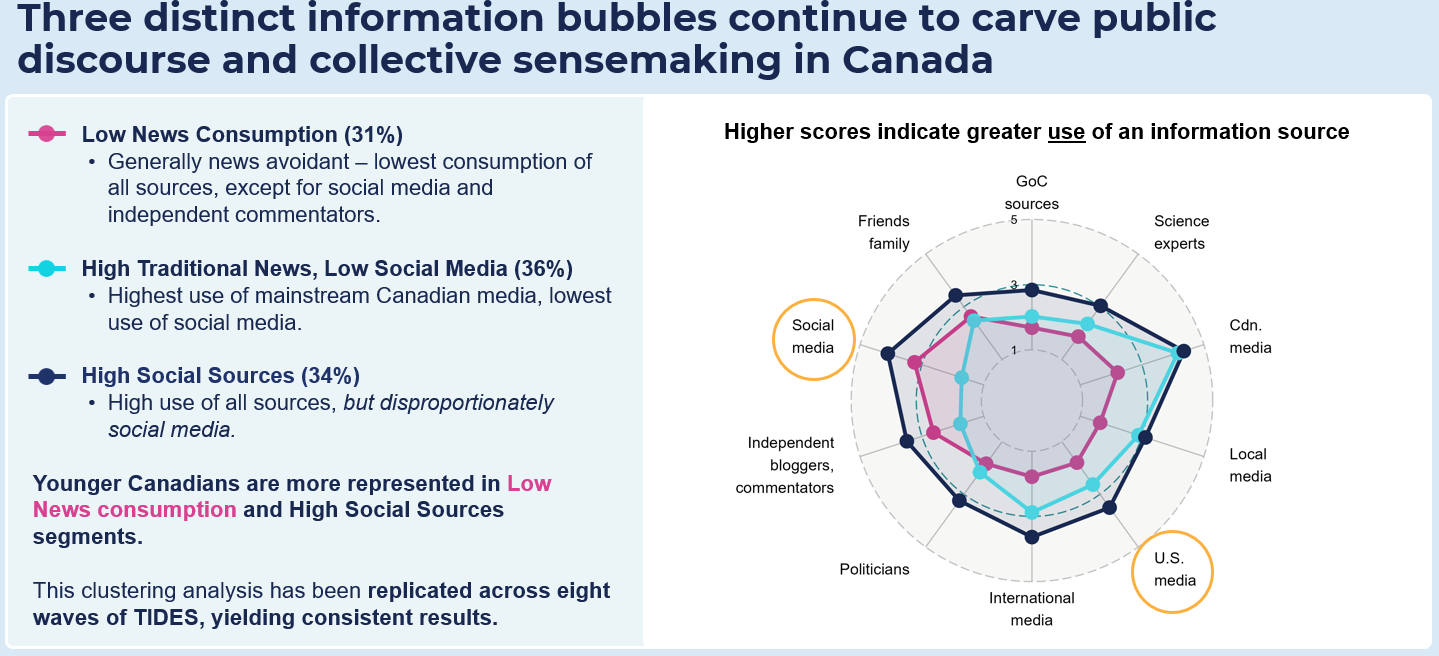
Source: TIDES Wave 8 (February 2025)
These population segments are identified by a K-means clustering algorithm, which seeks to identify subgroups of respondents that have the highest within-cluster similarity and between-cluster difference given a set of inputted variables. The optimal number of clusters (three in this case) is determined in a data-driven way. The results have been replicated across 8 waves of TIDES, yielding highly consistent output.
Text version
You can request an alternate format of this graphic. Please submit a request by email to info@pco-bcp.gc.ca and provide us with the title of the graphic and the alternate format you would like.
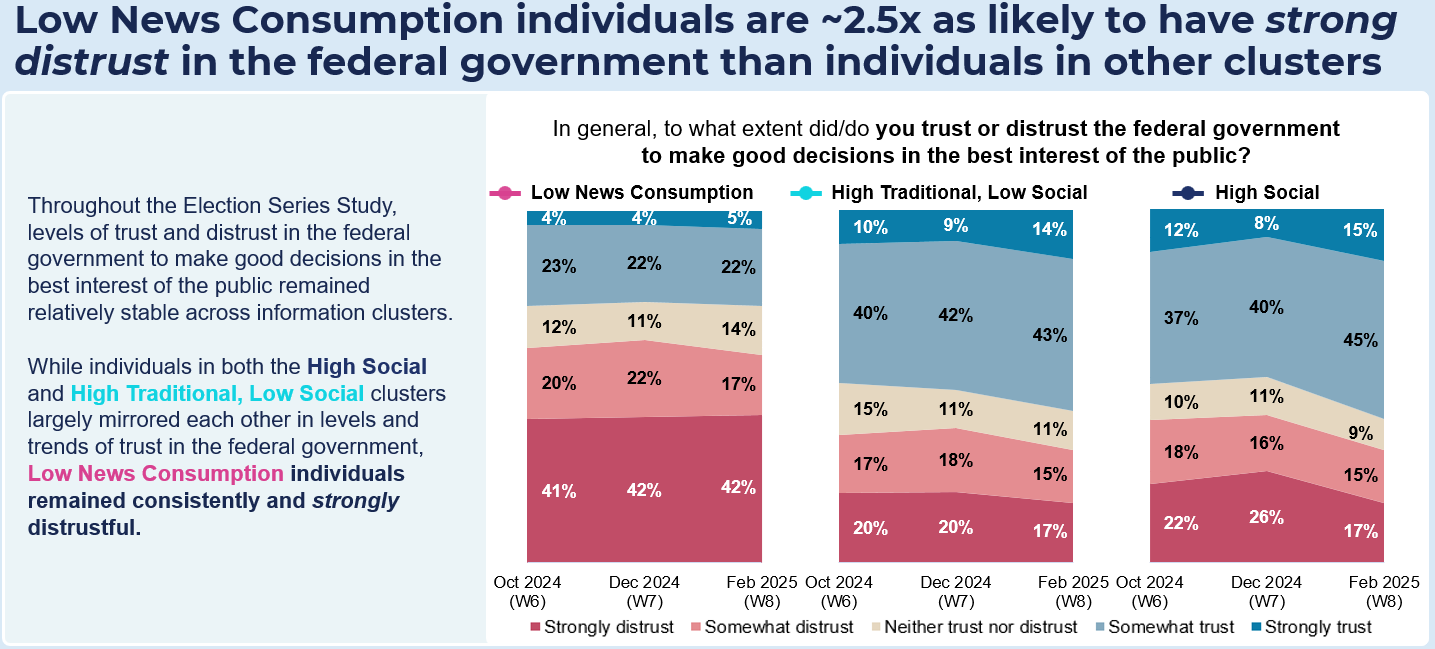
Source: TIDES Waves 6-8
Text version
You can request an alternate format of this graphic. Please submit a request by email to info@pco-bcp.gc.ca and provide us with the title of the graphic and the alternate format you would like.
[ * ]
[ * ]
[ * ]
[ * ]
[ * ]
Exploitable vulnerabilities: Enduring social division, fragmentation of consensus reality and concerns about Canada’s future
[ * ]
[ * ]
[ * ]
[ * ]
[ * ]
[ * ]
Conclusions
[ * ]
Canada’s fight against fentanyl
Impact Canada
June 2025
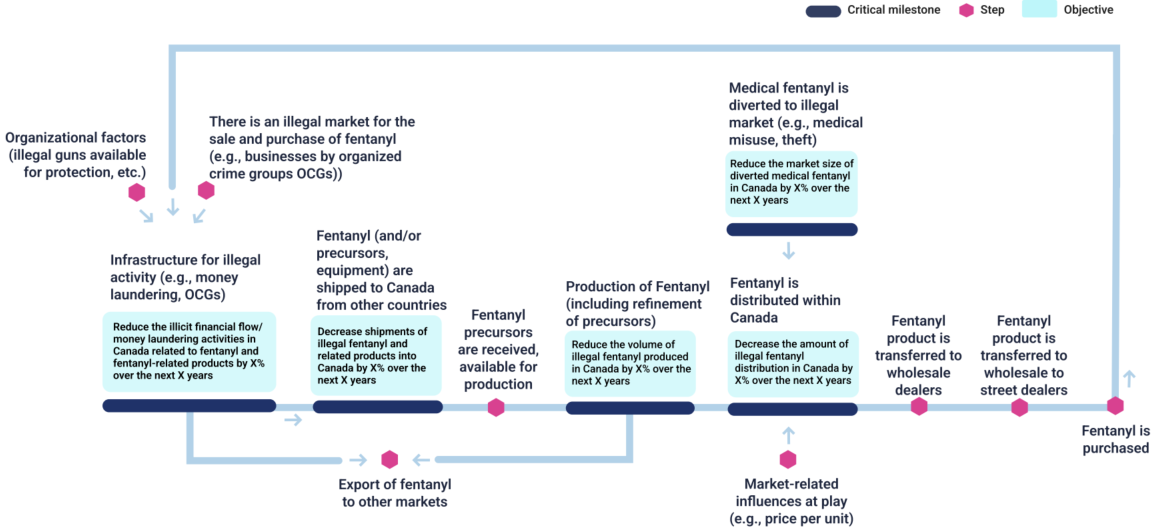
Tracking the supply of fentanyl in the canadian context
Text version
You can request an alternate format of this graphic. Please submit a request by email to info@pco-bcp.gc.ca and provide us with the title of the graphic and the alternate format you would like.
Overall policy objective: Reduction of harms to Canadians caused by fentanyl
Step one: Critical objectives and metrics
[ * ] using currently-available federal data we could create a dashboard that speaks to federal activities and outputs in the five key essential areas:
- Disrupt financial infrastructure supporting fentanyl supply
- Data from suspicious financial transactions (STR) submitted to FINTRAC by reporting organizations; Biweekly data collection with release lag of up to a month; Metric may be limited due to fluctuations in disclosure numbers or transaction values in STRs; Source: FINTRAC
- Intercept international shipments of fentanyl and precursors
- Data on seizures of prohibited substances, firearms and fentanyl, including volume, value, and type of seizures (including drugs); Daily data collection with short lag time (48 hours); Source: CBSA Drugs and Weapons Dashboard
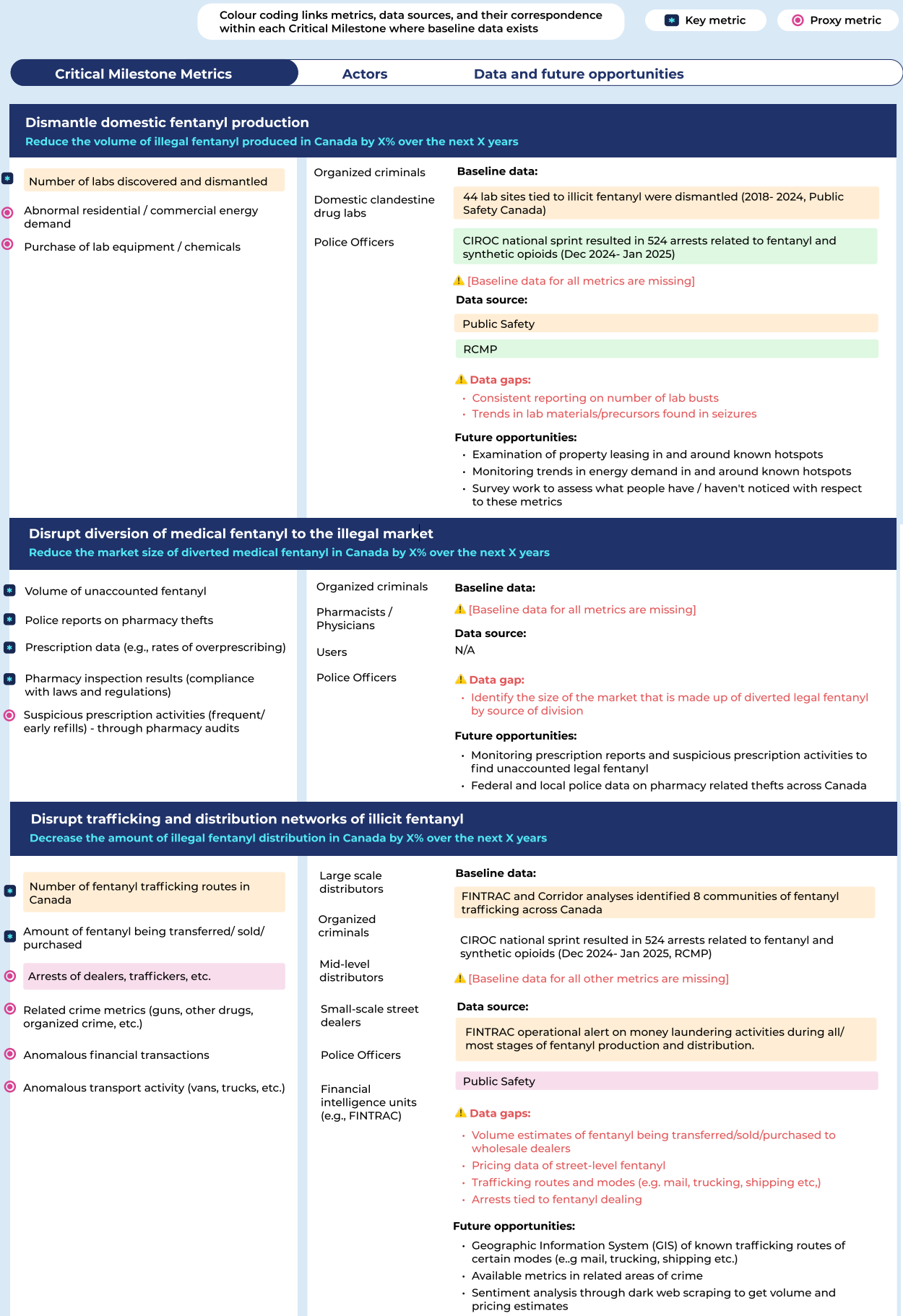
- Dismantle domestic fentanyl production
- Data on fentanyl lab takedowns; Data released ad hoc based on takedown activity, can lag by 1 year or longer subject to sample testing and substance confirmation by Health Canada; Source: RCMP Records Management System and Police Jurisdiction data
- Drug seizures data; Weekly data collection with shorter lag time (3-4 days), but data may be missing details (e.g. source, origin, destination, etc.); Source: RCMP Records Management System
- Disrupt diversion of medical fentanyl to the illegal market
- Data on volume of unaccounted fentanyl, police reports on pharmacy theft, prescription data and pharmacy inspection results: No current federal data source; May be available through negotiation with PTs, at a lag.
- Disrupt trafficking and distribution networks of illicit fentanyl
- Corridor analysis data identifies suspected fentanyl trafficking routes based on STR data; Biweekly data collection with release lag of up to a month; Metric might be limited due to fluctuations in disclosure numbers or transaction values in STRs; Source: FINTRAC
- Data on criminal charges related to fentanyl seizures (e.g., trafficking, possession, import/export, production, etc.); Data collection frequency and release lag information is unknown; No current dashboard and reports are run ad-hoc; Source: RCMP Records Management system
Step two: Bolstering a monitoring dashboard
Over the course of an additional year and pending resources and cooperation from federal partners, we could significantly improve the dashboard by undertaking three concrete areas of work for a robust, accurate picture of Canada's Fight Against Fentanyl:
- Evolve from an output-based story to an impact assessment over three months by grounding available federal data in the context of the size of the illicit fentanyl market. This would include estimating volume by leveraging data from FINTRAC reports to estimate total units of fentanyl in Canada, dark web monitoring to estimate volume and price of fentanyl being sold and leveraging wastewater sample data to estimate the volume.
- Demonstrate return on federal investment over two months by overlaying federal investments onto each critical milestone outlined, with consideration of other relevant factors.
- Fill in data gaps with proxy indicators over seven months for a more accurate picture by: i) surveying Canadians to obtain crowd-sourced proxy measures on the drug trade, and assess public perception, trust and willingness for further effort (four months) and ii) bringing all available data into a single GIS map to help identify hotspots of fentanyl production and trafficking (three months).
End goal: Communicate federal return on investment to the canadian public and bilateral partners
As an illustrative example, the activities above could evolve the strength of a given indicator on the dashboard as follows:
- [ * ] — Kgs of fentanyl seized
- [ * ] — Kgs seized, leading to an estimated reduction in market size by x%, with modest confidence in estimate
- [ * ] — $1 invested in federal activity leads to X Kgs seized, or an estimated reduction in market size of y%, with modest confidence in estimate
- [ * ] — $1 invested in federal activity leads to X Kgs seized, or an estimated reduction in market size of y%, with high confidence and regional nuance
Text version
You can request an alternate format of this graphic. Please submit a request by email to info@pco-bcp.gc.ca and provide us with the title of the graphic and the alternate format you would like.
Text version
You can request an alternate format of this graphic. Please submit a request by email to info@pco-bcp.gc.ca and provide us with the title of the graphic and the alternate format you would like.
Office of the Deputy Secretary to the Cabinet (Governance)
Email from John Hannaford to Deputies on PM including
From: Hannaford, John <John.Hannaford@pco-bcp.gc.ca>
Sent: Saturday, March 22, 2025 10:02 AM
To: 'jeff.labonte@nrcan-rncan.gc.ca' <jeff.labonte@nrcan-rncan.gc.ca>; 'lauralee.langley@acoa-apeca.gc.ca' <lauralee.langley@acoa-apeca.gc.ca>; 'paul.ledwell@veterans.gc.ca' <paul.ledwell@veterans.gc.ca>; 'kaili.levesque@dfo-mpo.gc.ca' <kaili.levesque@dfo-mpo.gc.ca>; 'andre.loranger@statcan.gc.ca' <andre.loranger@statcan.gc.ca>; 'paul.mackinnon@inspection.gc.ca' <paul.mackinnon@inspection.gc.ca>; Christopher.MacLennan@international.gc.ca; 'bill.matthews@tbs-sct.gc.ca' <bill.matthews@tbs-sct.gc.ca>; 'sandra.mccardell@international.gc.ca' <sandra.mccardell@international.gc.ca>; McClymont, Donnalyn <Donnalyn.McClymont@pco-bcp.gc.ca>; 'suzy.mcdonald@fin.gc.ca' <suzy.mcdonald@fin.gc.ca>; 'christine.mcdowell@veterans.gc.ca' <christine.mcdowell@veterans.gc.ca>; 'frances.mcrae@fegc-wage.gc.ca' <frances.mcrae@fegc-wage.gc.ca>; 'daniel.mills@ps-sp.gc.ca' <daniel.mills@ps-sp.gc.ca>; 'michael.mills@tpsgc-pwgsc.gc.ca' <michael.mills@tpsgc-pwgsc.gc.ca>; 'john.moffet@ec.gc.ca' <john.moffet@ec.gc.ca>; 'isabelle.mondou@pch.gc.ca' <isabelle.mondou@pch.gc.ca>; 'david.morrison@international.gc.ca' <david.morrison@international.gc.ca>; Namiesniowski, Kristina (Ext) <kristina.namiesniowski@hrsdc-rhdcc.gc.ca>; 'erin.ogorman@cbsa-asfc.gc.ca' <erin.ogorman@cbsa-asfc.gc.ca>; 'jimi.onalik@cannor.gc.ca' <jimi.onalik@cannor.gc.ca>; 'greg.orencsak@hc-sc.gc.ca' <greg.orencsak@hc-sc.gc.ca>; 'john.ostrander@servicecanada.gc.ca' <john.ostrander@servicecanada.gc.ca>; 'sony.perron@ised-isde.gc.ca' <sony.perron@ised-isde.gc.ca>; 'sony.perron@dec-ced.gc.ca' <sony.perron@dec-ced.gc.ca>; 'arianne.reza@tpsgc-pwgsc.gc.ca' <arianne.reza@tpsgc-pwgsc.gc.ca>; 'dominic.rochon@tbs-sct.gc.ca' <dominic.rochon@tbs-sct.gc.ca>; 'rogersd@smtp.gc.ca' <rogersd@smtp.gc.ca>; Taki Sarantakis (taki.sarantakis@csps-efpc.gc.ca) <taki.sarantakis@csps-efpc.gc.ca>; Schaan, Mark <Mark.Schaan@pco-bcp.gc.ca>; 'naina.sloan@pacifican.gc.ca' <naina.sloan@pacifican.gc.ca>; 'rob.stewart@international.gc.ca' <rob.stewart@international.gc.ca>; Termorshuizen, Cindy (GAC/AMC) <Cindy.termorshuizen@international.gc.ca>; 'arun.thangaraj@tc.gc.ca' <arun.thangaraj@tc.gc.ca>; 'paul.thompson@hrsdc-rhdcc.gc.ca' <paul.thompson@hrsdc-rhdcc.gc.ca>; 'raj.thuppal@ssc-spc.gc.ca' <raj.thuppal@ssc-spc.gc.ca>; 'jf.tremblay@ec.gc.ca' <jf.tremblay@ec.gc.ca>; 'francis.trudel@tbs-sct.gc.ca' <francis.trudel@tbs-sct.gc.ca>; 'michael.vandergrift@nrcan-rncan.gc.ca' <michael.vandergrift@nrcan-rncan.gc.ca>; Williams, Tushara <Tushara.Williams@pco-bcp.gc.ca>; 'gina.wilson@sac-isc.gc.ca' <gina.wilson@sac-isc.gc.ca>; 'rob.wright@rcaanc-cirnac.gc.ca' <rob.wright@rcaanc-cirnac.gc.ca>; 'caroline.xavier@cse-cst.gc.ca' <caroline.xavier@cse-cst.gc.ca>; 'STEFANIE.BECK@forces.gc.ca' <Stefanie.Beck@forces.gc.ca>; 'alex.benay@tpsgc-pwgsc.gc.ca' <Alex.benay@tpsgc-pwgsc.gc.ca>; 'francis.bilodeau@ised-isde.gc.ca' <francis.bilodeau@ised-isde.gc.ca>; 'dominique.blanchard@tbs-sct.gc.ca' <dominique.blanchard@tbs-sct.gc.ca>; 'jacqueline.bogden@tbs-sct.gc.ca' <jacqueline.bogden@tbs-sct.gc.ca>; 'annie.boudreau@tbs-sct.gc.ca' <annie.boudreau@tbs-sct.gc.ca>; Brosseau, Kevin <Kevin.Brosseau@pco-bcp.gc.ca>; 'andrew.brown@pch.gc.ca' <andrew.brown@pch.gc.ca>; 'eric.costen@hc-sc.gc.ca' <eric.costen@hc-sc.gc.ca>; 'shalene.curtis-micallef@justice.gc.ca' <shalene.curtis-micallef@justice.gc.ca>; de Boer, Stephen <Stephen.deBoer@pco-bcp.gc.ca>; Dickson, Samantha Maislin (JUS/JUS) <SamanthaMaislin.Dickson@justice.gc.ca>; 'brigitte.diogo@tc.gc.ca' <brigitte.diogo@tc.gc.ca>; Drouin, Nathalie G <e.g.Drouin@pco-bcp.gc.ca">Nathalie.g.Drouin@pco-bcp.gc.ca>; 'chris.forbes@fin.gc.ca' <chris.forbes@fin.gc.ca>; 'jean-guy.forgeron@inspection.gc.ca' <jean-guy.forgeron@inspection.gc.ca>; 'jean-francois.fortin@cra-arc.gc.ca' <jean-francois.fortin@cra-arc.gc.ca>; Fox, Christiane <Christiane.Fox@pco-bcp.gc.ca>; Gallivan, Ted <Ted.Gallivan@pco-bcp.gc.ca>; 'nancy.gardiner@feddevontario.gc.ca' <nancy.gardiner@feddevontario.gc.ca>; 'tricia.geddes@ps-sp.gc.ca' <tricia.geddes@ps-sp.gc.ca>; 'annette.gibbons@dfo-mpo.gc.ca' <annette.gibbons@dfo-mpo.gc.ca>; 'valerie.gideon@rcaanc-cirnac.gc.ca' <valerie.gideon@rcaanc-cirnac.gc.ca>; 'valerie.gideon@fednor.gc.ca' <valerie.gideon@fednor.gc.ca>; 'diane.gray@prairiescan.gc.ca' <diane.gray@prairiescan.gc.ca>; 'cliff.groen@servicecanada.gc.ca' <cliff.groen@servicecanada.gc.ca>; 'paul.halucha@infc.gc.ca' <paul.halucha@infc.gc.ca>; 'bob.hamilton@cra-arc.gc.ca' <bob.hamilton@cra-arc.gc.ca>; 'nancy.hamzawi@phac-aspc.gc.ca' <nancy.hamzawi@phac-aspc.gc.ca>; Hannaford, John <John.Hannaford@pco-bcp.gc.ca>; 'lawrence.hanson@agr.gc.ca' <lawrence.hanson@agr.gc.ca>; 'scott.harris@cic.gc.ca' <scott.harris@cic.gc.ca>; Hassan, Sandra (Ext) <sandra.hassan@labour-travail.gc.ca>; 'jeffery.hutchinson@ps-sp.gc.ca' <jeffery.hutchinson@ps-sp.gc.ca>; 'isabelle.jacques@justice.gc.ca' <isabelle.jacques@justice.gc.ca>; 'heather.jeffrey@phac-aspc.gc.ca' <heather.jeffrey@phac-aspc.gc.ca>; 'philip.jennings@ised-isde.gc.ca' <philip.jennings@ised-isde.gc.ca>; Johnson, Mollie <Mollie.Johnson@pco-bcp.gc.ca>; 'scott.jones@ssc-spc.gc.ca' <scott.jones@ssc-spc.gc.ca>; 'anne.kelly@csc-scc.gc.ca' <anne.kelly@csc-scc.gc.ca>; Khanna, Mala <Mala.Khanna@pco-bcp.gc.ca>; 'natasha.kim@forces.gc.ca' <natasha.kim@forces.gc.ca>; 'harpreet.kochhar@cic.gc.ca' <harpreet.kochhar@cic.gc.ca>; 'michelle.kovacevic@sac-isc.gc.ca' <michelle.kovacevic@sac-isc.gc.ca>
Subject: Prime Minister’s conflict of interest screen/Filtre anti-conflits d’intérêts du Premier Ministre
Dear Colleagues,
This is to advise you that a conflict of interest screen is in place for the Prime Minister as it relates to Brookfield Asset Management, Brookfield Corporation, and Stripe, Inc. The screen is labelled as draft because the Office of the Conflict of Interest and Ethics Commissioner is still in the process of reviewing the file and it is possible that there will be additions to it. I will send any further updates to the screen as they are available.
Conflict of interest screens are precautionary and preventive compliance measures to assist public office holders in avoiding conflicts of interest.
The Prime Minister's screen is administered by the Prime Minister’s Chief of Staff, Marco Mendocino, and by me. As administrators, our job is to ensure that the Prime Minister is not made aware of and does not participate in any official matters or decision-making processes involving the Companies’ interests.
All ministers are also being informed by the Prime Minister’s Office of this screen.
Should you have any questions about the screen, please contact Mala Khanna, Deputy Secretary of Governance at the Privy Council Office.
John Hannaford
Clerk of the Privy Council and Secretary to the Cabinet |
Greffier du Conseil privé et secrétaire du Cabinet
(He, Him, Il)
Draft assessment tool on the application of the Prime Minister’s conflict of interest screen
Guideline on screen
The purpose of this memo is to provide guidelines for administrators of the Screen that will be necessary to ensure that the Prime Minister is not made aware of any decisions and discussions relating to the private interests of Brookfield Asset Management, Brookfield Corporation and Stripe, Inc. (the "Companies").
The Prime Minister has divested himself of his interest in the Companies as required by the Conflict of Interest Act and has further agreed to a compliance measure in the form of a conflict of interest screen, a copy of which is attached. Accordingly, he has adopted this screen as a precautionary and preventive measure to avoid improperly furthering the private interests of the Companies.
Generally, the screen operates to prevent the Prime Minister from exercising an official power, duty or function that provides an opportunity to improperly further the Companies' private interests.
In other words, the screen is activated the moment it becomes more reasonable than not that the Companies' interests could be furthered by a decision or discussion involving the Prime Minister.
Two exceptions are provided under the Conflict of Interest Act. The Prime Minister may participate in:
- decisions on matters of general application, and
- those decisions that may affect the Companies' interests as a member of a broad class of persons (unless those interests are disproportionate to the other members of the class).
Consideration will be given to the two decision categories as follows:
- First, a private interest does not include an interest in a decision or matter that is of general application. Courts have held that decisions that apply universally to everyone falling within the Prime Minister's jurisdiction are of general application. Accordingly, a decision or a matter is of general application if it applies to an undetermined number of persons without regard to a class or identifiable group.
- Second, a private interest does not include an interest in a decision or matter that affects a public office holder or the Companies as one of a broad class of persons. The moment a decision or matter affects a specific group or class that can be identified, the decision is no longer of general application. In such cases, one must have regard to whether such a matter or decision affects the interests of the person as one of a broad class.
A broad class of persons would include a large number of persons that may have all sorts of different characteristics or attributes but share at least one important attribute. The matter or decision must affect the interests of all members of the broad class in the same manner. This exclusion would also apply to the interests held by friends and relatives.
Public office holders cannot avail themselves of this exclusion if they, their friends or their relatives have a disproportionate interest in the matter or decision when compared to others in the group.
This means that if a decision or matter is narrowly focused and affects the interests of the Companies as one of a small group, or if a Company has a dominant interest in the matter, it would not be considered a matter of general application, nor would the interest be seen as one of a broad class of persons. In this scenario, consideration may also be had to the remoteness of the Prime Minister's decision-making with respect to the opportunity to improperly further the Companies' private interests.
A decision or matter will likely be too remote where there is an absence of a direct link between the exercise of an official power, duty or function and the opportunity to further a private interest. However, the screen will be activated if the Prime Minister knows or reasonably should know, at the time a decision is made, that this will ultimately create an opportunity to further the Companies' private interests. Remoteness must be evaluated according to the facts of each case. You are encouraged to consult the Commissioner when in doubt.
If a matter that would normally be caught by this screen comes to the attention of the Prime Minister, he must recuse himself from all discussions, decisions, debates or votes on that matter, as required by section 21 of the Conflict of Interest Act. For greater certainty, a recusal means more than abstaining from a discussion or decision; the Prime Minister must physically or virtually leave the room where the discussion or decision is taking place. The Prime Minister must advise the Commissioner as soon as possible following the recusal. The Prime Minister shall, within 60 days after the day on which the recusal took place, make a public declaration of the recusal that provides sufficient detail to identify the conflict of interest that was avoided. No publication of the declaration shall be made if the very fact of the recusal could reveal, directly or indirectly, a confidence of the King's Privy Council.
Public-facing screen
Conflict of interest screens are preventive compliance measures, agreed upon pursuant to section 29 of the Conflict of Interest Act (Act) by a public office holder and the Conflict of Interest and Ethics Commissioner, to assist public office holders in avoiding conflicts of interest. Screens also seek to minimize the possibility of conflicts arising between the public duties of the public office holder and their private interests orthose of their relatives and friends.
The Conflict of Interest and Ethics Commissioner and I have agreed that a conflict of interest screen is an appropriate compliance measure, aimed at preventing any opportunity to improperly further the private interests of Brookfield Asset Management, Brookfield Corporation, and Stripe, Inc. ("the Companies") or to give preferential treatment to any of them, while I exercise my official powers, duties and functions as a reporting public office holder.
This screen is administered by my Chief of Staff and by the Clerk of the Privy Council to ensure that I am neither made aware of nor participate in any official matters or decision-making processes involving the Companies' interests. I may, however, participate in a decision or matter that is of general application and those that may affect the Companies' interests as a member of a broad class of persons unless those interests are disproportionate to the other members of the class.
All powers, duties and functions on matters that form part of this screen will be exercised by the appropriate minister, as selected by the screen administrators.
All ministers, all members of my ministerial staff and other necessary ministerial staff and public servants have been informed in writing about this conflict of interest screen.
I have undertaken to inform the Conflict of Interest and Ethics Commissioner at the earliest opportunity of all changes of which I become aware that relate to or should form part of the matters caught by this screen.
In the event that I am made aware of a matter forming part of this screen or any such matter comes before me, I am required under section 21 of the Act to recuse myself from that matter by removing myself from the room where the discussion or decision is taking place. I must so inform the Conflict of Interest and Ethics Commissioner and, where appropriate, make a public declaration of recusal pursuant to subsection 25(1) of the Act.
Draft version of the Assessment Tool on the Application of the Prime Minister’s Conflict of Interest Screen as approved by PM’s counsel and the Conflict of Interest Commissioner
June 25, 2025
Purpose
The Prime Minister, in collaboration with the Conflict of Interest and Ethics Commissioner (“Commissioner”), is responsible for approving and updating the Prime Minister’s Conflict of Interest Screen.
The screen is administered by the Prime Minister’s Chief of Staff and by the Clerk of the Privy Council. They ensure that the Prime Minister is not made aware and does not participate in a decision or matter to which the screen applies. In such instances where the screen does not capture a matter in which he has a private interest, the Prime Minister must recuse himself. Recusal under the Conflict of Interest Act requires the Prime Minister to remove himself physically or virtually from the meeting or discussion where the matter is being decided, lest his mere presence be seen to influence the decision of other public office holders.
This assessment tool is intended for use by the Privy Council Office, and relevant departments and agencies, to support the Clerk of the Privy Council in applying the screen within the public service.
The assessment tool contains the following information:
- Part A: provides a list of matters that must routinely be included in the screen.
- Part B: includes a list of matters that must be assessed further to determine whether they should be included in the screen, including guidance on how to conduct the assessment.
Part A: Matters that must be included in the screen
Any direct engagement by the Brookfield Corporation, Brookfield Asset Management, or Stripe Inc. (collectively, “the Companies”), or any person or entity acting on their behalf, with the Government of Canada (e.g., contracting for goods and services, applications for funding) will routinely and automatically be included in the screen and not discussed with or provided to the public office holder. The screen will also apply to: (i) meetings with known subsidiaries of the Companies; (ii) decisions regarding a financial grant or contribution to known subsidiaries of the Companies; and (iii) contracts with known subsidiaries of the Companies.
Brookfield Corporation
Brookfield is a leading global investment firm focused on asset management, and wealth solutions. Brookfield Corporation is a company focused on investments in three core businesses: alternative asset management, wealth solutions and diverse range of operating businesses, including renewable power, infrastructure, private equity, real estate and credit. Brookfield Asset Management (BAM) manages private and public funds that buy, own and operate long-life assets and businesses and credit securities.
Stripe Inc.
Stripe Inc. is a technology company specializing in online payment processing for internet businesses. Stripe provides infrastructure for online transactions, enabling businesses to accept payments and manage their operations online.
Part B: Matters requiring assessment
The following matters may engage the private interests of the Companies and must be assessed on a case-by-case basis if they are meant to be brought to the attention of the Prime Minister, to confirm whether they are subject to the screen.
Decisions related to these issues taken solely under the authority of a given Minister and not discussed at Cabinet would not be subject to this assessment. Such files must not be brought to the attention of the Prime Minister.
The categories include:
In respect of Brookfield: Matters directly impacting on real estate or infrastructure projects owned by Brookfield, or where a Brookfield business (i.e., Brookfield Corporation and BAM) is a proposed contractual counterparty to the Government of Canada or recipient of a grant or contribution from the government of Canada.
In respect of Stripe: Changes in policy directly impacting on the payments sector in a manner that will disproportionately impact Stripe.
A note on tax policy: changes to tax policy are generally understood to be of a general application and/or benefitting a class of persons. Tax changes are not expected to the subject to the screen.
Process for assessment
For files in Part A – automatic screen
- Responsible Deputy Secretary at PCO applies screen at time of file initiation, taking the following steps:
- Alert the Deputy Secretary Governance for tracking and to flag to the screen administrators and the Commissioner. Administrators must confirm screen should apply.
- Once confirmed, mark all work product related to the file with appropriate designation to identify the screen.
- Once confirmed, alert the Deputy Secretary Operations to ensure any Cabinet documents are marked accordingly.
- Work with screen administrators through Deputy Secretary Governance to provide the matter to the alternate decision-maker, who would receive advice from the Privy Council Office in the same form as would be prepared for the Prime Minister. The Prime Minister’s Office (PMO) may also seek to offer political views and support tothe Minister’s Office. (see “Alternate Decision-Maker” section below)
For files in Part B – assessment required
- Responsible Deputy Secretary at PCO to assess at the time of file initiation if the matter falls into one of the broad categories of matters requiring assessment, as laid out in Part B of this document.
- If the file falls into one of the identified categories, the Deputy Secretary must consider, with departmental experts and legal advice as needed, whether:
- The matter is one of general application (i.e., applies universally).
- The matter applies to a class of persons (i.e., applies to an identifiable group of persons with a common important attribute and the decision impacts members of the group equally). If the companies have a disproportionate interest in the matter than others in the group, this exception does not apply. The remoteness of the Prime Minister’s decision-making with respect to the opportunity to improperly further the Companies’ private interests must be part of this assessment.
- If the answer to either Questions 2a and 2b is yes, the Deputy Secretary should alert Deputy Secretary Governance, who will note the recommendation that the screen does not apply and advise the screen administrators for validation. All such flags are to be recorded. If the screen administrators agree, the screen is not applied and the file proceeds as normal.
- If the answer to both Questions 2a and 2b is no, the Deputy Secretary must then articulate, with departmental and legal advice as needed, how the action would advance the specific interests of Brookfield and why the exceptions are not met (e.g., general application and broad class of persons).
- The Deputy Secretary must present the recommendation to apply the screen and rationale to the Deputy Secretary Governance, for discussion with the screen administrators for final validation. The screen administrators may consult the Commissioner, taking care not to reveal Cabinet Confidences. If the screen administrators and the Commissioner agree, the screen must be applied.
- The Deputy Secretary must mark all work product related to the file with appropriate designation to identify the screen and must alert the Deputy Secretary Operations to ensure any Cabinet documents are marked accordingly.
- The Deputy Secretary must work with the screen administrators through the Deputy Secretary Governance to notify the alternate approver that they will need to act on the Prime Minister’s behalf.
- This tool will be reviewed annually to determine whether the screen is still required. The Prime Minister does not have a private interest in Brookfield and Stripe today, and with the passage of time this screen may no longer be required.
Determining alternate approval
Where the screen is applied to a matter requiring the Prime Minister’s sole approval, the matter will be referred to another minister using the Acting Ministers’ Minute.
Where the screen is applied to a matter for discussion/decision by Cabinet or Cabinet committees chaired by the Prime Minister, the Vice-Chair will assume the role of Chair for any matters covered by the screen. In the event of the vice-chair’s absence, the chair role is determined using the Acting Ministers’ Minute. Recusal under the Conflict of Interest Act requires the Prime Minister to remove himself physically or virtually from the meeting or discussion where the matter is being decided, lest his mere presence be seen to influence the decision of other public office holders.
Maintaining the screen
The public office holder, in coordination with the Commissioner, is responsible for maintaining the screen and notifying the screen administrators of any material changes, so that they can update their respective assessment tools.
This assessment tool will be updated as required (and reviewed for accuracy annually), to account for any material changes to the screen. The Privy Council Office will disseminate any updates to Deputy Ministers and those involved in its application.
Conflict of Interest Assessment Tool Checklist
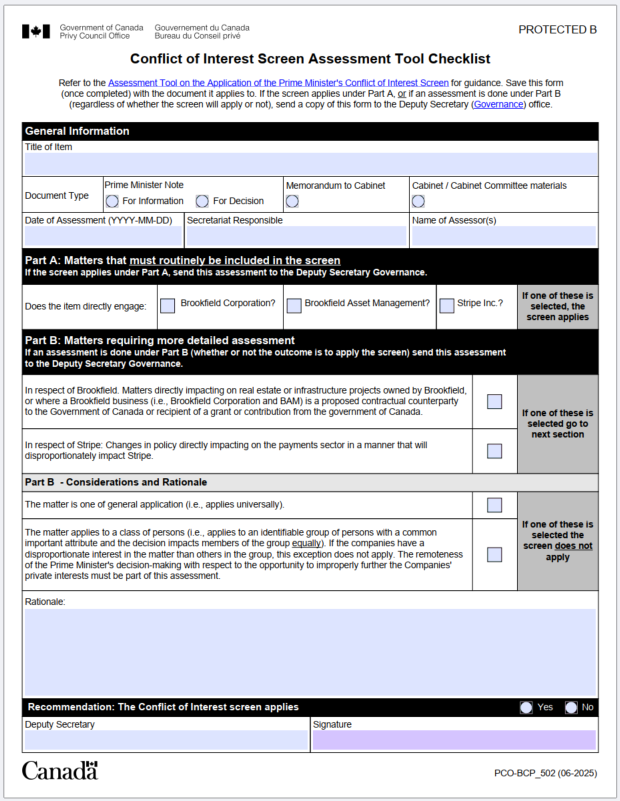
Text version
You can request an alternate format of this graphic. Please submit a request by email to info@pco-bcp.gc.ca and provide us with the title of the graphic and the alternate format you would like.
[ * ]
[ * ]
Ministerial Services and Corporate Affairs
Briefing for the Clerk of the Privy Council
July 2025
Background
Ministerial Services and Corporate Affairs (often called Corporate Services Branch) provides all corporate services to PCO, the Prime Minister’s Office (PMO) and four additional PCO Ministers’ offices. In addition, it provides services to several arms-length bodies including commissions of inquiry, the National Security Intelligence Review Agency, the National Security and Intelligence Committee of Parliamentarians, the Office of the Intelligence Commissioner and the Leaders’ Debates Commission.
CSB provides a mix of traditional corporate services, unique services bespoke to PCO, and a suite of services for other departments and senior officials:
- Traditional corporate services include Finance, Human Resources (HR), Information Technology (IT), IT Security, Accommodations, Access to Information and Privacy (ATIP), and Information Management (IM).
- Unique services include PM tour and audio/video support, support to the PM residence, PM correspondence, Cabinet logistical support, PM switchboard, and support to the PM and family.
- Additional services offered to other departments and senior officials include secure communications, concierge services, Ministers’ residence support, Ministers’ Regional Offices, and ministerial security services (working hand in hand with NSIA branch).
The following content focuses on the unique or non-traditional services provided by the branch.
MSCA branch is lead by Matthew Shea, who serves as the Assistant Secretary to the Cabinet, Ministerial and Corporate Affairs.
Ministerial Services and Corporate Affairs – at a glance
The branch has a number of unique functions, including:
- PM residence and family support
- PM Tour and AV support
- PM Switchboard
- PM correspondence services
- Secure communications for senior leadership
- Cabinet support and logistics
- Liaison and VIP support for PCO Ministers and their offices
- Regional support for all Ministers
- Ministerial security and the Crisis Management Cell
- Continuity of Operations planning
CSB Directorates
- Corporate Secretariat
- Data and Information Services
- Finance and Corporate Planning
- Human Resources
- Information Technology
- Logistics and Special Services
- 24/7 VIP Liaison, Business Continuity and Regional Services
Organizations supported by MSCA
MSCA now supports a large number of stakeholders, as shown in the following.
Ministers’ Offices
- PMO
- Leader of the Government in the HoC
- King’s Privy Council Canada-U.S. Trade, Intergovernmental Affairs and One Canadian Economy
- Internal Trade
- Quebec Lieutenant
External organizations
- National Security and Intelligence Committee of Parliamentarians (NSICOP)
- National Security and Intelligence Review Agency (NSIRA)
- Office of the Intelligence Commissioner
- Leaders’ Debates Commission
Privy Council Office
- Clerk and Deputy Clerk’s Office
- Clean Growth
- Fentanyl
- Foreign and Defence Policy
- Governance
- Impact and Innovation
- Intergovernmental Affairs
- National Security and Intelligence Advisor
- Operations
- Plans and Consultations
- Senior Personnel and Public Service Renewal
Government-wide services
- Lead Concierge Function
- Secure Communications for National Leadership
- Ministers’ Regional Offices (MROs) and Residence Support for Ministers
- Ministerial Security (in close coordination with the National Intelligence and Security Advisor)
Support to external organizations
MSCA provides a range of corporate services on a cost recovery basis (IT, finance, HR, procurement and contracting, inventory management, IM, graphics/printing, mail/messenger services, and accommodations) to four independent organizations through memorandums of agreement.
National Security and Intelligence Review Agency (NSIRA)
- Budget: $19.5M
- FTE: 100
- Mandate: To review all Government of Canada national security and intelligence activities in an integrated manner, without regard for the department or agency the activities fall under.
- Services provided: IT, Finance and IM
National Security and Intelligence Committee of Parliamentarians (NSICOP)
- Budget: $3.8M
- FTE: 12
- Mandate: To review the legislative, regulatory, policy, administrative and financial framework for national security and intelligence; any activity carried out by a department that relates to national security or intelligence, unless the activity is an ongoing operation and the appropriate Minister determines that the review would be injurious to national security; and any matter relating to national security or intelligence that a Minister of the Crown refers to the Committee.
- Services provided: Finance, HR, accommodations, graphics/printing, inventory management, mail/messenger services, procurement and contracting, IT and IM
Office of the Intelligence Commissioner (ICO)
- Budget: $2.6M
- FTE: 8.5
- Mandate: To perform quasi-judicial reviews of the conclusions on the basis of which certain authorizations are issued or amended, and certain determinations are made, under the Communications Security Establishment Act and the Canadian Security Intelligence Service Act.
- Services provided: Accommodations, IT and IM
Leaders Debates Commission (LDC)
- Budget: $3.5M (election year)
- FTE: 4 (election year)
- Mandate: To organize two leaders' debates for the federal general election, one in each official language, while paying special attention to Canada's Indigenous languages.
- Services provided: Finance, HR, accommodations, graphics/printing, inventory management, mail/messenger services, procurement and contracting, IT and IM
Support to Commissions of Inquiry
MSCA is responsible for administrative support services for independent Commissions of Inquiry (Commissions) established under the Inquiries Act. Since 2006, support has been provided to eight Commissions, of which three were operational in the last five years, two concurrently. For each Commission, services are delivered expeditiously enabling the Commissioner and their team to commence work immediately.
MSCA provides a dedicated liaison to coordinate service delivery in the areas of:
- Accommodations – establishing secure offices across Canada
- Information technology – issuing equipment, account creations, IT security measures, software and storage solutions
- Information management – supporting the creation of file hierarchies, finding keys, final archiving
- Contracting – engaging a high volume of contracted resources, including legal counsel, researchers and advisors
- Human resources – rapid onboarding and off-boarding of term employees, expert advice
- Financial services – securing funding, advisory services and invoice and contribution claim processing
Recent Commissions supported by MSCA include:
- Public Inquiry into Foreign Interference in Federal Electoral Processes and Democratic Institutions
- Commissioner: Honourable Marie-Josée Hogue
- Period of operations: February 7, 2023 to February 11, 2025
- Mandate: Examine and assess foreign interference in relation to the 43rd and 44th general elections and the ability of the public service to detect, deter and counter foreign interference
- Status: Final records pending transfer to Library and Archives Canada
- Public Inquiry into the 2022 Public Order Emergency
- Commissioner: Honourable Paul S. Rouleau
- Period of operations: April 25, 2022 to March 31, 2023
- Mandate: A review of the circumstances leading to the 2022 Public Order Emergency, the measures taken to resolve the emergency and an assessment and recommendation in relation to the effectiveness of existing legislation
- Status: Final records pending transfer to Library and Archives Canada
- Joint Public Inquiry into the Nova Scotia April 2020 Tragedy
- Commissioners: Honourable J. Michael MacDonald, Leanne J. Fitch and Dr. Kim Stanton
- Period of operations: October 21, 2020 to May 15, 2023
- Mandate: Investigate the largest mass shooting in Canadian history to determine what happened and make recommendations to avoid such tragic events in the future
- Status: Final records pending transfer to Library and Archives Canada
Support for the Prime Minister
PM Tour
- The PM Tour Group provides full technical and multimedia support for PM events, press conferences, announcements and meetings both domestic and abroad.
- When the Prime Minister is away from Ottawa overnight, the team sets up a small office to provide support to the PM and senior officials that accompany him. This ensures that the PM is able to receive documents and briefings at various classification levels anywhere in the world.
Secure communications & calls with world leaders
- The Prime Minister has a full suite of secure communication tools available in his offices, residences and in temporary offices during overnight travel away from Ottawa along with 24/7 support from CSB. The tools include [ * ], secure mobile phone and secure videoconference units.
- PCO has improved the reach, reliably and redundancy of secure communication capabilities of the government, including creating mobile secure communication options. [ * ]
- CSB provides technology and logistical support for all calls with world leaders, working with FDP and the other country’s executive office. [ * ]
PM correspondence
- CSB provides correspondence support to the Prime Minister and all Ministers in PCO’s portfolio.
- The Executive Correspondence team treats over 2.5 million emails, and approximately 145,000 pieces of paper mail each year. This includes drafting responses on behalf of the Prime Minister for significant birthdays and anniversaries and handling priority mail from VIPs, such as Heads of State or Premiers.
PM residences and family
- The Assistant Secretary to the Cabinet, Ministerial Services and Corporate Affairs functions as the key contact for the PM and family for issues related to the residence or personal requirements. This often includes liaising with the house manager, NCC and RCMP.
- CSB supports PMO in the hiring of residence staff, processing of all invoices, and recovery of personal costs from the Prime Minister for groceries and other personal expenses.
- CSB provides all technology to the PM and family, and manages all IT and other technology in the residence including phones, cable, internet, etc. CSB has invested in redundant technologies [ * ]
- Cyber briefings are offered to members of the PM’s family [ * ]
PM switchboard + 24/7 support
- The PM switchboard service supports the Prime Minister, his office and family on a 24/7 basis. The switchboard maintains a comprehensive databank of contact information for world leaders, premiers, senior officials, along with personal contact information for friends and family of the PM.
- CSB is in the process of merging the switchboard with other 24/7 support to improve effectiveness and find efficiencies. The goal will be to provide a unified 24/7 support model for the PM and other VIPs with support for secure communication, IT, and other urgent requirements.
Interdepartmental Concierge Community
The “Departmental Concierge” role was established in 2019 as a primary liaison between a Minister’s Office and departmental functional leads (HR, IM/IT, Finance, Security, Communications and Accommodations).
Concierges are responsible for ensuring departmental readiness and effective planning, coordination and communication with their Minister’s Office - they are typically the first contact and the last contact for an incoming or outgoing Minister’s Office.
The Assistant Secretary to the Cabinet, Ministerial Services and Corporate Affairs at PCO serves as the lead Concierge across government playing a leadership role for all corporate aspects of a transition (convening departmental concierges and subject matter experts to promote consistent approaches; proactively addressing emerging issues that require government-wide approaches; leaning in to support departments facing challenges).
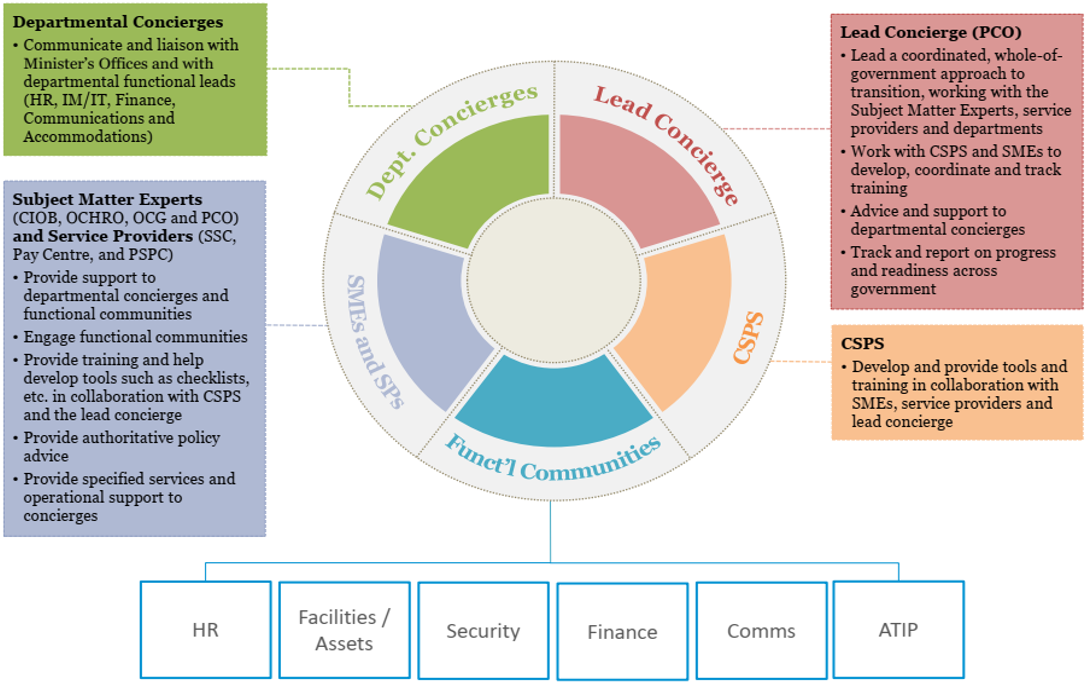
Text version
You can request an alternate format of this graphic. Please submit a request by email to info@pco-bcp.gc.ca and provide us with the title of the graphic and the alternate format you would like.
Ministerial security
PCO, through its Concierge function, offers security services for Ministers and other senior officials who are concerned about their safety as a result of their departmental obligations. MSCA’s 24/7 capacity is used to support a Ministerial Security hotline.
- The Deputy Clerk and the National Security and Intelligence Advisor are kept aware of all request and the recommended supports provided to Ministers and senior officials.
Through this initiative, PCO in collaboration with Ministers’ Offices, Deputy Ministers, departmental security officers, and other security agencies can arrange for:
- Residential security: An unarmed security guard at a residence, along with potential residential security upgrades.
- Event security: A private guard to ensure safety at events.
- Drivers: Trained private security personnel to drive Ministers between events outside the National Capital Region.
- Personal threat risk assessments and individual briefings to enhance awareness of and identify strategies to mitigate threats.
The costs associated with personal security are charged back to respective departments.
DM Protection Committee is kept apprised of all Ministerial Security requests and responses by the Assistant Secretary to the Cabinet, Ministerial Services and Corporate Affairs.
Ministers’ Regional Offices (MROs) and residence support
In 2020, with the machinery of government change, 16 MROs were transferred from PSPC to PCO. The MROs operate as business centres for all Cabinet Ministers, Secretaries of State, Parliamentary Secretaries and exempt staff when travelling in the regions on government business, providing secure accommodations, communications, administrative and logistical support for on and off-site meetings and events.
MSCA has worked with SSC and PSPC on a number of targeted investments in security and technology along with a more common look and feel to improve user experience across the country. All MROs now have secure video and bandwidth has been increased.
MSCA also offers residential support to all Ministers to ensure a base level of support, working in close collaboration with departments. This has allowed PCO to improve technology support including secure communications and reliable internet for all Ministers.
In addition, MSCA has negotiated access to departmental regional offices to support Ministers who are not located near an MRO. When combined with the residential support now offered to Ministers, MSCA is able to provide integrated regional support to Ministers, improving user experience while taking pressure off of individual departments.
Candidate Security Program
In light of the security environment and a rise in the frequency and severity of threats against public officials, the Candidate Security Program was established by PCO to provide private security services to all federal electoral candidates running in the 45th General Election.
The Assistant Secretary to the Cabinet, MSCA was tasked by the DM Protection Committee (DMPC) to create and implement a program aimed at providing an additional layer of personal protection for candidates throughout the writ period using private sector security service providers.
The program complemented existing security measures and services options available to candidates, including from RCMP, police of jurisdiction, and Elections Canada. MSCA led the design and implementation of the program with support from Public Safety Canada, Public Services and Procurement Canada, the RCMP, and other partners.
The program ran from March 29 to May 12 on a 24/7 basis, offering all registered candidates access to close protection and residential security services in response to specific reported threats or incidents. Over the course of the Program, PCO provided security services to (22) federal electoral candidates, whose security needs and requests varied widely.
It is hoped that for future elections, other federal departments will be in a position to lead this program, building on the lessons learned from the initial offering.
Annex A: Accommodations projects at a glance
NCR
- Two projects to enhance PCO Top Secret Capacity in the NCR
- Continued improvements to meeting facilities across the portfolio
- Ongoing participation in the Centre Block rehabilitation
- Long term planning for the Block 1 rehabilitation
Regional
- Ongoing accommodations project to help enhance physical security, including two projects to create proper security zoning
- Planning for the relocation of three MROs between 2028 and 2031
- Ongoing projects to increase for regional Top Secret capacity in two locations
Annex B: IT projects at a glance
Client applications update
Progressing on its IM/IT Modernization Initiative to improve the delivery of PCO programs and services, two systems developed in 2023 are being leveraged to enhance business processes associated with correspondence for other supported officials, and compensation and performance management for Senior Personnel. Enhancements to the Executive Correspondence System and the Senior Personnel Appointments Central Environment will increase efficiency and effectiveness by providing the adapted tools to meet the demands of the fast-pace PCO environment.
Workload migration, application modernization and cloud enablement
Strengthened IT infrastructure and prepared for disaster recovery capability by migrating Protected B workloads to new data centres, while modernizing 400+ applications through portfolio updates, targeted migrations, technical debt reduction, and comprehensive documentation.
[ * ]
Enhancing PCO’s security posture
In 2024, PCO received funding for initiatives geared toward enabling PCO to more efficiently manage access to its core network and digital services. This includes enhancements to internal identity and access management, monitoring capabilities for mobile devices, and the implementation of stricter controls around portable storage devices usage.
[ * ]