
Over 50 years of advancing gender equality in Canada

April 2026 marks 50 years since Status of Women Canada (SWC) was created in 1976, establishing a dedicated federal agency to advance gender equality.
Canada’s journey towards gender equality
Canada can take pride in its many achievements over the past five decades to advance gender equality, including:
- signing the Canadian Charter of Rights and Freedoms, which includes sex and gender as one of the prohibited grounds for discrimination
- legalizing same-sex marriage nationwide
- supporting the advancement of women to stay in school, to participate in the labour force, make choices about their careers, and rise to leadership roles
- making investments to address and prevent gender-based violence and advance rights and equality for 2SLGBTQI+ communities
Over 50 years ago, Canada looked different for women. They couldn’t open a bank account without their husband’s or father’s signature, contraception was illegal, they had limited representation in higher education, were paid substantially less than men, and were almost entirely absent from decision-making roles in businesses and in politics.
Barriers were even greater for Indigenous women, women living with disabilities, women from 2SLGBTQI+ communities, and newcomer, racialized, and migrant women.
In the 1960s, as the women’s liberation movement grew worldwide, Canadians demanded action against inequality and pushed for a more inclusive society.
- In 1966, Laura Sabia rallied about 30 women’s groups to urge Prime Minister Lester B. Pearson to launch a Royal Commission on women’s issues, going so far as to threaten a march of 2 million women on Parliament Hill.
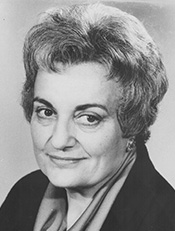
- Canada’s Secretary of State Judy LaMarsh joined the call by demanding a public inquiry into the status of women in Canada.

- Together with many others, their advocacy led to the groundbreaking Report of the Royal Commission on the Status of Women in Canada in 1970, and from there, the creation of Status of Women Canada in 1976.

In December 2018, legislation transformed Status of Women Canada into Women and Gender Equality Canada (WAGE), the country’s first stand-alone federal department dedicated to advancing equality, with an expanded mandate to advance equality for sex, sexual orientation, gender identity, and gender expression.
Over the years, 2SLGBTQI+ communities have led change through activism and legal action.
- In 2016, a Special Advisor on LGBTQ2 issues was appointed, and, shortly thereafter, a 2SLGBTQI+ Secretariat was created with the mandate to provide the federal government with pathways to address historical and ongoing injustices experienced by 2SLGBTQI+ people in Canada
- With WAGE’s expanded mandate, the 2SLGBTQI+ Secretariat joined the department in 2021

Looking to the future
With its transition to a department, WAGE was strengthened as the central coordinating body for advancing gender equality in Canada, supporting new programs, investing more resources, and advancing inclusive policies for all Canadians.
Today, WAGE continues to work alongside Federal, Provincial, and Territorial partners, Indigenous communities, civil society organizations, and advocates nationwide to advance equality and inclusion by:
- funding women's and civil society organizations that drive change in their communities
- taking action to prevent and address gender-based violence
- applying Gender-based Analysis Plus (GBA Plus) to ensure diverse voices shape decision-making
- advancing rights and equality for 2SLGBTQI+ people in Canada
- supporting research to inform evidence-based action
- growing an economy that works for everyone, where women and gender-diverse people have fair access to good jobs, leadership roles, entrepreneurship, and financial security
Digital toolkit
Download these visuals and use them on your website, social media channels or virtual meetings.
Download all visuals (ZIP – 2.8 MB) or choose the content that is most important to you based on your needs.
How to save images to your computer or mobile device
(1) Select image
On a PC: Right-click on the image you want to download.
On a Mac: Hold down the Control key (Ctrl) and click on the image you want to download.
On a mobile device: Tap and hold the image you want to download until the menu appears.
(2) Choose “Save as”
The options on the contextual menu will vary, depending on which web browser you’re using. Some browsers may say “Save as” while others may say “Save image as” or “Save picture as.”
(3) Rename the file (optional)
A dialogue box will open, giving you the opportunity to change the file name or keep it as is.
(4) Choose a destination folder
Specify a location to save the downloaded image and click “Save.”
Web banner

Text version – Web banner
50 years of advancing gender equality in Canada, and the Canada wordmark
Use this banner for your web or intranet content.
Facebook and LinkedIn

Text version – Facebook and LinkedIn
50 years of advancing gender equality in Canada, and the Canada wordmark
Use this image for your Facebook and LinkedIn content.

Text version – Virtual meeting background
50 years of advancing gender equality in Canada and 50 ans de promotion de l’égalité des genres au Canada in French, and the Canada wordmark
Use this background during your virtual meetings.

Text version – Instagram
50 years of advancing gender equality in Canada, and the Canada wordmark
Use this image for your Instagram content.

Fact sheet: Women’s equality then and now (PDF, 94 KB)
See how life for women in Canada has changed since the creation of Status of Women Canada in 1976
Text version – Printable fact sheet
Canada’s journey towards gender equality
Building on more than 50 years of federal action
April 2026 marks 50 years since Status of Women Canada was created. A federal agency established in 1976, its goal was to advance gender equality in response to the momentum generated by women’s rights advocates and grassroots movements nationwide.
Then and Now
Gender wage gap
1970’s: Women earned 60¢ for each dollar earned by a man.
Today: Women earn 87¢ for each dollar earned by a man.
Post-secondary education
1970’s: Fewer than 30% of women went on to post-secondary education, like college or university.
Today: About 70% of women go on to college or university.
Manager roles and senior leader roles
1970’s: 14% of manager roles were held by women.
Today: 36% of manager roles and 29% of senior leader roles are held by women.
Women in the labour force
1970’s: 38% of women were in the labour force.
Today: 85% of women 25 to 54 are in the labour force.
In 2018, Status of Women Canada became Women and Gender Equality, Canada’s first stand-alone federal department dedicated to advancing equality for women and 2SLGBTQI+ people.
Today, the department continues to work alongside Federal, Provincial, and Territorial partners, Indigenous communities, and organizations to advance gender equality.
Learn more about advancing gender equality in Canada
Canada wordmark
Resources
Royal Commission on the Status of Women
Learn more about the Royal Commission on the Status of Women in Canada, and the groundbreaking Report of the Royal Commission on the Status of Women in Canada
Gender equality timeline
See how gender equality has evolved in Canada over the years
Facts, stats, and impact: Gender equality
View statistics on gender equality in Canada
Canada’s journey towards gender equality
Learn more about over 50 years of progress to advance gender equality in Canada