
Evaluation of Capability Acquisition Modernization
December 2025
1258-3-077 (ADM(RS))
Reviewed by ADM(RS) in accordance with the Access to Information Act. Information UNCLASSIFIED.
Table of Contents
- Overview
- Overview of Defence Acquisition Pathways
- Traditional Project Acquisition Pathway
- A Lengthy and Difficult Project Acquisition Process
- Emergency Acquisition and Urgent Operational Requirements Pathway
- New Acquisition Initiatives – Challenges and Opportunities
- Enabling New Initiatives to Succeed
- Annex A: Methodology
- Annex B: Process Maps of Agile Procurement
- Annex C: Process Maps of Continuous Capability Sustainment
Alternate Formats
Assistant Deputy Minister (Review Services)
Overview
The aim of this developmental evaluation (DE) is to provide advice to the Continuous Capability Sustainment (CCS) and Agile Procurement (AP) initiatives. This advisory role also involved the identification and consolidation of progress in defence procurement over the last several years to compare traditional procurement with the new CCS and AP approaches and with the established urgent operational requirements (UOR) approach.
The Defence Procurement Review and Canada’s defence policy: Our North, Strong and Free promised a pilot of the CCS approach to integrate the latest technology and innovations in more regular, incremental maintenance cycles. The pilot initiative was launched, and the next step is expanding CCS across other platforms. Our North, Strong and Free stated that “the speed of technological change requires a shift in organizational mindset—a willingness to embrace innovation and experimentation and to continuously adopt emerging technologies.” AP is an initiative for lower-risk information and communication technology projects that have evolving requirements. It leverages iterative capability development and sustained engagement with government partners and industry.
Note: AP is distinct from continuous capability delivery (CCD). CCD is a broader pathway for evolving non-project capabilities through incremental development and stable funding. CCD may draw on aspects of AP, including early value, adaptive sourcing, continuous improvement and strong partnerships—thus reducing risk and boosting efficiency.
The evaluation included the joint development of advisory products to support the path forward for the CCS and AP initiatives. The advisory products included an overview of the length of the traditional procurement approach, a review of procurement during emergencies or crises, additional work on identifying potential projects for AP and CCS, lessons learned from previous efforts to expedite procurement, performance metrics for CCS, a procurement process maturity scorecard and a review of risk acceptance within the Department. The evaluation was conducted from November 2024 to July 2025.
Overall Assessment
Procurement challenges related to governance, data management, project and risk management, and the workforce were common themes across key past audits, evaluations and other reviews. The Department of National Defence (DND) and the Canadian Armed Forces (CAF) have implemented measures to improve capability acquisition, including greater delegation of authority (DoA), streamlining acquisition paths, improved process documentation, and workforce development. Indeed, defence procurement is evolving rapidly in DND and the Government of Canada, which includes the establishment of the Defence Investment Agency. Despite significant progress, the evaluation identified persistent challenges such as disconnected databases, heavy oversight and excessive project documentation requirements.
There is a case for action to improve the tempo of defence procurement through the adoption of lean or minimum viable governance and project management approaches; digital modernization; and the enablement of flexible and urgent pathways. CCS and AP show promise as innovative and streamlined approaches to address challenges created by rapidly changing technology requirements. Failing to exploit the opportunities for improvement identified in this report will contribute to acquisition delivery that remains complex and prolonged, UORs that continue to fall short of their expectations and military capabilities that lack the readiness and relevance required by the CAF.
Key Observations
- DND has made significant improvements to key issue areas related to acquisition (e.g., Organizational Project Management Capacity Assessment (OPMCA) rating, governance, data, workforce, and project management), but challenges remain—including disconnected databases, inadequate project prioritization, rigid project requirements and sub-optimal use of OPMCA-level and delegated authorities.
- Emergency acquisition and UOR processes are intended to enable rapid, accountable acquisition during crises but are constrained by limited scope, heavy governance and lack of cross-departmental coherence.
- AP and CCS represent innovative and streamlined approaches when compared to traditional defence procurement. There are inherent challenges and risks associated with each initiative that would need to be mitigated for their full potential to be realized.
- If supported and conditions for success are established, AP and CCS have the potential to make immediate impacts to defence procurement.
Key Opportunities for Improvement
- Governance: Leaner oversight; clearer UOR; CCS and AP guidance; and greater DoA are needed—especially for lower-risk projects—and further leveraging of DND’s OPMCA level.
- Digital Tools: Stronger digital stewardship, standardization and sustained investment are key to enabling integrated, decision-ready procurement information.
- Project Management: Advancing the maturity of capability acquisition will require streamlined processes, stronger performance data and sustained support for iterative and new approaches.
- Workforce: Timely delivery depends on early human resources planning, targeted upskilling and sustained staffing investment.
- Risk: Clarity on risk tolerance and coordinated, risk-informed decision making are needed to support timely and flexible delivery.
Overview of Defence Acquisition Pathways
Defence acquisition at DND encompasses a diverse set of processes, authorities and governance structures designed to deliver capabilities to the CAF. These pathways accommodate a wide range of requirements—from small-scale, time-sensitive procurements to complex, multi-year capital projects—while attempting to balance agility, oversight and accountability. By offering multiple acquisition approaches, DND can better align resources and timelines with operational priorities, adapt to evolving defence needs and leverage both established and emerging procurement practices.
Chapter 2 of the Project Approval Directive (PAD) outlines some of the key management approaches for DND’s acquisition initiative options, including traditional project pathways, sub-project pathway options and alternatives to project pathways.
The following initiative decision pathway map illustrates a sample of the acquisition options currently available at DND. These range from long-standing, well-established routes (e.g., Path A – Minor Capital Projects) to newer, more flexible approaches (e.g., AP, tailored project approval process).

Figure 1 Summary
The decision map details a high-level process to help stakeholders and decision makers identify the most appropriate delivery pathway for an initiative.
Correspondence and questionnaire results revealed that further clarity is needed about whether processes such as AP and UOR should be separate pathways or variations within existing project pathways (e.g., paths A to D). Additionally, defining key terms—such as “recurring,” “enduring” or “routine” activities—would enhance consistent interpretation and application across teams and could inform the refinement of existing paths or the development of new paths. Finally, clearly distinguishing between approaches with overlapping features, such as AP and CCD, would help delineate responsibilities and reduce confusion.
Traditional Project Acquisition Pathway
Observation 1: The Department of National Defence has made significant improvements to key issue areas related to acquisition (e.g., Organizational Project Management Capacity Assessment rating, governance, data, workforce, and project management), but challenges remain—including disconnected databases, inadequate project prioritization, rigid project requirements and sub-optimal use of Organizational Project Management Capacity Assessment–level and delegated authorities.
A meta-analysis of key evaluation and audit reports assessed recent progress in addressing procurement challenges, identified persistent gaps and highlighted opportunities to improve processes and outcomes. The review covered 16 audit and evaluation reports (2017–2024), questionnaire responses from 10 key personnel across major branches within DND and consultations with Assistant Deputy Minister (Materiel) (ADM(Mat)), Assistant Deputy Minister (Digital Services) (ADM(DS)) and the Vice Chief of the Defence Staff (VCDS). Additional analysis incorporated other relevant correspondence, documentation and literature.
Of the 16 internal and external audit and evaluation reports examined…
- Eighty-two total challenges were identified, implicating DND, TBS, Public Services and Procurement Canada (PSPC) and Shared Services Canada.
- Fifty-two of these challenges have Management Action Plans (MAPs) for which DND is the Office of Primary Interest.
- DND established 29 MAPs to respond to these challenges, 21 (72 percent) of which have been fully implemented.
- Ten challenges associated with DND did not have a specific recommendation or MAP but were generally addressed through DND MAPs covering similar issues.
- Twenty challenges were identified in reports published by other government departments and are not associated with a DND MAP.
- Fifty-two of these challenges have Management Action Plans (MAPs) for which DND is the Office of Primary Interest.
Procurement Challenges Identified in Recent Years:
- Sub-optimal project prioritization, lack of clear guidance for project approval processes and rigid funding models contributed to disproportionate oversight, inconsistent perspectives and reduced innovation.
- Incomplete and inconsistent data across systems, along with inefficient project management, contributed to inconsistent information, barriers to decision making, and the obstruction of central planning.
- Risk-averse culture and a slow procurement system contributed to limited innovation, delays and increased costs.
- Resource competition, staffing shortages and limited expertise contributed to straining resources and capabilities.
Recent Achievements:
- An OPMCA rating that permits departmental signing authority up to PCRA 3, updating policies, increased delegated expenditure authorities and the establishment of specialized working groups helped to streamline decision making, strengthen governance and enhance efficiency.
- Implementing digital tools and improving monitoring and reporting of project interdependencies helped to enhance data visibility, modernize enterprise planning and improve efficiency.
- Tailoring requirements to risk and complexity, amending the Government Contracts Regulations and implementing earned value management reduced processing times, improved schedule tracking, and informed decision making.
- The development of new courses related to force development and project management helped facilitate personnel growth and improve project management.
Ongoing Challenges:
- Risk aversion and insufficient guidance on new or lesser-known acquisition approaches contribute to constrained innovation and fragmented strategic direction. These limitations reduce the ability to explore and adopt more effective procurement methods, including non-project life cycle management options and minimum viable product (MVP) approaches.
- Inadequate data on project interdependencies, governance gate movement and comprehensive performance metrics—combined with paper-based procurement processes and a siloed system—results in an incomplete view of procurement activities. These gaps limit decision-ready information, hinder real-time insights and prevent the identification of efficiencies, ultimately extending project timelines.
- A shortage of procurement specialists, outdated training, limited access to costing analysts and excessive documentation requirements contribute to operational bottlenecks and workforce gaps.
Opportunities:
- Improving collaboration with other departments, focusing senior leadership on high-cost/risk projects and instituting key AP concepts could optimize oversight, enhance strategic alignment and result in faster acquisition.
- Ensuring DEFENCEx aggregates data within a strong governance framework and continuing to invest in systems and skills related to data and digitalization could better inform decision making, provide greater strategic visibility and enhance innovation.
- Simplifying and digitalizing document requirements, developing comprehensive process mapping and promoting non-project approaches to acquisition could lead to streamlined documentation, stronger data insights and more responsive decision making.
- Enhancing procurement knowledge and human resource capacity could improve expertise and efficiency.
A Lengthy and Difficult Project Acquisition Process
Although not a representative statistic, a rough estimate based on 84 projects with analyzable data indicated the average time from project definition (DEF) to closure, even for the low-complexity projects (e.g., PCRA levels 1 and 2), was at least a decade. Projects with a PCRA 3 took roughly five years longer from DEF to closure, though this is only an approximate estimate.
It is hard to access reliable data due to fragmented systems, recent Capital Investment Plan Program Review adoption, inconsistent phase tracking and governance gate records stored in individual project files, preventing a complete view of procurement.
| PCRA | Minimum Number of Years From DEF to Close | Maximum Number of Years From DEF to Close |
|---|---|---|
0 |
N/A | N/A |
| 1 | 3.84 | 24.49 |
| 2 | 4.72 | 20.41 |
| 3 | 9.82 | 27.53 |
Table 1 Summary
TBS Oversight
The MND approved roughly 75 percent of submissions from fiscal year 2020/21 to 2024/25. TBS reviewed 37 percent of PCRA 3 submissions, highlighting an opportunity to better leverage DND’s OPMCA 3 rating.
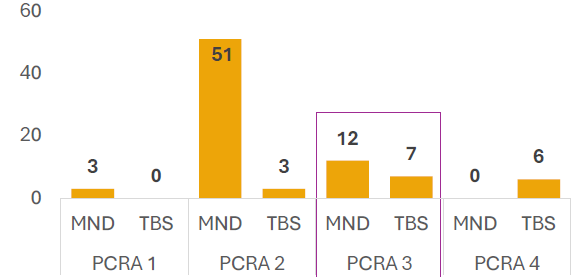
Figure 2. TBS reviewed 37 percent of PCRA 3 submissions, highlighting an opportunity to better leverage DND’s OPMCA 3 rating.
Figure 2 Summary
Independent Review Panel for Defence Acquisition (IRDPA) Engagement
Some stakeholders perceive that IRPDA is seeing too many low-risk projects because of the $100 million threshold. From 2020 to March 2025, IRPDA reviewed at least 44 low-risk PCRA 2 or 3 projects, often multiple times.
| PCRA Level | Project Count | Percentage |
|---|---|---|
| 2 | 30 | 46% |
| 3 |
14 | 22% |
| 4 | 7 | 11% |
| Unknown | 14 | 22% |
| Total | 65 | 100% |
“Unknown” refers to cases where the PCRA level was unavailable due to missing data or because Independent Review Panel (IRP) 2 had not yet occurred. |
||
Table 2 Summary
The traditional project acquisition process is a waterfall-style project management model where activities proceed in a linear, sequential manner through defined phases and approval gates. The following visual provides a snapshot of the 100+ steps from the traditional project approval process, which is widely seen as burdened by excessive governance, redundant approvals, lengthy sequential reviews, unnecessary delays, complex documentation and rigid requirements. Each efficiency opportunity shown in the following visual corresponds to at least one underlying challenge, with dozens of such challenge–opportunity pairs identified. This evaluation also identified eight key opportunities at 24 locations where the process could be simplified, streamlined or enhanced.

High Gate Density: The process contains seven major gates plus multiple milestones, each adding time and complexity.
Multiple Review Layers: In some phases, the same documents are reviewed by multiple stakeholders or governance bodies.
Figure 3 Summary
Emergency Acquisition and Urgent Operational Requirements Pathway
Observation 2: Emergency acquisition and urgent operational requirements processes are intended to enable rapid, accountable acquisition during crises but are constrained by limited scope, heavy governance and lack of cross-departmental coherence.
DND Emergency Acquisition
The CAF and DND must remain ready to respond quickly to emergencies at home and abroad. Authorities such as the Government Contracts Regulations, the Defence Production Act, the Emergencies Act and the Emergency Management Act enable rapid, non-competitive contracting. TBS directives and policies set and communicate contracting authority thresholds (e.g., DND $3 million, PSPC $25 million) and oversight requirements. Operational guidance in DND and PSPC manuals outline procedures for compliant, mission-focused acquisitions.
Correspondence with stakeholders identified opportunities to enhance the agility and efficiency of existing pathways:
- Modernize emergency or urgent acquisition pathways to ensure they are fast, flexible and well-resourced;
- Raise the Minor Capital Project threshold for low-risk PCRA level projects to reduce administrative burden (complete);
- Use pre-approved or standing acquisition models for recurring, enduring or routine needs (e.g., ammunition, firearms, drones) to enhance predictability and efficiency; and
- Increase staffing capacity to ensure projects are well-managed and delays are minimized.
UORs
Traditional procurement processes, while thorough, are often too slow for urgent needs. To bridge this gap, DND uses the UOR process to enable rapid acquisitions to address critical short-term capability gaps. The UOR process, as currently implemented, does not deliver on its mandate. A preliminary assessment of UORs for ongoing operations indicates that UORs have not progressed as intended, which raises questions about the suitability of the current framework.
A combination of cultural change, significant process and governance reform, and additional resources could significantly enhance the effectiveness of UORs in meeting urgent operational needs. While UORs can deliver capabilities in a timelier fashion when compared to traditional procurement projects (3 years compared to 10+ years), this success is relative and is not satisfactory according to program staff. The challenges associated with UORs are not unique, and overlaps exist between the anticipated challenges that CCS and AP are also likely to face.
Thematic Analysis of UOR Project Bottlenecks
UOR as a Misnomer
- UORs are not universally perceived as urgent: Urgency is often recognized only within select departmental circles.
- There is no distinct UOR process. Rather, it is about gaining priority and working within the existing acquisition pathways.
Implication: The label “UOR” does not guarantee expedited treatment unless actively championed by leadership or PTs.
Mixed Results on Meeting Timelines
- The major capital process and documentation burden were consistent sources of delay.
Implication: UOR project success is highly dependent on internal team initiative and external complexity, not on systemic efficiency.
| Project | # Months Anticipated to Initial Operational Capability |
|---|---|
UOR 1 |
43 |
UOR 2 |
32 |
UOR 3 |
38 |
UOR 4 |
34 |
UOR 5 |
30 |
Table 3 Summary
Governance and Stakeholder Saturation
- Project Management Offices are understaffed and overwhelmed by the volume of individuals and stakeholders who need to be consulted (250+ individuals in some cases).
- Governance steps are repetitive and slow, with each requiring full documentation and review.
Implication: The system is not designed for speed—even UORs must navigate the full bureaucratic maze.
Costing and Redundancy as Major Friction Points
- Costing analysis is the most cited bottleneck with 4/5 of the PTs experiencing delays: long timelines, scarce analysts and rigid expectations.
- Projects are held to early, inexact cost estimates, with little tolerance for adjustment.
Implication: Streamlining costing and reducing redundant documentation could significantly improve UOR responsiveness.
Selective and Team-driven Efficiency
- Some efficiencies were achieved: compressed DCBs, Sustainability-BCA waivers, abbreviated costing and use of the national security exemption.
- Governance scheduling remained rigid—limited use of ad hoc meetings for UORs.
Implication: Improvements are possible, but they rely on experienced teams and leadership support, not built-in process flexibility.
Cultural Risk Aversion
- Risk aversion is deeply embedded in the system, especially in delegating authority.
- Risk tolerance was higher within sponsor/implementer L1s but diminished outside of DND.
Implication: A cultural shift toward calculated risk-taking is needed to make UORs truly effective.
New Acquisition Initiatives – Challenges and Opportunities
Observation 3: Agile Procurement and Continuous Capability Sustainment represent innovative and streamlined approaches when compared to traditional defence procurement. There are inherent challenges and risks associated with each initiative that would need to be mitigated in order for their full potential to be realized.
Overview: Currently, DND waits until a platform is halfway through its service life to upgrade its systems. This results in periods of technology obsoleteness where the CAF is at an operational disadvantage or non-compliant with evolving global standards. CCS prevents this obsoleteness by routinely updating technology based on materiel capability sustainment roadmaps for both new and existing platforms.
AP offers a flexible alternative to traditional procurement, which assumes all requirements are known upfront—a poor fit for information and communication technology, where uncertainty and experimentation are common. AP is characterized by iterative capability development, cross-functional teams (CFT) and sustained industry engagement, allowing faster adaptation and reducing the risks of rigid planning. Both show promise but require further refinement, support and clear guidance to succeed.
AP
Potential Benefits
- Collaborative Engagement and Empowered Teams: Unlike the traditional model where requirements are developed in isolation, AP brings CFTs and suppliers together early. “Big Room” sessions and tailored oversight speed up decisions and keep solutions aligned with needs.
- Incremental Delivery and Learning: Instead of waiting years for a product that may be outdated, AP delivers capability in increments. Shorter contracts, off-ramps and rapid feedback help teams adapt, reduce risk and improve outcomes.
- Streamlined Requirements: Rather than lengthy documentation and slow approvals, AP adjusts requirements based on risk and complexity. Real-time collaboration simplifies requests for proposals, evaluations and oversight, reducing overhead and enabling faster progress.
- Flexibility and Adaptability: Traditional procurement locks solutions into rigid contracts while AP uses iterative delivery, modular contracts and early exits to keep solutions aligned with shifting operational and technological needs.
- Cost Efficiency: In contrast to models prone to overruns and rework, AP embeds key stakeholders early and plans incrementally. This strengthens cost control, reduces burden and ensures resources are used effectively.
Potential Implementation Challenges
- Limited Direction and Guidance: Unclear policies, roles and frameworks may lead to confusion and inconsistent use of AP. Without leadership from TBS or internal champions, teams may hesitate to adopt it.
- Risk Aversion: A strong preference for traditional control and certainty may cause resistance to AP’s flexible model, especially among those uncomfortable with ambiguity or shared accountability.
- Funding: Rigid funding models that demand upfront costing conflict with AP’s iterative nature. Limited flexibility may delay funding and constrain innovation.
- Resource Intensive: AP may require greater upfront investment in coordination, staffing and training—particularly to establish effective CFTs.
Opportunities to Institutionalize AP and CCS Approaches
- Publish tools and guidance to ensure consistent, confident application of AP and CCS across the Department, reducing confusion and enabling adoption.
- Align funding with agile and sustainment delivery models by working with financial authorities, including engagement and collaboration with central agencies, to enable phased approvals and long-term flexibility.
- Build capacity and confidence through better costing data, real-time analytics and targeted training, empowering stakeholders to adopt new approaches.
CCS
Potential Benefits
- Operational Relevance and Agility: Unlike the traditional model where long gaps between upgrades leave capabilities outdated, CCS sustains relevance through timely, recurring improvements. This avoids obsoleteness and delays while keeping forces mission-ready.
- Simplified and Streamlined Processes: Instead of repetitive approval cycles, CCS consolidates upgrades under one framework. This reduces the need for repeated approvals and speeds up decision making.
- Improved Planning: Rather than relying on static forecasts that quickly expire, CCS uses rolling 3–5-year sustainment roadmaps. These improve cost accuracy, reduce risk and enable course corrections as priorities and technologies shift.
- Cost and Time Efficiencies: Traditional acquisition often locks funding and requirements upfront, creating inflationary pressures and delays. Through incremental acquisitions, CCS offers to control costs, speed delivery and avoid redundant steps.
- Industrial Relations: Unlike episodic projects that create boom-bust cycles, CCS provides industry with predictable demand. This supports research, development and steady jobs and strengthens Canada’s defence industrial base.
Potential Implementation Challenges
- Funding: CCS lacks a dedicated, long-term funding mechanism. Existing budgets (e.g., national procurement) may be fully allocated or ill-suited, making it difficult for DND to secure necessary funds. Long-term funding commitments are subject to fiscal cycles and central agency priorities, which DND cannot fully control.
- Costing: CCS is perceived as having more expensive upfront costs (i.e., sticker shock), and there could potentially be a struggle to justify or articulate these costs.
- Limited Direction and Guidance: As CCS is new and evolving, a lack of clear guidance, terminology or processes may create initial challenges for stakeholders.
- Limited Data and Evidence: DND lacks sufficient, well-organized data to justify CCS funding. Evidence on technological change and incremental costs is limited and poorly structured.
The evaluation team worked with stakeholders to develop process maps for AP (Annex B) and CCS (Annex C). These maps illustrate how both initiatives approach governance and emphasize early and ongoing collaboration and incremental delivery—helping maintain alignment with evolving needs while reducing risk and delays.
Enabling New Initiatives to Succeed
Observation 4: If supported and conditions for success are established, Agile Procurement and Continuous Capability Sustainment have the potential to make immediate impacts to defence procurement.
Identifying Current Projects That Could Be AP or CCS Initiatives
The objective of the AP analysis was to assess how many projects could currently use AP instead of other procurement options. The analysis focused on a comprehensive list of 55 projects led by ADM(DS). The final product includes detailed criteria to identify projects well suited for AP as well as the final list of projects within AP scope. The identification of preliminary AP criteria will help ADM(DS) and project sponsors assess whether their projects are well suited for AP.
If fully supported by senior leadership and external government bodies, the AP initiative would offer a sizable opportunity to deliver value earlier for the CAF.
ADM(DS) led the initial review of the project list and provided the evaluation team with a proposed classification for each project, along with supporting rationale and references. The evaluation played a challenge function to this initial classification, including reviewing the rationale, validating the consistency of classifications and refining AP criteria.

Figure 4 Summary
The objective of the CCS analysis was to assess the scope and cost of the CCS initiative and support the CCS team’s response to stakeholder inquiries. The evaluation team had to combine separate lists of current procurement projects from CFD, CProg and ADM(Mat) (582 projects). All projects that had no CCS nexus were eliminated first (e.g., infrastructure, mechanical systems, clothing and ammunition). The remaining 149 projects were categorized through detailed document review.
Overall, 76 projects involved routine technological upgrades, underscoring a trend to underestimate resource needs to maintain operational relevance and the value of alternative paths like CCS.

Figure 5 Summary
Establishing Tools to Measure Success
Measuring the success (e.g., effectiveness, efficiency) of defence acquisition requires an informed and structured approach that links performance metrics to departmental priorities. By defining key performance indicators (KPIs) and establishing a reliable data collection process, DND can track progress, identify gaps and ensure alignment with operational objectives.
To support the implementation of CCS, the evaluation team backed the development of KPIs and a data collection plan, which will be maintained and applied by the CCS team going forward.
Additionally, the evaluation team developed a defence acquisition maturity scorecard, which tracks progress towards improved capability acquisition, including for AP and CCS. This rubric measures improvements in key thematic areas identified in the evaluation and proposes potential metrics for assessing performance. Maintaining and refining this scorecard could be undertaken by one of the evaluation’s offices of primary interest to ensure it remains relevant and actionable over time.
Annex A: Methodology
A DE approach was used to support and advise the CCS and AP initiatives in the early stages of their implementation. DE is well suited to assist in the design and adaptation of initiatives operating in complex or evolving environments (e.g., defence procurement). Unlike traditional evaluations that assess outcomes after implementation, DE provides real-time feedback to help shape a program as it unfolds. The evaluator plays an embedded, collaborative role—working closely with program teams to facilitate learning, guide decision making and build capacity for evaluative thinking.
- Document Review Meta-Analysis
- Reviewed 16 key audit and evaluation reports from DND, the Office of the Auditor General and PSPC from 2017 to 2024 to identify improvements and continued barriers to procurement. Key internal documents and external literature were also reviewed.
- Consultations
- Consulted key personnel in support of the meta-analysis, process mapping, data and other analytical products.
- Questionnaire
- Strategically distributed questionnaires on MAPs and general procurement issues, receiving 10 responses from key personnel across ADM(Mat), ADM(DS) and VCDS.
- Interviews
- Interviewed key personnel to identify challenges and tangible benefits of CCS and AP and with the UOR process.
- Data Analysis
- Assessed project data access and quality from multiple sources during a review of project timelines. Analyzed the frequency of IRPDA and TBS reviews at various PCRA levels. Identified projects that could be CCS and AP initiatives.
- KPI Development
- Developed KPIs with the program for monitoring the CCS initiative. Aligned with the CCS Directive and Departmental Results Framework.
- Process Mapping
- Constructed a PAD process map and developed feedback on where AP and CCS initiatives could provide efficiencies. Reviewed PAD guide for CCS. Developed AP and CCS process maps.
- Lessons Learned
- Collected lessons learned insights from the Special Operations Forces Capability and Recapitalization Project as they apply to innovative procurement approaches like AP and CCS.
- UOR Analysis
- Reviewed the UOR process, including issues with five current UORs, UORs during the war in Afghanistan via a Director General Audit report, and similar processes of selected allies.
Advisory Products Package
The following advisory products were developed as a way to complement the analysis and observations within the main body of the report. Together, these additional products seek to inform the path forward for emerging initiatives and support the modernization of capability acquisition within DND.
1. Analysis of the length of the procurement process |
2. Procurement during crisis management |
3. Identification of projects for AP and CCS |
4. Special Operations Forces Capability and Recapitalization Project lessons learned |
5. Performance metrics for CCS |
6. Procurement process maturity scorecard |
7. A review of risk acceptance |
Annex B: Process Maps of Agile Procurement
In collaboration with key stakeholders, the evaluation team developed proposed process maps for AP, covering the full life cycle from initial identification to project closeout. These maps are designed to remain evergreen and adaptive to evolving stakeholder priorities and realities. Unlike the traditional project acquisition model—where rigid, upfront requirements often lead to misalignment, delays and outdated solutions—AP emphasizes flexibility and collaboration.
Through early industry engagement, AP fosters innovative solutions and reduces the risk of misfit capabilities. Using CFTs and Big Room sessions, AP accelerates decision making and builds shared understanding across stakeholders. With phased implementation cycles, AP delivers an MVP early, ensuring users receive capability sooner while allowing requirements and costs to be refined throughout the process. This iterative approach reduces risk, encourages innovation and maintains alignment with evolving operational and technological needs.

Notes:
This map is built in accordance with current TBS policy.
This map (i.e., parts 1 and 2) is aligned with incremental implementation and focuses on the most pertinent steps of the process. Additionally, it will be partially simplified in AP cases where there is a single procurement cycle.
The following are not shown on map for readability purposes:
- Approval gates generally include multiple pre-coordination engagements—as opposed to the depicted single step-to-step flow.
- AP can revert to the traditional procurement approach anytime when no longer suitable.
CFT and Big Room steps may include multiple engagements over an allocated period of time.
PAD remains the authoritative document.
Figure 6 Summary
Annex C: Process Maps of Continuous Capability Sustainment
In collaboration with key stakeholders, the evaluation team developed proposed process maps for CCS that illustrate the CCS processes for in-service equipment/fleets and MCPs seeking project approval for implementation. They are intended to remain evergreen and adaptive to evolving stakeholder priorities and realities. Unlike the traditional project acquisition model, CCS emphasizes streamlined governance and integration with life cycle sustainment planning.
For in-service equipment and fleets, the process assumes an existing funding baseline, allowing projects already underway to be reprofiled into a CCS model in a way that attempts to streamline governance. For MCPs in DEF, new tools are introduced to help identify, prioritize and cost capability requirements, ensuring capability requirements are strategically relevant and financially realistic. Both pathways are supported by materiel capability sustainment roadmaps—three-year forecasts of requirements and costs—reviewed by governance bodies and prioritized to direct resources to critical initiatives. Working from funding baselines, CCS reduces redundant approvals and accelerates decision making. Ongoing validation keeps sustainment plans aligned with evolving needs and technologies while strengthening prioritization and resource allocation. CCS funds projects in smaller, predictable amounts rather than all at once, creating stable planning for DND and industry alike.

Figure 7 Summary
