
2023-24 Gender and diversity: Impacts of programs
From: Treasury Board of Canada Secretariat
On this page
Executive summary
Gender-based Analysis Plus (GBA Plus) helps ensure that government programs are inclusive and responsive to the diverse needs of Canadians. A GBA Plus considers intersecting identity factors such as gender, race, Indigeneity, age, income and disability.
In recent years, the Canadian Gender Budgeting Act has been an important driver of this work, including requiring departments to report on the gender and diversity impacts of their programs.
In 2023–24, 51% of 780 programs reported impacts on gender and diversity, an increase over previous years. An additional 10% of programs were developing data collection plans to report on impacts in the future.
While there has been clear progress in program impact reporting in recent years, 39% of programs are still not fulfilling the requirement to either report impacts on gender and diversity or develop a data collection plan that would allow them to report in the future.
For the first time, the quality of reporting was assessed across five criteria:
- rationale for GBA Plus lens selection
- data availability
- rationale for methods
- engagement with communities
- integration of findings into program design
While 61% of the 2023–24 programs had available data (by reporting results or developing a plan), the vast majority of them did not meet the quality standards of the other four criteria. For example, only 15% of these programs engaged with key groups and only 13% of them used findings to inform future design.
The programs areas that showed stronger GBA Plus integration include health, environment, social inclusion and heritage. In contrast, government operations and international affairs programs faced greater challenges. Common gaps include vague references to “underserved groups,” limited use of qualitative data, and insufficient feedback into program design.
Background
GBA Plus is an analytical tool used to support the development of responsive and inclusive policies, programs and other initiatives, and to understand how a range of factors affects access to and experience of government programs. The needs and experiences of different groups of people are influenced by intersecting parts of their identity, the context they are in and their lived experiences.
While not an exhaustive list, the following identity factors can directly or indirectly, in isolation or in combination, affect how individuals and communities access and experience government programs:
- sex
- gender
- race
- Indigeneity
- nationality
- ethnicity
- age
- income
- geography
- sexual orientation
- disability
GBA Plus is based on the idea that all people should have access to quality government programs, services, facilities, spaces and opportunities that improve their lives. It should be applied not only to the development of initiatives, but also to their implementation, monitoring and evaluation. The Government of Canada continues to apply GBA Plus as part of its commitment to evidence-based decision-making.
The 2018 Canadian Gender Budgeting Act (the Act) enshrined gender and diversity budgeting in the federal government’s budgetary and financial management process. Under the Act, three different ministers have responsibilities to support this work.
- The Minister for Women and Gender Equality is to provide guidance, best practices and expertise to support gender budgeting.
- The Minister of Finance has to prepare two annual reports. One is tabled before Parliament and includes gender and diversity impacts of all new budget measures, while the other includes an analysis of the impacts of tax expenditures on gender and diversity, such as tax exemptions, deductions or credits.
- The President of the Treasury Board must make available to the public, every year, analyses of the impacts of existing Government of Canada expenditure programs on gender and diversity.
To fulfill the obligation of the President of the Treasury Board, GBA Plus Supplementary Information Tables were introduced alongside the Departmental Results Reports. In these reports, departments are required to identify:
- how each program goal relates to gender and other identity factors (GBA Plus)
- the barriers some people may face in achieving the outcomes set for the program, and if so, what are the potential mitigation strategies
- what are the experiences of diverse communities served by the program
The program’s impacts to be reported should provide evidence of how the program activities are experienced by the groups of people identified. If departments cannot report impacts of the program on gender and diversity, they must present their data collection plan with activities and timelines to allow the measurement and reporting of impacts on the identified groups in relation to the program goals in the future.
Key findings
The share of programs reporting impacts on gender and diversity reached 51% in 2023–24 (398 programs), representing a continued increase over the last three years (48% in 2022–23 and 35% in 2021–22). An additional 10% of programs were developing data collection plans in 2023–24 to be able to report on impacts in the future.
Despite continued improvements in impact reporting, 39% of programs are still not fulfilling the requirement to either report impacts on gender and diversity or to develop a data collection plan that would allow them to do so in the future.
Of the 398 programs reporting impacts in 2023–24, most (77%) of them identified quantitative indicators, while about half used qualitative impacts and a smaller number of programs used both. Some programs erroneously reported indicators that did not reference any gender and diversity impacts, which signals misunderstanding of the requirements under the Act.
With respect to identity factors, the data were most commonly disaggregated using gender and/or sex (237 programs), Indigeneity (154 programs), age (136 programs), race/ethnicity (97 programs), and disability (76 programs). These data have been relatively stable over the last three years.
In 2023–24, only 42 programs reported using indicators that were disaggregated by more than one identity factor, a decline from the 60 programs that did so in 2022–23. Disaggregating data by more than one identity factor is important to help understand how different aspects of a person’s identity—like race, gender, income and ability—combine to shape their unique experiences of discrimination or privilege in society.
About 40 programs noted aggregate impacts on “marginalized people” or “underserved groups” or “priority groups,” without specifying who the people were. The lack of specificity in terms of the sociodemographic impacts makes it challenging to identify program-specific outcomes for particular populations, as well as opportunities to adjust program design.
Of the programs that reported qualitative impacts advancing GBA Plus goals, the stronger examples described changes in attitudes and behaviours or increased community well-being. However, programs did not generally report strongly on negative impacts or on lived experiences. Doing so could substantially strengthen insights derived from qualitative impacts.
Among the 780 active programs in 2023–24, the vast majority (686 programs) have been operating for at least four years. Yet, within this relatively mature set of programs, performance measurement practices remain uneven.
For instance, while over 50% of this mature set of programs started reporting on gender and diversity impacts or developed a data collection plan in 2020–21, 16% have never reported on gender and diversity impacts nor developed a data collection over the period (see Chart 1).
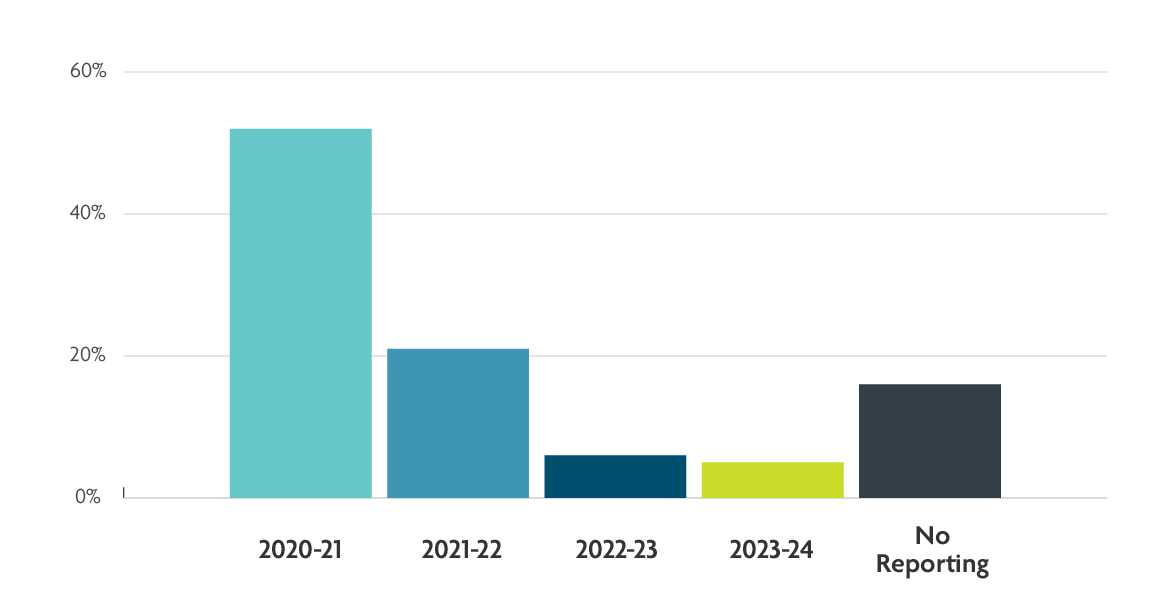
Chart 1 - Text version
The chart is a vertical bar chart titled “Chart 1: Percentage of programs by first year of reporting impacts or a data collection plan.” It shows the distribution of 686 programs based on the first year in which they reported impacts or had a data collection plan, covering the period from 2020–21 through 2023–24, plus a category for those with no reporting.
Along the horizontal axis, five categories (fiscal years) are listed from left to right:
- 2020–21
- 2021–22
- 2022–23
- 2023–24
- No reporting
The vertical axis shows percentages from 0% to 60% in increments of 10%.
Each category has a single bar representing the percentage of programs that began reporting in that year.
Approximate bar heights:
- 2020–21: About 52% of programs
- 2021–22: About 20%
- 2022–23: About 6%
- 2023–24: About 4%
- No reporting: About 15%
A footnote below the chart reads:
“Includes the 686 programs in place over the entire 2020–21 to 2023–24 period.”
Overall, the chart shows that more than half of programs began reporting in 2020–21, with significantly smaller proportions in later years and a notable portion—around 15%—still lacking any reporting.
As shown in Chart 2, only a little over half of the programs (53%) kept reporting on their GBA Plus impacts after their first year. Consistent year-over-year reporting on gender and sex-related identity factors was significantly lower, with only about one-third of respondents doing so. This points to a broader challenge that while many programs can sustain general performance reporting, fewer have embedded practices to track equity-related impacts in a consistent way.

Chart 2 - Text version
The chart is a vertical bar chart titled “Chart 2: Distribution of programs established since 2020–21 by consistency of reporting status.” It shows how consistently impacts or data collection plans have been reported for programs established since 2020–21.
The chart includes two categories on the horizontal axis:
- Consistently
- Not consistently
The vertical axis ranges from 42% to 54%, with gridlines every 2%.
Each of the two categories has one bar showing the percentage of programs falling into that reporting pattern.
Approximate bar heights:
- Consistently: About 53% of programs.
- Not consistently: About 47% of programs.
A footnote below the chart reads:
“Includes the 686 programs in place over the entire 2020–21 to 2023–24 period.”
Overall, the chart indicates that just over half of programs have reported impacts or maintained data collection on a consistent basis since 2020–21, while just under half have not reported consistently.
Assessing the quality of government-wide impact analysis on gender and diversity
In this section
The 2023–24 review of departmental analysis on gender and diversity impacts was assessed across five criteria (see Appendix A for additional information on the criteria):
- rationale for GBA Plus lens selection
- data availability
- rationale for methods
- engagement with communities
- integration of findings into program design
Quality assessment across programs
Most programs (61%) reported some results or had plans to improve reporting capacity, and a smaller share (25%) explained their data methods. Far fewer provided a rationale for the lens selection (16%), engaged with key groups (15%), or used findings to adapt their programs (13%). Overall, departments are starting to track impacts, but deeper integration of GBA Plus principles—especially in engagement, data rationale and program design—remains limited.
Quality assessment by program area
The Government of Canada is comprised of an array of programs areas (see Chart 3). GBA Plus and measurement of impacts are to be applied differently across these areas. For example, a program focused on research or policy development will generally not need personal information data collection since it does not interact directly with individuals; however, the reverse would be true for programs in employment and income security.
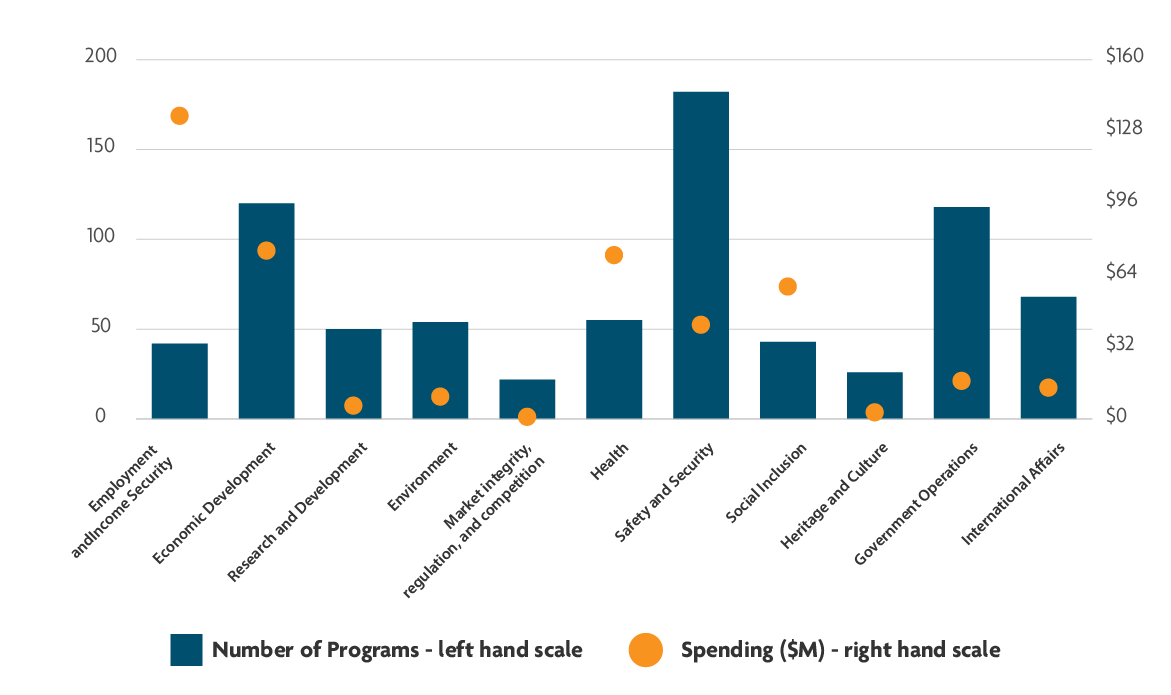
Chart 3 - Text version
The chart is a combined bar and scatter chart titled “Chart 3: Number of programs and actual spending by program area in 2023–24.” It displays two types of information for each program area:
- Number of programs (shown as vertical bars, measured on the left-hand scale)
- Actual spending in millions of dollars (M$) (shown as dots, measured on the right-hand scale)
Both scales increase upward, with the left-hand scale ranging from 0 to 200 programs and the right-hand scale ranging from $0 to $160 million.
The program areas, listed along the horizontal axis from left to right (many displayed diagonally), are:
- Employment and Income Security
- Economic Development
- Research and Development
- Environment
- Market Integrity and Regulations
- Health
- Safety and Security
- Social Inclusion
- Heritage and Culture
- Government Operations
- International Affairs
Approximate values shown in the chart
Number of programs (bars):
- Employment and Income Security: ~50
- Economic Development: ~110
- Research and Development: ~60
- Environment: ~35
- Market Integrity and Regulations: ~25
- Health: ~150
- Safety and Security: ~40
- Social Inclusion: ~180
- Heritage and Culture: ~50
- Government Operations: ~30
- International Affairs: ~70
Spending in millions (dots):
- Employment and Income Security: ~150M
- Economic Development: ~50M
- Research and Development: ~30M
- Environment: ~20M
- Market Integrity and Regulations: ~5M
- Health: ~80M
- Safety and Security: ~30M
- Social Inclusion: ~60M
- Heritage and Culture: ~20M
- Government Operations: ~10M
- International Affairs: ~40M
Overall interpretation
- Social Inclusion, Health, and Economic Development have the highest number of programs.
- Employment and Income Security shows the highest spending despite having fewer programs than several other categories.
- Some areas (such as Market Integrity and Regulations) have both low numbers of programs and low spending.
When examining different areas of government activities, it becomes clear that progress is uneven. For instance, programs in health, research and development, environment, social inclusion, and heritage and culture tend to have higher quality reporting on the impacts on gender and diversity, while programs in government operations and international affairs tend to experience greater challenges in doing so (see Table 1).
| Coherent lens selection | Data collection plan and/or impacts | Rationale for methods | Engagement with key groups | Looping results to design | |
|---|---|---|---|---|---|
| Employment and income security | Average | Above average | Average | Average | Average |
| Economic development | Average | Average | Above average | Average | Average |
| Research and development | Above average | Above average | Average | Average | Above average |
| Environment | Average | Average | Above average | Above average | Average |
| Market integrity, regulation, and competition | Average | Average | Average | Above average | Below average |
| Health | Above average | Average | Above average | Above average | Average |
| Safety and security | Average | Average | Average | Average | Average |
| Social inclusion | Average | Average | Average | Above average | Above average |
| Heritage and culture | Above average | Above average | Average | Average | Average |
| Government operations | Average | Below average | Below average | Below average | Average |
| International affairs | Below average | Below average | Average | Average | Average |
See Appendix B for insights, guidance and departmental examples on measuring and reporting gender and diversity impacts by program area.
Appendix A: Quality criteria to assess impact reporting on gender and diversity
In this section
- Selecting GBA Plus lenses that are coherent with program goals
- Analyzing impacts by gender and diversity and/or developing a plan to collect data to enable such analysis in the future
- Providing a rationale for choices of qualitative and/or quantitative data collection methods
- Engaging with key groups and communities on results and data collection methods
- Using findings on gender and diversity to inform future program design
Selecting GBA Plus lenses that are coherent with program goals
Applying a GBA Plus involves aligning analysis with program goals by avoiding generalized labels for groups (such as, “vulnerable populations”) and identifying specific barriers faced by distinct populations. It emphasizes intersectionality, especially in complex issues, and discourages defaulting to broad categories (like employment equity groups) unless clearly relevant. The approach draws from existing legislation, frameworks and literature to meaningfully define affected populations.
Analyzing impacts by gender and diversity and/or developing a plan to collect data to enable such analysis in the future
Results analysis and reporting should include disaggregated data by identity factors to uncover differential impacts in program access, service quality and outcomes. The impact of inclusive design should be measured using case studies, baseline comparisons and alignment with frameworks such as the Gender Results Framework, United Nations Declaration on the Rights of Indigenous Peoples, and the Sustainable Development Goals. Where data are unavailable, plans to address gaps and links to administrative data should be outlined.
Providing a rationale for choices of qualitative and/or quantitative data collection methods
Data collection strategies must be justified. Both qualitative and quantitative data offer complementary insights, with qualitative data especially valuable for understanding satisfaction and accessibility. Data collection must also adhere to privacy principles, collecting only what is necessary.
Engaging with key groups and communities on results and data collection methods
Engagement with affected communities, particularly marginalized groups, is crucial, not just for program design but also for evaluating and interpreting results. This engagement supports evidence-building, ensures relevance and fosters ownership of solutions.
Using findings on gender and diversity to inform future program design
Evidence must feed back into decision-making processes to show that GBA Plus is a continuous, integrated practice—not a one-time compliance task—demonstrating a commitment to ongoing improvement.
Appendix B: Guidance, insights and examples by program area
In this section
- Employment and income security (42 programs)
- Economic development (120 programs)
- Research and development (50 programs)
- Environment (54 programs)
- Market integrity, regulation, and competition (22 programs)
- Health (55 programs)
- Safety and security (182 programs)
- Social inclusion (43 programs)
- Heritage and culture (26 programs)
- Government operations (118 programs)
- International affairs (68 programs)
1. Employment and income security (42 programs)
This area groups program activities that aim to improve the financial situation of Canadians and to provide basic income support to the most vulnerable of Canadian society. This outcome area includes Employment Insurance.
Benefits are primarily and ultimately delivered to individuals with a focus on economic security at the personal level. Key indicators to consider in this area are:
- access to the service
- quality of the service
- the specific needs of the target population to achieve outcomes
Therefore, in alignment with program goals, programs in this area can strengthen impact reporting by:
- reporting on groups historically at risk of living in poverty or facing under employment (for example, through research on incidence of poverty across populations, Canada’s Poverty Reduction Strategy, Employment Equity Act criteria)
- collecting data via client-feedback methods (such as, surveys, focus groups, interviews) that can be used to assess the service experience and better understand access and/or barriers to loop results into program design
- validating data collection methods and plans based on client experience
Since the services are usually delivered to individuals who are identifiable, data linking can be a method to reduce data collection effort and access high-quality data, specifically on outcomes.
Example from Employment and Social Development Canada
Program: Supports for Student Learning program (SSLP)
Goals: SSLP is to help learners succeed in school and develop the skills they need to transition to the job market. The program funds organizations at the national, regional, local and grassroots levels to provide learners with the financial and non-financial supports needed to graduate high school and transition to and succeed in post-secondary education.
Impacts: In 2023–24, SSLP supported more than 152,000 youth across funded projects. Where possible, funding recipients reported on the number of students enrolled in their projects annually, disaggregated by:
- gender
- First Nation, Métis, Inuit status
- disability
- race and ethnicity
- sexual orientation
- income
- housed status
- age
- immigration status
- rural, remote or northern status
- identification with official language communities
The Outbound Student Mobility Pilot (OSMP) aims to increase participation in study and work abroad opportunities for Canadian college and undergraduate university students. Between April 1, 2023, and March 31, 2024, a total of 5,687 students participated in the program, of which:
- 73% identified as an underrepresented student
- 62% identified as a low-income student
- 19% identified as a student with a disability
- 11% identified as an Indigenous student
As of December 2023, SSLP program officials have engaged funding recipients to:
- discuss project and participant data collection
- refine data collection and reporting processes
- explore ways to build capacity, survey youth and balance various methodological factors to ensure that the data collected are accurate and reliable
This will help track and measure the intersectional impacts of program participation on youth that identify with equity-seeking groups. The SSLP provided opportunities for stakeholders to report and describe how their tailored support benefitted learners from underserved communities.
Work was also done to improve the department’s understanding of factors contributing to student success and to strengthen the evidence-based approach used to improve program implementation. This was done by actioning key items from the Impact Measurement Framework work underway and as identified in the Evaluation of the SSLP (June 2023 Final Report), including the launch of a pilot Youth Feedback Survey to understand the influence of SSLP supports and services on youth participants.
2. Economic development (120 programs)
This area groups program activities aim to create an environment conducive to economic growth and to promote the development of all sectors of the economy and in all regions of Canada.
Benefits are primarily delivered to businesses, organizations or communities. Based on program goals, impacts reporting can be strengthened by:
- selecting lenses and disaggregating outcomes based on identity factors such that they recognize how historical, local and operational context and multiple identities can shape economic opportunity and program access
- using environmental scans or secondary data and reports published to highlight industry and sector-specific trends, and looping them into program design
- adopting data linking, which, based on the organization, can measure the employment impacts on different populations
Example from Indigenous Services Canada
Program: Indigenous Entrepreneurship and Business Development
Goals: The program supports Indigenous economic development and innovation, and reduces socioeconomic gaps between Indigenous Peoples and non-Indigenous people with co-developed and distinctions-based policies and programs.
Impacts: The Aboriginal Entrepreneurship Program – Access to Capital provides funding to expand and diversify the network of Indigenous Financial Institutions and Métis Capital Corporations, enhancing access to capital for Indigenous businesses across Canada. For 2023–24, among other indicators, the program reported on the number of Indigenous businesses accessing funds. Results were reported based on:
- gender of principal owners
- 28% of businesses are owned by women
- 6% of businesses are equally owned
- 66% of businesses are owned by men
- age of principal owner
- 18% of the entrepreneurs are under 35
- 50% of the entrepreneurs are ages 36 to 50
- 25% of the entrepreneurs are ages 51 to 65
- 8% of the entrepreneurs are 66 and older
- Business location
- 48% of the businesses are in urban areas
- 38% of the businesses are in rural areas
- 14% of the businesses are in remote areas
The program has begun to collaborate with experts and Indigenous organizations to improve its data collection and analysis structure to better address identity-based needs.
3. Research and development (50 programs)
Program activities aim to prepare Canada for future challenges by investing in innovative research and development and in specialized education and training.
Benefits to marginalized communities are likely more indirect. In relation to program goals, programs can show:
- the distribution of funding application and access by identity group and institution type (for example, colleges vs. research-intensive universities)
- the impacts of addressing intersectional barriers to commercialization, IP ownership, or leadership in research and development spaces
- the impacts of equity-focused mentorship, internship and fellowship opportunities
- the representation of diverse researchers on peer review panels, boards and advisory committees
Example from Natural Sciences and Engineering Research Council (NSERC)
Program: Research Training and Talent Development
Goals: The program provides grants, scholarships and fellowships to attract, retain and develop the next generation of scientists and engineers, as well as to promote science to Canadian youth to encourage an early interest in science. The student support provided at all post-secondary levels helps Canada develop a talented, skilled and inclusive workforce.
Impacts: Black scholars are largely underrepresented as recipients of NSERC’s scholarship and fellowship funding. In 2023–24, NSERC provided 126 additional awards to meritorious Black students and fellows.
In 2023–24, the Indigenous Scholars Awards and Supplements Pilot Initiative increased the number of awards offered to Indigenous applicants. This pilot leveraged the Canada Graduate Scholarships—Master’s program by awarding all meritorious Indigenous applicants with a scholarship and a supplement. Overall, 18 Indigenous students received awards.
- Percentage of newly funded recipients who self-identify as “Indigenous peoples”: 3.8%
- Percentage of newly funded recipients who self-identify as “women”: 48.3%
- Percentage of newly funded recipients who self-identify as “persons with disability”: 7.8%
- Percentage of newly funded recipients who self-identify as “visible minority”: 31.9%
4. Environment (54 programs)
Program activities aim to ensure that Canada’s environment is restored and protected, and that natural resources are used in a sustainable manner for future generations.
Program outcomes are geared towards communities at large or based on local and programmatic context, such as Indigenous communities and people with specific health issues. In alignment with program goals, impacts reporting can be strengthened by:
- taking into account legislation or regulations that draw particular attention to specific lenses or identity factors, in order to design and implement data collection and reporting (such as Canada Clean Air Act)
- taking into consideration business and economic interests
- integrating geographic, provincial/territorial, and regional sociodemographic disaggregated data
- developing and implementing data collection and reporting based on engagement and corroboration with key groups, in accordance with legislation; ministerial mandates; and international, provincial, regional or Indigenous government protocols
Example from Environment and Climate Change Canada
Program: Community Eco-Action
Goals: The program is a suite of initiatives aimed at increasing Canadians’ participation in activities to protect, conserve and restore the environment. It includes funding programs such as the Environmental Damages Fund (EDF) program and the Science Horizons program, as well as the Sustainable Development Goals.
Impacts: Through the Climate Action and Awareness Fund, funded in large part by the EDF, 130 projects for approximately $167 million have been approved so far and projects are ongoing. The EDF aims to have a positive impact on the lives and natural environment of Canadians and their communities by providing funding for community-based projects that benefit the environment.
During funding proposal intake periods, concrete actions were taken to recognize various cultures and languages through the engagement of Indigenous communities and official language minority communities to build awareness of funding opportunities. These included:
- using a linguistic lens when answering inquiries and evaluating proposals that involve official language minority communities
- funding projects in communities negatively impacted by climate risks (such as, coastal, northern communities)
Program impact statistics reported on the sociodemographic makeup of groups engaging or directly benefiting from the program. For example, the Science Horizons Youth Internship Program reported on Indigenous youth hired (4%), racialized youth hired (25.5%), youth with disabilities hired (7.2%) and women hired (55.2%).
The Science Horizons Youth Internship project continued its commitment to help enable employment and skills training for youth furthest away from employment. For its new program delivery cycle for fiscal year 2023–24, the program has incorporated new targets and increased targets for equity-seeking groups, specifically:
- Indigenous youth
- racialized youth
- youth with disabilities
- youth from an official language minority community
- youth from rural, remote and fly-in communities
- 2SLGBTQQIA+ youth
- women
Targets were informed by industry research and are proportionally representative to the size of the respective equity-seeking groups in Canada, with the goal of increasing participation and resources directed towards youth.
5. Market integrity, regulation, and competition (22 programs)
Program activities aim to stimulate private investment and business activities and to maintain the integrity of the Canadian marketplace.
Program outcomes are geared towards business and commercial growth, stabilization and support. In alignment with program goals, impacts reporting can be strengthened by:
- identifying labour relations mandates and standards, and market composition information in Canada and internationally to report on who benefits and faces barriers from private investment and market participation
- establishing and using relevant methods (for example, focus groups with diverse audiences, market investment surveys) to generate evidence to modify program design
- using environmental scans or market trend analysis to corroborate data collection plans and approaches to be deployed
Example from Innovation, Science and Economic Development Canada
Program: Marketplace Protection and Promotion
Goals: The program regulates and provides oversight over a number of aspects of the Canadian marketplace, including trade measurement, insolvency, corporate governance including federal incorporation, market access and consumer affairs.
Impacts: Corporations Canada published its fourth annual review in May 2024 on diversity of boards of directors and senior management teams of federal distributing corporations created under the Canada Business Corporations Act (CBCA), using 2023 data. Corporations have to report on the representation of four designated groups defined in the Employment Equity Act on their board of directors and senior management teams: women, Indigenous peoples (First Nations, Inuit and Métis), persons with disabilities, and members of visible minorities.
The Office of the Superintendent of Bankruptcy (OSB) collects data for GBA Plus on a voluntary basis to analyze and address potential barriers in the insolvency system. In 2023–24, OSB revised its outreach and engagement strategy and undertook a project to better understand the needs of marginalized groups, particularly Indigenous Peoples. This included engaging with Indigenous debtors to identify challenges and developing a “What we heard” report with recommendations for improvement, which will be finalized in 2024–25.
The department reported impacts based on multiple identity factors, specifically noting the volume of consumer insolvencies by the following:
- gender
- age
- annual income
- Indigenous identity
- disability
- visible minority status
Corporations Canada met with various groups representing Indigenous entrepreneurs, women entrepreneurs, and Black-owned and -led businesses to understand their needs, inform on our services and receive feedback. Feedback is intended to improve services (simplify wording, navigation, ease of use and increase overall accessibility).
Corporations Canada also developed an Indigenous engagement plan in collaboration with Indigenous organizations, Indigenous people and other government departments. The plan encompasses many areas, such as Indigenous languages research and inclusion, equitable communication and eliminating internal barriers.
6. Health (55 programs)
Program activities aim to create a responsible, accessible and sustainable health system. This outcome area also includes the Canada Health Transfer.
Program outcomes are geared towards assessing, establishing and improving equitable health outcomes at individual, community and societal levels. In alignment with program goals, impacts reporting can be strengthened and maintained by:
- using established frameworks and health equity parameters to identify and determine lens selection criteria (such as Social Determinants of Health) and provincial/territorial health authority inputs for impacts reporting
- co-developing and seeking buy-in from vulnerable and marginalized communities in particular, balancing privacy considerations based on context to develop plans for collecting, using and reporting on health outcomes
- identifying qualitative or mixed methods (such as focus groups, interviews) to help iteratively define complex issues, taking multi-strand perspectives to establish equitable pathways for health program access
Example from Indigenous Services Canada
Program: Public Health Promotion and Disease Prevention
Goals: The program offers First Nations and Inuit the flexibility to implement integrated, holistic health services, while also supporting the transfer of these services to their communities. The program’s key activities encompass mental wellness, healthy living, child development, communicable disease control, and environmental public health.
Impacts: Indicators reported identified a wide range of impacts across five sub-programs. For example, the Communicable Disease Control and Management sub-program identified the rate (per 100,000) of newly reported cases of HIV among individuals living in First Nations communities based on age and gender. The COVID-19 pandemic affected surveillance and delayed reporting for 2022, as resources were shifted away from other diseases. It also disrupted access to prevention and care for sexually transmitted and blood-borne infections (STBBIs). Stigma, power imbalances and asymptomatic cases further limited testing for STBBIs like syphilis across all age groups.
Further impacts from COVID-19 were identified, specifically ways in which the pandemic and the need to reallocate public health resources disrupted immunization programs across Canada and delayed annual reporting. Vaccine hesitancy and public fatigue further reduced immunization coverage, including among children.
Additional statistics under the Mental Wellness sub-program reported included the percentage of adults who reported “excellent” or “very good” mental health for First Nations on and off reserve, Inuit living within Inuit Nunangat and Métis communities (female and male).
The Mental Wellness Program will continue to use data from surveys such as the Regional Health Survey, Indigenous Peoples Survey, and the forthcoming National Inuit Health Survey. The program prioritizes Indigenous-led data strategies that focus on distinctions and aggregate-level, outcomes-based reporting and supporting Indigenous communities’ control over their data and storytelling. It is also exploring ways to integrate Indigenous-developed indicators and measurements into its reporting.
Example from Health Canada
Program: Tobacco Control
Goals: The Program aims to reduce the prevalence of tobacco use in Canada through uptake prevention efforts and helping people who use tobacco to quit. The program also addresses the health risks of using vaping products and works to prevent their use among youth and Canadians who do not smoke.
Impacts: The program’s reported impacts noted that tobacco use is not spread equally across the population. To address that, Health Canada implemented policies and interventions that are specifically targeting adults who smoke, youth and/or people who do not smoke.
The program’s indicators on the prevalence of Canadians (aged 15+) who report current cigarette smoking are shared by gender, age, sexual orientation, educational attainment, socio-economic status and diagnosis of anxiety and/or mood disorder. The department’s Sex- and Gender-based Analysis Plus (SGBA Plus) data collection plans include collaborating with Statistics Canada to assess key aspects of tobacco use through population health surveys, such as the Canadian Community Health Survey and the Canadian Tobacco and Nicotine Survey. A Public Opinion Research project was conducted in 2023–24, taking a deep dive into the barriers and enablers of smoking cessation among Canadian adults who smoke, and exploring whether attitudes and behaviours around smoking cessation differ by high and low prevalence groups.
Health Canada funded five projects through the Substance Use and Additions Program (SUAP) focused on prevention, protection and/or cessation of use of tobacco and vaping products. Projects informed Canadians about harms and risk of tobacco and vaping products, including projects designing cessation interventions for people who smoke as well as youth who vape. To improve SUAP’s capacity for collecting and reporting on demographic data and to support funding recipients, SUAP provided a demographic data collection guide to recipients which supports the collection of relevant SGBA Plus data. This guide included examples of quantitative and qualitative demographic data collection tools.
7. Safety and security (182 programs)
Program activities aim to maintain the safety and security of Canada and its citizens through crime prevention, law enforcement, the securing of Canadian borders and emergency preparedness. To report on impacts, this group of programs can:
- use equity-focused safety indicators that track who feels/is actually safe and who is vulnerable to harm, underreporting or discrimination
- measure systemic barriers and discrimination
- track reforms and community-centred initiatives by reporting on efforts to engage underrepresented communities in public safety planning
- include qualitative and lived experience data to supplement numbers
Example from the Canada Border Services Agency
Program: Buildings and Equipment
Goals: The program oversees infrastructure and equipment maintenance activities and capital investments delivered at air, land and marine ports of entry; at the Canada Border Services Agency College; at immigration holding centres; and at staff housing units. GBA Plus is incorporated into building designs for infrastructure replacements and/or construction, ensuring barrier-free access.
Impacts: All Canadians, specifically the demographic of those with vision impairment and those facing gender-based barriers, will benefit directly from the incorporated GBA Plus elements. In terms of changes in its delivery model impacting outcomes on gender and diversity, the design guides for Canada Border Services Agency ports of entry have incorporated elements of gender-neutral washrooms and change rooms, as well as textured flooring, and will incorporate levels of accessibility and accommodation into the built environment for future port of entry construction.
Example from Public Safety Canada
Program: Serious and Organized Crime
Goals: The objective of the program is to enhance the safety and security of Canadians by combatting and reducing the impact of serious and organized crime in Canada. The program aims to prevent and disrupt criminal activities such as drug trafficking, human trafficking, money laundering, cybercrime, and other illicit activities.
Impacts: In 2023–24, the National Strategy for the Protection of Children from Sexual Exploitation on the Internet supported Statistics Canada to produce a Juristat report on the Statistical profile of online child sexual exploitation police-reported incidents in Canada in order to better understand how this crime impacts various populations.
This report illustrated that online child sexual exploitation is a gendered crime, which largely impacts girls as victims for all offence types. The majority of victims of police-reported online sexual offences against children were girls, particularly girls between the ages of 12 and 17 (71% of all victims). Boys and men represented the vast majority of accused across all offence types. This report helps inform policies and programs in addressing this crime.
The full scope of human trafficking is unknown due to the under-reported nature of the crime. As a result, police-reported and court-related data provide only a partial view of the issue. While formal data are limited, qualitative evidence illustrates that individuals at greatest risk of victimization in Canada are generally those facing socio-economic challenges and marginalization. Particularly at risk are Indigenous women and girls, immigrants and newcomers to Canada, youth in foster care, people with disabilities and 2SLGBTQIA+ individuals.
As of April 2024, there have been over 3,000 project participants in the 12 community-led Empowerment projects funded under the Contribution Program to Combat Serious and Organized Crime. Almost all of the projects addressed the need for individualized supports, as their clients’ needs can be diverse and, as one project noted, “healing from trauma is non-linear.” For those projects targeting youth, as of April 2024, there have been over 44,000 individuals reached both in person and online. Youth feedback indicates appreciation for survivor-led stories and the ability to engage and provide feedback to the material.
8. Social inclusion (43 programs)
Program activities aim to promote and protect Canada’s official languages, human rights (including basic living standards), and the participation of all groups in Canadian society. To strengthen measurement and reporting, these programs can:
- complement quantitative reporting with qualitative, community-informed data like:
- experiences of discrimination in accessing official language services
- challenges faced by 2SLGBTQI+ individuals in asserting human rights
- voices of persons with disabilities or racialized newcomers in evaluating program access and effectiveness
- report on how program outcomes influence or improve policy environments and institutional practices, such as:
- enhanced protection of language rights in education or health
- integration of gender and diversity considerations in human rights frameworks
- creation of more inclusive public institutions and programs
Example from Canadian Heritage
Program: Youth Engagement
Goals: The program aims to strengthen young people’s connection to Canada by fostering civic engagement, appreciation of diversity and national identity. The program targets youth across Canada, with a strong focus on equity-seeking groups, including Indigenous youth, racialized youth, youth with disabilities, those from rural or low-income backgrounds, and 2SLGBTQI+ youth.
Impacts: The Exchanges Canada Program provides grants and contributions supporting youth exchanges across regions, promoting national unity and understanding. Impacts show strong results:
- 80% of women, 79% of men and 77% of non-binary participants reported a better understanding of what Canadians have in common
- 90% of women, 89% of men and 85% of non-binary participants reported a greater appreciation of Canada’s diversity
Notable initiatives include “Connecting Young Canadians,” which supported reciprocal exchanges for 2,088 youth, including 413 from official language minority communities. The project helped enhance youth attachment to Canada through knowledge-sharing and relationship-building.
The Youth Take Charge Program empowered nearly 2,000 Francophone youth in New Brunswick—especially from official language minority communities—to design and lead projects that educate their peers and communities about Canada. This youth-led model fostered civic engagement and a deeper personal connection to national identity.
The Youth Secretariat played a key role in ensuring a whole-of-government youth strategy, leading a senior-level horizontal committee to promote youth priorities. It maintained and promoted the Youth Impact Analysis Tool, which helps integrate a youth perspective, especially related to gender and diversity, into federal policy design.
In 2023–24, the Youth Secretariat led inclusive recruitment for the seventh cohort of the Youth Council, prioritizing equity through digital outreach and efforts to reach underrepresented youth.
Example from Crown-Indigenous Relations and Northern Affairs Canada
Program: Negotiation of Treaties, Self-Government Agreements and other Constructive Arrangements
Goals: The program supports Canada’s commitment to the negotiation of treaties, self-government agreements and other constructive arrangements to reconcile Indigenous rights with the sovereignty of the Crown. The intent is to co-create an enabling environment where Indigenous groups can exercise their right to self-determination and improve the conditions in their communities.
GBA Plus is applied in various ways: the parties may identify ways to ensure that the process is community-led through an inclusive and accessible community outreach campaign and ratification, with a particular focus on women, youth and other socially vulnerable groups, such as persons with disabilities and 2SLGBTQI+ individuals, and includes consideration of optimal times, places, persons and methods.
Consideration is given to how a provision proposed for a treaty or self-government agreement would impact individuals based on the intersection of various identity characteristics (for example, gender, sexual orientation, age, educational attainment, family and socioeconomic status). Once an agreement has been concluded, Indigenous groups have the sole authority to allocate the associated funding.
Impacts: Some research has shown that Indigenous groups with modern treaties have, on average, higher community well-being compared to those without modern treaties. In addition, Indigenous women, girls, and 2SLGBTQI+ people face gender-based barriers to participate in the exercise of Indigenous self-government, stemming from past and present discriminatory provisions in colonial policies and legislation, such as the identity and status provisions of the Indian Act. As a result, they are often excluded from governance processes and decisions. Modern treaties also have increased rates of gender equality of leadership compared to Indian Act bands.
9. Heritage and culture (26 programs)
Program activities aim to support Canadian culture and enhance knowledge of Canada’s history and heritage, such as military history and national heritage sites. To demonstrate impact, programs can track who receives funding and support, and who faces barriers in accessing cultural infrastructure and opportunities, for example:
- distribution of grants and cultural investments by applicant identity
- access to historic preservation programs by community or organization type
- accessibility of cultural and heritage sites (physical, linguistic, cultural)
Example from National Film Board (NFB)
Program: Audiovisual Programming and Production
Goals: The program’s mandate is to create relevant and innovative audiovisual content that interprets Canada and its diversity to Canadians and people around the world. By working with filmmakers and artists from every region of Canada, the NFB seeks to reflect the perspectives and experiences of communities that are systematically underrepresented in the media and to develop innovative new storytelling forms and approaches.
Impacts: In 2023, the NFB strengthened its commitment to equity in storytelling by setting a new target: by March 31, 2025, over 30% of its productions will be directed by Black or racialized filmmakers. This builds on earlier commitments to gender parity (2016) and Indigenous reconciliation (2017), ensuring greater representation for underrepresented groups including 2SLGBTQI+ communities, people with disabilities, and official language minority communities.
Key impacts:
- Percentage of completed works directed by Indigenous filmmakers and artists: 20%
- Percentage of production budget allocated to works directed by creators from official language minority communitiesFootnote **: 18%
- Percentage of works in progress directed by filmmakers who belong to an official language minority community: 23%
- Percentage of production budget allocated to works and percentage of works in progress directed by womenFootnote **: 55%
- Percentage of production budget allocated to works directed by Indigenous filmmakers and artistsFootnote **: 25%
- Percentage of works in progress directed by Indigenous filmmakers or creators: 23%
- Percentage of works in progress directed by Black and People of Colour filmmakers or creators: 36%
- Percentage of works in progress directed by filmmakers or creators who self-identify as a person with one or more disabilities: 12%
- Percentage of works in progress directed by filmmakers or creators who are a member of the 2SLGBTQI+ community: 20%
10. Government operations (118 programs)
Program activities aim to support the government in delivering its core operations and to maintain rigorous stewardship over financial resources, assets and human resources. This includes the federal treasury, tax collection, public service recruitment and development, the provision of linguistic and procurement services, and administrative tribunals.
To capture impact, these programs can report disaggregated data across:
- procurement policies and supplier diversity
- human resources areas for equity monitoring, such as hiring, promotion and public service leadership development
Example from Treasury Board of Canada Secretariat
Program: Comptrollership
Goals: The program provides functional direction and assurance for financial management, internal audit, investment planning, procurement, project management, and the management of real property and materiel. As part of this work, the program provides policy guidance and leads initiatives to help departments implement requirements related to gender and diversity. It also helps departments to build a skilled, inclusive, diverse and equitable comptrollership workforce and to serve diverse stakeholders and communities.
Impacts: The program reported on distribution of audit committee members and internal audit functions by gender, official first language, visible minority status, disability status, Indigeneity status, location, among others.
In 2023–24, the program also:
- continued to work with Indigenous Services Canada, Public Services and Procurement Canada and Indigenous partners to help departments follow the Mandatory Procedures for Contracts Awarded to Indigenous Businesses
- published the Guide to Official Languages in Federal Procurement to help make sure departments meet official languages obligations during the procurement process
- ensured that new financial management systems being adopted by departments were accessible and available in both official languages
- worked with departments on a range of recruitment, talent management and development activities to foster a skilled, inclusive, diverse and equitable comptrollership workforce
Example from Indigenous Services Canada (ISC)
Program: Indigenous Governance and Capacity Supports
Goals: The program aligns the department’s governance capacity programming to strengthen the fabric of Indigenous governments and communities across Canada.
Impacts: Efforts to modernize Canada’s support for First Nations governance have included analyzing the impacts of governance capacity programs on individuals, sub-groups and community-level factors. A key milestone in this process was the completion of a disaggregated salary data collection through Statistics Canada in March 2023. This analysis involved a preliminary review of self-government agreements, which identified 21 occupational classes related to governance functions. The study revealed that First Nations’ average salaries on reserves were 28% lower than in non-remote Canadian communities and 21% lower than in remote ones. This highlights the challenges First Nations face in offering competitive salaries, impacting their ability to hire and retain staff for governance and administrative roles.
Further efforts were made in 2023–24 to enhance data collection within the Professional and Institutional Development sub-program, specifically targeting the involvement of and impact on equity groups like youth, elders, women, persons with disabilities and 2SLGBTQIA+ individuals in governance projects. Indicators disaggregated included capacity building funding allocated through the Professional and Institutional Development program, broken down by region/province and territory.
Under the New Fiscal Relationship Grant sub-program, since 2019, ISC and the Assembly of First Nations have been developing a National Outcome-Based Framework to enhance the measurement of First Nations outcomes. This initiative involved extensive engagement with First Nations citizens, data experts, leaders, Regional Indigenous Organizations, and Tribal Councils to inform socio-economic reporting.
The 2023–2026 Data Strategy for the Federal Public Service supports this shift by committing ISC and the Treasury Board of Canada Secretariat to advance self-determination and data sovereignty. The National Outcome-Based Framework is moving away from government-prescribed reporting mechanisms towards offering a toolkit that First Nations communities can customize to measure their success based on their Indigenous ways of knowing, with ISC examining correlations between grant participation and factors like community size, remoteness, employment, and income.
11. International affairs (68 programs)
Program activities aim both to promote peace and security, freedom, democracy, human rights and the rule of law throughout the world, and to provide Canadian representation abroad. This is achieved through the provision of military and police support, services to Canadians abroad, and international diplomacy. Where and when the focus of program activities is primarily domestic, that is, within Canadian borders, those program activities should then be identified in the A Safe and Secure Canada outcome area.
Program outcomes are geared towards fulfilling Canada’s international obligations and treaties, servicing Canadians abroad and implementing immigration priorities. In alignment with program goals, impacts reporting can be strengthened by:
- establishing benchmarks for lens selection and impacts reporting based on country or region-specific trade agreements, international treaties and regulations (for example, Convention on the Elimination of All Forms of Discrimination Against Women, GBA Plus in Canada-United States-Mexico Agreement and other Free Trade Agreements)
- documenting engagement with and impact on communities by including qualitative and quantitative input from local non-government organizations, communities affected by (in particular) peace and security operations
- highlighting partnerships with local civil society organizations, including by profiling reports or shadow audits submitted to the UN or in partnership with Canada to corroborate on collection and reporting processes
Example from Global Affairs Canada
Program: Anti-Crime and Counter-Terrorism Capacity Building
Goals: The program builds local capacity with a particular focus on recipient states in the Middle East, Africa, the Americas and South-East Asia to prevent and respond to global security threats, which consequently should reduce the negative impact on Canadians and Canadian interests.
Impacts: Projects under the program achieved significant results to help address gender issues in a variety of contexts in 2023–24. Impacts reported were primarily focused on gender, such as the number of total capacity-building recipients (678) who reported increased knowledge, skills or abilities related to addressing security threats (348 male / 330 female).
As part of Global Affairs Canada’s anti-crime programming, the Organization of American States Inter-American Drug Abuse Control Commission supported capacity-building in Latin America and the Caribbean to strengthen development and implementation of gender-sensitive alternatives to incarceration (ATI) for drug-related offenses. To support the implementation process, a sensitization training workshop was provided to more than 50 judicial and health operators (35 women, 21 men, 4 preferred not to answer) in Colombia and Peru to ensure awareness on the importance of incorporating gender perspectives on drug-related offenses in the criminal justice and ATIs policies and programs. This project improved the participants’ application of the core concepts and strategies regarding implementation, monitoring and evaluation of alternatives to incarceration policies, programs and practices.
In partnership with the Organization of American States (OAS) Inter-American Drug Abuse Control Commission, Global Affairs Canada’s Anti-Crime Capacity Building Program supported programming in OAS member states to strengthen law enforcements’ operational capacity to counter drug trafficking by increasing gender mainstreaming and achieving inclusive and gender-equitable law enforcement agencies. To this end, an in-person visit was conducted to update and finalize the action plan to strengthen gender equality in counterdrug law enforcement agencies in Argentina, with the participation of 20 female representatives from the Ministry of Security’s four counterdrug agencies. Following the visit, all seven OAS beneficiary countries had the first draft of their action plan completed, being one step closer to strengthening gender offices, updating recruitment practices and crafting gender policies for counterdrug law enforcement agencies.