
Winter sports and recreation safety
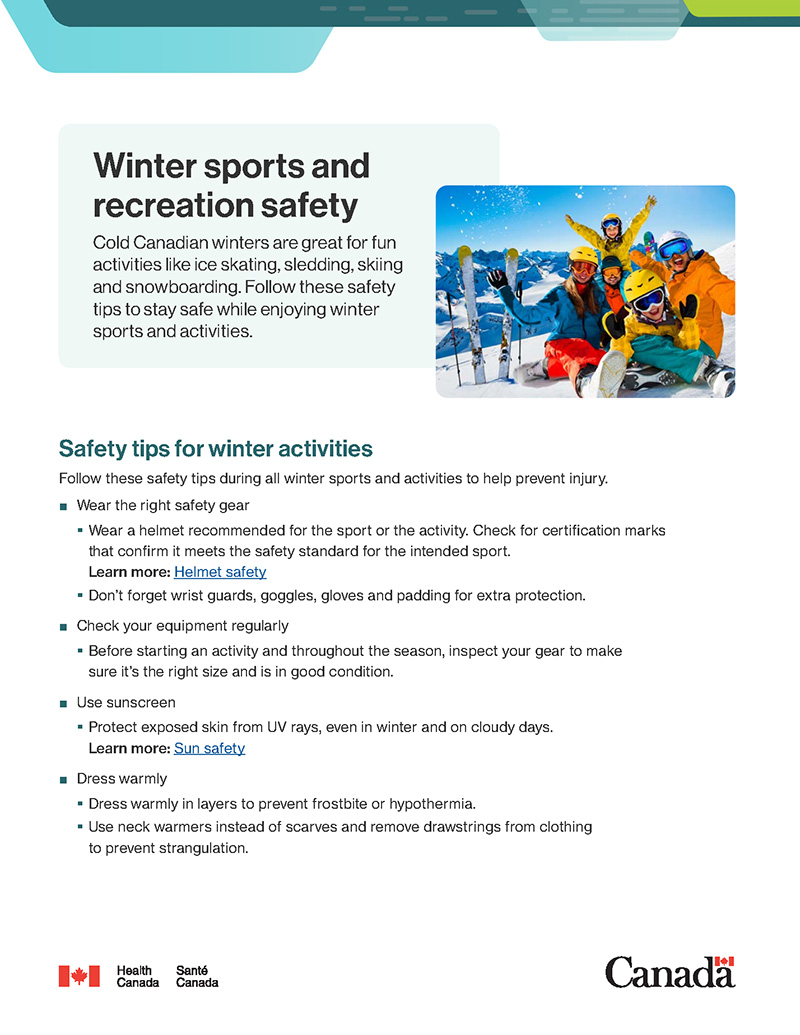
Cold Canadian winters are great for fun activities like ice skating, sledding, skiing and snowboarding. Follow these safety tips to stay safe while enjoying winter sports and activities.
On this page
Safety tips for winter activities
Follow these safety tips during all winter sports and activities to help prevent injury.
- Wear the right safety gear
- Wear a helmet recommended for the sport or the activity. Check for certification marks that confirm it meets the safety standard for the intended sport.
- Learn more: Helmet safety
- Don't forget wrist guards, goggles, gloves and padding for extra protection.
- Check your equipment regularly
- Before starting an activity and throughout the season, inspect your gear to make sure it's the right size and is in good condition.
- Use sunscreen
- Protect exposed skin from UV rays, even in winter and on cloudy days.
- Learn more: Sun safety
- Dress warmly
- Dress warmly in layers to prevent frostbite or hypothermia.
- Use neck warmers instead of scarves and remove drawstrings from clothing to prevent strangulation.
- Keep dry
- Change out of wet clothes and boots as soon as possible to prevent frostbite.
- Supervise young children
- Keep an eye on young children while they play outdoors or participate in winter activities to make sure they stay safe and don't get too cold or wet.
- Stay hydrated
- Drink lots of water before and during your practice, game or activity.
- Learn more: Make water your drink of choice
Safety tips for ice skating, sledding, skiing and snowboarding
Skating, sledding, tobogganing, skiing and snowboarding are fun ways to stay active in the winter, but it's important to know how to stay safe and prevent injuries.
Protect yourself and your family by following these additional safety tips on the ice and on the hills.
Ice skating safety tips for frozen lakes, rivers and ponds
- Make sure the ice looks to be at least 15 centimeters (6 inches) thick for skating alone and 20 centimeters (8 inches) for groups.
- Many factors can impact ice thickness, including snow cover, water currents, changes in air temperature or the presence of logs and rocks. Consult local experts to get more information about the hazards in your area before going out on the ice.
- Ice thickness can change quickly. Check the ice every time you go out, even if it was safe the day before.
- Never skate near pockets of open water. The ice is thin and unsafe in those areas.
- Stay off storm water management ponds.
Learn more about ice safety and how to measure ice thickness.
Sledding or tobogganing safety tips
- Use a safe sledding position.
- Kneel or sit upright on your sled or toboggan.
- Avoid sliding headfirst, which may put you at greater risk for head injuries.
- Don't lie flat on your back, as it may increase the chances of a spinal injury.
- Choose a safe location.
- Only sled in designated areas meant for sledding.
- Don't sled near roads, parking lots, rocks, trees, goal posts, signs, fences or other hazards.
Skiing and snowboarding safety tips
- Check that your equipment is in good condition and properly fitted. Improperly adjusted or ill-fitting helmets, bindings, boots, snowboards and skis can be dangerous.
- Have a professional check your bindings once a year.
- Make sure snowboards have full-length steel edges, sturdy bindings and a securely attached board leash.
- Wear sunglasses or goggles with UV protection to guard against snow glare.