
Privy Council Office’s 2026-2027 Departmental plan
On this page
Copyright information
© His Majesty the King in Right of Canada, as represented by the Prime Minister of Canada, 2026
ISSN 2371-7289
At a glance
This departmental plan details the Privy Council Office’s (PCO) priorities, plans, and associated costs for the upcoming three fiscal years.
These plans align with the priorities outlined in the Prime Minister’s Mandate Letter as well as PCO’s Raison d’être, mandate and role: who we are and what we do.
Key priorities
- Provide non-partisan advice to the Prime Minister, PCO’s portfolio ministers, Cabinet, and Cabinet committees on matters of national and international importance
- Support the smooth functioning of the Cabinet decision-making process to help implement the Government’s agenda
- Ensure Canada is safe and secure, and promote a fair, transparent, and democratic government
- Foster an effective, diverse, inclusive, and innovative public service
Government of Canada Mandate Letter Priorities
- Establishing a new economic and security relationship with the United States and strengthening our collaboration with reliable trading partners and allies around the world
- Building one Canadian economy by removing barriers to interprovincial trade and identifying and expediting nation-building projects that will connect and transform our country
- Bringing down costs for Canadians and helping them to get ahead
- Making housing more affordable by unleashing the power of public-private cooperation, catalysing a modern housing industry, and creating new careers in the skilled trades
- Protecting Canadian sovereignty and keeping Canadians safe by strengthening the Canadian Armed Forces, securing our borders, and reinforcing law enforcement
- Attracting the best talent in the world to help build our economy, while returning our overall immigration rates to sustainable levels
- Spending less on government operations so that Canadians can invest more in the people and businesses that will build the strongest economy in the G7
Comprehensive Expenditure Review
The government is committed to restraining the growth of day-to-day operational spending to make investments that will grow the economy and benefit Canadians.
As part of meeting this commitment, PCO is planning the following spending reductions:
- 2026-27: $14,912,000
- 2027-28: $19,883,000
- 2028-29: $29,824,000
It is anticipated that these spending reductions will involve a decrease of approximately 201 full-time equivalents by 2028-29.
PCO will achieve these reductions by doing the following:
- Flattening the executive structure, automating Prime Minister correspondence from the public, modernizing Governor in Council appointments and Cabinet document systems, and digitizing routine messenger services.
- Reducing HR, Finance and IT staff to align with a smaller PCO workforce and modernizing and streamlining operations to meet service demands.
- Discontinuing select functions and sunset program funding such as Clean Growth and Public Lands and Housing. There will also be consolidation within various functions to eliminate duplication while maintaining essential expertise.
The figures in this departmental plan reflect these reductions.
Highlights for the Privy Council Office in 2026-27
In 2026–27, the Privy Council Office (PCO) will play a central role in advancing the Government of Canada’s agenda.
Central advice and Cabinet support
PCO will continue to serve the Prime Minister and Cabinet through timely, integrated, non-partisan advice on complex domestic and international issues while ensuring the smooth functioning of Cabinet and Cabinet committee decision-making. Furthermore, PCO will facilitate and drive execution by coordinating departments, tracking delivery, and helping to translate Cabinet decisions into coherent action.
Driving Investment and Economic Confidence PCO will provide integrated, strategic advice to the Prime Minister and Cabinet to reinforce Canada’s position as a stable, competitive, and trusted destination for domestic and foreign investment. This includes supporting policy coherence across economic, trade, security, and regulatory files to enhance investor certainty, promote long-term productivity, and strengthen Canada’s economic resilience.
Advancing trade diversification and economic resilience
To reduce reliance on any single market and build the strongest economy in the G7, PCO will coordinate whole-of-government efforts to diversify Canada’s international trade and investment relationships. This includes supporting the development of new foreign, economic, and security policy priorities that expand access to reliable partners and allies, strengthen supply chains, and promote Canadian competitiveness across key sectors.
Strengthening the Canada–United States economic partnership
PCO will continue to support Canada’s economic and security relationship with the United States with advice on trade, borders, supply chains, security, and investment. By aligning foreign, defence, economic, and domestic policy considerations, PCO will help ensure Canada is well positioned to manage shared challenges and seize emerging opportunities in the bilateral relationship.
Accelerating Major Projects and Nation-Building Infrastructure
PCO will support the Major Projects Office (MPO) in getting projects built faster. Through streamlined governance, a single federal point of leadership, and working with proponents and permitting authorities with a goal of getting projects through the process within two years, the MPO will create a more predictable, efficient environment for project proponents. This work will support the development of trade-enabling infrastructure, large-scale industrial and transportation projects, and the responsible development of energy and natural resources, in partnership with provinces and territories, Indigenous Peoples, and the private sector.
Together, these efforts will help advance one Canadian economy—strengthening investment, expanding trade opportunities, accelerating major projects, and ensuring Canada remains competitive, resilient, and well positioned for long-term growth.
For 2026-27, PCO’s total planned spending is $252,265,293, with 1,246 planned full-time equivalent staff.Summary of planned results
The following provides a summary of the results the department plans to achieve in 2026-27 under its main areas of activity, called “core responsibilities.”
Core responsibility : Serve the Prime Minister and Cabinet
PCO’s sole core responsibility is to provide advice and support to the Prime Minister, portfolio ministers, Cabinet, and Cabinet committees.
- Planned spending: $151,752,321
- Planned human resources: 724
More information about Serve the Prime Minister and Cabinet can be found in the full plan.
For complete information on PCO’s total planned spending and human resources, read the Planned spending and human resources section of the full plan.
From the Prime Minister
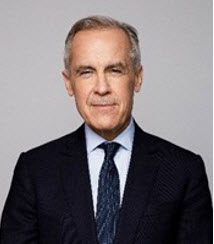
The Right Honourable
Mark Carney
Prime Minister of Canada
In a more dangerous and divided world, Canadians need a government that acts with purpose, discipline, and at pace. The Privy Council Office plays a central role in that effort – supporting strong Cabinet decision-making, providing integrated strategic advice, and ensuring the government’s priorities are translated into concrete action and tangible results.
To that end, I am pleased to present the Privy Council Office’s 2026-27 Departmental Plan, which outlines how the Privy Council Office will continue to support the government’s ambitious agenda at a time of economic disruption and global realignment.
This plan reflects the government’s commitment to building our strength at home: bolstering Canada’s security, building one Canadian economy, advancing major nation-building projects, and bringing down costs for Canadians. Over the year ahead, we will also continue to strengthen our international partnerships – building a dense web of economic, trade, and security relationships that move Canada from reliance to resilience and deliver long-term growth and prosperity.
Throughout this work, we will maintain a disciplined approach to public administration. By modernising the systems we use, embracing innovation, and holding the line on day-to-day operational spending, the Privy Council Office will help ensure that public resources are focused where they have the greatest impact.
A strong and united Canada depends on a strong and professional public service. I thank the public servants of the Privy Council Office – and across government – for their continued service as we work together to build a more secure, prosperous, and resilient country.
The Right Honourable Mark Carney
Prime Minister of Canada
Plans to deliver on core responsibilities and internal services
Core responsibilities and internal services
Core responsibility: Serve the Prime Minister and Cabinet
In this section
Description
To deliver analysis, advice, and support to the Prime Minister and portfolio ministers, including non-partisan advice and information from across the public service resulting from consultations and collaboration with international and domestic sources inside and outside government.
To act as secretariat to the Cabinet and its committees, including managing the Cabinet's decision-making system; coordinating departmental policy proposals to Cabinet; scheduling and providing support services for meetings of Cabinet and Cabinet committees; advancing the Government's agenda across federal departments and agencies; and providing administrative services to the Prime Minister's Office, portfolio ministers, and Commissions of Inquiry.
To lead and renew the public service in order to advise the Government in implementing its agenda and deliver services and results to Canadians.
Indicators, results and targets
This section presents details on the department’s indicators, the actual results from the three most recently reported fiscal years, the targets and target dates for ‘Serve the Prime Minister and Cabinet’. Details are presented by departmental result.
Table 1: Government’s priorities are achieved
Table 1 provides a summary of the target and actual results for each indicator associated with the results under ‘Serve the Prime Minister and Cabinet’.
| Departmental Result Indicators | Actual Results | 2026–27 Target | Date to achieve target |
|---|---|---|---|
| Percentage of Cabinet Committee Chairs who felt they were well-supported with administrative, logistical, and briefing support |
|
Survey in spring 2026 will establish a baseline and target | Survey in spring 2026 will establish baseline and target |
| Percentage of Cabinet Committee Chairs who believe their time was effectively allocated to advancing Government priorities and addressing time-sensitive business |
|
Survey in spring 2026 will establish a new baseline and target | Survey in spring 2026 will establish a new baseline and target |
| *This indicator was introduced in 2023-24, therefore there are no results available for previous years. | |||
Table 2: Cabinet receives high-quality advice
| Departmental Result Indicators | Actual results | 2026–27 Target | Date to achieve target |
|---|---|---|---|
| Percentage of Cabinet Ministers satisfied with service and advice from PCO |
|
Feedback is received from over 50% of Ministers and 80% overall satisfaction with services from respondents | Spring 2027 |
| Percentage of Cabinet Ministers that indicate that Memorandums to Cabinet (MCs) include satisfactory GBA Plus analysis |
|
Feedback is received from over 50% of Ministers and 80% overall satisfaction with services from respondents | Spring 2027 |
Table 3: Cabinet decision-making process runs smoothly to help implement the Government’s agenda
| Departmental Result Indicators | Actual results | 2026–27 Target | Date to achieve target |
|---|---|---|---|
| Orders in Council (OICs) are made available to the public without delay in accordance with the Statutory Instruments Act |
|
|
March 2027 |
| *This indicator was introduced in 2023-24; therefore, there are no results available for previous years. | |||
Table 4: Public Service Renewal priorities are achieved
| Departmental Result Indicators | Actual results | 2026–27 Target | Date to achieve target |
|---|---|---|---|
| Percentage of public service employees who describe their workplace as being psychologically healthy |
|
Increase | March 2027 |
| Percentage of public service employees who feel that their department or agency implements activities or practices that support diversity, inclusion, and anti-racism* |
|
Increase | March 2027 |
| *This indicator was introduced in 2023-24; therefore, there are no results available for previous years. | |||
Additional information on the detailed results and performance information for PCO’s program inventory is available on GC InfoBase.
Plans to achieve results
In 2026-27. PCO will focus on delivering high-quality analysis, advice and operational support to the Prime Minister, Cabinet and Cabinet committees. The department will work with other departments and agencies to advance the Government’s public service agenda and support the Clerk of the Privy Council in his role as Head of the Public Service. PCO will also support the Prime Minister in determining how the Government of Canada should be structured and organized to meet its priorities for the year.
Key priority 1: Provide non-partisan advice to the Prime Minister, portfolio ministers, Cabinet, and Cabinet committees on matters of national and international importance
- PCO’s advice and support to the Prime Minister will help advance the effective development and implementation of the Government's agenda and priorities. PCO will provide timely, comprehensive and expert analysis and advice to support these priorities and enable the Government to deliver its mandate to Canadians in a coordinated and coherent manner.
- Facilitate the implementation of responses to review bodies and recommendations by Commissions of Inquiry to address issues of national importance and inform enhancements to public programs and policies that better support Canadians.
- The department is committed to ensuring the Prime Minister and Cabinet are informed and supported on all security and intelligence policy and operational issues, through the careful monitoring of intelligence, development of strategic advice and intelligence assessments, and coordination with operational agencies and departments. PCO also supports national security and intelligence functions by ensuring secure and accredited physical spaces are available and maintained to conduct business across Canada.
- Deliver advice and analysis to the Prime Minister to advance Canada’s international engagements and collaborate with other federal departments and agencies to develop and provide strategic foreign and defence policy advice to advance Canada’s interests at home and abroad.
Mandate Letter Priority 1: Establishing a new economic and security relationship with the United States and strengthening our collaboration with reliable trading partners and allies around the world.
- Deliver advice and analysis to the Prime Minister and the Minister responsible for Canada-U.S. Trade, Intergovernmental Affairs, Internal Trade and One Canadian Economy to advance Canada’s international engagements, with respect to foreign and defence policy, peace and security, as well as international trade and foreign investment attraction.
- Work with international security and intelligence partners, including the United States and other allies, on common threats and challenges. Through bilateral and multilateral engagement, PCO plays a role in building trust and common understanding with both new and traditional partners.
- Inform and provide strategic advice and intelligence on issues that impact Canada’s security and national interest, with a particular focus on reinforcing Canada’s reputation as a key investment destination and keeping Canadians safe by strengthening the Canadian Armed Forces, securing borders, and reinforcing law enforcement.
- Coordinate with responsible departments and agencies to propose a vision, principles, and priorities for the development of new foreign, defence, and economic security, as well as diversification of Canada’s international trade, building the strongest economy in the G7.
- Support bilateral and multilateral relationships among federal, provincial and territorial governments as well as the Prime Minister’s engagement with First Ministers, including at First Ministers’ Meetings to address shared issues and build one Canadian economy.
- Canada’s fight against fentanyl continues to be a priority in 2026-27. To accelerate Canada’s ongoing work to detect, disrupt, and dismantle the illegal trade in fentanyl and synthetic drugs, PCO will coordinate federal, provincial, territorial and municipal enforcement and public health efforts; support intelligence-driven operations; apply data-driven performance indicators; work with the U.S., Mexico, China, and India to stop the global fentanyl trade, including precursor chemicals and to dismantle transnational criminal networks and money-laundering operations that fuel this crisis.
Mandate Letter Priority 2: Building one Canadian economy by removing barriers to interprovincial trade and identifying and expediting nation-building projects that will connect and transform our country.
- PCO will continue to coordinate efforts with other federal departments and with provinces and territories to remove barriers to internal trade, including in the housing and construction and labour mobility sectors. This will include supporting engagement through the Committee on Internal Trade; activating a network of domestic trade contacts; finding innovative approaches to support internal trade in the food sector; and developing strategies to measure and communicate results to Canadians.
- Advance shared priorities with provincial and territorial governments by maintaining effective relations and coordinating with key federal partners, including the newly established MPO.
- MPO’s vision is to support the Government’s efforts to expand and diversify domestic and international trade, build trade-enabling infrastructure such as ports, large infrastructure projects such as railways and responsibly develop untapped energy and natural resources.
- The MPO will drive transformative change in Canada’s regulatory and decision-making processes by streamlining approvals and committing to a two-year timeline for major project decisions. It will provide a single point of contact and leadership for major projects referred to the Office. The MPO will work with federal departments, provinces and territories, Indigenous Peoples, and private-sector partners to help move projects forward faster, with greater clarity, and in alignment with Canada’s economic, environmental, and reconciliation goals.
- Support efforts to increase Canada’s industrial competitiveness by providing strategic advice to advance major economic priorities, such as the Climate Competitiveness Strategy, Buy Canadian initiative, and Automotive Strategy, while ensuring policy coherence across portfolios and alignment with long-term competitiveness goals.
Mandate Letter Priority 3: Bringing down costs for Canadians and helping them to get ahead.
- Work with Finance Canada to deliver the new Canada Groceries and Essentials Benefit to help more than 12 million low- and modest-income Canadians afford day-to-day essentials.
- Bring together departments and agencies to develop a National Food Security Strategy that strengthens domestic food production and improves access to affordable, nutritious food for all Canadians.
- Collaborate with departments to renew the Canada Strong Pass in Summer 2026 to make domestic travel and cultural experiences more affordable, while also encouraging Canadians to “choose Canada” and support local tourism and cultural institutions.
- Work with Employment and Social Development Canada to chart a sustainable path forward for the Canada-wide Early Learning and Child Care System.
Mandate Letter Priority 4: Making housing more affordable by unleashing the power of public-private cooperation and creating new careers in the skilled trades.
- Collaborate with departments and agencies to advance Build Canada Homes as a new federal entity that will build affordable homes, leverage federal lands for housing, support builders with financing, and encourage innovative building methods – using Canadian technology, workers and lumber, and sustainable building practices.
- Help enable Build Canada Homes to work with provinces, territories, municipalities and Indigenous communities to help fight homelessness by building transitional and supportive housing.
- Work with departments and agencies to ensure effective and efficient implementation of measures to create new careers in the skilled trades, such as investments in the Union Training and Innovation Program to support union-led apprenticeship training in Red Seal trades.
Mandate Letter Priority 6: Attracting the best talent in the world to help build the economy and returning overall immigration rates to sustainable levels.
- PCO will continue to inform and provide strategic advice on advancing the government’s immigration commitments by: 1) stabilize permanent resident (PR) admissions at less than 1% of Canada’s population annually beyond 2027; 2) reduce the number of temporary workers and international students to less than 5% of Canada’s population by the end of 2027; 3) establish a 12% target for Francophone immigration outside Quebec by 2029.
- In collaboration with departments and agencies, PCO will pursue measures to restore control, clarity, and consistency to Canada’s immigration system, while maintaining compassion in choices and driving competitiveness in our economy. This will include implementing enhancements to the asylum system to better manage intake volumes and processing backlogs, as well as improvements to immigration processing for permanent resident streams to address the growing backlogs and lengthy processing times.
- Work with responsible departments to implement the permanent resident and temporary resident admission targets in the 2026-2028 Immigration Levels Plan, as well as one-time initiatives to transition up to 115,000 Protected Persons and 33,000 work permit holders to permanent residency in 2026 and 2027.
- To advance the government’s International Talent Attraction Strategy, PCO will work with responsible departments to accelerate immigration pathways for top international talent and recruit over one thousand highly qualified international researchers to Canada, as well as other highly-skilled workers.
Mandate Letter Priority 7: Spending less on government operations so that Canadians can invest more in the people and businesses that will build the strongest economy in the G7.
- PCO will drive a coordinated approach to reducing government operating costs by providing timely, integrated and evidence-based advice to the Prime Minister and Cabinet. To achieve this, PCO will play a challenge function role to ensure smooth implementation of mission-related priorities, including files such as the use of AI in government and the streamlining of procurement processes, while strengthening its capacity to assess trade-offs between operation savings and long-term economic performance.
- Continue to provide central strategic coordination for major government investments and economic initiatives outlined in Budget 2025, ensuring policy coherence across ministerial portfolios, and identifying trade-offs across short-term support and long-term competitiveness goals. PCO will ensure that fiscal planning measures, including the Comprehensive Expenditure Review, are integrated into the government’s long-term economic priorities to promote efficient use of resources for key investments and economic initiatives.
- Serve as the central challenge function that supports departments and agencies in developing streamlined program architectures and governance models that reduce administrative burden and improve service delivery to businesses and communities.
Key priority 2: Support the smooth functioning of the Cabinet decision-making process to help implement the Government’s agenda
- PCO will deliver an effective and efficient Cabinet business system by supporting the Prime Minister and Cabinet ministers with Cabinet and Cabinet committee meetings. This includes coordinating Cabinet priorities through managing the Cabinet forward agenda, planning meeting agendas, and operating the official submission and distribution systems for Cabinet material.
- Help ensure that Cabinet decision-making proceeds smoothly and supports the Government’s agenda. This involves working with departments and agencies to strengthen proposals and advice, highlight cross-government linkages, and integrate a range of perspectives, including those of impacted communities, other jurisdictions, and service delivery partners.
- Work to modernize, streamline, and digitize Cabinet business, with a view to improve the provision of timely advice and information.
- The Governor (General) in Council (GIC) refers to the Governor General of Canada acting by and with the advice and consent of Cabinet. PCO will continue to support Cabinet in its GIC role and to support the Prime Minister and the Clerk of the Privy Council as they use and manage Orders in Council (OICs), regulations, and other statutory instruments.
- Continue to modernize GIC appointments and OIC processes to eliminate legacy processes and update systems, making them faster and more digital. PCO will update its OIC website to facilitate public access to OICs and other GIC decisions.
Key priority 3: Ensure Canada is safe and secure, and promoting fair, transparent and democratic Government
Mandate Letter Priority 5: Protecting Canadian sovereignty and keeping Canadians safe by strengthening the Canadian Armed Forces, securing our borders, and reinforcing law enforcement.
- PCO will support the Prime Minister, Cabinet Committees, and Cabinet on matters of security and the national interest, monitor evolving threats and opportunities for Canada, and coordinate integrated advice and intelligence briefings to Cabinet. PCO will continuously identify opportunities to review and improve the support provided to the Prime Minister and National Security Council in responding to strategic, long-term issues impacting Canada’s security or national interest.
- The new, PCO-led National Security Strategy will act as a strategic vision for national security work by the Government of Canada and will aid in identifying priorities and provide appropriate advice for the Government over the coming years. PCO will develop new ways to turn national security priorities into clear goals and actions for the security community.
- Continue to play a convening role, share information, and collaborate with security and intelligence departments across the Government of Canada to provide timely and quality advice to the Prime Minister, portfolio ministers, Cabinet and Cabinet Committees, including on developing national security threats and events.
- Continue to play a coordination function for the Canadian intelligence community, including by developing Joint Intelligence Assessments on issues of national interest for the Prime Minister, National Security Council, and Cabinet. PCO will continue to develop intelligence assessment capacity in targeted geographic and thematic areas. PCO will also work with security partners to maximize resources dedicated to analysing intelligence information within government.
- Continue to coordinate, develop and implement government-wide measures designed to protect and strengthen Canada’s democratic institutions and processes.
- Continue to convene and track the implementation and progress of Canada’s increased defence investments to build a stronger Canadian Armed Forces to protect Canadians, defend our sovereignty, and support our allies, including by meeting the NATO 2% defence spending commitment. This includes through supporting routine updates to Cabinet on this issue. In collaboration with responsible departments and agencies, PCO will continue to provide advice to the Prime Minister on work and initiatives that contribute to safeguarding Arctic sovereignty.
- Facilitate optimal decisions to support federal policing progression and reinforce the Royal Canadian Mounted Police’s capacity to tackle serious and organized crime by growing its qualified and expertly trained staff of federal policing personnel. This will enhance Canada’s capacity to combat serious and organized crime, contributing to safer and more secure communities for all Canadians.
- PCO will support an ambitious legislative agenda to make communities safer and work closely with partner departments to align border security enhancements with broader criminal justice and immigration reforms.
Key priority 4: Foster an effective, diverse, inclusive and innovative public service
- PCO will continue to design outcomes-based solutions by engaging with other federal departments and agencies to apply advanced data analytics, evidence-based behavioural and social science methods, and impact measurement and partnership brokering strategies in key priority areas such as trust in government and society, public safety and security, AI, and government operations.
- Support renewal efforts to build a public service that focuses on delivery, simplifies internal processes, ensures accountabilities are clear, and advances a values-based culture grounded in reconciliation, anti-racism, accessibility, equity, diversity and inclusion.
- Continue to support the Government in its commitment to an open, competency-based process for GIC appointments that reflect Canada’s diversity.
Gender-based Analysis Plus
Under its core responsibility to serve the Prime Minister and Cabinet, PCO integrates Gender-Based Analysis Plus (GBA Plus) into its advisory, coordination, and challenge functions to support informed decision-making, in accordance with the Canadian Gender Budgeting Act. Given PCO’s mandate, impacts on gender and diversity are primarily realized through policy development processes, government-wide coordination, and leadership appointments. PCO will continue to support the coordination of GBA Plus considerations using a combination of representation data, process-based indicators, and evidence-informed analysis.
The primary elements of this approach include:
- A systematic application of GBA Plus in advice to the Prime Minister and Cabinet, including through mandatory assessments in Cabinet committee materials and Memoranda to Cabinet.
- PCO is working to enhance the documentation of GBA Plus in the challenge function. This will further the qualitative assessment and monitoring of gender and diversity considerations in policy proposals.
- Applying a GBA Plus lens to policy advice related to PCO’s various programs, including consideration of differential regional, demographic, socio-economic, and international impacts.
- The use of administrative and representation data, where available, to monitor diversity outcomes associated with PCO-led processes, for instance for GIC appointments.
- As of December 31, 2025, there were approximately 1,754 GIC appointees occupying positions within administrative tribunals, agencies, boards, commissions, international organizations, and Crown corporations. Of these appointees, 51% identify as women, 17% as visible minorities, 8% as Indigenous peoples, and 6% as persons with a disability.
- The integration of external research, expert advice, and disaggregated data from partner organizations to inform analysis of differential impacts across diverse and equity-deserving groups.
- PCO promotes GBA Plus training for all new employees as part of these employees’ onboarding packages and for existing employees so they can strengthen intersectional considerations when undertaking the challenge-function role and providing advice.
- PCO collaborates with federal partners, including Women and Gender Equality Canada, the Department of Finance Canada, and the Treasury Board of Canada Secretariat to support the alignment of GBA Plus considerations in horizontal initiatives and intergovernmental policy development.
- PCO will continue to support inclusive policy design and evaluation through data analytics, behavioural and social science methods, and inclusive engagement practices.
Where data collection to monitor or report on the impacts of initiatives by gender and diversity is not possible, PCO continues to apply its GBA Plus Framework to deploy its mandate. Additionally, ongoing efforts focus on refining tools, guidance, and evidence to support consistent and meaningful consideration of gender and diversity impacts in decision-making.
Planned resources to achieve results
Table 5: Planned resources to achieve results for ‘Serve the Prime Minister and Cabinet’
Table 5 provides a summary of the planned spending and full-time equivalents required to achieve results.
| Resource | Planned |
|---|---|
| Spending | 151,752,321 |
| Full-time equivalents | 724 |
Complete financial and human resources information for PCO’s program inventory is available on GC InfoBase.
Program inventory
‘Serve the Prime Minister and Cabinet’ is supported by the following programs:
- International Affairs and National Security
- Impact and Innovation
- Legislative and Parliamentary Governance
- Planning and Operations of Cabinet
- Intergovernmental Affairs
- Social and Economic Policy
- Senior Personnel and Public Service Renewal
- Commissions of Inquiry
Additional information related to the program inventory for ‘Serve the Prime Minister and Cabinet’ is available on the Results page on GC Infobase.
Summary of changes to reporting framework since last year
In the past year, PCO’s reporting framework associated with its core responsibility was updated as follows:
- Added a new department results indicator:
- Percentage of Cabinet Committee Chairs who felt they were well-supported with administrative, logistical, and briefing support
- Amended an existing department results indicator:
- Percentage of Cabinet Committee Chairs who believe their time was effectively allocated to advancing Government priorities and addressing time-sensitive business
- Removed departmental results indicator:
- Percentage of official Cabinet material submitted by departments to PCO, respecting the Guidance for the Drafting of the Memoranda to Cabinet
Internal services
In this section
Description
Internal services are the services that are provided within a department so that it can meet its corporate obligations and deliver its programs. There are 10 categories of internal services:
- acquisition management services
- communications services
- financial management services
- human resources management services
- information management services
- information technology services
- legal services
- materiel management services
- management and oversight services
- real property management services
Plans to achieve results
This section details the department’s plans to achieve results and meet targets for internal services.
Through its ongoing modernizing efforts, the departmental Internal Services functions will provide efficient and timely services in support of PCO’s priorities.
In 2026–27, PCO will continue to:
- provide effective stewardship of financial, human and information resources;
- work with Government partners, including the Treasury Board of Canada Secretariat, the Canada School of Public Service and the Knowledge Circle for Indigenous Inclusion to support horizontal initiatives and the Call to Action on Anti-Racism, Equity, and Inclusion in the Federal public service;
- provide support for secure communication technologies for senior officials across government;
- deliver departmental security operations, through integrated security planning and coordination with partners, to protect people, information, and assets and support continuity of operations;
- implement a new case management software solution and related process improvements, to enable timely processes of requests under the Access to Information Act;
- strengthen its departmental information and data governance practices, a key enabler for AI adoption as well as ongoing trust and transparency obligations;
- implement annual commitments related to PCO’s Accessibility Plan;
- promote inclusion, diversity, equity and anti-racism in the workforce, including using data analytics and disaggregated data tools to identify trends, gaps, opportunities, and increase the representation of employment equity groups; and
- provide PCO’s newly established Special Operating Agency, the MPO, with internal services support.
Responding to the Call to Action on Anti-Racism, Equity and Inclusion at PCO
Building on the foundational work and progress achieved to date, the Clerk of the Privy Council, the Secretary of the Treasury Board, and the Deputy Minister of Finance created a unified Central Agencies Inclusion, Diversity, Equity and Anti-racism (IDEA) Secretariat in June 2025. The Central Agencies IDEA Secretariat will continue to advance the Clerk’s Call to Action on Anti-Racism, Equity, and Inclusion and a values-based culture, delivering on public service-wide priorities on reconciliation, anti-racism, accessibility, equity, diversity, and inclusion by working across the three departments to foster an inclusive culture, harmonize initiatives and improve outcomes for employees from equity deserving groups.
PCO will use executive performance management to advance progress on equity, diversity and inclusion. This includes analyzing disaggregated employment equity data to inform decision-making (e.g., talent management) while addressing representation gaps.
As of December 2025, representation increased across all four employment equity groups with increases since 2020 for Indigenous Peoples (2.7% to 3.3%), Racialized People (16.5% to 24.9%), Women (53.9% to 57.7%) and Persons with Disabilities (3.2% to 9.5%). At the departmental level, Women and Indigenous Peoples employment equity groups exceed workforce availability (WFA) as of December 2025; while Racialized People and Persons with Disabilities remain below their WFA benchmarks (WFA gaps of 5 and 22 employees, respectively). Disaggregated data showed the representation of Black employees increased from 3.4% (29 employees) in March 2020 to 6.2% (66 employees) in December 2025.
Areas with larger representation gaps, particularly the executive feeder and Economics and Social Science Services groups for Persons with Disabilities, Racialized People, and Indigenous Peoples, require continued focus. However, representation in the executive classification improved for all four employment equity groups from March 2020 to December 2025, with the most significant improvement for Racialized People, rising from 9.3% (7 executives) to 30.6% (33 executives).
PCO will continue to advance initiatives aligned with the Call to Action, enterprise-wide diversity and inclusion strategies, and reconciliation commitments, and will demonstrate progress through clear actions, measurable outcomes, and transparent reporting. This includes supporting employee networks and safe spaces, offering mentorship or sponsorship opportunities for underrepresented groups, and engaging diverse perspectives through dialogue and feedback.
Accessibility and Disability Inclusion at PCO
PCO will continue advancing an accessible and barrier-free workplace by publishing and implementing PCO’s renewed Accessibility Plan 2026-2028 as part of our department’s obligations under the Accessible Canada Act. The renewed plan improves upon efforts made in the past three years in ensuring employees have the tools, resources, and supports needed to advance accessibility and disability inclusion.
Table 6: Indicator, target and result for diversity and inclusion
| Expected result | Indicator | 2026-27 Target | Date to achieve target |
|---|---|---|---|
| PCO’s workforce is representative of the Canadian population | Percentage of employment equity groups representation (Visible Minorities, Indigenous Peoples, Women and Persons with Disabilities) in the Executive (EX) and EX-feeder (EX minus-1 and EX minus-2) groups at PCO | At or above the most recent workforce availability, or improved from previous year (if not at workforce availability) | March 2027 |
Planned resources to achieve results
Table 7: Planned resources to achieve results for internal services this year
Table 7 provides a summary of the planned spending and full-time equivalents required to achieve results.
| Resource | Planned |
|---|---|
| Spending | 100,512,972 |
| Full-time equivalents | 522 |
Complete financial and human resources information for PCO’s program inventory is available on GC InfoBase.
Planning for contracts awarded to Indigenous businesses
For 2026-27, PCO plans to meet its target of awarding 7% of the total value of all its contracts to Indigenous businesses by:
- Raising awareness across the department through training sessions and by reinforcing with business owners that they must consider Indigenous suppliers particularly in areas where contracted goods and services are part of regular operations;
- Requiring business owners to justify why an Indigenous supplier is not being considered, where capacity exists;
- Leveraging existing tools, such as voluntary set-asides under the Procurement Strategy for Indigenous businesses; and
- Ensuring all Procurement Officers continue to complete the mandatory training on Indigenous considerations in procurement.
Table 8: Percentage of contracts planned and awarded to Indigenous businesses
Table 8 presents the current, actual results with forecasted and planned results for the total percentage of contracts the department awarded to Indigenous businesses.
| 5% Reporting Field | 2024-25 Actual result | 2025-26 Forecasted result | 2026-27 Planned result |
|---|---|---|---|
| Total percentage of contracts with Indigenous businesses | 4.8% | 7% | 7% |
PCO did not meet its 2024-25 target of 7% because of $32 million in contracts awarded through a competitive process for services supporting the Candidate Security Program of the 45th General Election, representing 45.1% of PCO’s total contract values. Excluding this initiative, PCO would have awarded 8.7% of the total value of its contracts to Indigenous businesses.
Department-wide considerations
In this section
Related government priorities
United Nations 2030 Agenda for Sustainable Development and the UN Sustainable Development Goals
In 2026–27, PCO will advance the United Nations 2030 Agenda through its 2023–2027 Departmental Sustainable Development Strategy by integrating environmental, social, and economic considerations into its advisory and coordination roles.
Sustainable Development Goal (SDG) 10: Advance reconciliation with Indigenous Peoples and take action on inequality
PCO will promote reconciliation and inclusive decision making by fostering a culture informed by Indigenous histories and rights and by continuing training and awareness initiatives that help reduce systemic barriers.
SDG 12: Reduce waste and transition to zero-emission vehicles
PCO will support sustainable operations by transitioning to a zero‑emission fleet and embedding environmental considerations into procurement through green procurement training and practices.
SDG 13: Take action on climate change and its impacts
PCO will strengthen climate resilience within its operations and support climate related policy development by assessing climate risks and understanding barriers to greater climate action and environmental protection in Canada.
More information on PCO’s contributions to Canada’s Federal Implementation Plan on the 2030 Agenda and the Federal Sustainable Development Strategy can be found in PCO's Departmental Sustainable Development Strategy.
Artificial Intelligence
In 2026-27, PCO will continue to advance the responsible use of AI to strengthen policy development, enhance analytical capabilities, and improve the efficiency of government operations. AI will be used to automate routine tasks and enhance decision-making, enabling employees to focus on higher-value strategic work, directly contributing to PCO’s mandate and the broader Public Service Renewal agenda. Furthermore, PCO will extend these capabilities by equipping the MPO with specialized AI tools to support operational requirements.
To increase productivity and support efficient operations, PCO will focus on the following areas:
- Operational integration: Implementing and scaling AI solutions across key strategic areas, including predictive modeling and simulation, qualitative and quantitative analysis, and automated content generation.
- Intelligence analysis: Leveraging AI-enabled tools to support intelligence analysis and to improve the speed and accuracy of insights provided to the intelligence community.
- Standardized tools: Providing staff with access to enterprise AI solutions to enhance information processing and daily workflows.
To prepare the workforce and organization for responsible AI adoption, PCO will implement a comprehensive strategy focused on literacy and governance:
- Upskilling and literacy: Offering training resources to ensure employees understand how to use AI safely, effectively, and ethically. This includes focused education on privacy, bias, and informational security.
- Knowledge sharing: Sharing lessons learned from AI pilot initiatives to inform adoption strategies, measure productivity impacts, and promote responsible innovation.
- Data readiness and governance: Ensuring that AI use aligns with Treasury Board policies, directives, and guidance, and that appropriate governance mechanisms are in place to support transparency, accountability, and risk management.
Quality of life impacts
PCO’s core responsibility supports the Quality of Life Framework by advancing key indicators across four domains:
- Good governance: PCO strengthens the Democracy and Institutions category by providing non‑partisan advice and promoting transparency and accountability across the public service.
- Prosperity: PCO contributes to the Economic Security and Deprivation category by offering strategic analysis on issues such as affordability, housing, and foreign investment in Canada.
- Environment: PCO supports the Ecological Integrity and Environmental Stewardship category by advancing government efforts to reduce greenhouse gas emissions and improve air quality.
- Society: PCO promotes inclusive policy and practices related to equity, intersectionality, and reconciliation, and ensures that decision‑making reflects the diversity of perspectives across Canada.
For more information, refer to the Quality of Life Hub and the Quality of Life Framework of Canada.
Planned spending and human resources
This section provides an overview of PCO’s planned spending and human resources for the next three fiscal years and of planned spending for 2026-27 with actual spending from previous years.
Spending
This section presents an overview of the department's planned expenditures from 2023-24 to 2028-29.
Budgetary performance summary
Table 9: Three-year spending summary for core responsibilities and internal services (dollars)
Table 9 presents PCO’s spending over the past three years to carry out its core responsibilities and for internal services. Amounts for the 2025–26 fiscal year are forecasted based on spending to date.
| Core responsibility and internal services | 2023-24 Actual expenditures | 2024-25 Actual expenditures | 2025-26 Forecast spending* |
|---|---|---|---|
| Serve the Prime Minister and Cabinet | 121,482,862 | 138,737,441 | 141,470,277 |
| Subtotal | 121,482,862 | 138,737,441 | 141,470,277 |
| Internal services | 122,489,267 | 113,006,748 | 110,082,185 |
| Total | 243,972,129 | 251,744,189 | 251,552,462 |
| *2025–26 Forecast as of September 30, 2025. | |||
Analysis of past three years of spending
Core responsibility
PCO’s actual spending under its core responsibility increased by $17.3 million (14%) from 2023–24 to 2024–25, which was associated with increased spending on the Public Inquiry into Foreign Interference in Federal Electoral Processes and Democratic Institutions. This increase was slightly offset by spending reductions announced in Budget 2023 and employee retroactive payments made in 2023–24 related to pay rate increases.
Forecasted spending increased by $2.7 million (2%) from 2024–25 to 2025–26, mainly due to the establishment of the MPO, the continuation of PCO’s Choose Canada advertising campaign in 2025–26, and work related to Canada’s fight against fentanyl. This forecasted increase is partially offset by lower spending in 2025–26 due the conclusion of the Public Inquiry into Foreign Interference in Federal Electoral Processes and Democratic Institutions in 2024–25.
Internal services
PCO’s actual spending on internal services decreased by $9.5 million (8%) from 2023–24 to 2024–25, which was associated with the completion of the work of the Independent Special Rapporteur and employee retroactive payments made in 2023–24 related to pay rate increases. The decrease was partially offset by increased spending in 2024–25 to enhance PCO’s physical and information technology (IT) security posture.
Forecasted spending decreased by $2.9 million (3%) from 2024–25 to 2025–26, mainly due to costs incurred in 2024–25 for parental and maternity allowances and entitlements on cessation of service or employment.
More financial information from previous years is available on the Finances Section of GC Infobase.
Table 10: Planned three-year spending on core responsibilities and internal services (dollars)
Table 10 presents PCO’s planned spending over the next three years by core responsibilities and for internal services.
| Core responsibility and internal services | 2026-27 Planned spending | 2027-28 Planned spending | 2028-29 Planned spending |
|---|---|---|---|
| Serve the Prime Minister and Cabinet | 151,752,321 | 148,452,105 | 143,575,994 |
| Subtotal | 151,752,321 | 148,452,105 | 143,575,994 |
| Internal services | 100,512,972 | 98,735,797 | 96,171,376 |
| Total | 252,265,293 | 247,187,902 | 239,747,370 |
Analysis of the next three years of spending
Core responsibility
Expenditures for the core responsibility are expected to decrease by $3.3 million (2%) from 2026-27 to 2027-28. This is mainly due to the phasing out of construction activities to enhance PCO’s security posture, with the majority of expenditures occurring in 2026-27, as well as spending reductions announced in Budget 2025 (Comprehensive Expenditure Review). The decrease is expected to be partially offset by increased spending for the MPO.
From 2027-28 to 2028-29, spending is expected to further decrease by $4.9 million (3%), primarily due to reductions announced in Budget 2025, which are expected to partially offset by further increased spending for the MPO.
Internal services
Internal services spending is projected to decrease by $1.8 million (2%) from 2026-27 to 2027-28 and $2.6 million (3%) from 2027-28 to 2028-29, mainly due to incremental spending reductions announced in Budget 2025.
More detailed financial information on planned spending is available on the Finances section of GC Infobase.
Table 11: Budgetary gross and net planned spending summary (dollars)
Table 11 reconciles gross planned spending with net spending for 2026-27.
| Core responsibility and Internal Services | 2026-27 Gross planned spending (dollars) | 2026-27 Planned revenues netted against spending (dollars) | 2026-27 Planned net spending (authorities used) |
|---|---|---|---|
| Serve the Prime Minister and Cabinet | 152,511,817 | (759,496) | 151,752,321 |
| Subtotal | 152,511,817 | (759,496) | 151,752,321 |
| Internal services | 107,945,140 | (7,432,168) | 100,512,972 |
| Total | 260,456,957 | (8,191,664) | 252,265,293 |
Analysis of budgetary gross and net planned spending summary
Revenues reported include the provision of intelligence analysis training and those referred to in paragraph 29.1(2)(a) of the Financial Administration Act, including the provision of internal support services such as financial management, human resources, information technology services, and the Secure Communications for National Leadership initiative.
Information on the alignment of PCO’s spending with Government of Canada’s spending and activities is available on GC InfoBase.
Funding
This section provides an overview of the department's voted and statutory funding for its core responsibilities and for internal services. For further information on funding authorities, consult the Government of Canada budgets and expenditures.
Graph 1 summarizes the department's approved voted and statutory funding from 2023-24 to 2028-29.
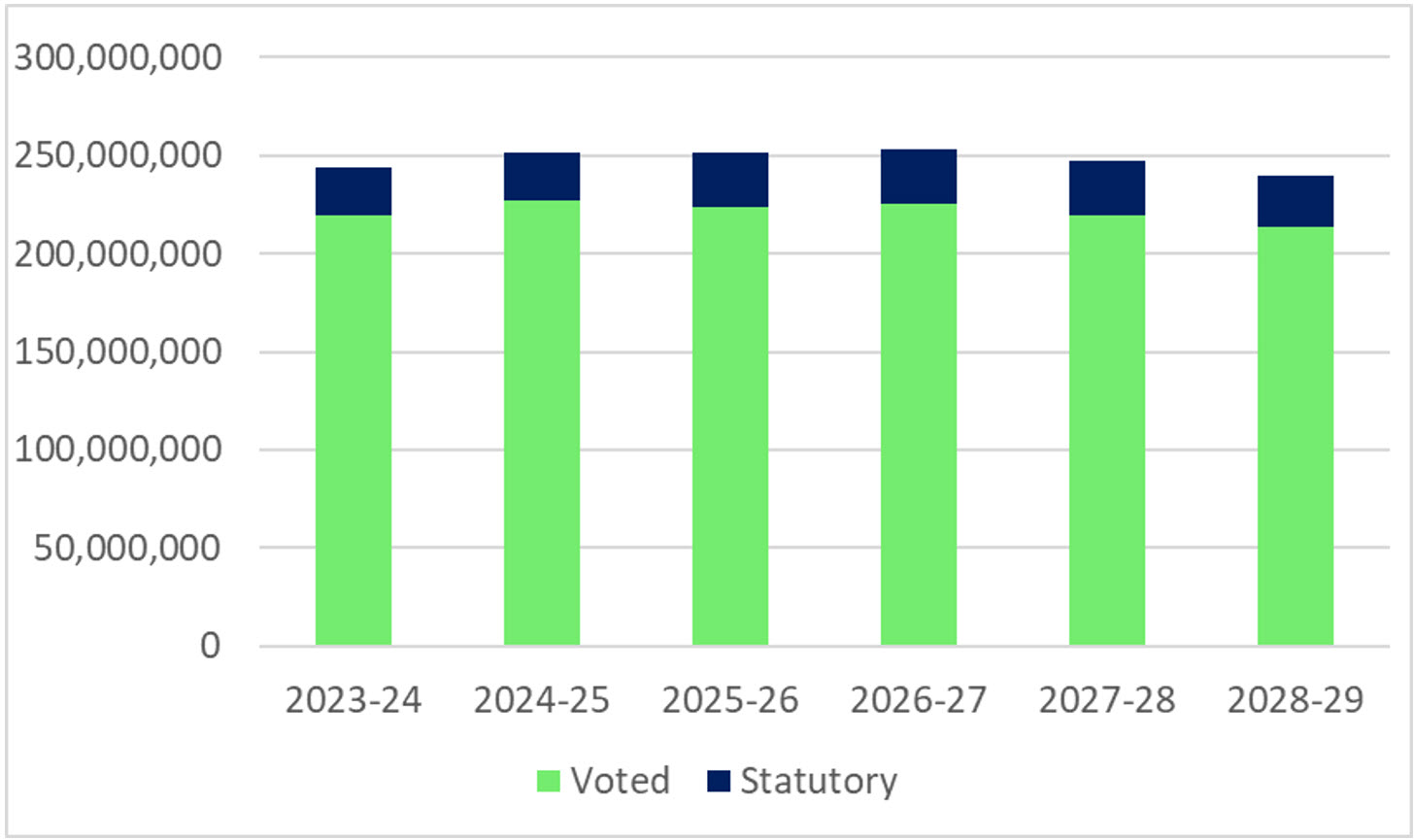
Text description of graph 1 (dollars)
| Fiscal year | Total | Voted | Statutory |
|---|---|---|---|
| 2023-24 | 243,972,129 | 219,369,215 | 24,602,914 |
| 2024-25 | 251,744,189 | 227,242,405 | 24,501,784 |
| 2025-26 | 251,552,462 | 224,099,850 | 27,452,612 |
| 2026-27 | 252,265,293 | 224,349,806 | 27,915,487 |
| 2027-28 | 247,187,902 | 219,761,984 | 27,425,918 |
| 2028-29 | 239,747,370 | 213,605,172 | 26,142,198 |
Analysis of statutory and voted funding over a six-year period
The departmental funding trend graph presents planned (voted and statutory spending) over a six-year period from 2023-24 to 2028-29. Fiscal years 2023-24 to 2024-25 show actual expenditures as reported in the Public Accounts, fiscal year 2025-26 presents forecasted spending as of September 30, 2025, and fiscal years 2026-27 to 2028-29 present planned spending.
Spending increased by $7.8 million (3%) in 2024-25. This is mainly attributable to increased spending on the Public Inquiry into Foreign Interference in Federal Electoral Processes and Democratic Institutions and to enhance PCO’s physical and IT security posture. The increase was slightly offset by reduced spending following employee retroactive payments made in 2023-24 related to pay rate increases, the completion of the work of the Independent Special Rapporteur in 2023-24, and incremental spending reductions announced in Budget 2023.
Forecasted spending in 2025-26 (as of September 30, 2025) is expected to decrease slightly by $0.2 million (0%) compared to 2024-25. This is mainly attributable to lower spending in 2025-26 due to the conclusion of the Public Inquiry into Foreign Interference in Federal Electoral Processes and Democratic Institutions in 2024-25, which is forecasted to be mostly offset by increased spending related to the MPO and PCO’s Choose Canada advertising campaign in 2025-26.
Planned spending in 2026-27 is higher than 2025-26 forecasted spending by $0.7 million (0%). The slight increase is mainly due to increased planned spending by the MPO and investments in PCO’s security posture. These increases are expected to mostly be offset by spending reductions announced in Budget 2025 and Budget 2023, as well as decreased planned spending on federal election costs and advertising initiatives in 2026-27.
Spending is expected to decrease by $5.1 million (2%) in 2027-28. This can be attributed to the phasing out of construction activities to enhance PCO’s security posture, with the majority of expenditures occurring in 2026-27, and incremental spending reductions announced in Budget 2025. The decrease is expected to be partially offset by increased planned spending by the MPO in 2027-28.
Spending is expected to further decrease by $7.4 million (3%) in 2028-29, primarily due to incremental spending reductions announced in Budget 2025, which are expected to be partially offset by incremental spending by the MPO in 2028-29.
For further information on PCO’s departmental appropriations, consult the 2026-27 Main Estimates.
Future-oriented condensed statement of operations
The future-oriented condensed statement of operations provides an overview of PCO’s operations for 2025-26 to 2026-27.
Table 12: Future-oriented condensed statement of operations for the year ended March 31, 2027 (dollars)
Table 12 summarizes the expenses and revenues which net to the cost of operations before government funding and transfers for 2025-26 to 2026-27. The forecast and planned amounts in this statement of operations were prepared on an accrual basis. The forecast and planned amounts presented in other sections of the Departmental Plan were prepared on an expenditure basis. Amounts may therefore differ.
| Financial information | 2025-26 Forecast results |
2026-27 Planned results | Difference (Planned results minus forecasted) |
|---|---|---|---|
| Total expenses | 289,453,355 | 293,248,181 | 3,794,826 |
| Total revenues | 7,834,481 | 8,170,387 | 335,906 |
| Net cost of operations before government funding and transfers | 281,618,874 | 285,077,794 | 3,458,920 |
Analysis of forecasted and planned results
Planned spending in 2026-27 is higher than 2025-26 forecasted spending by $3.4 million. The increase is mainly due to increased planned spending by the MPO and investments in PCO’s security posture. These increases are expected to mostly be offset by spending reductions announced in Budget 2025 and Budget 2023, as well as decreased planned spending on federal election costs and advertising initiatives in 2026-27.
A more detailed Future-Oriented Statement of Operations and associated Notes for 2026-27, including a reconciliation of the net cost of operations with the requested authorities, is available on PCO’s website.
Human resources
This section presents an overview of the department’s actual and planned human resources from 2023-24 to 2028-29.
Table 13: Actual human resources for core responsibilities and internal services
Table 13 shows a summary of human resources, in full-time equivalents, for PCO’s core responsibilities and for its internal services for the previous three fiscal years. Human resources for the 2025–26 fiscal year are forecasted based on year to date.
| Core responsibility and Internal Services | 2023-24 Actual full-time equivalents | 2024-25 Actual full-time equivalents | 2025-26 Forecasted full-time equivalents* |
|---|---|---|---|
| Serve the Prime Minister and Cabinet | 682 | 748 | 723 |
| Subtotal | 682 | 748 | 723 |
| Internal services | 664 | 585 | 526 |
| Total | 1,346 | 1,333 | 1,249 |
| *2025-26 Forecast as of September 30, 2025. | |||
Analysis of human resources over the last three years
Core responsibility
The increase in full-time equivalents (FTEs) under core responsibility from 2023-24 to 2025-26 is associated with the establishment of the MPO in 2025-26. The increase is partially offset by a decrease in FTEs due to spending reductions announced in Budget 2023, the conclusion of the Public Inquiry into Foreign Interference in Federal Electoral Processes and Democratic Institutions in 2024-25, the election and transition periods related to the 45th federal general election that was held on April 28, 2025, and the transfer of the Emergency Preparedness Secretariat to Public Safety in 2024-25.
Internal services
The decrease in internal services from 2023-24 to 2025-26 is associated with the election and transition periods related to the 45th federal general election that was held on April 28, 2025, and spending reductions announced in Budget 2023.
Table 14: Human resources planning summary for core responsibilities and internal services
Table 14 shows information on human resources, in full-time equivalents, for each of PCO’s core responsibilities and for its internal services planned for the next three years.
| Core responsibility and internal services | 2026-27 Planned full-time equivalents | 2027-28 Planned full-time equivalents | 2028-29 Planned full-time equivalents |
|---|---|---|---|
| Serve the Prime Minister and Cabinet | 724 | 666 | 657 |
| Subtotal | 724 | 666 | 657 |
| Internal services | 522 | 492 | 488 |
| Total | 1,246 | 1,158 | 1,145 |
| *FTEs are presented net of Budget 2025 reductions and planned staffing increases in 2026-27 | |||
Analysis of human resources for the next three years
Core responsibility
The overall decrease of 67 in planned FTEs from 2026-27 to 2028-29 for core responsibility is mainly due to spending reductions announced in Budget 2025.
Internal services
The overall decrease of 34 in planned FTEs from 2026-27 to 2028-29 for internal services is mainly due to spending reductions announced in Budget 2025.
Supplementary information tables
Information on PCO’s departmental sustainable development strategy can be found on PCO’s website.
Federal tax expenditures
PCO’s Departmental Plan does not include information on tax expenditures.
The tax system can be used to achieve public policy objectives through the application of special measures such as low tax rates, exemptions, deductions, deferrals and credits. The Department of Finance Canada publishes cost estimates and projections for these measures each year in the Report on Federal Tax Expenditures.
This report also provides detailed background information on tax expenditures, including descriptions, objectives, historical information and references to related federal spending programs as well as evaluations and GBA Plus of tax expenditures.
Corporate information
Departmental profile
Appropriate ministers:
- The Right Honourable Mark Carney, Prime Minister of Canada
- The Honourable Dominic LeBlanc, President of the King’s Privy Council for Canada and Minister responsible for Canada-U.S. Trade, Intergovernmental Affairs, Internal Trade and One Canadian Economy
- The Honourable Steven MacKinnon, Minister of Transport and Leader of the Government in the House of Commons
- The Honourable Joël Lightbound, Minister of Government Transformation, Public Works and Procurement and Québec Lieutenant
Institutional head:
Michael Sabia, Clerk of the Privy Council and Secretary to the Cabinet
Ministerial portfolio:
Privy Council Office
Enabling instrument:
Order in Council P.C. 1940-1121
Year of incorporation / commencement:
1867
Departmental contact information
Mailing address:
Privy Council Office
85 Sparks Street, Room 1000
Ottawa, Ontario
K1A 0A3
Telephone:
613-957-5153 (9:00 A.M. to 5:00 P.M. EST)
Email:
Websites:
Definitions
List of terms
- appropriation (crédit)
- Any authority of Parliament to pay money out of the Consolidated Revenue Fund.
- budgetary expenditures (dépenses budgétaires)
- Operating and capital expenditures; transfer payments to other levels of government, organizations or individuals; and payments to Crown corporations.
- core responsibility (responsabilité essentielle)
- An enduring function or role performed by a department. The intentions of the department with respect to a core responsibility are reflected in one or more related departmental results that the department seeks to contribute to or influence.
- Departmental Plan (plan ministériel)
- A report on the plans and expected performance of an appropriated department over a 3 year period. Departmental Plans are usually tabled in Parliament each spring.
- departmental result (résultat ministériel)
- A consequence or outcome that a department seeks to achieve. A departmental result is often outside departments’ immediate control, but it should be influenced by program-level outcomes.
- departmental result indicator (indicateur de résultat ministériel)
- A quantitative measure of progress on a departmental result.
- departmental results framework (cadre ministériel des résultats)
- A framework that connects the department’s core responsibilities to its departmental results and departmental result indicators.
- Departmental Results Report (rapport sur les résultats ministériels)
- A report on a department’s actual accomplishments against the plans, priorities and expected results set out in the corresponding Departmental Plan.
- full-time equivalent (équivalent temps plein)
- A measure of the extent to which an employee represents a full person-year charge against a departmental budget. For a particular position, the full-time equivalent figure is the ratio of number of hours the person actually works divided by the standard number of hours set out in the person’s collective agreement.
- Gender-based Analysis Plus (GBA Plus) (analyse comparative entre les sexes plus [ACS Plus])
Is an analytical tool used to support the development of responsive and inclusive policies, programs, and other initiatives. GBA Plus is a process for understanding who is impacted by the issue or opportunity being addressed by the initiative; identifying how the initiative could be tailored to meet diverse needs of the people most impacted; and anticipating and mitigating any barriers to accessing or benefitting from the initiative. GBA Plus is an intersectional analysis that goes beyond biological (sex) and socio-cultural (gender) differences to consider other factors, such as age, disability, education, ethnicity, economic status, geography (including rurality), language, race, religion, and sexual orientation.
Using GBA Plus involves taking a gender- and diversity-sensitive approach to our work. Considering all intersecting identity factors as part of GBA Plus, not only sex and gender, is a Government of Canada commitment.
- government priorities (priorités gouvernementales)
- For the purpose of the 2026-27 Departmental Plan, government priorities are the high-level themes outlining the government’s agenda in the 2025 Speech from the Throne.
- horizontal initiative (initiative horizontale)
- An initiative where two or more federal departments are given funding to pursue a shared outcome, often linked to a government priority.
- Indigenous business (enterprise autochtones)
- Requirements for verifying Indigenous businesses for the purposes of the departmental result report are available through the Indigenous Services Canada Mandatory minimum 5% Indigenous procurement target website.
- non‑budgetary expenditures (dépenses non budgétaires)
- Non-budgetary authorities that comprise assets and liabilities transactions for loans, investments and advances, or specified purpose accounts, that have been established under specific statutes or under non-statutory authorities in the Estimates and elsewhere. Non-budgetary transactions are those expenditures and receipts related to the government's financial claims on, and obligations to, outside parties. These consist of transactions in loans, investments and advances; in cash and accounts receivable; in public money received or collected for specified purposes; and in all other assets and liabilities. Other assets and liabilities, not specifically defined in G to P authority codes are to be recorded to an R authority code, which is the residual authority code for all other assets and liabilities.
- performance (rendement)
- What a department did with its resources to achieve its results, how well those results compare to what the department intended to achieve, and how well lessons learned have been identified.
- performance indicator (indicateur de rendement)
- A qualitative or quantitative means of measuring an output or outcome, with the intention of gauging the performance of a department, program, policy or initiative respecting expected results.
- plan (plan)
- The articulation of strategic choices, which provides information on how a department intends to achieve its priorities and associated results. Generally, a plan will explain the logic behind the strategies chosen and tend to focus on actions that lead to the expected result.
- planned spending (dépenses prévues)
For Departmental Plans and Departmental Results Reports, planned spending refers to those amounts presented in Main Estimates.
A department is expected to be aware of the authorities that it has sought and received. The determination of planned spending is a departmental responsibility, and departments must be able to defend the expenditure and accrual numbers presented in their Departmental Plans and Departmental Results Reports.
- program (programme)
- Individual or groups of services, activities or combinations thereof that are managed together within the department and focus on a specific set of outputs, outcomes or service levels.
- program inventory (répertoire des programmes)
- Identifies all the department’s programs and describes how resources are organized to contribute to the department’s core responsibilities and results.
- result (résultat)
- A consequence attributed, in part, to an department, policy, program or initiative. Results are not within the control of a single department, policy, program or initiative; instead they are within the area of the department’s influence.
- statutory expenditures (dépenses législatives)
- Expenditures that Parliament has approved through legislation other than appropriation acts. The legislation sets out the purpose of the expenditures and the terms and conditions under which they may be made.
- target (cible)
- A measurable performance or success level that an organization, program or initiative plans to achieve within a specified time period. Targets can be either quantitative or qualitative.
- voted expenditures (dépenses votées)
- Expenditures that Parliament approves annually through an appropriation act. The vote wording becomes the governing conditions under which these expenditures may be made.