
Sex trafficking

Sex trafficking is a form of human trafficking that involves recruiting, moving, or holding victims for sexual exploitation purposes. Sex traffickers can coerce victims into providing sexual services by force or through threats, including mental and emotional abuse and manipulation. It may not seem threatening at first, often starting as an in-person or online relationship, before exploitation occurs.
Need help?
If you or someone you know may be a victim of human trafficking, contact the Canadian Human Trafficking Hotline confidentially. Support is available 24/7.
Who's at risk
Sex trafficking can happen to anyone. While every Survivor’s story is unique, traffickers often target people who may be at odds with or separated from their families, in need of work, desperate for money, or Survivors of abuse. This crime can also affect vulnerable men and boys, but based on available government data and resources in Canada, human trafficking most often affects:
Women and girls

Police-reported incidents of human trafficking show that 93% of victims are women and girls.Footnote1
Youth and young adults
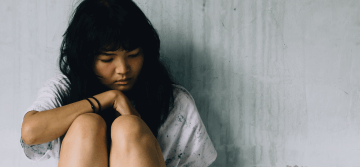
Police-reported incidents of human trafficking show that 22% of victims are girls under the age of 18, and 41% are women aged 18-24.Footnote1
Indigenous people

The National Inquiry into Missing and Murdered Indigenous Women and Girls links sex trafficking and violence, noting Indigenous women and girls face higher risk due to social and economic impacts of colonialism. Footnote2
Hear from Survivors about warning signs
While each trafficking situation is unique, there are some common signs experienced by sex trafficking victims or Survivors. The following video features real testimonies from Survivors of sex trafficking sharing their lived experiences.
If you have difficulties playing video, please let us know using the feedback tool at the bottom of this page.
A described video version is also available.
Transcript
The following video contains topics that may be distressing to some audiences including sexual exploitation, drug use, and violence. Viewer discretion is advised.
The following video contains testimonies from Survivors of sex trafficking and their family members.
They've shared their experiences to help Canadians understand the problem of human trafficking in this country.
What are potential warning signs experienced by sex trafficking victims or Survivors?
Brenda
We need to learn what the signs are we need to use our gut feelings and call in. You know, I think so many times we see something and we're just, like, you know, it's not my business and keep going. Or—I don't know, I just feel like it's our responsibility, right, to take care of each other, watch over each other. And if we had the signs, we would know more.
Subtle forms of control
Mallory
He would be in another hotel room that I was paying for. He would have friends, and alcohol, and weed and they would just hang out and enjoy themselves while I was working. If I was to leave at all, I needed to tell him
and I needed to come right back, obviously, and usually he would send
His friend's girlfriend with me to go out so that I wouldn't go anywhere by myself. And after a little bit, I realized that was a pattern, that I never really got to go anywhere by myself. At one point, like, my ID and stuff went missing, too.
Substance misuse
Raine
I wasn't taught about the birds and the bees, about safe sex, consent. That didn't exist in the late '90s, early 2000s. I was struggling with the impacts of the impacts of being raped and I was turning to drugs and alcohol to cope.
I currently have a 13-year-old boy that I'm raising, and
If they automatically started consuming large quantities of drugs and alcohol, I'd be like, what is going on? You know what I mean? Like, I don't think anybody as a young child is like, when I grow up, I want to drink copious amounts of alcohol and put a bunch of drugs in my system. Nobody wants to do that.
Self-harming behaviour
Charlie
I can't speak for other people, but in my life, like, my eating disorder started around the age of when - It started at eight, and that's when I started being trafficked.
And it's like I started controlling my food. I started hiding food. I didn't understand
What I was doing, but I would just do it and it made me feel better. And, yeah, and then it just kind of progressed from there.
I struggled with self-harm for a long time, and people call it an addiction, and that's something that I've overcome.
But that was what I did to escape the trauma. Trauma can really affect someone. And with what happened, I just didn't know what else to do. I didn't feel like I had anyone to turn to. Like, I know it sounds kind of weird, causing physical pain, but I guess causing the physical pain takes away the emotional pain.
Changes in physical appearance
I had a tattoo put on while I was with my trafficker, and it was the name that he gave me. That was my identity for a very long time.
It's hard having a piece of your body that you don't want to look at, or that you don't want other people to ask questions about, or you, you avoid. Like, how do you avoid your own place on your body?
The experiences shared reflect potential warning signs of sex trafficking, but it's not an exhaustive list. Each trafficking situation is unique, and the warning signs are wide-ranging.
If you or someone you know may be a victim or survivor of sex trafficking, call the Canadian Human Trafficking Hotline at 1-833-900-1010
His Majesty the King in Right of Canada, as represented by the Ministers of Public Safety and Emergency Preparedness, 2025.
PS18-96/1-2025E-MP4
ISBN 978-0-660-75677-6
Public Safety Canada Securite publique Canada
Canada
Possible signs of sex trafficking
Not all victims will experience the same signs, and many signs aren’t obvious when they happen — something might just feel off. The following are some things to look out for.
Do you or someone you know:
- Have a new relationship with someone controlling, perhaps online?
- Feel intimidated or controlled? For example, somebody controlling phone access, ID, or movements.
- Receive excessive gifts or cash from a partner for no reason?
- Seem to be in a relationship that has taken a sudden negative turn?
- Seem withdrawn, isolated, or absent from environments and activities that were previously prioritized?
- Get pressured to share intimate images or keep secrets from friends and family?
If you said yes to one or more questions, you or someone you know may be at risk of being trafficked.
What you can do
Protecting against sex trafficking doesn't start when exploitation begins, it starts with having open, non-judgemental conversations with friends and loved ones.
Healthy relationships, boundaries, and consent
Sex trafficking can begin as a relationship with a romantic partner, friend, family member, or colleague. That's why it's so important to understand what healthy relationships look like.
In a healthy relationship, the people involved should:
- Feel good about the relationship and not put each other down.
- Have their own likes and dislikes alongside their similarities.
- Be able to talk about their needs without hurting each other.
- Not prevent each other from having friends.
- Feel comfortable and safe with each other.
- Have fully and freely given consent to what's happening.
An important part of healthy relationships are boundaries: the personal limits people set for themselves around physical space, touch, time, emotional sharing, and attention. Boundaries are communicated in different ways, sometimes stated openly and other times it can show up as hesitation, pulling away, changing the subject, or silence. Knowing boundaries helps people spot unhealthy behaviour and get help if something feels wrong.
Just as people have the right to their own personal boundaries, it's equally important to respect them. That's what consent is all about. It means no one is forced, and everyone, actively, willingly, and continuously agrees. Consent can't be assumed or guessed, and it can change at any time. This can be confusing in a relationship because someone might say yes even when they don't want to. They might feel pressured, be scared to argue, or worry about consequences. Power imbalances in relationships are common in sex trafficking situations, so recognizing lack of consent is a major red flag.
How to support someone
If somebody comes to you about a relationship that feels wrong or unsafe, it's important to listen without judgement. Many traffickers use fear and shame to keep their victims from telling others what's happening, so it's important to create a safe, caring, and non-judgemental space. Don't question them or tell them what to do. Instead, share options and ways you can support them (for example, checking in privately and sharing with them available supports).
If you are concerned that someone you know might be a victim of sex trafficking, take safe action to help. This can include documenting what you've seen by writing it down; delaying action by speaking to the person privately when they're in a safe position to see if they're OK and offer support; or delegating, reach out to local police or the Canadian Human Trafficking Hotline.
Where to get help
If you or someone you know may be a victim of sex trafficking, you may have a lot of feelings of uncertainty. Even if you're unsure, it's important to reach out for help.
If you're in immediate danger, call 911.
If you can safely use a phone or go online, call the Canadian Human Trafficking Hotline at 1-833-900-1010. It's confidential, open 24/7, 365 days a year, offered in over 200 languages, and available to the deaf, hard-of-hearing, and non-verbal.

How traffickers take control of victims
Learn what motivates traffickers, how they recruit and maintain control of victims, and what warning signs to look for.
Who human trafficking affects
While anybody can be a victim, learn why some people are at higher risk.
