
Chapter 16: Safe sport complaint mechanisms
Part II — Safe sport in Canada
On this page
- The road to an independent national level complaint mechanism
- The Abuse-Free Sport Program: creation, implementation and functioning
- The Canadian Safe Sport Program: creation, implementation and functioning
- Participant perspectives on the Abuse-Free Sport Program and the Canadian Safe Sport Program
- National level Independent Third-Party mechanisms
- Provincial and territorial level complaint mechanisms
- Local and grassroots level complaint mechanisms
- Participant perspectives on centralization and harmonization of complaint mechanisms
- What is happening in other countries?
- Systemic barriers to reporting maltreatment in sport
- Response to maltreatment in sport: preliminary findings and recommendations
- Support for those affected: preliminary findings and recommendations
In the previous chapter, we reviewed the existing safe sport policies in Canada. A key point is that these policies generally do not include the procedures to handle complaints of maltreatment. Instead, these policies are administered and enforced through separate complaint mechanisms.
In this chapter, we first review the national level complaint mechanisms that were created to implement the Universal Code of Conduct to Prevent and Address Maltreatment in Sport and other national level safe sport policies. These include:
- The Abuse-Free Sport Program, through which the Office of the Sport Integrity Commissioner administered the Universal Code of Conduct to Prevent and Address Maltreatment in Sport up until August 1, 2025.
- The Canadian Safe Sport Program, through which the Canadian Centre for Ethics in Sport currently administers the Universal Code of Conduct to Prevent and Address Maltreatment in Sport for federally funded national level sport organizations.
- Independent Third-Party mechanisms, engaged by national level sport organizations to administer safe sport complaints within their organization that fall outside the jurisdiction of the former Abuse-Free Sport Program and the Canadian Safe Sport Program.
We then review complaint mechanisms that exist at the provincial and territorial level, including centralized complaint mechanisms established by provincial and territorial governments, as well as Independent Third-Party mechanisms directly hired by provincial or territorial sport organizations. We also examine complaint mechanisms operating at the local and grassroot level and highlight the various barriers that hinder the reporting of maltreatment in sport. We share participants’ perspectives throughout the various topics we discuss.
We conclude this chapter by presenting our preliminary findings and recommendations on (i) safe sport policies and complaint mechanisms and (ii) complaint management processes and procedures.
The road to an independent national level complaint mechanism
The consensus to develop what would become the Universal Code of Conduct to Prevent and Address Maltreatment in Sport emerged at the National Safe Sport Summit held in 2019. At this summit, participants also agreed that an independent body would need to be identified to implement such a code.Footnote 1
Later, as the Universal Code of Conduct approached its final stage, a Leadership Group was created to conceptualize a structure for its implementation. This group was an informal partnership of athletes and representatives from National Sport Organizations, Multisport Service Organization, the Canadian Olympic and Paralympic Sport Institute Network, and subject matter experts.Footnote 2
In June 2020, the Leadership Group, with support from the Sport Information Resource Centre, hired a private contractor. This contractor was tasked to independently analyze existing complaint mechanism models. Their goal was to identify the most appropriate and effective mechanism to independently administer the Universal Code of Conduct for federally funded sport organizations.Footnote 3 The firm McLaren Global Sport Solutions Inc. was chosen to complete the analysis, develop recommendations and deliver a final report to the Leadership Group.Footnote 4
The final report prepared by McLaren Global Sport Solutions Inc., titled “Aiming High: Independent Approaches to Administer the Universal Code of Conduct to Prevent Maltreatment in Sport in Canada” was published on October 5, 2020.Footnote 5
In total, the Aiming High report included 101 recommendations that addressed a variety of topics from recommendations on the organizational structure of the independent mechanism, to its procedures and funding. A list of the recommendations from the Aiming High report is attached as Appendix 6.
The Aiming High report eventually led to the creation of the Abuse-Free Sport Program.
The Abuse-Free Sport Program: creation, implementation and functioning
In November 2020, the Government of Canada officially launched an initiative to create an independent mechanism for administering the Universal Code of Conduct to Prevent and Address Maltreatment in Sport.Footnote 6
In July 2021, the Sport Dispute Resolution Centre of Canada (also called “SDRCC”) was chosen to establish and run this new independent mechanism for federally funded sport organizations.Footnote 7
On May 17, 2022, the Sport Dispute Resolution Centre of Canada announced that the Office of the Sport Integrity Commissioner (also called the “OSIC”) would launch in June 2022 and receive reports of Universal Code of Conduct violations as part of the new Abuse-Free Sport Program.Footnote 8
The Office of the Sport Integrity Commissioner officially began operations three months later, on June 20, 2022.
As we will discuss further in this Chapter, the Office of the Sport Integrity Commissioner eventually transferred its operations to the Canadian Centre for Ethics in Sport on April 1, 2025, and fully ceased operations on August 1, 2025.
This section begins with an introduction to the Sport Dispute Resolution Centre of Canada, focusing on its mandate and structure. We then discuss the scope of the Abuse-Free Sport Program, its complaint management process and its sport environment assessments.
Role and structure of the Sport Dispute Resolution Centre of Canada
The Sport Dispute Resolution Centre of Canada is a not-for-profit corporation created in 2003 under the Physical Activity and Sport Act.Footnote 9 Its legislative mandate is to provide the sport community with a national alternative dispute resolution service for sport disputes, outside of traditional court systems. It also provides expertise and assistance regarding alternative dispute resolution.Footnote 10
Prior to the launch of the Office of the Sport Integrity Commissioner, the Sport Dispute Resolution Centre of Canada was already operating two core services pursuant to the Physical Activity and Sport Act, and it continues to do so.
These services are the Dispute Resolution Secretariat and the Dispute Prevention Resource Centre.
Figure I: Structure of the Sport Dispute Resolution Secretariat (before August 1, 2025, which marks the closing of the Office of the Sport Integrity Commissioner)
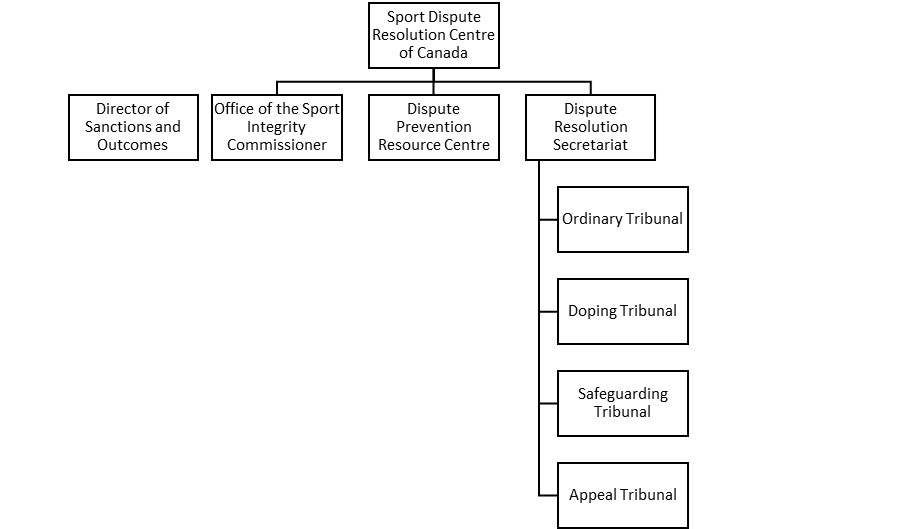
Figure I: Structure of the Sport Dispute Resolution Secretariat – Text Version
The Sport Dispute Resolution Centre includes four main components: The Dispute Resolution Secretariat, the Dispute Prevention Resource Centre, the Office of the Sport Integrity Commissioner and the Director of Sanctions and Outcomes. The Dispute Resolution Secretariat provides services through four divisions: the Ordinary Tribunal, the Doping Tribunal, the Safeguarding Tribunal and the Appeal Tribunal.
Dispute Resolution Secretariat
The Dispute Resolution Secretariat offers alternative dispute resolution services to the sport community. These services include facilitation, mediation, mediation/arbitration, and arbitration.
The Secretariat has four tribunals: the Ordinary Tribunal, the Doping Tribunal, the Safeguarding Tribunal and the Appeal Tribunal.Footnote 11
- Ordinary Tribunal: The Ordinary Tribunal serves as a final appeal mechanism for sport-related decisions made by organizations that have their own internal appeal processes. Most cases heard by the Ordinary Tribunal are about team selection and athlete carding, but it also receives disputes related to eligibility, general discipline and governance.
- Doping Tribunal: The Doping Tribunal is a specialized division. It is the first instance to rule on doping violations claimed by the Canadian Centre for Ethics in Sport under the Canadian Anti-Doping Program.
- Safeguarding Tribunal: The Safeguarding Tribunal was created to review decisions made by the Director of Sanctions and Outcomes under the Abuse-Free Sport Program. Since April 2025, it can also review decisions made by the Canadian Centre for Ethics in Sport under the Canadian Safe Sport Program.
- Appeal Tribunal: The Appeal Tribunal hears appeals from the Doping Tribunal and the Safeguarding Tribunal.
The Canadian Sport Dispute Resolution Code outlines the procedural rules that apply to all disputes submitted to the Sport Disputes Resolution Centre of Canada.Footnote 12
Dispute Prevention Resource Centre
The Dispute Prevention Resource Centre focuses on dispute prevention, education, awareness and policy support. It offers a wide variety of information, tools and documents to help all members of the sport community to prevent disputes or to minimize their severity.Footnote 13
Among other things, the Centre provides the following:
- templates for clauses and policies, like template mediation agreements and template contractual arbitration clausesFootnote 14
- a database of decisions from Sport Dispute Resolution Centre of Canada arbitratorsFootnote 15
- articles and other publicationsFootnote 16
- a list of lawyers and pro bono resourcesFootnote 17
Jurisdiction of the Office of the Sport Integrity Commissioner and scope of the Abuse-Free Sport Program
The Office of the Sport Integrity Commissioner, which ceased to operate on August 1, 2025, was independent but was housed within the Sport Dispute Resolution Centre of Canada. According to what we heard, structural safeguards had been put in place to maintain the independence of the Office of the Sport Integrity Commissioner and the Director of Sanctions and Outcomes.Footnote 18
Broadly speaking, the Office of the Sport Integrity Commissioner had the authority to administer the Universal Code of Conduct to Prevent and Address Maltreatment in Sport when a sport organization was a program signatory to the Abuse-Free Sport Program.Footnote 19
Program Signatory Agreement
To become a program signatory, a sport organization had to sign a contract, named a Signatory Agreement, with the Sport Dispute Resolution Centre of Canada.Footnote 20 By signing this agreement, the sport organization retained the services of the Sport Dispute Resolution Centre for Canada to implement their safe sport program. These services included those of the Office of the Sport Integrity Commissioner, the Director of Sanctions and Outcomes, and the Dispute Resolution Secretariat.Footnote 21
Under the Signatory Agreement, the sport organization namely had to do the following:
- Adopt the Universal Code of Conduct to Prevent and Address Maltreatment in Sport and ensure that all other internal policies and procedures are consistent with it.
- Obtain consent from individuals affiliated with the program signatory to be subject to the Universal Code of Conduct, its administration and enforcement process.
- Cooperate in good faith with the Office of the Sport Integrity Commissioner. This applies to any process related to the administration and enforcement of the Universal Code of Conduct.
- Implement the sanctions and measures that are imposed by the Director of Sanctions and Outcomes, the Safeguarding Tribunal and the Appeal Tribunal.Footnote 22
Although sport organizations from all levels of sport could opt in to the Abuse-Free Sport program, most program signatories were federally funded National Sport Organizations and Multisport Service Organizations.Footnote 23 This is because these organizations were required to be program signatories to receive funding from the Government of Canada.
Volleyball was the only sport in which the Abuse-Free Sport program applied across all levels of the sport, namely at the national, provincial, territorial and club levels.Footnote 24
We understand from the press release that followed the 2022 Conference of Federal, Provincial and Territorial Ministers responsible for Sport, Physical Activity & RecreationFootnote 25 that provinces and territories could choose to use the Office of the Sport Integrity Commissioner as their independent third party. We also note that Nova Scotia was the first and only province to be a Signatory of the Abuse-Free Sport Program.Footnote 26 The first Provincial Sport Organizations from Nova Scotia was expected to be onboarded by the end of 2023.Footnote 27 At the time, there was hope this would encourage other provinces and territories to join the program. However, this hope never materialized as no other province or territory became a program signatory.Footnote 28
As of March 2025, 90 organizations had signed onto the Abuse-Free Sport Program:
- 63 national level sport organizations
- 21 Multisport Service Organizations
- 6 Canadian Sport Centres and InstitutesFootnote 29
Consent Form
As mentioned above, all program signatories were required to obtain consent from participants to ensure they accept to be subject to the jurisdiction of the Sport Dispute Resolution Centre of Canada. This consent was obtained through a Consent Form.Footnote 30
Participants could include athletes, coaches, officials, volunteers, administrators, directors, employees, trainers, parents and guardians, depending on each program signatory agreement.Footnote 31 For minors under the age of 13, the Consent Form was to be signed by their parent or guardian.
Through the Consent Form, participants namely agreed to:
- Be subject to the terms of the Universal Code of Conduct to Prevent and Address Maltreatment in Sport.
- Be subject to the jurisdiction of the program signatory and the Sport Dispute Resolution Centre of Canada regarding the administration and enforcement of the Universal Code of Conduct.
- The collection, use and disclosure of personal information by the program signatory and the Sport Dispute Resolution Centre of Canada, for the purpose of receiving, processing and adjudicating admissible complaints against them.
- The disclosure of personal information through a public registry created to support the Universal Code of Conduct’s objectives. This information includes their full name, their affiliated organizations, and the nature of allegations and any findings or disciplinary actions against them.Footnote 32
Complaint management process under the Abuse-Free Sport Program
The Abuse-Free Sport Program administered and enforced the Universal Code of Conduct to Prevent and Address Maltreatment in Sport in accordance with the procedures set out in policies available on the Abuse-Free Sport website.
In short, the complaint management process under the Abuse-Free Sport Program can be summarized as follows:
- The Office of the Sport Integrity Commissioner would first review complaints to ensure they fell within the jurisdiction of the Abuse-Free Sport program.
- Next, the Office of the Sport Integrity Commissioner would proceed with mediation (if the parties consented) and an investigation.
- Once the investigation was complete, the complaint would be transferred to the Director of Sanctions and Outcomes. They would determine if any violations of the Universal Code of Conduct to Prevent and Address Maltreatment in Sport occurred, then impose sanctions.
- The decision of the Director of Sanctions and Outcomes could be reviewed by the Safeguarding Tribunal of the Sport Dispute Resolution Centre of Canada. Further appeal to the Appeal Tribunal was also available.
A detailed summary of the complaint management process under the Abuse-Free Sport Program is attached as Appendix 7. A flow chart illustrating the complaint management process under the Abuse-Free Sport Program is also available on the Office of the Sport Integrity Commissioner’s website.Footnote 33
Sport Environment Assessments
The Office of the Sport Integrity Commissioner conducted Sport Environment Assessments for Program Signatories. These assessments followed the Guidelines Regarding Safe Sport Environment Assessments.Footnote 34
The purpose of these assessments was to identify and address systemic issues related to the Universal Code of Conduct to Prevent and Address Maltreatment in Sport. This aimed to improve the sport environment for both current and future participants.Footnote 35
Sport Environment Assessments identified systemic issues and remedies. They sought to understand problems and their root causes, then explored possible solutions. Each Assessment was made public and published in a report by the Office of the Sport Integrity Commissioner.
The reports from Sport Environment Assessments were comprehensive and included, among other items:
- An analysis of gathered information and concerns relating to the Universal Code of Conduct to Prevent and Address Maltreatment in Sport.
- The identification of any systemic issues or other issues that were identified.
- Recommendations to address the identified issues.
- Recommendations to improve the experience for current and future participants.
- Other observations and recommendations that support the objectives of the assessment.Footnote 36
Individuals and sport organizations could request a Sport Environment Assessment if they wished to raise concerns about systemic issues related to the Universal Code of Conduct to Prevent and Address Maltreatment in Sport within a particular sport environment.
The Office of the Sport Integrity Commissioner could also initiate an Assessment on its own if it became aware of alleged systemic issues related to the Universal Code of Conduct in a specific sport environment.Footnote 37
The Sport Environment Assessment process generally involved the following steps:
- A Sport Environment Assessment was either requested or initiated by the Office of the Sport Integrity Commissioner.
- If a request was accepted, the scope of the assessment, including its objectives and timeframes, was defined.
- An independent assessor or assessment team then conducted the assessment and prepared a report.
- The completed report was shared with the interested sport organization and published on the Office of the Sport Integrity Commissioner’s website.
- Finally, the Office of the Sport Integrity Commissioner would monitor the sport organization’s implementation of the recommendations and publish a monitoring report on its website. This monitoring report had to be published no later than 1 year after the publication of the assessment report.Footnote 38
The Office of the Sport Integrity Commissioner maintained the Sport Environment Assessment Index. This Index provided information about the assessments it had initiated. As assessments progressed through the Sport Environment Assessment process, general updates were made available through the Index.Footnote 39
Trauma-informed approach
The Office of the Sport Integrity Commissioner had committed itself to administering the Abuse-Free Sport Program in a trauma-informed manner.Footnote 40
According to the Office, a trauma-informed process “[reflects] an understanding of how trauma impacts individuals psychologically, emotionally and physically, and aims to prevent re-traumatization using safe and respectful practices.”Footnote 41 Such processes were also described as being compassionate, efficient, and “[providing] fairness, respect and equity to all parties involved.” Footnote 42
In this context, the Office of the Sport Integrity Commissioner established the Abuse-Free Sport Legal Aid Program. This Program provided eligible individuals, both complainants or respondents, with free and confidential access to legal advisors.Footnote 43 These legal advisors could provide advice at every step of the complaint management process, from the intake to the final appeal. They could also assist during the first stage of the Sport Environment Assessment process.
The Canadian Safe Sport Program: creation, implementation and functioning
On May 2, 2024, the Government of Canada announced that the Office of the Sport Integrity Commissioner would cease administering the Abuse-Free Sport Program.Footnote 44 Instead, the Canadian Centre for Ethics in Sport would take over responsibility for the independent mechanism implementing the Universal Code of Conduct to Prevent and Address Maltreatment in Sport.
The stated reason for this change was to preserve the independence of both the program and the Sport Dispute Resolution Centre of Canada, which housed the Office of the Sport Integrity Commissioner.Footnote 45
In this respect, the Canadian Centre for Ethics in Sport began to implement the Universal Code of Conduct through the Canadian Safe Sport Program on April 1, 2025. Consequently, after a transition period, the Office of the Sport Integrity Commissioner ceased operating the Abuse-Free Sport Program on August 1, 2025.
This section begins with a description of the mandate and structure of the Canadian Centre for Ethics in Sport. We then discuss the transition from the Abuse-Free Sport Program to the Canadian Safe Sport Program and the changes made to the Centre to absorb the administration of the Universal Code of Conduct to Prevent and Address Maltreatment in sport. We continue with a description of the scope of the Canadian Safe Sport Program and of its report process.
A table comparing the main features of the Abuse-Free Sport Program with those of the Canadian Safe Sport Program can be found in Appendix 8.
Role and structure of the Canadian Centre for Ethics in Sport
Role
The Canadian Centre for Ethics in Sport (also called the “CCES”) is an independent, national Multisport Service Organization incorporated under the Canada Not-for-profit Corporations Act.Footnote 46 Its mandate is to “work collaboratively to address unethical behaviours and promote a values-based approach to sport to ensure positive sport experiences for all.”Footnote 47
As of April 1, 2025, the Centre is responsible for the Canadian Safe Sport Program. Under this program, the Centre independently administers and enforces the Universal Code of Conduct to Prevent and Address Maltreatment in Sport for federally funded National Sport Organizations and Multisport Service Organizations.Footnote 48
In addition to safe sport, the Canadian Centre for Ethics in Sport’s areas of activity are anti-doping and competition manipulation. With respect to anti-doping, the Centre is tasked with deterring and detecting the use of “prohibited substances and methods.” This is pursued through the Canadian Anti-Doping Program,Footnote 49 a national initiative designed to “prevent, deter and detect doping in sport.”Footnote 50
With respect to competition manipulation, the Canadian Centre for Ethic in Sport’s role is primarily to provide education and to advocate for the integrity of sport.Footnote 51
Governance and organizational structure
The Canadian Centre for Ethics in Sport is governed by a completely independent Board of Directors. This board comprises twelve prominent individuals from various fields, including Canadian and international sport, medicine, academia, business, law, ethics and governance.Footnote 52
Board members are selected and elected by existing members of the Board of Directors.Footnote 53 They are selected based on their skills, experience and expertise, ensuring a diverse and knowledgeable leadership rather than affiliations with specific sport organizations. These individuals volunteer their time and expertise to support the Centre's mission.Footnote 54
The Directors of the Canadian Centre for Ethics in Sport are also its members.Footnote 55 The Centre currently has 12 Directors.Footnote 56 In accordance with the Centre’s by-law, one of these members must be a retired elite sport participant.Footnote 57
The Board’s responsibilities include strategic oversight, financial stewardship, policy development, and ensuring compliance with international and national standards. Additionally, the Canadian Centre for Ethics in Sport has a series of working groups and committees that focus on specific governance aspects, such as finance, risk management, and ethics.Footnote 58
The Centre operates under a multi-year strategic plan that guides its priorities and goals. The previous plan was published in 2022. And because the Centre has taken on the responsibility of administering the Canadian Safe Sport Program, it is now working on a new strategic plan.Footnote 59
The President and Chief Executive Officer, appointed by the Board of Directors, is responsible for implementing the strategic plans and policies of the organization.Footnote 60 The Executive Directors, who are below the President and Chief Executive Officer, lead departments focused on different aspects of the Centre’s work.
Announcement and transition from the Abuse-Free Sport Program to the Canadian Safe Sport Program
On May 2, 2024, the then-Minister of Sport and Physical Activity of Canada announced that the Canadian Centre for Ethics in Sport would administer the Universal Code of Conduct to Prevent and Address Maltreatment in Sport as of April 1, 2025.Footnote 61
The Canadian Centre for Ethics in Sport was chosen to take over the national safe sport program and its complaint mechanism to preserve the independence of both the program and the Sport Dispute Resolution Centre of Canada (which housed the Office of the Sport Integrity Commissioner).Footnote 62
During the first phase of the transition, from February 1, 2025, to March 31, 2025, the Office of the Sport Integrity Commissioner continued to accept complaints of maltreatment under the Abuse-Free Sport Program but did not start any new investigations. These complaints were reviewed and provisional measures were taken when required. Complaints that did not require immediate action were held until April 1, 2025.
On April 1, 2025, the Canadian Safe Sport Program launched and the Canadian Centre for Ethics in Sport began to handle reports of maltreatment and provide support services. At this point, the Office of the Sport Integrity Commissioner stopped accepting new complaints, though it could finish handling complaints received before February 1, 2025Footnote 63. Complaints that had been held during the transition were shared with the Canadian Centre for Ethics in Sport, provided the parties consented and the complaints met the new Canadian Safe Sport Program’s qualifications.
The Office of the Sport Integrity Commissioner closed on August 1, 2025. When cases it handled remained unresolved at this time, the parties were informed that their case could not be resolved under the Abuse-Free Sport Program. With their consent, these outstanding cases were transferred to the Canadian Centre for Ethics in Sport, which determined their eligibility under the Canadian Safe Sport Program.
Changes made to the Canadian Centre for Ethics in Sport to absorb the administration of the Universal Code of Conduct
To prepare for its new role in safe sport, the Canadian Centre for Ethics in Sport made changes to its governance, organizational structure and strategic direction.
Regarding governance, the Centre added two new members to its Board of Directors. These individuals possess expertise in areas crucial to safe sport and the administration of the Universal Code of Conduct to Prevent and Address Maltreatment in Sport.Footnote 64
On January 31, 2025, the Board of Directors also approved the Resolution on Independence, thereby formalizing its independence from sport.Footnote 65 Key principles of this resolution are as follows:
- Despite collaborating with numerous National Sport Organizations, the Canadian Centre for Ethics in Sport is adamant that these organizations have strictly no decision-making authority or influence on its policies.
- The Centre does not endorse, certify or sponsor any sport organization or their participants.
- The Government of Canada has no involvement or authority regarding the selection or election of members to the Centre’s Board of Directors, nor on how the Centre implements the Canadian Anti-Doping Program, the Canadian Safe Sport Program or the Canadian Program to Prevent Competition Manipulation.
- Directors adhere to a conflict-of-interest policy. Members of the Board of Directors are selected and elected by existing members of the Board of Directors.
Regarding the changes to its organizational structure, the Canadian Centre for Ethics in Sport also welcomed a new Executive Director, Safe Sport. This individual is responsible for overseeing the administration of the Canadian Safe Sport Program. It was publicly announced that the organization has brought on a team with a background in maltreatment and “experience working on the frontlines of a reporting mechanism.”Footnote 66
Regarding its programming, the Canadian Centre for Ethics in Sport reviewed its organizational strategy to focus on the integrity issues of safe sport, anti-doping and competition manipulation.Footnote 67 As previously noted, the Centre also ended its involvement with the True Sport brand, citing the need to focus on its mandate as an independent regulator for sport integrity.Footnote 68
In this respect, we were advised that the Centre engaged with victims, survivors, athletes and the broader sport community when it was announced as the new national safe sport administrator. These engagements revealed a perceived bias or conflict of interest due to the Centre being responsible for both the True Sport Program and the administration of safe sport reports.
Jurisdiction of the Canadian Centre for Ethics in Sport and scope of the Canadian Safe Sport Program
As discussed in Chapter 5, to receive funding through Sport Canada’s Sport Support Program, National Sport Organizations, National Multisport Service Organizations and Canadian Sport Centres and Institutes must comply with certain mandatory conditions, which will be included in the sport organization’s funding agreement. One of these mandatory conditions is the adoption of the Canadian Safe Sport Program.Footnote 69
Through the Canadian Safe Sport Program, the Canadian Centre for Ethics in Sport independently administers and enforces the Universal Code of Conduct to Prevent and Address Maltreatment in Sport.Footnote 70 It does so by receiving and responding to reports of prohibited behaviour.Footnote 71
The Canadian Centre for Ethics in Sport’s authority to administer the Canadian Safe Sport Program is contract-based, much like the Sport Dispute Resolution Centre of Canada’s former authority to administer the Abuse-Free Sport Program.
Specifically, the program applies to sport organizations that adopt it through a formal agreement called an “Adoption Contract.”Footnote 72 The program is only available to National Sport Organizations, National Multiport Service Organizations and Canadian Sport Centers and Institutes that receive funding from Sport Canada.Footnote 73 Under the program’s current framework, Provincial and Territorial Sport Organizations cannot decide to voluntarily adopt it.
The list of National Sport Organizations, National Multisport Service Organizations and Canadian Sport Centres and Institutes who have adopted the Canadian Safe Sport Program is included in Appendix 9.
It is important to note that the Canadian Centre for Ethics in Sport is adopting a staged approach to implementing the Canadian Safe Sport Program. It has indicated plans to expand the Program’s scope and reach as it gains experience and secures stable funding.
The Canadian Safe Sport Program applies to the national level participants within the organizations that adopt the program. The list of individuals in this category is set out in Rule 3.1 of the Canadian Safe Sport Program Rules. These individuals are:
- The board members and employees of federally funded national level sport organizations who have adopted the Canadian Safe Sport Program (referred to as “Sport Organizations”).
- Any athlete who receives Athlete Assistance Program support, is part of a Sport Organization’s national team program, or is otherwise included in a Sport Organization’s National Athlete Pool.
- Any athlete support personnel under a Sport Organization’s authority who is directly involved with or provides services to the Sport Organization’s national team program. This includes coaches, trainers, agents, team staff, medical and paramedical personnel.
- Any other individual who competes, participates or is otherwise involved in sport under the authority of a Sport Organization that has adopted the Canadian Safe Sport Program, and whom the Canadian Centre for Ethics in Sport has authorized to designate as a participant for the purpose of the Canadian Safe Sport Program.
- Any Canadian official, judge, umpire or referee accredited by a Sport Organization, as designated by each Sport Organization and authorized by the Canadian Centre for Ethics in Sport, who is involved in any international and/or national level competition held under the authority or governed by the rules of a national Sport Organization.Footnote 74
Additionally, adopting organizations can designate national level events where participants are subject to the Canadian Safe Sport Program and the Universal Code of Conduct to Prevent and Address Maltreatment in Sport. In such cases, the Canadian Safe Sport Program applies only for the duration of the individual’s participation in the designated event.
The above situation is detailed in Rule 3.2 of the Canadian Safe Sport Program Rules. It provides that the Rules may apply to other individuals (not already identified as Participants under Rule 3.1) while they are participating at certain events designated by each Sport Organization. To be authorized as a Participant in these cases, individuals must agree or otherwise consent, as part of the event registration process, to the application of the Universal Code of Conduct to Prevent and Address Maltreatment in Sport and of the Canadian Safe Sport Program.
The Canadian Safe Sport Program Rules explicitly mention that individuals involved with adopting sport organizations, or those participating in a specific event, must sign a Consent Form. We also note that under the Canadian Safe Sport Program, participants are required to complete the Canadian Centre for Ethics in Sport’s safe sport e-learning module before signing the Consent Form.Footnote 75
Report process under the Canadian Safe Sport Program
The Canadian Safe Sport Program’s report process is set out in the Canadian Safe Sport Program Rules.Footnote 76 Ultimately, these Rules empower the Canadian Centre for Ethics in Sport to determine whether a participant engaged in a prohibited behaviour contrary to the Universal Code of Conduct to Prevent and Address Maltreatment or in violation of the Rules. If such a determination is made, the Centre can impose sanctions in accordance with the framework set out in the Universal Code of Conduct.
The Rules cover every step of the report process, from receiving a report of a prohibited behaviour to the investigation, the determination of the report, and the review and appeal of a decision made by the Canadian Centre for Ethics in Sport.
The report process under the Canadian Safe Sport Program proceeds as follows:
- The Canadian Centre for Ethics in Sport is responsible for receiving reports of alleged behaviours that are prohibited by the Universal Code of Conduct to Prevent and Address Maltreatment in Sport.Footnote 77
- Any individual or sport organization can make a report of a prohibited behaviour (a “Report”) through the Canadian Centre for Ethics in Sport’s reporting platform, accessible online or by telephone.Footnote 78
- At any stage after receiving a report of alleged prohibited behaviour, the Centre has the authority to impose provisional measures.Footnote 79 These measures can include, for example, modifying training schedules or locations, or relocating individuals to avoid contact.
- The Centre provides a written notice (a “Notice of Report”) to the respondent, informing them that a Report has been made against them. The Centre will also inform the relevant sport organization of the Report.Footnote 80
- Within the 30 days following the Notice of Report being provided to the respondent, the Centre initiates one or more resolution procedures set out in Rule 13 of the Canadian Safe Sport Program Rules. These procedures include letters of concern, a remedial resolution, the acceptance of violation, mediation facilitated by the Sport Dispute Resolution Centre of Canada, and a formal resolution.Footnote 81
- At any time after assuming jurisdiction over the Report, the Canadian Centre for Ethics in Sport appoints an investigator to investigate the reported behaviour.Footnote 82
- The investigator delivers an investigation report to the Centre. This report summarizes the relevant evidence, the findings of fact and credibility made by the investigator, and the reasons for those findings.Footnote 83
- The Centre provides the investigation report to the reporting person and/or impacted person, as well as the respondent. All parties will have 10 days from receiving the report to make written submissions to the Centre.Footnote 84
- After receiving all written submissions, the Centre determines if a violation has been committed.Footnote 85 If a violation is confirmed, the Centre imposes appropriate sanctions.Footnote 86
- The Centre imposes sanctions on respondents according to Section 15 of the Canadian Safe Sport Program Rules. This Section requires that sanctions must align with those outlined in the Universal Code of Conduct to Prevent and Address Maltreatment in Sport.Footnote 87
- The Centre notifies the reporting person and/or impacted person, the respondent, and the relevant sport organization(s) of its decision. This notification, called a “Notice of Decision,” includes the reasons for the decision.
- Certain decisions of the Canadian Centre for Ethics in Sport can be reviewed by the Safeguarding Tribunal, a specialized division of the Sport Dispute Resolution Centre of Canada.Footnote 88
- If they participate in the review hearing before the Safeguarding Tribunal, the respondent, the reporting person and/or impacted person, and the Canadian Centre for Ethics in Sport can appeal a sanction decision of the Safeguarding Tribunal. This appeal would go to the Appeal Tribunal of the Sport Dispute Resolution Centre of Canada.Footnote 89
Finally, under the Canadian Safe Sport Program Rules, sport organizations are responsible for enforcing the sanctions. These sanctions are imposed either by the Canadian Centre for Ethics in Sport, or by the Sport Dispute Resolution Centre of Canada in the case of reviews and appeals.Footnote 90
A flow chart illustrating the report process under the Canadian Safe Sport Program is available on the Canadian Centre for Ethics in Sport’s website.Footnote 91
Sport Environment Assessments
The Canadian Safe Sport Program Rules provide for Sport Environment Assessments.Footnote 92 Though it may in the future, we understand that the Canadian Centre for Ethics in Sport is not currently offering this service.
Trauma-informed approach
The Canadian Centre of Ethics in Sport is committed to administer the Canadian Safe Sport Program in a trauma-informed manner. This commitment is explicitly stated in the Canadian Safe Sport Program Rules. Footnote 93
The Centre defines trauma-informed practice as a “strengths-based, people-focused framework rooted in an understanding of, and sensitivity to the impact trauma has on individuals.” Footnote 94 This practice also “emphasizes physical, psychological, and emotional safety for everyone intersecting with or working within the program.”Footnote 95
In this respect, support services are offered by the Canadian Centre for Ethics in Sport. They have a support team that can, for example, answer questions about the Canadian Safe Sport Program and share information about the report process.Footnote 96
Furthermore, the Canadian Centre for Ethics and Sport appears to have engaged the Canadian Centre for Mental Health in Sport to provide mental health services to those involved in the program.Footnote 97
However, according to its website, the Canadian Centre for Ethics in Sport is not currently offering legal aid. The website indicates that Sport Canada is in the process of exploring options to provide legal aid services to individuals involved in the Canadian Safe Sport Program’s report process.Footnote 98
Participant perspectives on the Abuse-Free Sport Program and the Canadian Safe Sport Program
Before reviewing the participant perspectives, the Commission must emphasize that the Office of the Sport Integrity Commissioner and the Abuse-Free Sport Program were created and expected to be fully operational in an extremely short amount of time. We understand that the compressed timeframe was necessary because of the urgent need for an independent complaint mechanism in view of the ongoing safe sport crisis.
We learned from many that less than a month away from the Abuse-Free Sport Program’s official launch, there were no policies or procedures in place. The revision of the Universal Code of Conduct to Prevent and Address Maltreatment in Sport had not yet been finalized, and the program lack facilities and sufficient support. Overall, several participants compared the rolling out of the Abuse-Free Sport Program to “flying a plane while building it.”
Less than 3 months after its creation, the Office of the Sport Integrity Commissioner began its operations. It took on its vast mandate, which included receiving reports of violation of the Universal Code of Conduct, initiating the scoping for Sport Environment Assessments, and offering education, preventative tools, resources and other services like mental health and legal aid.Footnote 99
The Commission recognizes that creating the Office of the Sport Integrity Commissioner and the Abuse-Free Sport Program in such a short amount of time with insufficient support was a herculean undertaking.
It is also important to note that in the McLaren Global Sport Solutions Inc. report, entitled “Aiming High: Independent Approaches to Administer the Universal Code of Conduct to Prevent Maltreatment in Sport in Canada,” it was recommended to phase in the complaint mechanism over a period of three years.Footnote 100 Under this proposal, among other elements, the complaint mechanism would have gradually onboarded sport organizations, beginning with 12 National Sport Organizations and 2 provincial federations of sport organizations such as Sport Manitoba and Sask Sport. Others would have been added in the following years of the pilot program.Footnote 101
The rationale behind the recommendation for a phased-in approach was that creating a complaint mechanism of this scope is a significant undertaking. Without proper planning, it could overwhelm the mechanism and lead to “a lack of trust, dissatisfaction, and poor adoption of the mechanisms provided by [the Independent Complaint Mechanism].”Footnote 102 In their view, a gradual approach would prevent this outcome.
In hindsight, requiring the Office of the Sport Integrity Commissioner to fully deploy in such a short timeframe, without a gradual phase-in of the program, likely contributed to its weaknesses. This must be taken into account when reading the participant perspectives below.
Limited jurisdiction of the Abuse-Free Sport Program
We were told that, when the Office of the Sport Integrity Commissioner was first announced, it was presented to the public as the solution to the safe sport crisis. However, in stark contrast, we were advised that in practice the Office lacked the authority to help in most circumstances due to its limited jurisdiction. This limitation is illustrated by the low complaint acceptance rate.
For example, in its first year of operation, the Office received 193 complaints but only 66 were deemed admissible (which is approximately a 34% acceptance rate).Footnote 103
We heard that the Office of the Sport Integrity Commissioner’s inability to hear complaints due to its limited jurisdiction was particularly frustrating for victims, survivors and parents. Many shared countless stories of trying to file complaints only to be turned away, sometimes with no explanation beyond being told that the Office did not have jurisdiction.
However, it is important to understand that the Office of the Sport Integrity Commissioner was not designed to have such limited jurisdiction. We were informed that the Office could in theory hear complaints all the way down to the club level.
To this end, we were told that Volleyball was the only sport where the Abuse-Free Program was applied at all levels of sport, including to its clubs. This was reportedly due to the uniquely strong relationship and alignment between Volleyball Canada, its member Provincial and Territorial Sport Organizations, and the local clubs. This allowed them to develop a set of pan-Canadian policies which apply uniformly to Volleyball Canada and its provincial and territorial counterparts. We were also advised that this allowed them to implement a structure where individuals need to be members of Volleyball Canada to be members of Provincial or Territorial Sport Organizations, and vice versa.
In fact, the first factor limiting the jurisdiction of the Abuse-Free Sport Program was precisely that most non-national sport organizations never opted into the program. When asked why, most non-national sport organizations told us that it was too expensive as the Abuse-Free Sport Program was operated on a fee-for-service model. They felt that it was more affordable to use an Independent Third Party. They also indicated that the requirement to obtain explicit consent from all their participants would be too complicated to manage. They explained that they did not have the time, resources or capacity to meet this requirement.
It came to our attention that National Sport Organizations found the consent forms were too broad and that in some cases, coaches had to be dismissed because they refused to sign the consent form.
The second issue with the jurisdiction of the Abuse-Free Sport Program was that participants needed to consent to be bound by the program. Without such consent, we understand that the Office of the Sport Integrity Commissioner was required to reject the complaint. Many complaints were rejected because the respondent had not consented to the program.
We were also told that participants for each program signatory were to be designated by the program signatory itself and therefore that the number of participants for each program signatory was relatively limited.
General concerns about the complaint management process under the Abuse-Free Sport Program
We have repeatedly heard frustration with the complaint process under the Abuse-Free Sport Program. More specifically, we heard frustration with the lack of clarity, timeliness, transparency and fairness of the process, and the lack of supports to assist the parties through the process. These factors led to a loss of trust in the process.
Clarity
We repeatedly heard from complainants, respondents, sport administrators and organizations that the complaint process was too complicated, confusing and obscure. Participants told us that the policies detailing the complaint process were difficult to understand because they were written in a complex legal language. On numerous occasions, participants commented that they did not understand the steps involved and what would happen next. They did not know how to navigate the system and told us that that there was no support available to help them.
Many individuals cited the absence of a clear steps to report maltreatment as an example of how unclear the overall complaint process was. It was not evident where or how to file a complaint with the Office of the Sport Integrity Commissioner. We also heard that the online complaint filing system was difficult to use and that the forms to file a complaint were confusing.
Timeliness
We have heard numerous concerns that the complaint process took too long. It was often described as an endless process, especially when decisions were appealed to the Sport Dispute Resolution Centre of Canada. On several occasions, we were advised that complaints were taking anywhere from several months to years to resolve.
Participants told us about delays at every step of the process, noting that extensions were frequently granted, often without a good reason. These delays were also poorly communicated to all parties. This left them with the impression that timeframes were not being enforced, which eroded their trust in the system. In other cases, the Office of the Sport Integrity Commissioner provided no timelines to the parties at all.
Transparency and communication
Participants frequently told us about a lack of communication between the Office of the Sport Integrity Commissioner and all interested parties. We heard that this poor communication increased confusion and contributed to a sense of helplessness for those trying to navigate the complaint process.
Complainants and respondents told us they rarely received updates on their cases. Participants described feeling unsure of what steps were being taken to address their matter, or if any progress was being made at all. They noted that this lack of communication, especially when cases remained unresolved for extended periods of times, added to significant stress and caused uncertainty in an already challenging situation.
Some National Sport Organizations also expressed dissatisfaction with the transparency of the process. They explained that they were sometimes unaware that a complaint against one of its members had been filed. The lack of communication meant they had no visibility once a complaint was made. They often did not know the nature or the seriousness of the allegations against their members.
The Commission was advised that this posed a problem when, for example, appointing a new national team coach. National Sport Organizations explained that in these circumstances, they need to accept the liability and risk of appointing (or not appointing) a person against whom a complaint was made, without having more information on the matter.
Fairness and due process
The universal sentiment among participants was that the process needs to be procedurally fair and provide due process to all parties. In this respect, we heard the Abuse-Free Sport Program lacked due process, particularly for respondents.
Participants told us that evidence typically inadmissible in court was allowed during the complaint process, and that the rules of evidence were not consistently applied. Others highlighted that decisions were made without transparency, and that evidence was sometimes excluded from investigation and final reports without proper explanation.
Concerns were also raised that respondents are not consistently given the right to respond to allegations of maltreatment or provided with enough information to do so effectively. For example, respondents stated that some decisions to impose provisional measures were made without giving them the opportunity to make submissions. We were advised that formal submissions were not always considered for provisional measures. In some circumstances, respondents may not have even known about the complaint when provisional measures were imposed.
Some respondents also shared that they felt treated as if they were “guilty” before any formal determinations were made. Similarly, we heard stories of ongoing complaints being shared with the media, leading the public to judge the respondent before the process concluded.
For context, confidentiality rules govern the complaint management process, preventing the disclosure of ongoing matters. However, participants reported that many complainants would breach these confidentiality rules by disclosing the complaint to the media. Yet, there were no consequences for breaching these rules. Some respondents told us that even where no wrongdoing was found, their reputation was ruined.
Mental health and legal support
The Commission heard numerous accounts of complainants and respondents going through the complaint process without mental health or legal support. Many participants were either not aware of the mental health and legal aid programs offered by the Office of the Sport Integrity Commissioner, or they noted that it was too difficult to access these resources.
Participants advised us that the list of legal aid lawyers was not updated, and that many of the lawyers on the list were unable to take on new cases. In these circumstances, parties were left to find a lawyer and many of them went through the complaint process un-represented. We heard that hiring a lawyer was too expensive and that there is a limited number of pro bono lawyers who are willing to take complex and lengthy cases.
We were informed that limited mental health support was available when complaints were handled by the Office of the Sport Integrity Commissioner. For context, the Office had a partnership with a group of sport psychologists who offered therapy sessions.
In addition to mental health and legal support services, both complainants and respondents expressed a need for guidance through the complaint process. We heard it was important to be able to speak with a person who can provide assistance and explain the complaint process, particularly someone who is trauma informed. The importance of human contact was also noted, as opposed to only receiving digital correspondence about the next steps, which was described as feeling impersonal and cold.
Specific concerns related to the steps of the complaint management process
Participants informed the Commission on specific issues related to the triage of complaints, the investigation process, the enforcement of sanctions at the end of the process, and the need for a trauma-informed approach. These issues further undermined the trustworthiness and effectiveness of the Abuse-Free Sport Program.
Triage of complaints
Although most participants agreed that a formal complaint is not always appropriate, opinions varied on whether complaints should meet a certain threshold to proceed formally. Under the Abuse-Free Sport Program, complaints underwent a triage process. However, this was done only to determine issues related to jurisdiction, if a complaint was criminal in nature or if mandatory reporting obligations were triggered.
Some participants called for better triaging or screening of complaints, suggesting that “less serious” or “administrative” complaints be returned to the National Sport Organization or other sport organizations to be handled at this level. Others called for better mechanisms to triage complaints of retaliatory behaviour (actions taken against a person for making a report of possible prohibited behaviour or for participating in a complaint process). They noted that without established thresholds and a proper triaging system, there is a risk that the complaint mechanism will become overwhelmed by complaints.
On the other hand, some participants noted the risks associated with triaging complaints. For instance, although some complaints may be more administrative in nature, such as those about playing time, they could still involve elements of maltreatment. Additionally, a pattern of “less serious” complaints originating from the same sport organization can reveal systemic problems. These issues could be overlooked if complaints are triaged, as the initial review of a complaint may not always reveal the entire story.
Investigation process
We heard serious concerns with the investigation process. Many participants noted a lack of regulations and oversight of investigations, along with the absence of standard protocols to handle evidence. Other concerns related to the investigation process and investigators include:
- The length of the investigation process (such as investigations taking several months to complete).
- The investigation being incomplete or factually deficient (such as investigators omitting to interview key witnesses).
- Investigators not having the proper education or experience, especially when the allegation was criminal in nature, such as child abuse or sexual abuse.
- Investigators not understanding the impact of an investigation on concurrent criminal proceedings, potentially jeopardizing those proceedings.
- Investigators not protecting the confidentiality of investigations.
Overall, to varying degrees, participants did not trust the investigators. Some believe that the Office of the Sport Integrity Commissioner should have conducted the investigations, rather than relying on external investigators.
Enforcement of sanctions
Complainants advised us that a significant problem with the Abuse-Free Sport Program was that sport organization did not always enforce sanctions, and that there was no oversight from the Office of the Sport Integrity Commissioner to ensure they did so. We also heard that sanctions were not effectively communicated across all levels of the sport (provincial, territorial and grassroots) with which the sanctioned individuals were involved. When they were communicated, we heard that National Sport Organizations generally had very little control or oversight over Provincial and Territorial Sport Organizations. This created a lack of accountability when dealing with sanctioned individuals. We also heard that provisional measures were not consistently enforced by sport organizations.
Trauma-informed process
Many participants emphasized that the complaint process needs to be trauma-informed for all parties. Victims and survivors especially told us that they did not feel safe when reporting maltreatment to the Office of the Sport Integrity Commissioner. The complaint process was described as difficult and traumatizing by many, including victims, survivors and parents. The process could also be harmful to respondents.
Victims and survivors noted a lack of protections throughout the complaint process. They said they were made to relive their trauma on multiple occasions as they had to write submissions, go through the investigation process, participate in mediation, and attend hearings. For example, while the cross-examination of the complainant at the hearing is important for testing evidence, participants emphasized that there should be processes and procedures in place to support complainants during their cross-examination.
We also heard that the complaint process was not responsive to the specific needs and realities of victims and survivors. For instance, the Commission heard from victims, survivors and witnesses who were hesitant to come forward and disclose certain types of maltreatment. They were concerned that those in power or those hearing the complaint would not understand their experience.
For example, in cases of racial abuse, a barrier to disclosure may be created if there is no racialized person to hear the complaint. It was also noted that there were no disabled individuals on the roster of arbitrators and mediators, which affected the quality of decision-making in cases involving para-athletes. Concerns were expressed that, without lived experience or a deep understanding of disability-related issues, the realities of these athletes were often overlooked or misunderstood.
Perspectives on the transition from the Abuse-Free Sport Program to the Canadian Safe Sport Program
Given that the Canadian Safe Sport Program has only recently launched, we have not yet received substantive feedback on the new process from participants. We have, however, received initial general impressions on the transition.
On the one hand, some participants welcomed the transition to the Canadian Centre for Ethics in Sport. They believe that the Canadian Centre for Ethics in Sport, as an organization fully independent from the Sport Dispute Resolution Centre of Canada, is in a good position to build trust with the sport community. There is hope that the Centre will learn from the challenges that the Office of the Sport Integrity Commissioner faced, leading to improvements in the complaint process. On the other hand, some participants feared that nothing would change and that the issues described above would persist.
Limited jurisdiction
We heard concerns regarding the limited jurisdiction of the Canadian Safe Sport Program as most occurrences of maltreatment occur below the national level of sport. We were informed that a majority of calls and inquiries received by the Canadian Centre for Ethics in Sport during the program’s first month were outside of their jurisdiction.
We note that in some cases, the jurisdiction could not be established because the nature of the complaint fell outside the scope of the Universal Code of Conduct to Prevent and Address Maltreatment in Sport. That said, we were advised that the Canadian Safe Sport Program is being introduced in phases, and the Centre hopes to extend the program beyond the national level in the coming years.
However, we were informed that the Centre will require additional funding to expand the jurisdiction of the Canadian Safe Sport Program. This funding might come from the government or through a fee-for-service model. In this respect, it is important to recall that the previous Abuse-Free Sport Program operated on a fee-for-service model and experienced significant difficulties in getting sport organizations to join, partly because of the prohibitive cost.
Dual responsibility for anti-doping and safe sport
We were also informed that there is a perception among athletes that the Canadian Centre for Ethics in Sport’s dual responsibility in anti-doping and safe sport is a source of conflict of interest. This stems from a perception that the Centre works “against” athletes in the anti-doping space yet aims to support them in safe sport.
That said, many athletes appeared to have positive views of the Canadian Centre for Ethics in Sports and believe that it works to protect them from doping and cheating in the sport system.
Sport Environment Assessments
We understand that the Canadian Centre for Ethics in Sport is not currently conducting Sport Environment Assessments. Participants expressed concern about this, emphasizing that Sport Environment Assessments are an essential tool to address the root causes of unsafe sport cultures within organizations.
That said, we were advised that the Canadian Centre for Ethics in Sport was launching the Canadian Safe Sport Program in phases, and that they would like to provide Sport Environment Assessments in the future. Participants noted that the Centre cannot conduct such Assessments without receiving adequate funding. In the interim, we understand that Sport Canada has taken responsibility for ensuring the continuity of the monitoring phase, as outlined in the Office of the Sport Integrity Commissioner Guidelines Regarding Sport Environment Assessments,Footnote 104 for ongoing Sport Environment Assessments.Footnote 105
Restorative practices
Multiple participants noted that there was a lack of opportunity to engage in restorative practices under the Abuse-Free Sport Program. They were seeking alternatives to resolve disputes beyond the formal complaint process, which involves an investigation and a full hearing. It was suggested that restorative principles should be a part of the Abuse-Free Sport Program.
National level Independent Third-Party mechanisms
As noted in earlier in this chapter, the Abuse-Free Sport Program had important limitations to its jurisdiction, frequently receiving complaints of maltreatment unrelated to Program Signatories or their participants. The Canadian Safe Sport Program faces similar problems.
For instance, the Office of the Sport Integrity Commissioner received 299 complaints from April 1, 2023, to March 31, 2024. Of these, only 134 complaints were deemed admissible.Footnote 106 The remaining complaints were inadmissible, usually due to issues related to jurisdiction. Specifically:
- In 63% of these cases, the respondent was not an Abuse-Free Sport Program participant.
- In 26%, the complaint was not related to an issue addressed by the Universal Code of Conduct to Prevent and Address Maltreatment in Sport.
- In 8.2%, the organization was not a Program Signatory.Footnote 107
Because of these jurisdictional issues, most National Sport Organizations maintain other complaint mechanisms to handle complaints of maltreatment that fall outside the Canadian Safe Sport Program’s jurisdiction. This happens when participants are not at the national level or because the sport organization did not adopt the program.Footnote 108 In this respect, most National Sport Organizations leverage Independent Third-Party mechanisms.
Independent Third-Party mechanisms
Independent Third-Party mechanisms generally refer to external individuals or agencies who are hired to independently review complaints and conduct investigations, or to direct complaints to the competent authority.Footnote 109 The jurisdiction of an Independent Third Party is generally set out in the sport organization’s discipline and complaints policy (or equivalent).Footnote 110
For example, Hockey Canada’s Maltreatment Complaint Management Policy (2023) recognized the Office of the Sport Integrity Commissioner’s jurisdiction over complaints involving the Universal Code of Conduct to Prevent and Address Maltreatment in Sport that occurred after Hockey Canada became a Signatory.Footnote 111
The policy further provided that the Independent Third Party, namely Sport ComplaintsFootnote 112, would be responsible for the administration of all complaints,Footnote 113 including:
- accepting and screening the complaints
- determining jurisdiction over the complaints, and referring them to the Office of the Sport Integrity Commissioner when applicable
- determining the procedure for each complaint
- selecting the Adjudicative Chair or Adjudicative Panel responsible for assessing if a violation has occurred and what appropriate discipline should be, if anyFootnote 114
Once a decision is made, any applicable sanction is generally implemented by the National Sport Organization.
We note that complaint mechanisms other than Independent Third Parties may also exist at the national level of sport. For instance, Athletics Canada has created its own independent office, the Athletics Canada Commissioner’s Office, specifically to resolve complaints within its organization.Footnote 115
Certain National Sport Organizations, which do not receive funding from Sport Canada and therefore are not required to adopt the Canadian Safe Sport Program, have also resorted to Independent Third-Party mechanisms to address maltreatment in sport and other issues, as directed by their policies.Footnote 116
We also note that the policies of National Sport Organizations frequently provide for the right to seek a review before the Sport Dispute Resolution Centre of Canada for any decision made by an Independent Third Party or another decision-maker.Footnote 117
Participant perspectives on Independent Third-Party mechanisms
The complaint mechanisms operated by National Sport Organizations are complex and fragmented because each organization has its own set of rules and procedures. Notwithstanding, referring complaints to Independent Third Parties, whether agencies or individuals, is a widespread practice in the sport system.
Most National Sport Organizations have an Independent Third Party. As we will discuss in greater detail below, provinces and territories, as well as Provincial and Territorial Sport Organizations, also use Independent Third-Party mechanisms.
Although Independent Third-Party mechanisms are omnipresent in the sport system, we note that many participants shared serious concerns about them. The perspectives we describe below on Independent Third-Party mechanisms are general and preliminary observations that apply at the national level of sport and below.
Costs
The sport community’s heavy reliance on Independent Third Parties has essentially led to the creation of a new industry for lawyers and investigators. Some National Sport Organizations told us that it is expensive to hire Independent Third Parties to manage and investigate their complaints, which creates a serious financial burden on organizations who are already struggling to make ends meet.
Lack of oversight
We heard that there is no oversight or licensing body for Independent Third Parties, and many expressed concerns that these Independent Third Parties were not regulated.
Questions have been raised as to whether Independent Third-Party staff have adequate experience and knowledge to administer safe sport complaints. Indeed, we were told that many investigators working for Independent Third Parties often lack the required expertise to deal with sensitive issues, such as cases of maltreatment involving children. For instance, we were advised of investigators handling cases involving child victims despite having no experience working with children. It was also noted that some decision-makers have an insufficient understanding of the sport environment and the power imbalances within it.
There are currently no mandatory qualifications or certifications to be an Independent Third Party. Many participants agreed that training and standards for those who investigate maltreatment in sport are needed.
Conflict of interests
Some participants expressed distrust about the independence of existing Independent Third-Party mechanisms because these parties are hired by National Sport Organizations. This relationship, at the very least, causes a perception that a conflict of interest exists. Participants are worried that Independent Third Parties may be influenced to make determinations that are favourable to the organization that pays them. We heard the system being described as “very incestuous.”
Other conflicts of interests were noted, notably because Independent Third Parties are often hired by sport organizations to develop their policies, then investigate and render decisions under those very same policies. These Independent-Third Parties may also do other work for the organization.
Participants have also expressed that Safe Sport Officers within National Sport Organizations should primarily focus on promoting safe sport practices and providing education. They should not focus on receiving or managing complaints.
A significant concern raised is the potential conflict of interest inherent in assigning a Safe Sport Officer to handle reports of misconduct. Given that these officers may have existing relationships or affiliations with parties involved—the complainant, respondent or others— there is a risk, or at least a perception, of bias.
Ineffectiveness
While some participants reported positive experiences with Independent Third Parties’ processes, the majority of those who spoke to us did not. Some believe that Independent Third Parties are ineffective and that they do not lead to satisfactory complaint resolutions. It was also noted that Independent Third Parties are not meant to focus on prevention or educating people to ensure that maltreatment does not reoccur.
General concerns about the complaint management process of Independent Third-Party Mechanisms
Overall, we heard that the procedures of Independent Third Parties are inconsistent and complicated. A part of the confusion stems from the fact that there are different Independent Third-Party agencies who operate in distinct manners.
Clarity and communication
A primary concern regarding Independent Third Parties is the lack of consistency in their procedures, which is a source of confusion for many. The Independent Third-Party process was frequently described as unclear, unpredictable, complicated and obscure.
Many Independent Third Parties have case managers who act as intermediaries between the parties and the investigator or decision-maker. These case managers can answer procedural questions and mitigate potential conflicts of interests. Adjudicators and legal professionals highlighted the importance of this role, especially when parties are self-represented. Nevertheless, we heard that some case managers were unresponsive and too slow to answer questions. There is a need for better communication with the parties.
Timeliness
We were advised that the Independent Third-Party processes are generally lengthy and frequently delayed. The process was described to us as “never ending.” We were told that timelines were either not being imposed or enforced. Participants recounted instances where the right to appeal a decision was granted months after the deadline to do so had expired. We also heard that the appeal process before the Sport Dispute Resolution Centre of Canada takes too long.
Fairness and due process
Participants were concerned by a lack of due process within Independent Third-Party mechanisms. The policies adopted by sport organizations, which are intended to guide these mechanisms, are generally entirely inadequate to guarantee procedural fairness and ensure due process. In many cases, participants told us that there simply was no due process.
These examples further illustrate some of the concerns shared with us:
- provisional measures that are imposed on respondents without providing the respondent with an opportunity to make submissions
- problems with the inconsistent interpretation and application of policies
- bias of investigators and decision-makers
- long hearing days
- investigation reports that are factually deficient
- investigation notes and reports that are not disclosed to the parties
- procedural fairness, like being shown a transcript ahead of time
Support and legal services
Complainants and respondents both called for better support services in respect of the Independent Third-Party processes. They described difficulties in finding legal representation. Many are resigned to going through the process without a lawyer because retaining legal counsel is too expensive.
There is also a limited number of lawyers willing to handle long and complex cases pro bono (free of charge). However, we were advised that some National Sport Organizations provide financial support for the complainant’s legal fees but offered no such support to their respondent coaches.
Interference with criminal investigations
We heard that some Independent Third Parties investigate complaints while criminal investigations are ongoing, without seemingly grasping the risk of compromising the criminal investigation.
For this reason, it was suggested that there should be a duty to report allegations of a criminal nature to the police, and that administrative investigation should be placed on hold until the criminal investigation is completed.
Enforcement
There were concerns that no one, including the National Sport Organizations, is monitoring the enforcement of sanctions imposed by Independent Third Parties. There seems to be a lack of accountability or transparency about whether sport organizations are enforcing sanctions.
For example, we learned about numerous accounts of coaches and other individuals who continue to work and volunteer in sport despite being actively suspended. This highlights a lack of monitoring to ensure sport organizations are enforcing sanctions.
Confidentiality
Participants expressed concerns about the confidentiality practices of Independent Third Parties. We heard of cases involving minors where the process was not kept confidential, despite promises of confidentiality. Privacy concerns were also raised regarding the storage of sensitive case information using cloud services such as OneDrive and SharePoint.
Provincial and territorial level complaint mechanisms
The federal, provincial and territorial ministers responsible for sport, physical activity and recreation met in 2019 to endorse the Red Deer Declaration – For the Prevention of Harassment, Abuse and Discrimination in Sport. They met again in August 2022, this time to discuss the next steps towards the elimination of abuse, harassment, sexual violence and discrimination in sport. They agreed to implement independent third-party mechanisms in their jurisdiction to report incidents of maltreatment by 2023.Footnote 118
As of today, some provinces and territories still have no formal and centralized complaint mechanism for addressing maltreatment in sport. In jurisdictions where such systems do exist, they are generally administered by the federation of sport organizations of the province (not the government) and rely on Independent Third-Party mechanisms.
As discussed below, Quebec is the only jurisdiction that has chosen to enact legislation to establish a centralized complaint mechanism. This included the creation of the recreation and sports integrity ombudsman, who is responsible for receiving and investigating integrity matters in the province.
Additionally, it should be noted that British Columbia is in the process of developing an independent complaint mechanism that will be operated by a not-for-profit organization.
A table summarizing the existing provincial and territorial complaint mechanisms, including Independent Third-Party mechanisms, is contained in Appendix 10.
Provincial statutory complaint mechanism
Quebec is currently the only jurisdiction with a statutory complaint mechanism, which was introduced in Bill 45 – An Act to amend the Act respecting safety in sports mainly to better protect the integrity of sports in recreation and sports. Footnote 119 Bill 45 received royal assent on June 7, 2024, and the provision that created the recreation and sports ombudsman entered into force on June 7, 2025.Footnote 120
A notable feature of the Quebec model is that it applies to all levels of sport, including recreation. Also, its application does not depend on the sport organization receiving public funds or being a member of a provincial or territorial sports federation.
The Act provides that the Government is to appoint a recreation and sports integrity ombudsman who is responsible for “receiving any complaint in matters of integrity and for making recommendations in that regard, in particular to a sports federation, sports body or recreation body.”Footnote 121 The Act empowers the ombudsman to take action after receiving a report (a complaint) or on their own initiative.Footnote 122
Once the recreation and sports integrity ombudsman has completed its examination of the complaint, they can “determine the conclusion” and, if applicable, make recommendations.Footnote 123 The sports federation or body can refuse to implement the recommendations and conclusion, provided they do so in writing. In such a case, the ombudsman can submit the case to the Minister of Education, Recreation and Sports, who then has the power to order the sports federation or body to take a measure indicated by the Minister.Footnote 124 The ombudsman is not a tribunal and cannot impose its recommendations.
The Minister of Education, Recreation and Sports can make regulations detailing the procedures for filing complaints with the ombudsman.Footnote 125 At the time of writing this report, no such regulations have been published.
Provinces and territories with a centralized complaint mechanism
The most common complaint mechanism at the provincial and territorial level are Independent Third-Party mechanisms. The following governments have delegated the responsibility of creating safe sport complaint mechanisms to their provincial Multisport Service Organizations (also referred to as provincial or territorial federations of sport organizations):
| Provincial Governments | Provincial Multisport Service Organizations |
|---|---|
| Manitoba | Sport Manitoba |
| New-Brunswick | Sport NB |
| Newfoundland and Labrador | Sport NL |
| Quebec | Sport Quebec |
| Saskatchewan | Sask Sport |
In turn, these federations of sport organizations have contracted Independent Third-Party agencies. For instance, Sport NB, Sport NL and Sask Sport have all partnered with ITP Sport, an independent complaints management agency.Footnote 126
We note that access to these Independent Third-Party mechanisms is limited to the participants of the Provincial Sport Organizations who are members of these federations.
Independent Third-Party mechanisms are discussed in more detail in Chapter 16.
Provinces and territories without a centralized complaint mechanism
There are currently no centralized complaint mechanisms for maltreatment in sport in the following provinces and territories:
- Alberta
- British Columbia
- Northwest Territories
- Nova Scotia
- Ontario
- Prince Edward Island
- Yukon
Since there are no centralized complaint mechanisms in these provinces and territories, the sport organizations where complaints originate are responsible for handling them according to their own internal procedures (if such procedures exist). As a result, Provincial and Territorial Sport Organizations often choose to leverage Independent Third-Party mechanisms.
An independent, centralized complaint mechanism is being created in British Columbia. Sport Safeguarding BC will be an independent not-for-profit society responsible for establishing and maintaining a complaint system for amateur sport in the province.Footnote 127 Its services will only be available to the members of sport organizations designated by viaSport, British Columbia’s provincial Multisport Service Organization.Footnote 128 Sport Safeguarding BC is expected to be operational in 2025.Footnote 129
In Nova Scotia, the Department of Communities, Culture, Tourism and Heritage is working with Sport Nova Scotia to establish an independent third-party process regarding maltreatment in sport.
Participant perspectives on provincial and territorial complaint mechanisms
Abuse-Free Sport Program
We heard that some provincial and territorial governments considered becoming Signatories to the Abuse-Free Sport Program. There were several factors that made adopting this program difficult, if not impossible, at the provincial/territorial level. Many felt the Abuse-Free Sport program was too expensive.
Some provinces and territories felt that the Universal Code of Conduct to Prevent and Address Maltreatment in Sport, which underpins the Abuse-Free Sport Program, was designed for National Sport Organizations and national team athletes. They believed that the language used in the Universal Code of Conduct was not well adapted to the provincial/territorial and grassroots levels of sport.
Moreover, the requirement to track the informed consent of all participants was administratively too complex. The level of tracking required to ensure informed, expressed consent was above the capacity of many Provincial and Territorial Sport Organizations. The Office of the Sport Integrity Commissioner required a separate consent form to be read and signed by each sport participant, and they would not accept a “check the box” option during registration.
Some Provincial and Territorial Sport Organizations still track their registration manually on paper or using excel sheets, and they may not even be aware of all the coaches and officials operating in their sport.
A further consideration for some provinces was that the Office of the Sport Integrity Commissioner did not differentiate between allegations made against youths and against adults. This was inconsistent with approaches that leverage restorative processes for minors.
Independent complaint mechanisms
As mentioned above, some provinces have adopted their own centralized complaint mechanisms. We heard of different reasons behind this choice, including a desire to reduce the number of complaint mechanisms in the province, the alternative being that Provincial Sport Organizations have their own complaint mechanisms. There was also a desire to standardize the procedures for complaint management.
The most common centralized complaint mechanisms at the provincial and territorial level are Independent Third-Party Mechanisms. While Third Parties maintain administrative control over these mechanisms, it was acknowledged that governments retain some form of influence over them through the funding they provide to the provincial federation of sport organizations.
The rationale that governments provided for establishing independent complaint mechanisms was to standardize and limit the variety of mechanisms across the sport system. In some jurisdictions, these mechanisms were intended to be “the full stop” for complaints from all Provincial and Territorial Sport Organizations. Government officials stated that there was support for such a centralized complaint mechanism. In some cases, they said that sport organizations were “eager” to have access to centralized complaint mechanisms. These mechanisms remove a complex responsibility from a resource-strapped sector, which is largely driven by volunteers who are worn out from significant emergencies like managing safe sport cases.
Independent complaint mechanisms seem to operate on implied consent, making awareness of the complaint processes and their jurisdictional policies extremely important. With greater awareness, however, comes an increased use of the independent complaint mechanisms. Some provinces and territories managed this issue by providing additional funding for more resources, including staffing.
Provincial and territorial complaint mechanisms, however, have limited reach. Much like provincial and territorial safe sport policies, only government-funded sport organizations are required to adopt them. This means that several levels of sport fall outside the scope of the complaint mechanisms. These include private sport organizations, school sport and professional sport. In some instances, cases involving parents and spectators also fall outside of the system.
In addition, some provinces and territories have put in place a resource or helpline. Through these, people can receive information or a referral to the appropriate complaint mechanism.
We also note that some provinces utilize Independent Third Parties. Our observations on Independent Third Parties are found in Chapter 16.
Some jurisdictions were considering restorative approaches. We heard that these can be very Human Resources intensive and would require significant capacity building to implement. It was also noted that they were very expensive.
Local and grassroots level complaint mechanisms
Many different complaint mechanisms operate at the local and grassroots level of sport. As discussed earlier in this chapter, Quebec is the only jurisdiction with a centralized complaint mechanism that operates at this level. Specifically, Quebec has created the recreation and sports integrity ombudsman who is empowered to hear complaints from all levels of sport, including those that arise at the local and grassroots level.Footnote 130 Otherwise, there is no centralized complaint mechanism for clubs, community associations and other organizations at the grassroots level of sport.
In some cases, clubs may be required to implement a complaint mechanism due to their affiliation with a Provincial or Territorial Sport Organization. Other clubs, community associations and organizations may also choose to create complaint mechanisms. Some of these organizations have hired Independent Third Parties. We further note that universities and colleges generally have complaint mechanisms in place,Footnote 131 and these are sometimes required by statute.Footnote 132
Participant perspectives on local and grassroots complaint mechanisms
The vast majority of safe sport issues occur locally, which underscore the need for appropriate complaint mechanisms in such settings. Although some complaint mechanism and reporting procedures exist at the grassroots level, they are not widely known or effectively communicated. There is little to no oversight over these clubs and community associations, meaning that procedures may not be strictly followed or enforced.
Grassroots organizations typically do not have the resources to administer complex complaint mechanisms. Complaints are usually handled internally, and many participants emphasized that these organizations are primarily run by volunteers who do not have the expertise or experience for this task.
We heard numerous stories of safe sport complaints that were mismanaged at the grassroots level. In some cases, victims and survivors told us that their complaints of abuse went unanswered or that they were not taken seriously by the clubs' administrators, staff or board of directors.
Participants also noted that universities, colleges and schools are mostly outside the national complaint mechanism (referring to the Abuse-Free Sport Program). This creates confusion when it comes to reporting maltreatment.
In this context, we were advised that a simple, one-stop, transparent and consistent complaint process was needed for the grassroots level of sport. This process must also ensure ease of communication, appropriate oversight and procedures that are sensitive and trauma-informed.
Participant perspectives on centralization and harmonization of complaint mechanisms
Many participants asserted that safe sport complaints cannot be handled internally by sport organizations or by Independent Third Parties who are hired by sport organizations. There is a general belief that complaint mechanisms for safe sport need to be fully independent from sport organizations.
Participants suggested that the existing complaint mechanisms across the country need to be simplified and harmonized. They also requested new laws to ensure safe sport requirements are uniform within jurisdictions.
On multiple occasions, we were told that the existing decentralized approach to complaint mechanisms for safe sport is not working. Participants explained that it is too complicated to navigate the complaint mechanisms, and that they do not know who has jurisdiction to hear safe sport complaints. Some shared that they filed their complaints with multiple organizations at once because they did not know who could help them.
Many shared with us that they would like to see a unified national complaint mechanism to administer a unified set of rules with the ability to hear complaints from all levels of sport. They advised that the complaint process needs to be simple and clear. This sentiment was echoed by numerous smaller sport organizations who are generally dependent on volunteers and that do not have the resources or the support to manage complaints internally.
Some participants expressed the opinion that a complaint mechanism with a single point of access where anyone can file a complaint was desirable. We also heard that there needs to be a uniform approach to sanctions, noting that sanctions are not applied the same way from one individual to another.
Some provincial and territorial governments were open to the notion of a national complaint mechanism. They acknowledged that all governments have the same goal, namely creating a safe sport environment for all. They also noted that a national complaint mechanism would create alignment across Canada, which was particularly important for tracking and monitoring the prevalence of maltreatment, as well as measuring and identifying trends. It would also ensure that sanctions are applied across jurisdictions consistently.
On the other hand, a unified complaint mechanism was viewed as idealistic by other governments. While a need for national oversight was generally recognized, government representatives and other participants emphasized the importance of regional input and representation. They also noted a need for flexibility to allow provinces and territories to determine how to implement agreed-upon general principles.
Both advantages and disadvantages were raised regarding local-level participants using a national complaint mechanism. In small communities, for example, a national mechanism would provide increased anonymity and confidentiality. A possible barrier to reporting could be a lack of trust in or proximity to a national service.
During our engagements with participants, some commented on the wide scope of the Canadian Anti-Doping Program, noting that most anti-doping violations are referred to the Canadian Centre for Ethics in Sport. They wondered if the Canadian Safe Sport Program could be similarly expanded to have a larger scope of application.
While the Canadian Anti-Doping Program rules do allow for national, provincial and territorial sport organizations to adhere to the Program, we were informed that funding limitations posed a challenge. The level of funding provided to the Canadian Centre for Ethics in Sport to administer the Canadian Anti-Doping Program only permitted its implementation in a meaningful and effective manner at the national and international level of sport.
Finally, we note that some participants questioned why safe sport disputes were not being referred to existing systems, like the criminal justice system, occupational health and safety tribunals, and human rights tribunals.
What is happening in other countries?
Like Canada, many countries have thoroughly examined the policies and procedures for handling complaints of maltreatment in sport. These extensive studies were driven by high-profile cases of athlete abuse,Footnote 133 as well as cases of child abuse and maltreatment in institutional settings.Footnote 134 As discussed in Chapters 6 and 7, this led to major reforms related to governance and substantial improvements in safe sport initiatives.
During the Commission’s activities, several countries were highlighted as potential models for the Canadian sport system, including Australia and the United Kingdom. We recognize the importance of the reforms undertaken in other jurisdictions and the valuable lessons that can be learned from them. Our final report will provide a more detailed discussion of developments and best practices in international jurisdictions, including those of Canada's closest geographical neighbour – the United States. For this Preliminary Report, we will focus on those countries that came up most frequently in discussions and that have undertaken extensive study and reform.
The Commission was cautioned that the ability to import best practices from other countries may be limited by Canada’s large geographic footprint and the federal system of government.
Australia
Reforms to the Australian Sport system were driven by two major inquiries: the Royal Commission into Institutional Responses to Child Sexual Abuse and the Review of Australia’s Sports Integrity Arrangements (the “Wood Review”).
Volume 14 of the Final Report of the Royal Commission into Institutional Responses to Child Sexual Abuse specifically examined sport and recreation institutions and made four recommendations:Footnote 135
- That all sport and recreation institutions that provide services to or for children implement the Commission’s Child Safe Standards.
- That the National Office for Child Safety create a child safety advisory committee for sport and recreation, with members of government and non-governmental organizations.
- That Play By The Rules be expanded and funded to create resources for sport and recreation.
- That oversight bodies responsible for implementing the Child Safe Standards share information with the sport and recreation sector via email.
As for the Wood Review, it was commissioned by the Government of Australia as a response to major doping scandals, convictions for match-fixing in several sports and increased international pressures related to integrity threats.Footnote 136 The Final Report contained 52 recommendations, including the creation of a national sports integrity commission for the purpose of regulation, monitoring, policy and program delivery.Footnote 137
In addition, following the release of “Athlete A,” a documentary detailing the abuse of athletes by USA Gymnastics doctor Larry Nassar, former athletes and parents of athletes in Australia came forward via social media.Footnote 138 This led Gymnastics Australia to request an independent review of the culture of gymnastics at all levels of the sport. The report made 12 recommendations, including that Gymnastics Australia adopt the National Integrity Framework and its related policies and complaints proceduresFootnote 139.
The National Integrity Framework
Launched in 2021, the National Integrity Framework establishes a set of rules that all members of a sport need to follow when it comes to their behaviour and conduct in sport.Footnote 140 These rules are outlined in four policies:
- the Safeguarding Children and Young People Policy
- the Member Protection Policy
- the Competition Manipulation and Sports Gambling Policy
- the Improper Use of Drugs and Medicine Policy
Through a fifth policy, the Complaints, Dispute and Discipline Policy, the National Integrity Framework also lays out the processes to be followed for addressing allegations related to a breach of those rules.Footnote 141
The National Integrity Framework is a voluntary framework that National Sporting Organizations, National Sporting Organizations for People with Disability and other approved Sporting Administration Bodies can adopt.Footnote 142 Complaints related to the National Integrity Framework are either handled by Sport Integrity Australia or by the sport organization.Footnote 143
For sporting organizations that do not adopt the National Integrity Framework, Sport Integrity Australia reviews their policies to ensure consistency within the sport system.
Sport Integrity Australia
Created under the Sport Integrity Australia Act (2020), Sport Integrity Australia was established to “prevent and address threats to sports integrity and to coordinate a national approach to matters relating to sports integrity in Australia.”Footnote 144 The legislation provides Sport Integrity Australia with oversight over the National Anti-Doping Scheme,Footnote 145 match-fixing,Footnote 146 and other matters related to sports integrity.Footnote 147
While Sport Integrity Australia maintains operational independence, the Minister may provide direction to the Chief Executive Officer “in relation to the performance of his or her functions and the exercise of his or her powers.”Footnote 148 In addition, the Chief Executive Officer is overseen by the Sport Integrity Australia Advisory Council. This Council provides advice to the Chief Executive Officer related to their functions and to the functions of Sport Integrity Australia.Footnote 149 This advice is strictly strategic advice and may not relate to any specific individual or case.Footnote 150
Complaint mechanisms
The jurisdiction of Sport Integrity Australia over complaints is rooted in two sources: first, whether a sport organization has adopted the National Integrity Framework and, second, the nature of the complaint.
More precisely, when a sport organization adopts the National Integrity Framework, Sport Integrity Australia manages complaints related to child safeguarding and discrimination based on protected characteristics, whether of children or adults.Footnote 151 All other complaints are handled by the sporting organization in accordance with the Complaints, Disputes and Discipline Policy that is part of the National Integrity Framework.
Sport Integrity Australia’s authority covers all levels of sport, from the national level to the grassroots level. This national authority is derived from the adoption of international legal instruments by the Australian Government, such as the United Nations Convention on the Rights of the Child and the International Convention on the Elimination of All Forms of Racial Discrimination. But as a federated country, with Commonwealth ("national”) and State or Territory (“state/territorial”) levels of governments, there are constitutional limits on the powers of each order of government.
In the context of complaints, the powers of Sport Integrity Australia are limited to investigations and support; there is no ability to issue sanctions. Rather, this decision falls to the respective sporting organization. While guidance is offered to sporting organizations in this regard,Footnote 152 there is nevertheless the possibility of inconsistencies across the system.
United Kingdom
As discussed in Chapter 6, responsibility for sport in the United Kingdom is shared by several organizations. UK Sport oversees high-performance sport across England, Northern Ireland, Scotland, and Wales. In contrast, physical activity and grassroots sport are divided up among the consistent countries of the United Kingdom and their respective sport organizations – England (Sport England), Northern Ireland (Sport Northern Ireland), Scotland (Sport Scotland), and Wales (Sport Wales).
Each of these constituent bodies has their own standards for safeguarding and protecting children and youth in sport.Footnote 153 These standards are rooted in the legal principle of “duty of care”. This duty means that sports organizations and those in positions of authority have a responsibility to ensure reasonable measures are taken to ensure the safety of individuals participating in sport activities they provide or endorse.Footnote 154
Sport Integrity
Following recommendations from the Whyte Review into allegations of mistreatment within gymnastics, UK Sport implemented a requirement that national sport organizations (referred to as national governing bodies) use Sport Integrity as a condition of funding.Footnote 155
Launched in May 2022, Sport Integrity consists of an independent and confidential reporting hotline and an independent investigation process.Footnote 156 It is operated by Sport Resolutions, an independent sport-specific dispute resolution service and supported by a charitable organization, Crimestoppers.Footnote 157
Sport Integrity processes and investigates allegations of bullying, harassment, discrimination, and abuse at the high-performance level. It does not deal with complaints related to anti-doping, gambling or match-fixing or issues related to team selection.Footnote 158 Sport Integrity’s services are available at no cost for athletes, Athlete Support Personnel and Office Holders participating in or operating Olympic and Paralympic programs funded by UK Sport.Footnote 159
Grassroot level of sport
Whether a sport or activity is part of a national governing body has implications for grassroots and community sport. For local organizations affiliated with a national governing body, that body’s safeguarding procedures will apply and there is usually a specific person identified to receive complaints.Footnote 160 In addition, the Ann Craft Trust, another charitable organization, provides support to national sport organizations to strengthen the safeguarding of adults at risk.
When local organizations are not affiliated with a national governing body, there are multiple potential paths for filing a complaint. These include, but are not limited to, reporting directly to local staff, or speaking with the National Society for the Prevention of Cruelty to Children – a child protection charity.
Takeaways on other countries’ approach
Despite best efforts, strong policies and a willingness to create change, the countries suggested to the Commission as models for the Canadian system still do not have a single point of entry for complaints and a truly unified approach to complaint management. We observed that countries have encountered jurisdictional issues to creating a uniformed code and complaint mechanism. Efforts to create such code or complaint mechanism have generally been limited to the national level or high-performance sport programs.
As an exception, Australia leveraged international legal instruments to reach grassroots sport. Their area of oversight was, however, limited to the subject of those legal instruments, notably child safeguarding and discrimination based on protected grounds.
In the absence of specific legal jurisdiction, uniform systems are based on voluntary, contractual agreements and often leverage funding as a tool of persuasion. Gaps and inconsistencies continue to exist in these systems.
As mentioned previously, Canada is not alone in undertaking an extensive review of its sport system, particularly regarding policies and procedures for handling complaints of maltreatment. The Commission heard about many reforms during its engagement process and met with international counterparts and experts to better understand the work that has been undertaken. The Commission is grateful for the candidness of these individuals and organizations. We recognize that it is by working together, through the sharing of information, best practices, and lessons learned, that the global sporting world can overcome these challenges. Just as it did with anti-doping following the Dubin Inquiry, Canada has an opportunity to be a leader for change and reform of the sporting world once again.
Systemic barriers to reporting maltreatment in sport
Before exploring our preliminary findings and recommendations on frameworks and mechanisms to respond to maltreatment in sport, it is important to underscore that barriers to reporting maltreatment. The culture of fear and silencing in sport is a significant reason why people do not report.
Victims, survivors and witnesses told us on countless occasions that they feared reporting maltreatment. We heard that those who speak out against maltreatment are frequently subject to retaliation, further reinforcing a culture of silence and mistrust.
Because they reported maltreatment, victims and survivors recounted many forms of retaliation:
- being cut from teams and shunned by their teammates
- being labelled as troublemakers or “problem athletes”
- given silent treatment and bullied
- losing their status as carded athletes and being expelled from sport organizations
- losing their scholarships and funding
We also heard that the complaint mechanisms were being weaponized and that complaints are filed to retaliate against those who reported maltreatment. Scare tactics are being used to control and silence children to prevent them from telling their parents. We also heard from parents who were also afraid of speaking up due to the fear of retaliation against their children. Other victims and survivors were explicitly instructed by their coaches, board members and others not to disclose or report maltreatment. This culture of fear leaves victims and survivors isolated.
The risk of losing funding if maltreatment is reported adds another layer to the culture of fear and silencing. This discourages individuals and organizations even further from reporting maltreatment. For example, sport organizations, their athletes and other participants hesitate to raise concerns to Sport Canada and Own the Podium for fear of losing their funding.
There is there also a culture of inaction and of turning a blind eye to maltreatment, which further discourages reporting. Victims, survivors and witnesses told us that when they raised concerns with coaches, parents and other adults, their complaints were not taken seriously. While many representatives of sport organizations do intervene when they see inappropriate behaviour and are aware of complaints of maltreatment, a prompt and appropriate response is often missing. This sends a message to victims and survivors that their voice does not matter and that nothing will change.
While exploring potential ways to improve safe sport, we must always keep such systemic barriers in mind.
Response to maltreatment in sport: preliminary findings and recommendations
Safe sport policies and complaint mechanisms: preliminary findings
As explained in Chapter 15, the Universal Code of Conduct to Prevent and Address Maltreatment in Sport only applies to sport participants associated with sport organizations who adopt it. While federally funded National Sport Organizations, national Multisport Service Organizations and Canadian Sport Centres and Institutes are required to adopt the Universal Code of Conduct as a condition for receiving funding from Sport Canada, other sport organizations can voluntarily adopt the Universal Code of Conduct or develop their own safe sport policy or code of conduct.
As also explained earlier in this chapter, even where sport organizations adopt the Universal Code of Conduct, the Canadian Safe Sport Program is only available in certain contexts and to certain participants of federally funded National Sport Organizations, national Multiport Service Organizations, and Canadian Sport Centers and Institutes.
At the provincial and territorial level, only British Columbia and Saskatchewan adopted a mandatory and “universal” safe sport policy or framework for provincially funded sport organizations within their jurisdiction. In addition, several provinces and territories do not have a centralized complaint mechanism. Where such systems do exist, like in Manitoba, New Brunswick, Newfoundland and Labrador, and Saskatchewan, they are administered by the province’s federation of sport organizations and rely on Independent Third-Party mechanisms. As for Quebec, the province has enacted legislation to establish a centralized complaint mechanism responsible for receiving and investigating sport integrity matters in the province.
In addition to the government safe sport policies and “centralized” complaint mechanisms, sport organizations maintain “private” complaint mechanisms to deal with those complaints that fall outside the jurisdiction of the centralized complaint mechanisms. In this respect, most National Sport Organizations leverage Independent Third-Party mechanisms, mostly external professionals or organizations retained to independently review complaints and conduct investigations.
The former Abuse-Free Sport Program, the new Canadian Safe Sport Program and their provincial and territorial counterparts (for those that exist) have limited applicability and reach across the Canadian sport system. They do not reach the grassroots and local levels of sport, where most instances of maltreatment take place.
Like the sport system itself, the safe sport policies and complaint mechanisms are fragmented. Sport participants are shuffled from one complaint mechanism to another and do not know where to go to file their complaints. Beyond the number of centralized complaint mechanisms and independent third-party mechanisms at all levels of sport, there appears to be no agreed-upon quality standard across the Canadian sport system. This applies to both “centralized” complaint mechanisms and Independent Third-Party mechanisms. Several participants raised concerns about the independence of organizations acting as Independent Third-Party mechanisms and about the selection, qualification and independence of adjudicators.
The Commission acknowledges the progress that has been made by the Government of Canada, several national Multisport Service Organizations and certain provinces and territories, in developing universal safe sport policies and centralizing the administration of complaints. However, both our engagement process and our independent review of the existing mechanisms lead us to the conclusion that in order to improve safe sport in Canada:
- There must be greater uniformity and alignment between safe sport policies and complaint mechanisms throughout the country.
- The “centralized” complaint mechanism(s) must have a greater reach to capture maltreatment arising at the grassroots and local level sport.
As for prevention efforts, there is an urgent need for stronger mechanisms to respond effectively to incidents of maltreatment in sport. The issue extends far beyond ensuring safety in high-performance environments. It is fundamentally about safeguarding the well-being of individuals, including children, and protecting society more broadly. As we heard repeatedly throughout our work, and as it appears from various government and expert reports published before ours, instances of maltreatment in sport permeate all levels of sport and are particularly prevalent at the grassroots and local level sport.
In view of the division of powers between the federal and provincial and territorial jurisdictions (discussed in Chapter 3), we believe improving safe sport in Canada can only be achieved through meaningful collaboration between both levels of government.
What a collaborative framework could look like
In the Commission’s view, the Government of Canada and most provinces and territories demonstrated an intention to join efforts to “ensure that all athletes and participants have a safe place to turn to when reporting incidents of maltreatmentFootnote 161. This is evident from intergovernmental collaboration between the federal, provincial and territorial governments (discussed in Chapter 3), and more particularly the Red Deer Declaration for the Prevention of Harassment, Abuse and Discrimination in SportFootnote 162 adopted in 2019. Three years later, at the 2022 Conference of Federal, Provincial and Territorial Ministers Responsible for Sport, Physical Activity & Recreation, it was also agreed that:
- Ministers would work towards establishing an independent third-party mechanism in their jurisdiction, including processes for the reporting and resolution of maltreatment allegations for sport organizations funded by a federal, provincial or territorial government in 2023.
- Jurisdictions could choose to use the Office of the Sport Integrity Commissioner as their independent third party, or another entity.Footnote 163
The Commission’s engagement process with provinces and territories so far also shows a political will for further collaboration with the Government of Canada on the topic of safe sport. There is a desire for better alignment and integration of existing processes for the reporting and resolution of safe sport issues throughout provinces and territories and across all levels of sport. In fact, several provinces and territories indicated that they would welcome a unified and centralized safe sport “complaint mechanism” or tribunal, to administer safe sport across the country, provided it is entirely funded by the Government of Canada.
Consequently, one of the focuses of the Commission’s work as it pertains to improving safe sport in Canada has been to reflect on different collaborative frameworks. These frameworks would enable the federal, provincial and territorial governments to work together not only to establish an independent third-party mechanism in their respective jurisdiction, but also to (i) achieve uniformity and alignment between complaint mechanisms and (ii) ensure their reach through grassroots and local level sports.
In light of the foregoing, the Commission has set out below three options for an intergovernmental collaborative framework. We believe all three options would allow for an integrated approach to responding to safe sport issues across all levels of the Canadian sport system. For each proposed option, we have outlined what we believe should be the role of the federal government, along with the advantages and disadvantages we perceive. The purpose of this exercise is to provide participants an opportunity to deliberate on the proposed options – whether at the National Summit or through other forms of engagement – before the Commission delivers its final recommendations to the Government of Canada.
We also wish to emphasize that each of the options proposed below values and incorporates the developments already made by governments and organizations. We believe that the existing structures and mechanisms are generally well thought out, and our proposed options aim at building on what already exists to allow all Canadian athletes and sport participants to benefit from them. Notably, the Canadian Centre for Ethics in Sport and its Canadian Safe Sport Program could serve as the foundational starting point for all the proposed options outlined below.
Finally, we wish to highlight that the Standing Committee on the Status of Women, in its 2023 Report entitled “Time to Listen to Survivors: Taking Action Towards Creating a Safe Sport Environment for all Athletes in Canada,” included the following recommendation: that”the Government of Canada collaborate with provincial and territorial governments as well as with Indigenous Peoples to ensure sports participants have access to independent complaint mechanisms through the Office of the Sport Integrity Commissioner or other independent mechanisms to ensure transparency for sexual misconduct, resources for survivors, and equal service across and within jurisdictions.”Footnote 164
Safe sport policies and complaint mechanisms: preliminary recommendations
Option 1: A national safe sport authority or tribunal
The Commission recommends that:
- The Government of Canada collaborate with the provincial and territorial governments to create a national safe sport authority or tribunal to administer federal and provincial/territorial safe sport legislation.
A first possibility would be for the Government of Canada to reach an agreement with the provincial and territorial governments for a collaborative framework. Under this framework, both levels of government would enact safe sport legislation and empower a national safe sport authority or administrative tribunal to administer federal and provincial and territorial legislation. Such a cooperative framework could namely include:
- Uniform provincial and territorial safe sport legislation applicable to participants and athletes involved in provincial and local level of sport.
- Complementary federal safe sport legislation applicable to athletes involved in national and international level sport.
- A single national safe sport authority or administrative tribunal empowered by both orders of government to administer and enforce the federal and provincial safe sport legislation.
- A Council of ministers comprising the Ministers responsible for sport in each provincial and territorial participating jurisdiction and the federal Secretary of State responsible for sport that oversees the national authority or tribunal.
- Provincial and territorial registry offices in every participating jurisdiction providing the same range of services to sport participants and athletes.
This recommendation is informed by similar collaborative frameworks developed by federal, provincial and territorial governments in two other areas of shared jurisdiction, namely securities regulationFootnote 165 and environmental assessments.Footnote 166
Although the national safe sport authority or administrative tribunal would likely be a government body established through federal legislation, it could leverage the expertise, personnel, processes, and procedures of the Canadian Centre for Ethics in Sport.
Advantages of Option 1:
- All participants involved in sport (and not only those participants of sport organizations that receive government funding) would be subject to the same legislated safe sport standards.
- It would allow for the creation of a unified national safe sport tribunal with jurisdiction to hear and adjudicate safe sport complaints from all levels of sport, from national to grassroot.
- It would provide uniformity and clarity by providing a single point of access for complainants.
- It would streamline processes and eliminate duplication of legislation, policies and complaint mechanisms.
- It would improve the overall experience for those navigating the safe sport system.
- A national safe sport tribunal or quasi-judicial tribunal would guarantee procedural fairness.
- The decisions of the national safe sport tribunal would be subject to judicial review before the courts.
Disadvantages of Option 1:
- Some provinces and territories may refuse to “opt-in” the collaborative framework.
- Such a collaborative framework presents a certain degree of novelty.
- The procedural rules of a national administrative tribunal may not offer enough flexibility to efficiently handle safe sport complaint.
- A national safe sport tribunal may not be suited to address all complaints from national to local level of sport throughout the country.
- Different jurisdictions and levels of sport may require different approaches.
- It would likely entail significant cost for the Government of Canada, particularly if it were to fully fund the national safe sport tribunal.
- The volume of work of the national safe sport tribunal may quickly become excessive.
Option 2: An Independent not-for-profit corporation as safe sport regulator
The Commission recommends that:
- The Government of Canada and the provincial and territorial governments agree to delegate the administration of a universal safe sport policy to an independent not-for-profit corporation.
A second possibility would be for the Government of Canada and the provincial and territorial governments to agree to delegate the administration of a universal safe sport policy to a single independent not-for-profit corporation.
As noted earlier in this chapter, this “contract-based” approach is currently used by Sport Canada, which has entrusted the Canadian Centre for Ethics in Sport with the mandate of independently administering the Universal Code of Conduct to Prevent and Address Maltreatment in Sport through the application of the new Canadian Safe Sport Program Rules. This applies, however, only to participants of federally funded National Sport Organizations, national Multisport Service Organizations and Canadian Sport Centres and Institutes.
We also note that the former Abuse-Free Sport Program, unlike the new Canadian Safe Sport Program, did offer provinces and territories the option to “opt-in.” This allowed complaints emanating from provincially and territorially funded sport organizations to be administered by the former Office of the Sport Integrity Commissioner. We were also told that one of the reasons why provinces and territories chose not to opt-in was that the cost of the Abuse-Free Sport Program was prohibitive. As a reminder, the cost of the Abuse-Free Sport Program, unlike that of the new Canadian Safe Sport Program, was then to be shared by its users, including National Sport Organizations.
Consequently, the Commission believes that the Government of Canada should contemplate a collaborative framework in which:
- The Government of Canada and the provincial and territorial governments would make the necessary revisions to the Universal Code of Conduct to Prevent and Address Maltreatment in Sport to ensure its applicability at all levels of sport.
- The Government of Canada and the provincial and territorial governments would assign the responsibility to administer the Universal Code of Conduct to Prevent and Address Maltreatment in Sport to the Canadian Centre for Ethics in Sport through the application of the Canadian Safe Sport Program.
- The Government of Canada would mandate that all sport organizations receiving federal funding adopt the Canadian Safe Sport Program.
- The Government of Canada would mandate that all National Sport Organizations receiving federal funding modify their membership rules to require of their member Provincial and Territorial Sport Organizations that they adopt the Canadian Safe Sport Program.
- The provincial and territorial governments would mandate that all sport organizations receiving provincial or territorial funding adopt the Canadian Safe Sport Program.
- The provincial and territorial governments would mandate that all Provincial and Territorial Sport Organizations receiving provincial/territorial funding modify their membership rules to require of their member Community Sport Organizations that they adopt the Canadian Safe Sport Program.
We note that this approach has previously been advanced and is supported by scholars in the field of sport.Footnote 167
The Commission emphasizes that the success of such an approach to alignment and outreach in addressing maltreatment in Canadian sport relies not only on government collaboration, but also – crucially – on meaningful cooperation between sport governing bodies and their member sport organizations across all levels of sport.
The Commission once again encourages the Government of Canada to incentivize provinces and territories participation by funding the activities of the Canadian Centre for Ethics in Sport for national, provincial, territorial, and local sport organizations that adhere to the Canadian Safe Sport Program.
Under Option 2, the custody and responsibility to review and oversee the Universal Code of Conduct to Prevent and Address Maltreatment in Sport should be assigned to the Centralized Sport Entity (discussed in Chapter 6). Until this entity is established by the Government of Canada, this responsibility should reside with Sport Canada.
Advantages of Option 2:
- All participants of sport organizations receiving funding from a participating government and all participants of sport organizations which are members of sport organizations receiving funding from a participating government, would be subject to the same universal safe sport policy.
- This “contract-based” approach would allow for a single and unified complaint mechanism to administer complaints emanating from (i) participants of sport organizations that receive funding from the federal government and participating provincial and territorial governments and (ii) participants of sport organizations that are members of those funded organizations.
- An independent not-for-profit organization such as the Canadian Centre for Ethics in Sport would offer more flexibility in its procedures and processes in comparison to a quasi-judicial body.
Disadvantages of Option 2:
- Some provinces and territories may refuse to “opt-in” the collaborative framework.
- An independent not-for-profit organization such as the Canadian Centre for Ethics in Sport may not offer as much procedural fairness as a quasi-judicial body.
- Sport governing bodies (National Sport Organizations and Provincial and Territorial Sport Organizations) may not always have sufficient leverage to require their members to adopt the Canadian Safe Sport Program.
- The decisions of the independent not-for-profit organization would not be subject to judicial review before the courtsFootnote 168 (but we note that the decisions of the Sport Dispute Resolution Centre of Canada are currently subject to set-aside annulment proceedings before the Ontario Superior Court of JusticeFootnote 169).
- A not-for-profit organization is governed by a board of directors and is therefore not sheltered from governance issues.
Option 3: Conditional grants to provinces and territories to encourage the implementation of a universal safe sport policy and centralized complaint mechanism within their respective jurisdiction
The Commission recommends that:
- The Government of Canada:
- maintain the Canadian Centre for Ethics in Sport to independently administer the Universal Code of Conduct to Prevent and Address Maltreatment in Sport, through the application of the Canadian Safe Sport Program and for participants of federally funded sport organizations; and
- provide conditional grants to provinces and territories to enable them to implement a provincial or territorial centralized complaint mechanism tasked with administering a universal safe sport policy for participants of provincially and territorially funded sport organizations within their territory. The universal safe sport policy and independent complaint mechanism would have to meet certain standards set by the Government of Canada.
Through this third approach, the federal government would rely on its spending power to achieve greater uniformity and clarity between the federal and provincial and territorial universal safe sport policies and centralized complaint mechanisms.
This recommendation is namely informed by similar conditional grants which were found to be constitutional by the Supreme Court of Canada in the area of health.Footnote 170 Under the Canada Health Act,Footnote 171 which sets out the primary objective of Canadian health care policy, the federal government is required to contribute to the funding of provincial health insurance programs when certain conditions are met.
Under Option 3, responsibility for the allocation of conditional grants to the provinces and territories should be assigned to the Centralized Sport Entity discussed in Chapter 6. Until this independent entity is established by the Government of Canada, this responsibility should reside with Sport Canada.
Advantages of Option 3:
- Conditional federal grants to the provinces and territories may encourage those who currently do not have a provincial or territorial safe sport policy and centralized complaint mechanism to implement one.
- Conditional federal grants to the provinces and territories would provide uniformity between the federal and provincial and territorial safe sport policies and centralized complaint mechanisms.
- This approach would likely allow provinces and territories like Quebec to maintain and improve their centralized complaint mechanism.
Disadvantages of Option 3:
- The provinces and territories may refuse the federal grant and adopt their own safe sport policy and complaint mechanism(s).
- This approach would likely entail a significant cost for the federal government which would be funding both the Canadian Centre for Ethics in Sport and its provincial and territorial counterparts.
- The federal government would require resources to monitor whether the provincial and territorial safe sport policies and complaint mechanisms meet the funding conditions.
Option 4: A federal safe sport legislation and tribunal
The Commission recommends that:
- The Government of Canada enact federal safe sport legislation and create a federal safe sport tribunal.
A fourth possible option, which would not require the buy-in of provinces and territories, would be for the federal government to include the content of the Universal Code of Conduct to Prevent and Address Maltreatment in Sport in federal legislation and establish a federal safe sport tribunal. In the Commission’s view, such federal legislation and the jurisdiction of a federal administrative tribunal would have to be limited in scope to individuals who compete, participate or are otherwise involved in national or international levels of sport in Canada.
While this approach would carry certain benefits, it would not, in our view, address the need for greater uniformity and alignment between safe sport policies and mechanisms. It also would not ensure a greater reach through all levels of sport.
Advantages of Option 4:
- Incorporating the Universal Code of Conduct to Prevent and Address Maltreatment in Sport in legislation would ensure the same standards apply to all individuals involved in national or international level sport in Canada, regardless of whether the national sport organization receives federal funding.
- A federal administrative tribunal established by federal statute would have the benefit of guaranteeing procedural fairness.
- The decisions of such tribunal would be subject to judicial review.
Disadvantages of Option 4:
- Federal legislation would likely be limited in scope to individuals who compete, participate or are otherwise involved in national or international level sport.
- A federal administrative tribunal would likely only have jurisdiction over safe sport complaints arising at the national and international level of sport.
Once again, we reiterate that the purpose of this exercise is to provide participants an opportunity to deliberate on the proposed options, whether at the National Summit or through other forms of engagement. The Commission will certainly benefit from all perspectives before delivering its final recommendations to the Government of Canada.
Support for those affected: preliminary findings and recommendations
Complaint management processes and procedures: preliminary findings
The Commission concluded that the safe sport system is fragmented. It consists of multiple centralized complaint mechanisms alongside independent third-party mechanisms that handle complaints falling outside the centralized bodies’ jurisdiction. We also observed a lack of consistency and uniformity across these mechanisms in the selection processes, qualifications, and independence requirements for adjudicators.
In our view, the same conclusion ought to be drawn regarding the processes and procedures for handling complaints, which appear inconsistent across the various complaint mechanisms. It is important to note that the Commission’s mandate did not include assessing the processes and procedures of every complaint mechanism across all levels of the Canadian sport system.
The following preliminary findings focus on the processes and procedures of the Abuse-Free Sport Program, administered by the Office of the Sport Integrity Commissioner until August 1, 2025. Our preliminary findings also focus on independent third-party mechanisms mandated by national and provincial sport organizations to adjudicate safe sport complaints.
Seeing as the Canadian Safe Sport Program only began operating on April 1, 2025, we are not in a position at the moment to make findings about its process and procedures.
The following recommendations reflect the Commission’s initial views on the key features that processes and procedures of complaint mechanisms should include. They are not meant to be an exhaustive list, but rather a summary of the main themes and insights gathered so far. We intend to further explore and refine these preliminary recommendations through further engagement with participants before we submit our final recommendations to the Government of Canada.
Although there is not a uniform approach to how complaints are received, assessed, investigated, or resolved—whether between the Abuse-Free Sport Program and independent third-party mechanisms, or even among independent third-party mechanisms themselves —the Commission did identify several recurring shortcomings in their processes and procedures. These deficiencies were consistently raised by various involved parties and were also identified by the Commission in its own independent review. They can be summarized as follows:
- Complaint procedures are often unclear and unnecessarily complex. Participants find it difficult to understand how the process works, what steps are involved, and what their rights and responsibilities are at each stage. This confusion discourages participation and undermines trust in complaint mechanisms.
- Complaint processes are not timely and take too long to reach a resolution, with cases dragging on for months or even years. These delays cause prolonged stress for all parties involved and undermine the effectiveness and credibility of complaint mechanisms.
- Complaint processes are not transparent enough. This, coupled with a lack of consistent communication and information sharing between the Office of the Sport Integrity Commissioner, case managers, investigators, decision-makers and the parties involved, diminishes confidence in the fairness of the entire process.
- Complaint processes often lack adequate support for the individuals involved. Participants highlighted the absence of accessible legal aid resources, limited access to mental health support, and a general lack of assistance in navigating the steps of the process.
- Complaint processes and procedures are not adequately trauma-informed, failing to take into account the needs and sensitivities of individuals who have experienced harm. The Commission repeatedly heard that the complaint process itself caused complainants to be retraumatized. This was primarily due to the aforementioned shortcomings: complex, unclear, and non-transparent procedures, a lack of support to navigate the system, and the absence of access to legal representation or advice. Complainants also described insensitive interactions with untrained personnel and overly legalistic approaches, which only made their distress worse.
- Complaint processes and procedures lack due process. The Commission entertains serious concerns about the fairness of the process, particularly for respondents. Our concerns pertain, among other things, to inconsistent application of procedural rules, inadequate disclosures or opportunities to be heard, and insufficient access to legal representation.
- Enforcement and oversight are lacking. Sanctions imposed by the Office of the Sport Integrity Commissioner (specifically, the Director of Sanctions and Outcome) and Independent third parties are not consistently enforced by sport organizations. There is also a lack of oversight to ensure compliance with these imposed sanctions.
With respect to independent third-party mechanisms, several participants also raised concerns specifically about the ability of independent third parties to ensure confidentiality throughout the complaint process.
In the Commission’s view, supporting healing requires that complaint processes and procedures be clear, straightforward, timely, and transparent. It is equally important to provide appropriate and accessible support, including guidance in navigating the process and legal aid resources.
Finally, complaint processes and procedures must prioritize trauma-informed practices while also embedding due process for both complainants and respondents. Trauma-informed approaches should not be seen as incompatible with due process; rather, they can be integral to ensuring fairness and sensitivity throughout the complaint process.
Complaint management processes and procedures: preliminary recommendations
The Commission therefore recommends that:
- All complaint processes and procedures dealing with safe sport across Canada:
- be clear, straightforward, and easily accessible to all. They must be designed to minimize confusion, reduce procedural barriers, and ensure that individuals understand their rights, responsibilities, and the steps involved throughout the process.
- be timely and efficient. Clear timelines and accountability measures must be established and enforced to ensure prompt resolution.
- be trauma-informed and adapted to individuals who have experienced harm. This does not mean compromising due process but rather ensuring that all stages of the complaint management process are conducted with sensitivity, respect, and support to prevent re-traumatization.
- embed due process for all parties involved. This includes ensuring fairness, impartiality, the right to be heard, adequate disclosure, and procedural safeguards for both complainants and respondents throughout all stages of the process.
- include monitoring and accountability measures to ensure that sport organizations properly enforce sanctions.
- All complaint mechanisms dealing with safe sport across Canada:
- be transparent and provide consistent communication with all parties involved.
- provide appropriate assistance to help individuals navigate the process, and provide case managers to act as an intermediary between the parties and the investigator or decision-maker, and who can answer procedural questions or concerns.
- provide access to legal aid resources for all parties involved. Both complainants and respondents must have equitable access to legal advice or representation to help them understand their rights and effectively participate in the process.
In this regard, the Commission echoes the Standing Committee on Canadian Heritage’s recommendation, in its Safe Sport in Canada Report, that “the Government of Canada establish a formal process to investigate sexual and physical abuse and maltreatment in Canada’s sport system, through a trauma-informed, survivor-focused lens.”Footnote 172