
Report on Federal Tax Expenditures - Concepts, Estimates and Evaluations 2026: part 9
Evaluation of the Canada Child BenefitFootnote 1
1. Introduction
The Canada Child Benefit (CCB) is a tax-free, monthly benefit adjusted for inflation that helps families with the cost of raising children. Introduced in 2016, the CCB is a key program supporting poverty reduction in Canada alongside other programs such as the Canada Workers Benefit (CWB) and the Guaranteed Income Supplement (GIS).Footnote 2Footnote 3 For the benefit year running from July 2025 to June 2026 (known as the 2025-26 benefit year), families can receive up to $7,997 ($666 per month) per child under age 6 and $6,748 ($562 per month) per child aged 6 through 17. Further, families can receive additional support through the Child Disability Benefit for children who are eligible for the Disability Tax Credit (DTC) (up to $3,411 per child – $284 per month). About 3.5 million families received the CCB in 2023-24,Footnote 4 receiving $26.3 billion in total benefits.Footnote 5
Section 2 presents background information on the CCB as well as the previous system of child benefits and tax credits in place before the introduction of the CCB. It also briefly describes other federal programs and measures providing support with the cost of raising children. Section 3 outlines the key datasets and variables used in the analysis. Section 4 presents trends in the number of child benefit recipients and amounts received as well as a comparison of average after-tax amounts received through the previous system of child benefits and the CCB. The trend analysis focuses on tax years 2005 to 2022 and benefit years 2006-07 to 2023-24 for the CCB and previous child benefits. Section 5 evaluates the CCB against four tax policy evaluation criteria: relevance, effectiveness, equity, and efficiency. This section discusses relevant literature and empirical evidence on the impact of the CCB on child poverty, short-term and long-term child outcomes, and parents' labour supply, among other indicators. Section 6 summarizes the main findings of the paper.
2. Background
2.1 CCB
The CCB was introduced in Budget 2016 and replaced the previous system of child benefits (discussed further in subsection 2.2), with the first CCB payments made to families in July 2016. Starting in the 2018-19 benefit year, both the maximum amounts and the phase-out thresholds for the CCB as well as the Child Disability Benefit were indexed to inflation annually. As part of the government's economic response to the COVID-19 pandemic, eligible parentsFootnote 6 received an additional CCB payment of up to $300 per child in May 2020.Footnote 7 Further, the CCB young child supplement was introduced during the pandemic to provide additional temporary support to families with children under the age of 6; the supplement consisted of 4 quarterly payments of either $300 or $150Footnote 8 per child for January 2021, April 2021, July 2021, and October 2021. Budget 2024 extended CCB eligibility for 6 months after a child's death for parents who would have otherwise been eligible for the CCB for that child during these months.Footnote 9
There are four main eligibility criteria for the CCB,Footnote 10 which are contained in the Income Tax Act:
- The parent lives with the child, and the child is under the age of 18.
- The parent is primarily responsible for the child's care and upbringing. The female parent is generally considered to be primarily responsible for the care and upbringing of the child (known as the female presumption rule), except in specific circumstances such as having a shared-custody arrangement for a child or in a family where there is no female parent or more than one female parent.Footnote 11
- The parent is a resident of Canada for tax purposes.
- The parent or their spouse or common-law partner (if applicable) is one of the following: a Canadian citizen, a permanent resident, a protected person, a temporary resident who has lived in Canada for at least 18 months, or an individual registered or entitled to be registered under the Indian Act.
Individuals can apply for the CCB through the Automated Benefits Application,Footnote 12 through My Account with the Canada Revenue Agency (CRA) or by completing and mailing Form RC66 – Canada Child Benefits Application to the CRA.Footnote 13 To receive CCB payments, eligible parents and their spouse or common-law partner each need to file a T1 Income Tax and Benefit Return each year, even if they have no income, and have a Social Insurance Number (SIN). The CCB is provided to most families with children. It is estimated that the annual CCB take-up rate is above 95%Footnote 14 nationally. Among Indigenous populations, the CCB participation rate is around 89%;Footnote 15 the CRA uses the participation rate instead of the take-up rate to study program participation among Indigenous populations living on and off reserves.
The CCB is paid monthly to eligible parents over a 12-month period from July to June each benefit year, with the CCB entitlement based on the adjusted family net income (AFNI) for the calendar year before the beginning of the benefit year. For example, the CCB for the 2025-26 benefit year is paid out monthly from July 2025 through June 2026, and entitlement is based on the AFNI for the 2024 calendar year (2024 tax year). In most cases, the AFNI is equal to the parent's net income as reported on the tax return in a one-parent family and to the sum of both spouses/common-law partners' net income in a two-parent family.Footnote 16
The CCB is calculated based on the number of children, the age of the children, and the AFNI. In addition to the CCB amount, parents of a child with a severe and prolonged disability who is eligible for the DTCFootnote 17 can receive additional support through the Child Disability Benefit, which is paid together with the CCB.
Eligible parents can receive the following amounts for the 2025-26 benefit year for each child:
CCB
- Child under the age of 6: Up to $7,997 ($666 per month)
- Child aged 6 through 17: Up to $6,748 ($562 per month)
Child Disability Benefit
- Child under the age of 18 who is eligible for the DTC: Up to $3,411 ($284 per month)
For families in a shared custody situation, each parent receives 50% of the annual CCB payment they would receive if they were the sole eligible individual, paid monthly. The income of each parent in a shared custody arrangement is considered separately to determine the amount of the CCB each will receive. That is, each eligible individual's adjusted net income (and the adjusted net income of their new spouse or common-law partner if applicable) will determine the amount of the benefit to which they are entitled.
Chart 1 provides a visual representation of the CCB income thresholds and phase-out rates for the 2025-26 benefit year by number of children in the family. There is no phase-in income range for the CCB, meaning that eligible families with an AFNI up to $37,487 in 2024 receive the maximum CCB amount. The first phase-out range applies to the portion of AFNI within $37,487 to $81,222, and the second phase-out range applies to the portion of AFNI greater than $81,222. To facilitate these calculations, eligible parents can use the Child and family benefits calculatorFootnote 18 on the CRA website to estimate their CCB amount for the 2024 tax year.
CCB amounts for the 2025-26 benefit year, by family type and AFNI
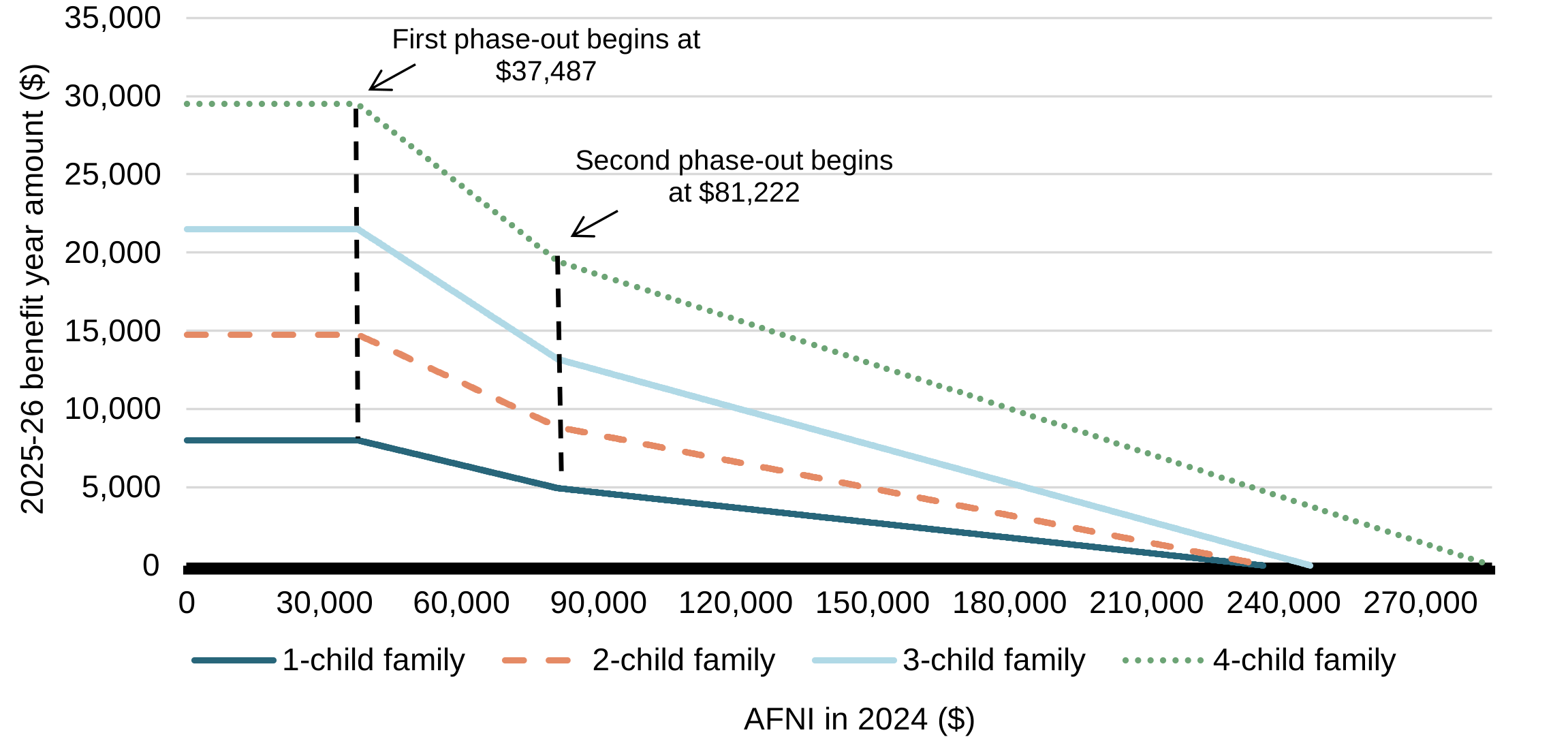
Table 1 shows the two sets of phase-out rates for the CCB based on the number of children and the AFNI.
| Number of children | Portion of AFNI within $37,487 to $81,222 | Portion of AFNI greater than $81,222 |
|---|---|---|
| 1 child | 7.0% | 3.2% |
| 2 children | 13.5% | 5.7% |
| 3 children | 19.0% | 8.0% |
| 4+ children | 23.0% | 9.5% |
Table 2 shows the income threshold and phase-out rates for the Child Disability Benefit. Families with one child eligible for the DTC receive the maximum Child Disability Benefit amount if their AFNI is less than or equal to $81,222, with the benefit being phased out at 3.2% on the portion of income over $81,222. The benefit is phased out at 5.7% of the portion of income over $81,222 for families with two or more children eligible for the DTC.
| Portion of AFNI greater than $81,222 | |
|---|---|
| 1 child eligible for the DTC | 3.2% |
| 2+ children eligible for the DTC | 5.7% |
Eligibility criteria and the calculation of CCB amounts are set out in section 122.6 of the Income Tax Act. The CRA administers CCB payments as well as payments legislated in the Children's Special Allowances Act. The Children's Special AllowanceFootnote 19 is paid in respect of children under the age of 18 who are in the care of federal, provincial/territorial or Indigenous agencies and institutions. The Children's Special Allowance is equivalent to the maximum (unreduced) CCB amounts (i.e., the payment is not phased out) plus the maximum Child Disability Benefit, where applicable. It is paid to the agency/institution caring for the child (or to the foster parent in some cases) instead of the CCB. The amount provided under the Children's Special Allowance ensures that equivalent support is provided in respect of a child who is in the care of, and maintained by, a federal, provincial/territorial or Indigenous agency/institution that cares for children.
2.2 Previous system of child benefits and tax credits
The previous system of child benefits is comprised of two main benefits: 1) the Canada Child Tax Benefit, which included the Canada Child Tax Benefit base amount, the National Child Benefit Supplement, and the Child Disability Benefit, and 2) the Universal Child Care Benefit. In addition, the Child Tax Credit was a non-refundable tax credit that provided tax relief to families with children aged 0 to 17.Footnote 20 Table 3 briefly describes each measure and shows the years during which each was in effect. Specific entitlement amounts for each measure are discussed in Chart 2 and Chart 3.
| Years in effect | Description | |
|---|---|---|
| Canada Child Tax Benefit | 1998-2016 | The Canada Child Tax Benefit base amount was a monthly, non-taxable benefit targeted to low- and middle-income families. The Canada Child Tax Benefit base amount, the National Child Benefit Supplement, and the Child Disability Benefit were all combined into one monthly payment to families, with the payment cycle running from July to June every benefit year. The entitlements to each benefit were based on their respective AFNI phase-out thresholds, phase-out rates and the number of children in a family, with amounts and phase-out thresholds indexed to inflation annually. |
| National Child Benefit Supplement | 1998-2016 | The National Child Benefit Supplement was a monthly, non-taxable supplement targeted to low-income families. The supplement was fully phased out once AFNI reached the top of the lowest marginal tax bracket (i.e., for the 2015-16 benefit year, the supplement was fully phased out for families with an AFNI of $44,701 in the 2014 tax year). |
| Child Disability Benefit | 2003-2016 | The Child Disability Benefit was a monthly, non-taxable benefit targeted to families with one or more children eligible for the DTC. |
| Universal Child Care Benefit | 2006-2016 | The Universal Child Care Benefit was a monthly, taxable, universal benefit provided to families with children under the age of 6 (except in 2015 when the Universal Child Care Benefit was enhanced and benefits were also provided to families with children aged 6 through 17). In two-parent families, the Universal Child Care Benefit was included in the income of the lower-income spouse or common-law partner. In one-parent families, the Universal Child Care Benefit could be included in an eligible dependant's income instead of the parent's income (as of 2010). The Universal Child Care Benefit amount was not indexed to inflation. |
| Child Tax Credit | 2007-2014 | The Child Tax Credit was a non-refundable tax credit that provided tax relief to families with children aged 0 to 17. Tax savings were equal to the credit amount for each child multiplied by the lowest marginal tax rate. |
Chart 2 illustrates the after-tax child benefits received by a two-child family (one child under the age of 6 and one child aged 6 through 17) at different levels of AFNI for the 2015-16 benefit year. The phase-out rates for the three components of the Canada Child Tax Benefit were structured similarly to those for the current CCB and Child Disability Benefit, with different percentage rates depending on the number of children in a family.Footnote 21
The maximum amounts for the three components of the Canada Child Tax Benefit are as follows for the 2015-16 benefit year:
- Canada Child Tax Benefit base amount: Up to $1,471 each for the first and second child and $1,574 for the third and each subsequent child;
- National Child Benefit Supplement: Up to $2,279 for the first child, $2,016 for the second child and $1,918 for each subsequent child; and
- Child Disability Benefit: Up to $2,695 per child eligible for the DTC.
Prior to 2015, the Universal Child Care Benefit provided a benefit of $100 per month per child under the age of 6. For 2015 and the first half of 2016, the Universal Child Care Benefit provided a benefit of $160 per month for each child under the age of 6 and $60 per month for each child aged 6 through 17. The value of the Child Tax Credit was $2,255 in 2014 (the last year the credit was in effect).
Child benefits for two children (one child under 6 and one child aged 6-17), 2015–16 benefit year

To compare the generosity levels of the two child benefit systems, Chart 3 shows how much a two-child family (one child under the age of 6 and one child aged 6 through 17) with different levels of income receives under the CCB compared to what they would have received under the previous system of child benefits, if both benefit systems had been in place for the 2016-17Footnote 22 benefit year. The chart demonstrates that low- and middle-income families receive more benefits as part of the CCB than under the previous system of child benefits.Footnote 23 For the 2016-17 benefit year, this two-child family with an AFNI of $35,000 received $3,730 more in CCB entitlements and families with an AFNI of $70,000 received $2,740 more than they would have under the previous system. Further, the CCB is more targeted to low- and middle-income families, with many higher-income families no longer receiving child benefits (like the two-child family with AFNI of $250,000 illustrated in Chart 3 who previously received $1,848 in child benefits through the Universal Child Care Benefit).
Comparison of amounts received under the Canada Child Benefit (CCB) and the previous system of child benefits for a family with two children (one child under 6 and one child aged 6-17), if both systems were in place for the 2016-17 benefit year

2.3 Related programs
In addition to the CCB, several federal programs support parents with the cost of raising children. For example:
- In Budget 2021, the Canada-wide Early Learning and Child Care system was introduced. The federal government is working with provinces and territories to reduce fees for regulated childcare to an average of $10-a-day and create 250,000 new early learning and child care spaces by March 2026. As of April 1, 2024, eight provinces and territories have reduced regulated childcare fees to an average of $10-a-day or less and all other provinces have reduced fees by 50 per cent.
- The Child Care Expense Deduction is a tax deduction that recognizes that parents who must incur childcare expenses in order to work or study have a reduced ability to pay tax. Parents may deduct a maximum annual amount which is the least of three factors: actual amount of child care expenses incurred; two-thirds of annual earned income of the individual who is eligible for the deduction (i.e., the lower-income partner, generally); and the total of the maximum dollar limits for all children, that is $8,000 per year for each child under age 7, $5,000 annually for children aged 7-15 and $11,000 for a child eligible for the DTC, regardless of their age (amounts are not indexed to inflation).
In addition, most provinces and territories also provide benefits similar to the CCB.
3. Data and Variables Used in the Evaluation
This evaluation relies on the following data sources:
- Trend analysis: CCB and Canada Child Tax Benefit data for benefit years 2006-07 to 2023-24, Universal Child Care Benefit data for tax years 2006 to 2016, Child benefit payments from the Public Accounts of Canada for fiscal years 2006-07 to 2023-24, and T1 Income Tax and Benefit Return (T1) data for the 2005 to 2022 tax years.
- Evaluation of the CCB: CCB microdata for the 2023-24 benefit year, T1 data for the 2022 tax year, Consumer Price Index (CPI) and Survey of Household Spending (SHS) data from Statistics Canada.
Throughout most of the evaluation, the unit of analysis is a family (that is, one or both parents and their minor children) given that child benefits are meant to provide support to all minor children in a family as opposed to an individual tax filer. In addition, one benefit payment is made monthly in respect of all of the children in a family. In the sections looking at CCB recipient data specifically, the unit of analysis is a CCB recipient. Variables used throughout the analysis pertain to benefit amounts as well as the sociodemographic characteristics of families receiving benefits such as income, family composition and the presence of a child eligible for the DTC.
4. Trend Analysis
Chart 4 shows that about 3 million families received the Canada Child Tax Benefit in 2006-07 and about 1.5 million received the Universal Child Care Benefit under the previous child benefit system. There was a small decline in the number of families receiving the Canada Child Tax Benefit over the ensuing years to about 2.8 million in 2015-16, a period during which incomes outpaced inflation. The number of families receiving the Universal Child Care Benefit jumped to about 3.7 million in 2015-16 after the expansion of the benefit to all families with children under the age of 18. The CCB is paid to approximately 3.5 million familiesFootnote 24 annually since its introduction in 2016, smaller than the number receiving the Universal Child Care Benefit because it is income-tested.
Number of families entitled to federal child benefit payments, by benefit year

Chart 5 highlights that federal child benefit payments totaled about $16.2 billion in the 2006-07 fiscal year under the previous child benefit system (in 2024 dollars), increasing to $22.6 billion in 2015-16 following the enhancement of the Universal Child Care Benefit, and then to $27.2 billion in 2016-17 with the introduction of the CCB. Payments of the CCB increased to $31.1 billion in 2020-21 due to a one-time enhancement of the benefit early in the COVID-19 pandemic and the temporary CCB young child supplement. It remained high at about $27.9 billion in 2021-22 due to the remaining payments of the young child supplement. About $26.3 billion was paid out under the CCB in 2023-24. The increase between the baseline (not accounting for the young child supplement) in 2022-23 and 2023-24 is due to high inflation resulting in a higher indexation rate for the CCB of 6.3% for 2023-24, compared to 2.4% for 2022-23.Footnote 25
Total federal child benefit payments, by fiscal year, 2024 dollars

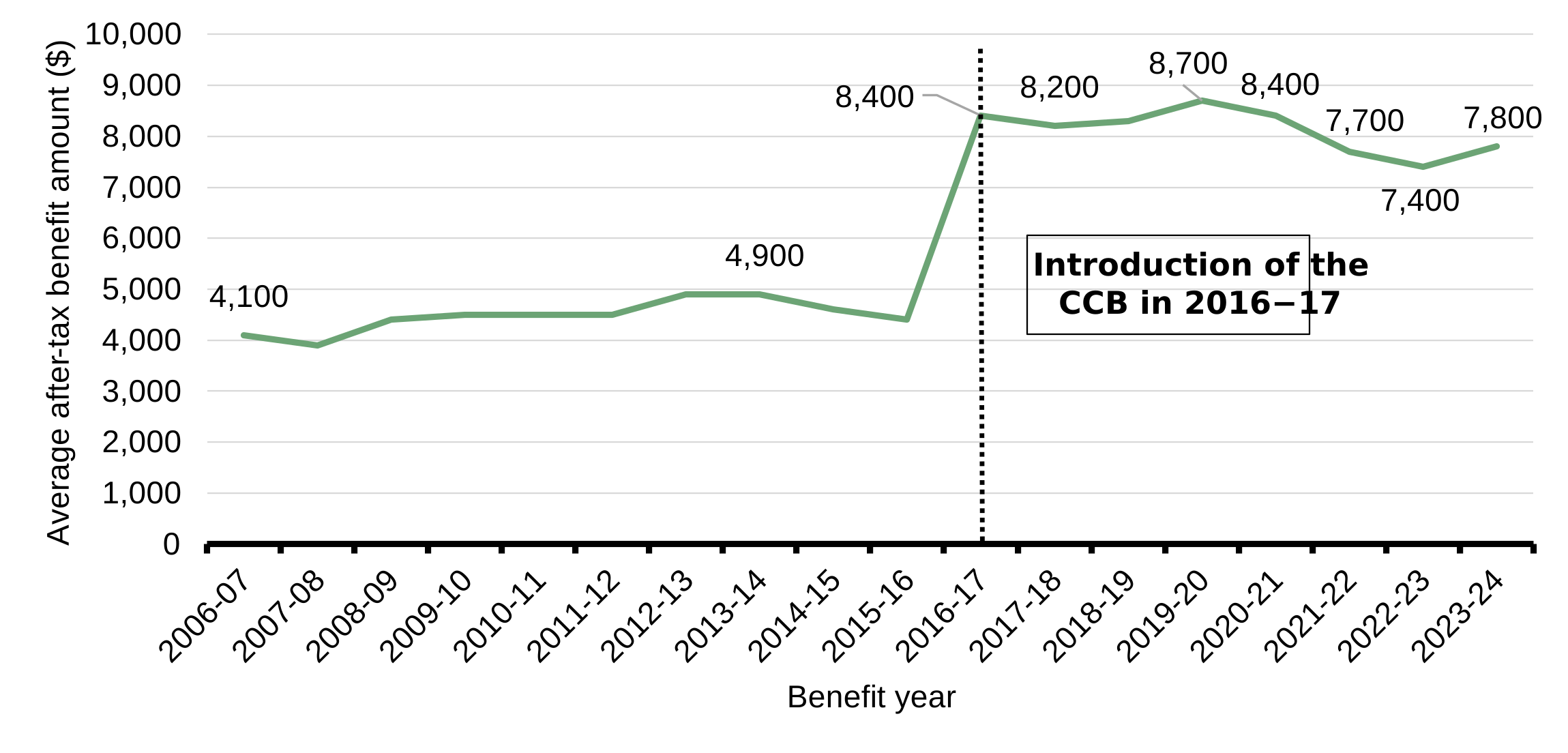
Chart 6 illustrates that average after-tax federal child benefits were about $4,100 per receiving family in the 2006-07 benefit year (in 2024 dollars). This increased to about $4,900 in 2013-14. Average benefits increased further to about $8,400 in 2016-17,Footnote 26 following the introduction of the CCB. The average CCB per recipient family increased again to about $8,700 in 2019-20, due to the one-time top-up to the benefit early in the pandemic. It dipped to about $7,400 in 2022-23 after the temporary CCB pandemic top-ups ended and then increased to about $7,800 in 2023-24 (again, the increase between 2022-23 and 2023-24 is due to inflation effects).
Average after-tax federal child benefit amounts, by benefit year, 2024 dollars
5. Evaluation of the CCB
5.1 Relevance
Relevance: A measure must serve a demonstrable and clearly defined policy need that is aligned with the roles, responsibilities, and current priorities of the federal government.
The CCB continues to serve an important policy need in helping families with the high cost of raising children. It is closely aligned with priorities of successive federal governments, including the current priorities of the federal government, with one of the seven priorities in its mandate letterFootnote 27 being "Bringing down costs for Canadians and helping them to get ahead." The Speech from the ThroneFootnote 28 echoes this priority by committing to protect programs that support families with the cost of raising children. As noted earlier, the CCB is indexed to inflation annually, which ensures that the value of the benefit is not eroded over time.
The cost of raising children can be examined from the perspective of the average level of spending on children in Canada. Chart 7 presents results from a recent Statistics Canada studyFootnote 29 in which the authors provided the first nationally representative estimatesFootnote 30 of average spending on children among Canadian families in over ten years. Using data from the Survey of Household Spending (SHS), the authors provide granular estimates of average spending on children in families with varying levels of income, family compositions, and children in different age groups. For example, Chart 7 illustrates that two-child, two-parent families with household incomes less than $104,000 (in 2024 dollars)Footnote 31 spend about $15,200 on average every year on each child aged 0 to 5. In comparison, two-parent families with household incomes above $170,200 spend about $26,300 every year per child aged 0 to 5. In general, average spending per child increases with household income as well as the number of parents supporting a family. In addition, overall spending tends to increase as children get older, with higher spending in categories such as clothing, food, and transportation.Footnote 32
Annual spending per child in a two-child family, by child age group, family composition, and household income group, 2024 dollars

In addition to annual spending on each child, the analysis also estimates total spending on each child from birth to age 17. Chart 8 highlights that for families with two children, the cumulative spending on each child ranges from about $285,400 in one-parent families with household incomes less than $104,000 to about $498,400 in two-parent families with household incomes above $170,200. In line with annual spending estimates, cumulative spending on each child from birth to age 17 also increases with household income and the number of parents supporting a family. The authors recognize that these estimates may be conservative given differing family realities and spending patterns (e.g., additional costs incurred when raising a child with a disability, choices surrounding spending on children's extracurricular activities).
Total spending per child from birth to age 17 in a two-child family, by family composition and household income group, 2024 dollars

This study shows that estimates of annual and cumulative spending per child in Canada are high, suggesting a policy imperative to provide financial assistance to families with children to help with these costs. At the same time, spending on children reflects personal preferences of a family, to a certain degree. The relevant role for governments concerned about costs for families could therefore be to provide support for basic needs. Additional policy decisions can be taken regarding the targeting of such supports based on income and family size.
5.2 Effectiveness
Effectiveness: A measure must achieve its policy objective(s) – The main objectives of the CCB are to help families with the costs of raising children and lift children out of poverty.
Reducing Child Poverty
Poverty reduction was one of the key objectives of the CCB when it was introduced.Footnote 33 The CCB is a significant part of the Government of Canada's Poverty Reduction Strategy, which has an overall target of reducing the poverty rate by 50% from its 2015 level by 2030. The proportion of children under the age of 18 living in poverty has decreased significantly – from 16.3% in 2015 to 10.7% in 2023,Footnote 34 based on the Market Basket Measure (MBM), Canada's Official Poverty Line.Footnote 35 This translates into hundreds of thousands of fewer children living in poverty compared to 2015. The poverty rate differs by family type – the poverty rate for children under 18 living in one-parent families headed by women fell from 39.2% in 2015 to 29.3% in 2023, whereas the poverty rate for children under 18 living in two-parent families fell from 13.2% in 2015 to 7.5% in 2023.Footnote 36
Recent empirical estimates point to the CCB being an effective program to reduce child poverty. Using a difference-in-difference strategy and data from the Longitudinal Administrative Database (LAD), Baker, Messacar, and Stabile (2023)Footnote 37 estimate that the introduction of the CCB reduced poverty by 11% in 2018 in families headed by a single mother and by almost 17% in two-parent families, compared to the mean rate in 2014. The measure of poverty they use is the low-income measure (LIM) since this is available in the LAD.Footnote 38 The authors also find average increases in the after-tax incomes of single and married mothers of about $2,500 following the introduction of the benefit.
These findings are supported by international evidence, with poverty reductions observed in the United States (U.S.) and the United Kingdom (U.K.) as a result of child benefit and working tax credit expansions. In the U.S., the refundable portion of the Child Tax Credit is credited with lifting about 2.4 million individuals out of poverty in 2022, with 5.3 million individuals being lifted out of poverty in 2021 when the credit was fully refundable.Footnote 39 Similarly in the U.K., the introduction of the Working Families' Tax Credit as well as changes to the Child Benefit and Child Tax Credit among other income-support measures are associated with child poverty rate reductions of over 30% in microsimulation analysis (Piachaud and Sutherland, 2001).Footnote 40
Increasing Spending in Specific Expenditure Categories
Najjarrezaparast and Pendakur (2021),Footnote 41 using a difference-in-differences strategy, estimate that the CCB increased overall spending in families with children compared to families without children (i.e., the control group – families not affected by the introduction of the CCB) by $2,288 annually on average. The response was even stronger among those living in rented accommodations, with their annual spending increasing by $3,361. Notably, their analysis focuses on the spending response of lower-income households, namely those with incomes below the median level of income. Among renters, the CCB led to statistically significant increases in spending on shelter ($1,376), food ($732), and children's clothing ($265). The authors present some evidence that renters with many children were more likely to move to find better living arrangements in response to the introduction of the CCB. Interestingly, the authors do not find statistically significant increases in spending for those in owned accommodations; this could be due to the specific characteristics of the respondents in the authors' sample (lower-income households) and results could differ when looking at CCB recipients in all income groups (not available in their analysis).
Results on childcare spending are mixed in the literature. For example, Najjarrezaparast and Pendakur (2021) do not find that the CCB increased spending on childcare. They offer a few possible explanations for this finding, such as lower-income families prioritizing other spending (e.g., food and shelter) over childcare when receiving additional cash transfers or childcare being prohibitively expensive even with the additional support from the CCB. In contrast, Adams et al. (2020)Footnote 42 at Employment and Social Development Canada (ESDC) find that the CCB is associated with higher shares of childcare spending (as a proportion of total household spending) for both lower-income and higher-income households. They observe more statistically significant average increases in childcare spending for higher-income households, particularly for those with children below the age of 6. Sample characteristics, methodological choices, and differences in the theoretical models underpinning the analysis could all be contributing to the differences in findings. Importantly, both studies use Survey of Household Spending (SHS) data with samples ending in 2017 and therefore do not capture the effects of the Canada-wide Early Learning and Child Care system introduced in 2021.
Looking at the previous system of child benefits, Jones, Milligan, and Stabile (2019)Footnote 43 use an instrumental variables (IV) strategy and estimate that for each additional dollar in benefit income, low-income families (i.e., families in the bottom income quartile) spend $0.23 more on food in stores while spending $0.05 less on food in restaurants. This suggests a shift towards cooking more at home. They also find higher spending on education ($0.13) – such as spending on computers and related items, recreation ($0.12), childcare ($0.07), and transportation ($0.07). Additionally, their analysis provides evidence of decreased spending on tobacco and alcohol among both low-income families ($0.07 and $0.02, respectively) and higher-income families ($0.06 and $0.07, respectively), which may be explained in part by lower financial stress as benefit income increases.
Improving Short-Term and Long-Term Child Outcomes
There is an extensive body of literature exploring the link between child benefits and child outcomes. In a recent comprehensive review of the literature in Canada, the U.S., and the U.K., Michelmore (2025)Footnote 44 describes how child benefits and tax credits have improved a host of child outcomes both in the short term (during childhood) and in the long term (when children reach adulthood). In the short term, child benefits in Canada are associated with improved educational outcomes, food security, physical health, mental health, and maternal mental health (Milligan and Stabile, 2011). In particular, Milligan and Stabile (2011) find stronger evidence of improved educational outcomes (e.g., test scores) and physical health for boys while they find stronger evidence of improved mental health for girls.
With respect to long-term outcomes, there is no empirical evidence to date on the long-term outcomes of children who benefited from the CCB or the previous system of child benefits in Canada.Footnote 45 However, with the evidence available in the U.S. looking at expansions of the Earned Income Tax Credit (EITC – similar to the Canada Workers Benefit), Michelmore (2025) highlights that children whose parents benefited from the credit had higher educational attainment, employment rates, and income mobility on average as well as better health and lower poverty rates in adulthood. For a more detailed discussion of the mechanisms through which child benefits and tax credits improve specific child outcomes, please refer to the literature review.
Overall, the empirical research demonstrates that the CCB is effective in helping to reduce child poverty in Canada. Both the CCB and the previous system of child benefits are also effective in increasing spending in a number of areas, such as food, shelter, children's clothing, education, and transportation, and likely improving child outcomes in the short term and long term.
5.3 Equity
Equity: A measure's benefits should be distributed equitably, considering the progressivity of the measure and the distribution of benefits among recipients in different sociodemographic groups.
Based on available microdata for the 2023-24 benefit year, there were 3,707,200Footnote 46 recipients who were entitled to receive the CCB in either July 2023 (the beginning of the benefit year) or June 2024 (the end of the benefit year).Footnote 47 Due to changing eligibility throughout the benefit year (e.g., due to children turning 18 years of age, changing family compositions), some families receive benefits in each of the 12 months of the benefit year while others receive benefits for only certain months during the benefit year. Using the first and last months of microdata allows us to proxy the total number of recipients with positive CCB entitlements throughout the 2023-24 benefit year.
Chart 9 illustrates the distribution of CCB recipients and entitlements for the month of June 2024Footnote 48 by gender identity of the eligible parent in one- and two-parent families. Due to the small number of gender-diverse recipients in the data, half of the gender-diverse recipients were randomly allocated to the men+ group and the other half to the women+ group. This is consistent with the gender identity grouping method used by Statistics Canada in the 2021 Census.Footnote 49 Due to the female presumption rule whereby the female parent is generally the parent who is entitled to receive the CCB, we expect that women+ make up the majority of CCB recipients (93.9% in total among all family types) and entitlement amounts in Canada (95.0%). This is consistent with the findings for 2020 that cisgender womenFootnote 50 benefit relatively more from the CCB (women+ who are racialized or of Indigenous identity also particularly benefit from the CCB).Footnote 51 However, given that the CCB is intended to support children, the gender distribution of benefits among children in these families is expected to be more equal. Chart 9 also highlights that most CCB recipients in one-parent families are women+, and they make up a greater share of entitlements than their share among all CCB recipients (32.2% and 25.8%, respectively). This is in line with the fact that most one-parent families in Canada are headed by women and that the prevalence of low income is higher in these families compared to other family types in Canada,Footnote 52 which translates into higher CCB amounts.
Proportion of CCB recipients and total entitlement amount in June 2024, by family type and gender identity group, 2023-24 benefit year

Chart 10 shows that the most common family compositions among CCB recipients are two-parent families with either two children (29.1%) or one child (27.6%), followed by one-parent families with one child (17.6%). Further, recipients with a higher number of children make up a lower proportion of CCB recipients and a higher proportion of total entitlements in June 2024. Families with a higher number of children are less common in Canada, but they receive more benefits given that they are supporting more children in the family. By design, the CCB provides a specific amount for each child aged 0 to 17 in a family; larger families thus generally receive higher benefits in recognition of the increase in costs associated with raising more children. Looking at average and median monthly entitlements, one-parent families receive higher CCB amounts than two-parent families with the same number of children. This is due to the lower AFNI on average among recipients in one-parent families.
Proportion of CCB recipients and total entitlement amount
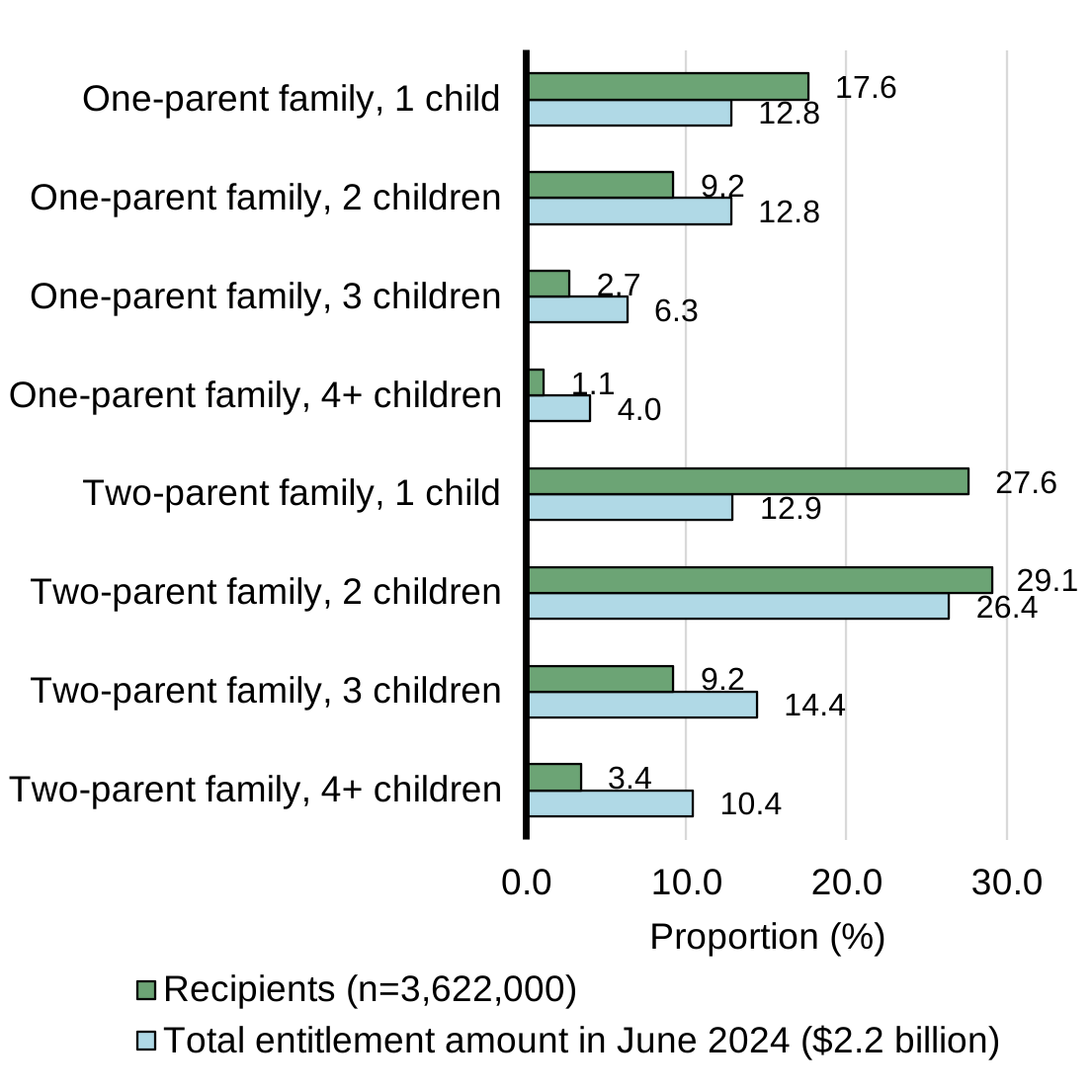
Average and median monthly entitlement amounts
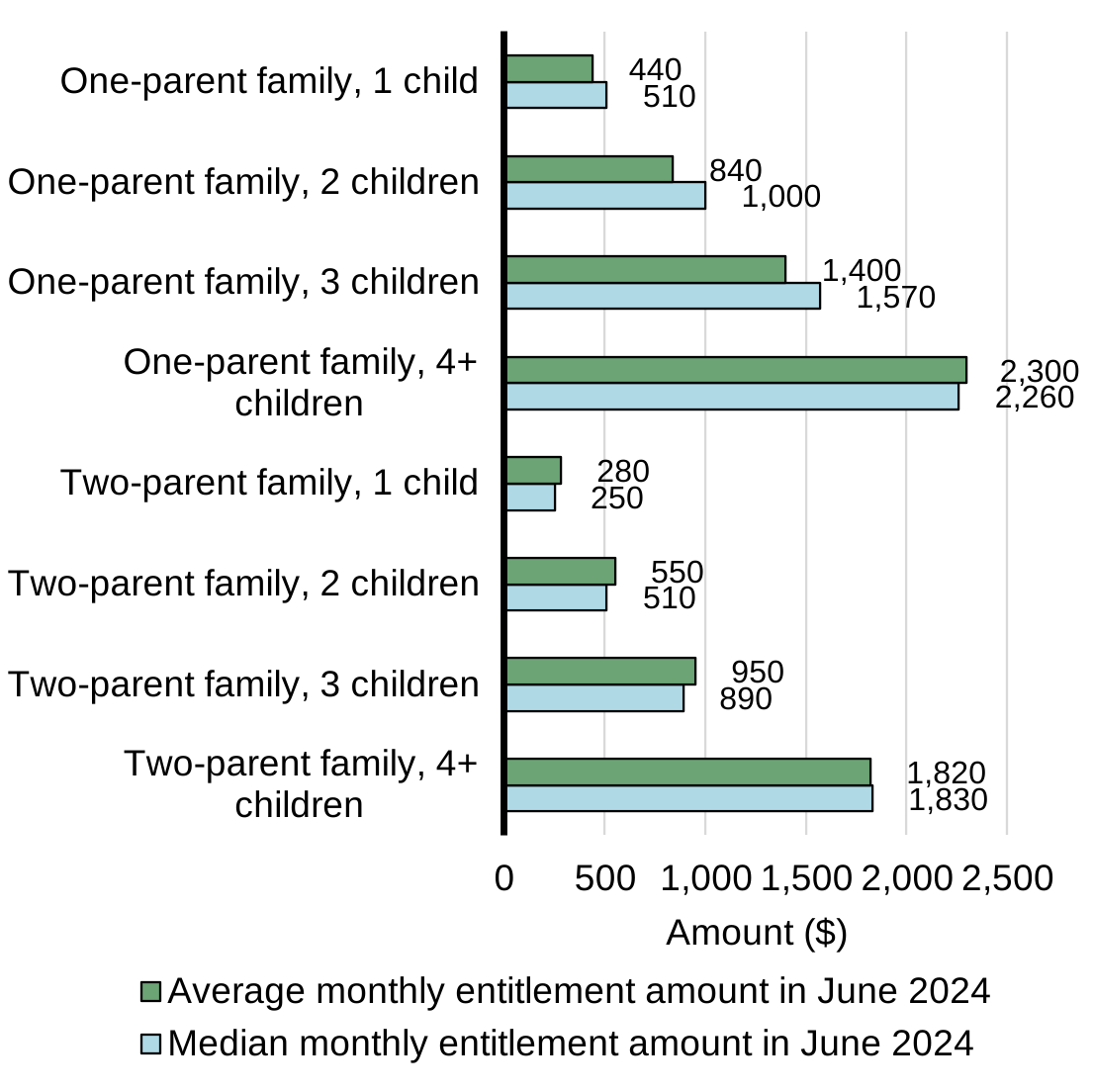
Source: CCB recipient microdata for July 2023 and June 2024 linked to 2022 T1 data
Notes: The number of recipients is rounded to the nearest 100. Percentages are rounded to the nearest 0.1. The total entitlement amount is rounded to the nearest 0.1 in billions. Average and median amounts are rounded to the nearest 10. Totals may not add up to 100.0% due to rounding.
CCB recipients who could not be linked to the 2022 T1 data have been excluded from the chart.
Recipients who appear in the CCB microdata but whose children are 18 years of age have been excluded from the chart. The number of recipients is slightly different in each chart due to differences in data availability for each sociodemographic variable.
Table 4 focuses on the 203,300 recipients with children eligible for the DTC,Footnote 53 receiving about $208.7 million in total CCB and Child Disability Benefit entitlements in June 2024. Most of these recipients are supporting one child with a severe and prolonged disability (55.5% in two-parent families and 34.0% in one-parent families). Like for the CCB base entitlement, recipients receive a Child Disability Benefit entitlement for each child eligible for the DTC in recognition of the additional costs involved in raising children with severe disabilities. Accordingly, we observe higher average and median benefits among recipients with two or more eligible children with disabilities.
| Family type and number of children eligible for the DTC | Proportion of Child Disability Benefit recipients with children eligible for the DTC (%) |
Proportion of total entitlement amount (%) | Average Child Disability Benefit ($) | Median Child Disability Benefit ($) | Average monthly entitlement including CCB and Child Disability Benefit ($) | Median monthly entitlement including CCB and Child Disability Benefit ($) |
|---|---|---|---|---|---|---|
| One-parent family, 1 child | 34.0 | 35.1 | 240 | 260 | 1,060 | 790 |
| One-parent family, 2+ children | 3.7 | 6.8 | 530 | 530 | 1,880 | 1,600 |
| Two-parent family, 1 child | 55.5 | 48.2 | 200 | 230 | 890 | 750 |
| Two-parent family, 2+ children | 6.7 | 9.8 | 450 | 530 | 1,500 | 1,360 |
|
Source: CCB recipient microdata for July 2023 and June 2024 linked to 2022 T1 data |
||||||
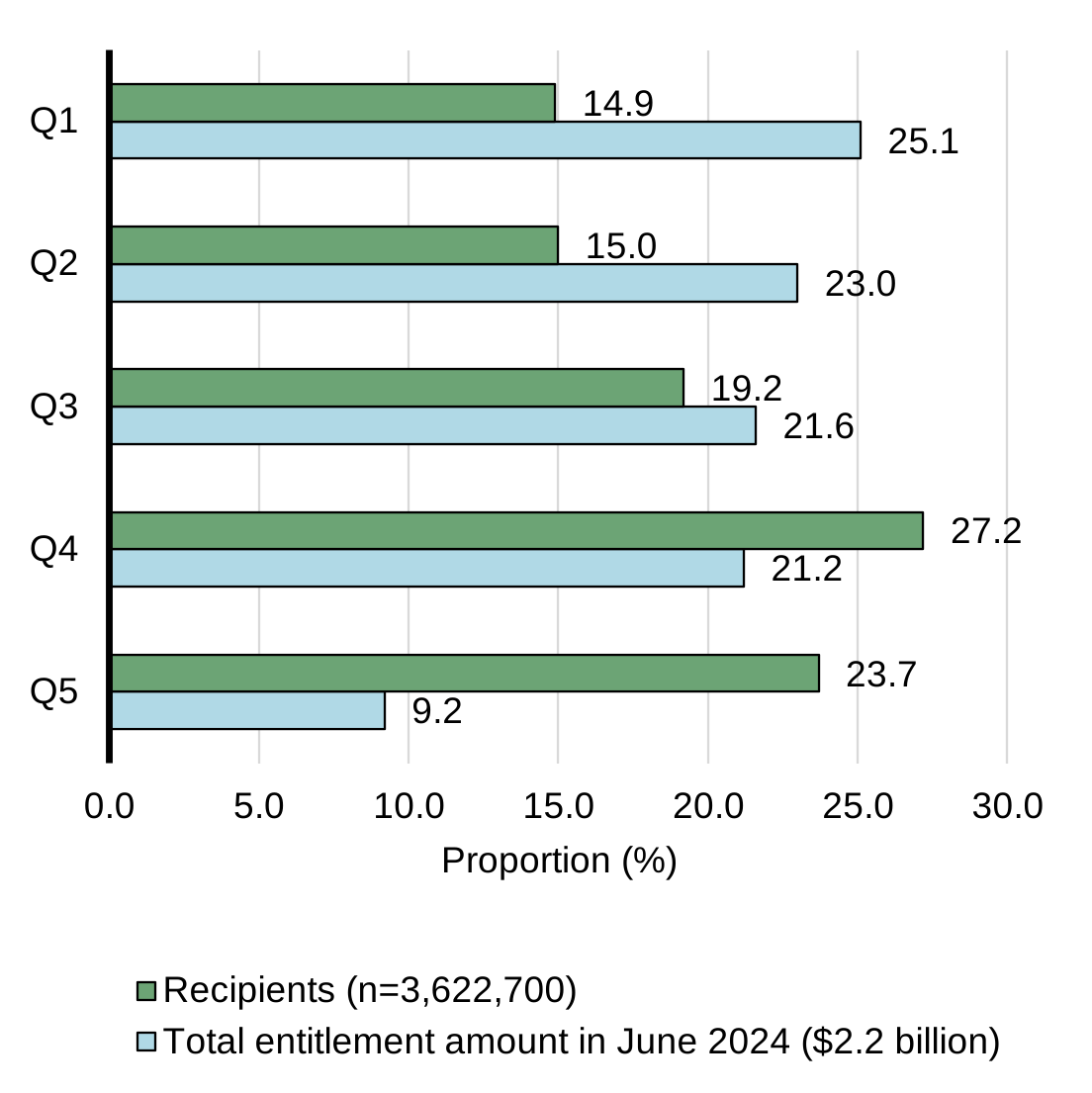
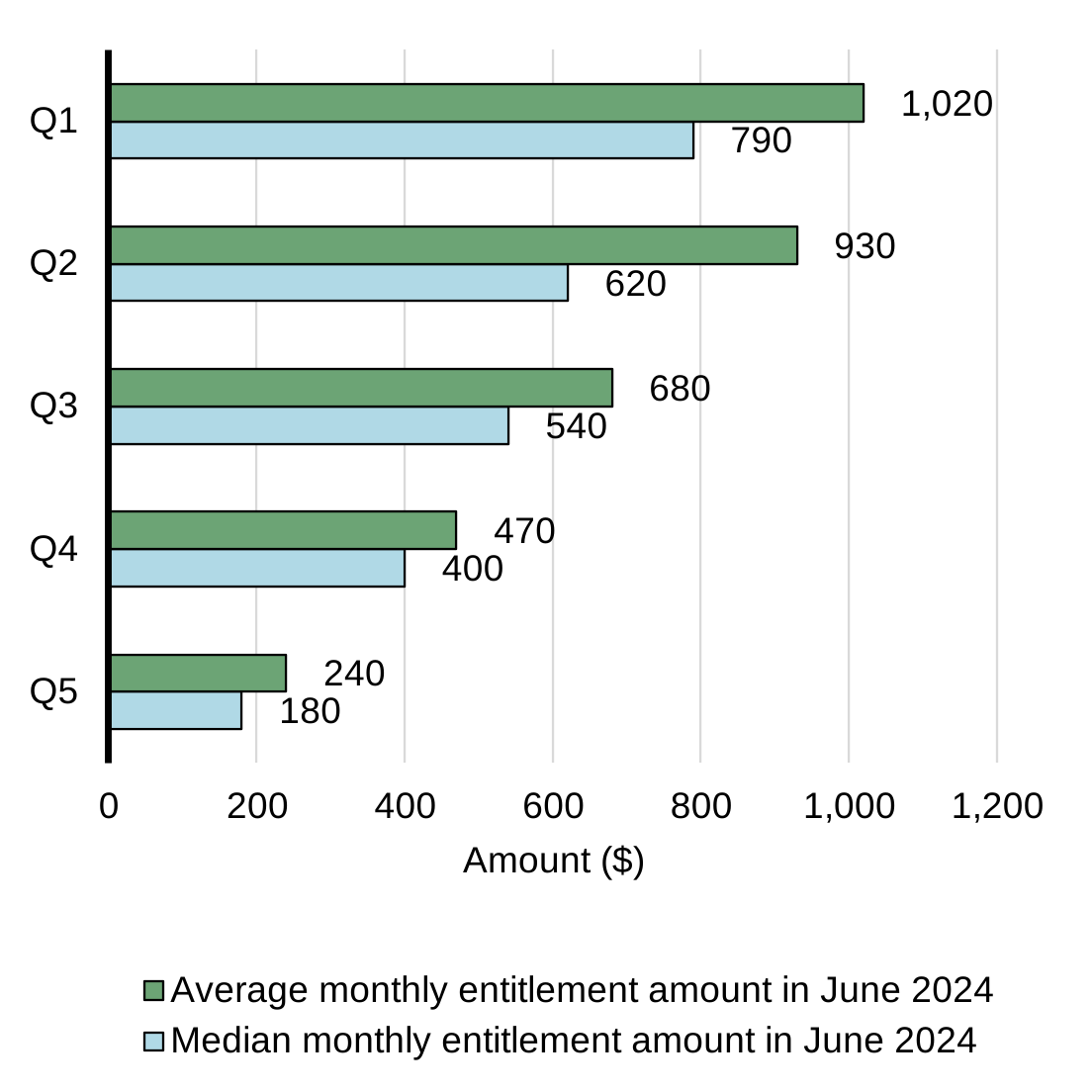
Chart 11 demonstrates the progressivity of the CCB with respect to AFNI, with recipients in lower-income families receiving higher average and median monthly benefits ($1,020 and $790 in Q1) than recipients in higher-income families ($240 and $180 in Q5). While recipients in the higher income quintiles make up the highest proportions of recipients (27.2% in Q4 and 23.7% in Q5), they make up smaller proportions of total entitlements in June 2024 (21.2% in Q4 and 9.2% in Q5), due to the progressive phase-out structure of the benefit. Families with children aged 0 to 17 in Canada generally have higher incomes than families without children, with two-parent families having higher median before and after-tax incomes compared to families without children in 2022.Footnote 54 Chart 11 combines recipients in one- and two-parent families in each quintile given that one-parent and two-parent families who have the same AFNI receive the same CCB entitlement if they have the same family composition (equivalent number of children in each age range and custody arrangement).
Proportion of CCB recipients and total entitlement amount
Average and median monthly entitlement amounts
Source: CCB recipient microdata for July 2023 and June 2024 linked to 2022 T1 data
Notes: The number of recipients is rounded to the nearest 100. Percentages are rounded to the nearest 0.1. The total entitlement amount is rounded to the nearest 0.1 in billions. Average and median amounts are rounded to the nearest 10. Totals may not add up to 100.0% due to rounding.
CCB recipients who could not be linked to the 2022 T1 data have been excluded from the chart.
AFNI quintiles are calculated based on all tax filers in the 2022 T1 data (each quintile contains 20% of all tax filers): Q1 (under $22,126), Q2 (from $22,126 to $45,517), Q3 (from $45,517 to $77,655), Q4 (from $77,655 to $126,932), Q5 (at or above $126,932).
The number of recipients is slightly different in each chart due to differences in data availability for each sociodemographic variable.
Overall, the CCB is progressive and its benefits are distributed equitably to families targeted by the measure – Recipients in lower-income families receive a greater share of overall CCB entitlements and higher average and median monthly benefits than recipients in higher-income families.
5.4 Efficiency
Efficiency: The costs incurred to achieve the policy objective of the measure should be minimized, or alternatively the benefits should be maximized for a given level of costs. The measure should aim to minimize economic distortions to achieve its objective.
Administration of the CCB
As mentioned earlier, to receive the CCB, parents need to apply for the benefit and must file an income tax and benefit return each year.
The Automated Benefits Application allows parents to register their child's birth and apply for the CCB at the same time, simplifying the application process for parents. Parents may also apply for the CCB online using the CRA's My Account service or by mailing a paper form. In certain cases, parents may need to provide additional documentation with their CCB application. Parents also need to notify the CRA of changes in marital status, residency and child custody, so that their CCB entitlement can be recalculated to reflect their current circumstances, as appropriate.
Given the child benefit delivery architecture was already in place from the previous child benefit system, it is appropriate to deliver the CCB through the tax system to make use of these benefit delivery efficiencies in targeting benefits to families with children. Using income information already on file with the CRA that individuals provide through the annual filing of a tax and benefit return avoids the need to establish separate data collection and income verification processes. The filing of a tax return is already required to access other benefits, such as the GST Credit and the Canada Workers Benefit, and was required to access the Canada Child Tax Benefit under the previous child benefit system.
The application process and use of the existing delivery structure aims to strike a balance between ensuring the integrity of the program (by verifying that applicants meet the eligibility criteria for the CCB) and minimizing to the extent possible the compliance burden for eligible families with children and administrative burden for the CRA.
The Government of Canada continues to make improvements in how these benefits are accessed. For example, the CRA will be offering pre-filled tax returns through My Account to up to 5.5 million lower-income individuals by the 2028 tax year, which will allow these individuals to more easily and directly file their returns and continue to access key benefits such as the CCB. This initiative complements existing simplified filing servicesFootnote 55 such as the SimpleFile program, which invites individuals to answer a few brief questions by phone, online or mail, and confirm their information so that the CRA can file their return on their behalf. Similarly, the Let Us Help You Get Your Benefits Indigenous Credit and Benefit Short Return is a simplified tax return that can be filed by certain low-income Indigenous people to access credits and benefits.
Labour Supply Impacts
Benefits that decrease as incomes rise can have a negative impact on an individual's incentive to work through two channels:
- a substitution effect, whereby phasing out the benefit as income rises reduces the returns from working, which makes leisure more attractive and encourages individuals to work less, and
- an income effect, whereby the benefit increases a recipient's income, so they could choose to spend some part of their increased income on leisure (i.e., reduced work hours).
Any negative impact on labour supply can increase the cost of the program to the government from decreased tax revenue on earnings and increased payments of the benefit. It can also mitigate the positive effects of the benefit on poverty, if individuals simply reduce their labour supply upon receiving the benefit such that there is no net change in their overall income. As the CCB is an income-tested benefit that provides additional income to families and has an important poverty reduction objective, it is thus important to examine the impact of the CCB on labour supply.
One way to explore the potential labour supply impacts of a measure is to look at changes in the effective marginal tax rates (EMTRs) for beneficiaries in different income groups. The EMTR concept represents the percentage that individuals pay in taxes on their next dollar of income, accounting for both additional taxes and lower amounts of income-tested benefits if applicable. In terms of policy design, the CCB decreased EMTRs for lower-income families due to lower benefit phase-out rates at those income levels compared to the previous system of child benefits. Conversely, the CCB increased EMTRs for certain middle- and higher-income families due to higher benefit phase-out rates at higher levels of income. While the EMTR is a useful concept to consider in policy design, the potential labour market impacts of a measure are best estimated using empirical research methods that leverage administrative and survey data.
In recent empirical evidence, Baker, Messacar, and Stabile (2023), using data from the Longitudinal Administrative Database (LAD) and the Labour Force Survey (LFS), find no statistically significant change in the employment rates of single and married mothers compared to their counterparts without children following the expansion of the Universal Child Care Benefit and the introduction of the CCB (i.e., no labour supply impact on the extensive margin). Similarly, they do not observe a clear change in usual hours worked following both policy reforms among single and married mothers compared to single and married women without children (i.e., no labour supply impact on the intensive margin). Moreover, they perform the analysis on several samples and see similar employment results for single and married mothers by age of the youngest child (0 to 5 or 6 to 17), by number of children (one or multiple children) and by immigration status (born in Canada or immigrant to Canada). Finally, their findings do not change when performing the analysis for single and married fathers.
In previous research, Koebel and Schirle (2016)Footnote 56 find differences in the labour supply responses of women by marital status following the introduction of the Universal Child Care Benefit in July 2006. Among married mothers, those with higher levels of education are more likely to be in the labour force after the policy change whereas those with more children (especially younger children) are less likely to be in the labour force and more likely to work fewer hours per week. In contrast, single mothers (either divorced, separated, or never married) are more likely to be in the labour force after receiving the Universal Child Care Benefit and their work hours appear largely unaffected. The authors offer some explanations of the mechanisms at play in these contrasting results, including the fact that married mothers negotiate with their partners regarding the preference for childcare provided by a parent versus formal childcare, whereas single mothers often need to rely on formal childcare to work. They also mention that differences in flexibility around work schedules for single mothers versus married mothers could be contributing to their results.
With respect to mothers' overall labour supply decisions, Michelmore (2025) argues that an increase in labour supply can have positive, negative or no effects on child outcomes depending on the magnitudes of the income effect (additional income from work) and the substitution effect (less time spent with their children). Findings vary in different countries depending on the economic context as well as the quality and availability of childcare. For example, Agostinelli and Sorrenti (2021)Footnote 57 find that in the U.S. an increase in labour supply positively impacts child development for higher-income mothers but negatively impacts child development for low-income mothers. On the other hand, Nicoletti, Salvanes, and Tominey (2023)Footnote 58 find that in Norway an increase in labour supply during preschool years likely leads to higher child test scores for both higher- and lower-income mothers, with the positive effects of additional income outweighing the reduced time spent with their children.
Overall, recent empirical evidence demonstrates that the CCB is efficient in that benefits do not come at the cost of reductions in labour supply. Both the expansion of the Universal Child Care Benefit in 2015 and the introduction of the CCB in 2016 did not impact the employment rates of single and married mothers compared to their counterparts without children and did not lead to a change in usual hours worked. In addition, delivery of the CCB through the tax system is efficient and builds on the delivery architecture that was already in place from the previous child benefit system.
6. Conclusion
The CCB serves an important policy need in helping families with the high cost of raising children, with recent estimates of this cost ranging from $15,000 to $29,300 annually depending on household income, family composition, and the age of the child. The benefit is also closely aligned with the current priorities of the federal government, including "Bringing down costs for Canadians and helping them to get ahead" as committed to in its mandate letter.
The CCB is effective in achieving one of its main policy objectives – helping to reduce child poverty in Canada. The proportion of children under the age of 18 living in poverty has decreased from 16.3% in 2015 to 10.7% in 2023, and empirically the introduction of the CCB reduced poverty by 11% in 2018 in families headed by a single mother and by almost 17% in two-parent families, compared to the mean rate in 2014. Further, the CCB and the previous system of child benefits are associated with increased spending in several expenditure categories such as food, shelter, children's clothing, education, and transportation. Evidence on childcare spending is mixed. Child benefits and tax credits in Canada as well as in the U.S. and the U.K. are shown to improve a host of child outcomes both in the short term and long term.
Looking at different sociodemographic groups, most of the 3.7 million CCB recipients in 2023-24 are women+Footnote 59 as expected due to the female presumption rule whereby the female parent is generally considered to be the primary caregiver of the child(ren) and as a result receives the CCB. The most common family compositions among CCB recipients are two-parent families with either one or two children as well as one-parent families with one child. By design, larger families generally receive higher benefits due to the increase in costs associated with raising more children. Similarly, the 200,000+ recipients with children eligible for the Disability Tax Credit (DTC) receive additional support through the Child Disability Benefit in recognition of the additional costs involved in raising children with severe disabilities. The CCB is progressive with respect to AFNI, with recipients in lower-income families receiving higher average and median monthly benefits than recipients in higher-income families.
Finally, building on the existing benefit delivery architecture in place under the previous child benefit system allows the CCB to take advantage of the efficiency gains of delivering a targeted benefit for families with children through the tax system, by using income information already on file with the CRA. Furthermore, the Automated Benefits Application allows parents to register their child's birth and apply for the CCB at the same time. The recent expansion of automatic tax filing also makes it easier for low-income parents to access the CCB. Empirical evidence demonstrates that the CCB is relatively efficient, as the expansion of the Universal Child Care Benefit in 2015 and the introduction of the CCB in 2016 did not have an impact on the employment rates of single and married mothers compared to their counterparts without children (i.e., no labour supply impact on the extensive margin). Similarly, there is no clear change in usual hours worked following both policy reforms among single and married mothers (i.e., no labour supply impact on the intensive margin).