
Revised risk management scope for phenol, methylstyrenated
Chemical Abstracts Service Registry Number (CAS RN):
68512-30-1
Environment and Climate Change Canada
Health Canada
January 2026

Summary of proposed risk management
This document outlines the proposed risk management options under consideration for phenol, methylstyrenated (MSP) (CAS RN 68512-30-1), which has been proposed to be harmful to the environment.
For the purposes of paragraph 77(1)(a) of the Canadian Environmental Protection Act, 1999 (CEPA), the Government of Canada proposes to recommend that MSP be added to Part 1 of Schedule 1 to CEPA.
The exposure source of concern for MSP is the use of paints and coatings products that contain MSP, more specifically, as protective coatings applied for routine maintenance on ships and during fabrication of large equipment.
The Government of Canada is considering the following new risk management action:
- Amending the Prohibition of Certain Toxic Substances Regulations, 2025, to prohibit the manufacture, use, sale, offer for sale, and import of the substance MSP and products containing it
- Upon prohibition of MSP, such as through its addition to the Prohibition of Certain Toxic Substances Regulations, 2025, the Government of Canada would also add MSP to Part 3 of the Export Control List in Schedule 3 to CEPA to subject its export to the Export of Substances on the Export Control List Regulations
To inform risk management decision-making, information on the following topics should be provided (ideally on or before March 18, 2026), to the contact details identified in section 8 of this document:
- Socio-economic and technical impacts of the proposed risk management
- Alternative substances to MSP in consumer and commercial products (for example, paints and coatings products, adhesives and sealants)
- Alternative products to those that may or could contain MSP
- Imports of manufactured items that are made with, coated with, or that contain MSP
- Analytical methods to detect levels of MSP and/or its representative component in the aquatic environment, in paints and coatings, and/or in other products
- Achievable timelines for a company to complete a phase out of MSP or MSP-containing products; and/or
- Information that could help establish an incidental presence concentration threshold in products
The risk management options outlined in this revised risk management scope document may evolve through consideration of assessments and risk management options or actions published for other Chemicals Management Plan (CMP) substances as required to ensure effective, coordinated, and consistent risk management decision-making.
Note: The above summary is an abridged list of the options under consideration to manage this substance and to seek information on identified gaps. Refer to section 3 of this document for more complete details in this regard. It should be noted that the proposed risk management options may evolve through consideration of additional information obtained from the public comment period, literature and other sources.
1. Context
The Canadian Environmental Protection Act, 1999 (CEPA) (Canada 1999) provides the authority for the Minister of the Environment and the Minister of Health (the Ministers) to conduct assessments to determine if substances are toxic to the environment and/or harmful to human health as set out in section 64 of CEPAFootnote 1 ,Footnote 2 , and, if so, to manage the associated risks.
As part of the first phase of the Chemicals Management Plan, the Ministers published the Final decision on the screening assessment of 145 substances on the Domestic Substances List (subsection 77(6) of the Canadian Environmental Protection Act, 1999) (Canada 2008b, 2008c), an assessment of 145 substances with similar hazardous properties. The substance, phenol, methylstyrenated, Chemical Abstracts Service Registry Number (CAS RN)Footnote 3 68512-30-1, referred to throughout this document as MSPFootnote 4 , was one of the 145 substances included in the assessment.
At that time, it was concluded that MSP did not meet the criteria of section 64 of CEPA because it was not entering the environment at levels that were harmful to the environment or human health (Canada 2008b). The conclusion was based on the fact that, according to a survey issued pursuant to section 71 of CEPA, no industrial activities (import or manufacture) in relation to the substance were identified in Canada above the reporting threshold of 100 kg for the specified reporting year and, therefore, there was no known exposure to humans or to the environment (Canada 2006). However, given the persistent, bioaccumulative, and inherently toxic to non-human organisms (PBiT) properties of this substance, there was concern that new activities, which had not been identified or assessed, could lead to the substance meeting the criteria of section 64 of CEPA.
On the basis of the assessment’s conclusion, the Significant New Activity (SNAc) provisions specified under subsection 81(3) of CEPA were applied to MSP (Canada 2008a). The SNAc Order for this substance requires notification, for the purpose of assessment, of the manufacture, import, or use of MSP in Canada in quantities at or above 100 kg. In response to the SNAc Order, multiple Significant New Activity Notifications (SNANs) have been received since 2015 (ECCC 2025), leading to publication of a draft assessment and associated risk management scope document in November 2021 (Canada 2021a, 2021b).
2. Issue
In 2023, CEPA was amended to strengthen Canada’s Chemicals Management Regime. Health Canada and Environment and Climate Change Canada are publishing an updated joint assessment of MSP in Canada, pursuant to modernized CEPA.
A notice summarizing the scientific considerations of the updated draft assessment for this substance was published in the Canada Gazette,Part I, on January 17, 2026 (Canada 2026). For further information, refer to the updated draft assessment of Phenol, Methylstyrenated.
2.1 Updated draft assessment conclusion
On the basis of the information available, the updated draft assessment proposes that MSP meets the criteria under paragraph 64(a) of CEPA because it is entering or may enter the environment in a quantity or concentration or under conditions that have or may have an immediate or long-term harmful effect on the environment or its biological diversity (Canada 2026).
The updated draft assessment also proposes that MSP does not meet the criteria under paragraphs 64(b) or 64(c) of CEPA as it is not entering the environment in a quantity or concentration or under conditions that constitute or may constitute a danger to the environment on which life depends or a danger in Canada to human life or health (Canada 2026).
The updated draft assessment also proposes that MSP meets the criteria for persistence and bioaccumulation, as defined in the Persistence and Bioaccumulation Regulations under CEPA (Canada 2000).
The exposures of concern identified in the updated draft assessment for MSP are based on the releases of MSP from activities notified through the received SNANs. The notified activities include the use of paints and coatings containing MSP in industrial and commercial applications. These activities were estimated to result in releases of the substance into the aquatic environment that would be of ecological concern. This document focuses on the notified activities of concern associated with paints and coatings containing this substance (refer to sections 4 and 5).
2.2 Proposed recommendation under CEPA
On the basis of the findings of the updated draft assessment conducted pursuant to CEPA, the Ministers propose to recommend that MSP be added to Part 1 of Schedule 1 to CEPAFootnote 5 . Addition of a substance to Schedule 1 to CEPA enables the Government of Canada to propose certain risk management measures under CEPA to manage potential ecological and human health risks associated with the substance.
CEPA sets out a 2-track approach for managing risks.
Under sub-section 77(3), the Ministers are required to propose recommending the addition of a substance that meets the criteria in paragraph (a), (b) or (c) to Part 1Footnote 6 of Schedule 1 to the Act and, in developing a proposed regulation or instrument respecting preventive or control actions, to give priority to the total, partial or conditional prohibition of activities in relation to the substance or to the release of the substance into the environment.
For other substances recommended for addition to Part 2 of Schedule 1 to the Act, the Ministers shall give priority to pollution prevention, and this could include regulatory or non-regulatory measures.
MSP is proposed to meet all of the criteria in paragraph 77(3)(a) for a substance that may have a long-term harmful effect on the environment. MSP is inherently toxic to non-human organisms, is persistent and bioaccumulative in accordance with the Persistence and Bioaccumulation Regulations of CEPA, is present in the environment primarily as a result of human activity, and is not a naturally occurring radionuclide or a naturally occurring inorganic substance.
The Ministers have taken into consideration comments submitted by stakeholders during the 60-day public comment period on the previous draft assessment for MSP (Canada 2021a) and its associated risk management scope document (Canada 2021b). The Ministers will also take into consideration comments submitted by stakeholders during the 60-day public comment period on the updated draft assessment for MSP (Canada 2026) and its associated revised risk management scope document.
If the Ministers finalize the recommendation to add MSP to Part 1 of Schedule 1, risk management instruments must, unless an exception in section 91 of CEPA applies, be proposed within 24 months from the date on which the Ministers recommended that MSP be added to Schedule 1 to CEPA, and finalized within 18 months from the date on which the risk management instruments are proposed, as outlined in sections 91 and 92 of CEPA (refer to section 8 for publication timelines applicable to this group of substances). Adding a substance to Schedule 1 does not restrict its use, manufacture, or import. Rather, it enables the Government of Canada to take enforceable risk management actions under CEPA.
2.3 Public comment period on the previous draft assessment and its associated risk management scope
The previous draft assessment for MSP (Canada 2021a) and its associated risk management scope (Canada 2021b) outlining the proposed risk management options under consideration at that time were published on November 6, 2021. Industry and other interested stakeholders were invited to submit comments on both documents during a 60-day comment period.
Comments received on the previous draft assessment and its associated risk management scope were taken into consideration in the development of this document. A summary of responses to public comments received is available.
3. Proposed risk management
3.1 Proposed environmental objective
Proposed environmental objectives are quantitative or qualitative goals to address environmental concerns. For MSP, the proposed objectives address the exposure sources of concern outlined in section 5 of this document.
Given that MSP is being recommended for addition to Part 1 of Schedule 1 to CEPA (see section 2.2), the ultimate environmental objective for this substance will be elimination via prohibitionFootnote 7 , in order to prevent or minimize adverse effects on the environment. This environmental objective is contemplated by paragraph 90(1.1) of CEPA for substances that have those characteristics.
Dimers of C9 monomer are persistent, bioaccumulative, and the most toxic and most significant component of MSP. To determine whether the environmental objective has been achieved, a critical body residue approach may be used to develop a measurable quantitative objective based on the aquatic predicted no-effect concentration (PNEC) for this component. Environmental concentrations of MSP at or below 0.024 µg/L may be considered protective for aquatic organisms from both direct contact and foodweb exposures.
3.2 Proposed risk management objective
Proposed risk management objectives set quantitative or qualitative targets to be achieved by the implementation of risk management regulations, instruments and/or tools for a given substance or substances. In this case, in order to achieve the proposed environmental objective, the proposed risk management objective for MSP is to prevent releases of the substance to the aquatic environment.
3.3 Proposed risk management options under consideration
For the purposes of paragraph 77(1)(a) of CEPA, the Government of Canada proposes to recommend that MSP be added to Part 1 of Schedule 1 to CEPA. The Government of Canada is considering a new risk management action.
To achieve the proposed risk management objective and to work towards achieving the proposed environmental objective, the proposed risk management option under consideration for MSP is to amend the Prohibition of Certain Toxic Substances Regulations, 2025 to include the substance MSP and products containing MSP. Specific time-limited exemptions could be considered in exceptional circumstances, taking into account socio-economic factors and the demonstrated absence of suitable alternatives with consideration of environmental risks.
This would prohibit the manufacture, use, sale, offer for sale and import of MSP, as well as products, including manufactured items, containing MSP. The proposed action would target all manufacturers, users, sellers, and importers of the substance MSP and products, including manufactured items, containing MSP. For example, products subject to the Prohibition of Certain Toxic Substances Regulations, 2025may include imported coatings and adhesives that contain MSP, imported manufactured items such as ships and industrial equipment coated with a coating that contains MSP, and imported tires manufactured with MSP.
Upon prohibition of MSP, such as through its addition to the Prohibition of Certain Toxic Substances Regulations, 2025, the Government of Canada would also add MSP to Part 3 of the Export Control List (ECL) in Schedule 3 to CEPA to subject its export, as well as the export of products and manufactured items containing it, to the Export of Substances on the Export Control List Regulations.
When domestic controls on the use of substances are being developed in Canada, the Government of Canada assesses whether these measures would be considered a prohibition or severe restriction under the Rotterdam Convention on the Prior Informed Consent Procedure for Certain Hazardous Chemicals and Pesticides in International Trade (the Rotterdam Convention) and whether they would trigger export obligations. This assessment is ongoing throughout the regulatory development process, to ensure that decisions to list substances on the ECL are based on the final risk management measures and that Canada is in compliance with its international export obligations (see section 7.1 for more detail).
A SNAc Order and Ministerial Conditions under CEPA have been imposed on MSP to mitigate potential risks to the environment. If the Prohibition of Certain Toxic Substances Regulations, 2025 are amended to include the substance MSP and products containing MSP, the existing SNAc Order and Ministerial Conditions for MSP would be rescinded.
Note that the proposed risk management options described in this document are preliminary and subject to change. Following the publication of this document, additional information obtained during the public comment period and from other sources will be considered, along with the information presented in this document, in the instrument development processFootnote 8 . The risk management options outlined in this document may also evolve through consideration of assessments and risk management options or actions published for other CMP substances to ensure effective, coordinated, and consistent risk management decision-making.
The design of proposed risk management instruments will strive to keep administrative burden on industry low while continuing to ensure that protections for human health and the environment are in place. This includes ensuring that requirements are aligned with other key jurisdictions wherever possible, keeping reporting requirements to those that are essential for effective administration, ensuring decision-making and processes are clear and streamlined, enabling innovation and alternative methods where feasible, and leveraging modern tools and innovative process solutions.
3.4 Performance measurement evaluation
Performance measurement evaluates the ongoing effectiveness and relevance of the actions taken to manage risks from toxic substancesFootnote 9 . Environment and Climate Change Canada and Health Canada have developed a Performance Measurement Evaluation Strategy that sets out the approach to evaluate the effectiveness of actions taken on substances found toxic under CEPA. The aim is to determine whether human health and/or environmental objectives have been met and whether there is a need to revisit the risk management approach for those substances. Selection of a substance for performance measurement evaluation is conducted through readiness, prioritization and work planning as outlined in the Performance Measurement Evaluation Strategy. In evaluating progress and revisiting risk management, as warranted, these activities together will aim to manage risks effectively over time.
The Government of Canada may measure the effectiveness of the risk management actions for MSP and the progress towards meeting the risk management and environmental objectives.
When undertaken, the results of performance measurement and evaluation are used to inform whether further risk management action is warranted and are made available to Canadians along with recommendations for further action, if applicable.
3.5 Risk management information gaps
Interested stakeholders can provide further information to inform risk management decision-making regarding MSP, including:
- Socio-economic and technical impacts:
- Anticipated economic and technical impacts of prohibiting or restricting the manufacture, use, sale, offer for sale, and import of MSP and products, including manufactured items, containing the substance in Canada
- Anticipated economic and technical impacts of controlling the export of MSP and products, including manufactured items, containing the substance
- Current and potential users and uses of coatings and other products that contain MSP
- Potential users and uses of manufactured items made with, coated with, or containing MSP
- Alternatives to MSP and products containing MSP:
- The trade names and safety data sheets (SDS) of anticorrosive coatings that do not contain MSP for use in harsh outdoor conditions, and/or when surface preparation is less than optimal
- Performance requirements or specifications (that is, durability) of high-performance protective/anticorrosive coatings
- The trade names, SDS, and performance specifications of products that contain MSP
- The name, CAS RN, and SDS of other substances that can act as alternatives to the function of MSP in paints and coatings or other products containing MSP
- Time, costs, and other anticipated constraints or significant challenges associated with replacing or reformulating products, including paints and coatings, containing MSP with alternatives and the efficiency or suitability of alternatives
- Import of manufactured items:
- Manufactured items that are made with, coated with, or contain MSP, and that are currently being imported or may potentially be imported into Canada. Examples of manufactured items may include ships, rail cars, vehicles, and industrial equipment coated with a coating that contains MSP, and tires manufactured with MSP
- Analytical methods to detect levels of MSP and/or its representative component (dimers of C9 monomer) in the aquatic environment, in wastewater, in biosolids, and/or in paints and coating products or other products;
- Information that could help establish an incidental presence concentration threshold in products for MSP, including concentration of substance that is deemed incidentally present and the basis for which it was determined that the substance is a residual trace contaminant or impurity that was not intentionally added to the formulation
Stakeholders that have information to help address these gaps should provide it on or before March 18, 2026 to the address identified in section 8. Note, information that was submitted in response to information gaps identified in the previous risk management scope document, is discussed in section 6 of this document.
4. Background
4.1 General information on Phenol, methylstyrenated (MSP)
MSP is an organic substance of Unknown or Variable composition, Complex reaction products or Biological materials (UVCB) and is composed of multiple componentsFootnote 10 . To assess a UVCB, the fate, behaviour, and toxicity exhibited by the whole substance released to the environment can be predicted by using the major components. Three major components (monomethylstyrenated phenol, dimethylstyrenated phenol, and dimers of C9 monomer) are expected to represent the largest fraction of the composition of MSP in imported products.
Among three major components of MSP, monomethylstyrelated phenol and dimers of C9 monomers are expected to persist in the environment; dimethylstyrenated phenol and dimers of C9 monomer are expected to bioaccumulate in organisms. Therefore, MSP is proposed to meet the persistence and bioaccumulation criteria as set out in the Persistence and Bioaccumulation Regulations (Canada 2000) of CEPA.
Empirical effects data suggest that the three major components of MSP can cause adverse effects in aquatic organisms at low exposure concentrations.
4.2 Previous assessments of MSP
MSP was identified in 2006 as a high priority for assessment on the basis of concerns associated with its persistence, bioaccumulation, and inherent toxicity to non-human organisms.
In 2008, during the first phase of the CMP, the Ministers published the Final decision on the assessment of 145 substances on the Domestic Substances List (subsection 77(6) of the Canadian Environmental Protection Act, 1999)(Canada 2008b). The assessment examined the potential ecological and health risks associated with 145 substances, including MSP, that were identified as meeting the persistence and bioaccumulation criteria set out in the Persistence and Bioaccumulation Regulations (Canada 2000) and the inherent toxicity criteria applied during categorization.
At the time, a survey issued pursuant to section 71 of CEPA found that no import or manufacture of the substance was reported in Canada above the reporting threshold of 100 kg for the specified reporting year (Canada 2006). Therefore, it was concluded that MSP did not meet the criteria of section 64 of CEPA because it was not entering the environment at levels that were harmful to the environment or human health (Canada 2008b).
However, given the persistent, bioaccumulative, and inherently toxic properties of this substance, there was concern that new activities, which had not been identified or assessed, could lead to the substance meeting the criteria of section 64 of CEPA. Therefore, this substance was subject to SNAc provisions specified under subsection 81(3) of CEPA (Canada 2008a). The SNAc Order for this substance, which has been in place since 2008, requires notification for the purpose of assessment of all manufacture, import, or use of the substance in Canada in quantities at or above 100 kg. As described in further detail below, multiple SNANs were received since 2015 providing information on new uses in Canada, leading to the current updated assessment and additional proposed risk management of MSP.
4.3 Current uses and identified sectors
Currently, MSP is manufactured outside of Canada and is imported in industrial products.
In response to the SNAc Order applied to the substance in 2008, multiple SNANs have been received since 2015, marking the beginning of notified domestic activity for MSP in Canada. In total, the SNANs indicate the intention to import the substance as an ingredient in industrial products in the range of 10 000 kg to 100 000 kg per year. These industrial products include coatings for application to large industrial equipment and machinery and to transportation vessels such as ships. Ministerial Conditions applicable to certain notifiers permit the manufacture or import of the substance in accordance with specified conditions (see section 7). The SNANs have not indicated any intention to manufacture the substance in Canada (ECCC 2025).
A consumer adhesive product containing MSP for home repair projects and a coating product containing MSP for use on concrete were also previously available in Canada; however, available information indicates that these products may have been reformulated to no longer contain the substance or taken off the market.
Based on information available on international uses of MSP and uses of structurally similar substances, MSP has the potential to be used in other product types such as adhesives and sealants, fillers, putties, plasters, modelling clay, inks and toners and polymers (ECHA 2025).
MSP also has the potential to be used in activities such as tire manufacturing, the formulation of polymeric surfactants, and the formulation of paints and coatings, although these activities are not known to be occurring in Canada at this time. Such activities could result in increases in domestic demand of this substance, which could lead to these activities and the manufacturing of MSP taking place in Canada. Releases from these potential activities that use MSP may be harmful to the environment if they were to occur in Canada.
5. Exposure sources of concern and identified risks
Releases of MSP to the Canadian aquatic environment are expected from certain notified activities that have been assessed.
Direct release into receiving surface water may occur when paints and coatings are applied for small surface repairs and anticorrosion maintenance to seafaring ships while in transit or docked. Application of paints and coatings to industrial equipment in specialized facilities may lead to indirect releases to receiving surface water through wastewater effluent. The risk management of MSP is intended to address all potential releases to the environment.
MSP is hazardous to aquatic organisms at very low exposure concentrations. Some components are associated with estrogenic activity and endocrine effects and are highly bioaccumulative in aquatic organisms.
Once released to water, each component of MSP will distribute separately in the environment. Components of MSP are expected to remain in the water column or adsorb in sediment and are not expected to undergo significant biodegradation. If released to soil, all major components of MSP are expected to remain in that compartment.
Once a coating containing MSP has cured, it is expected that the substance will be contained and its release from the cured coating is unlikely, even during disposal or recycling of the substrate to which the coating was applied. MSP is also not expected to be released to air.
6. Risk management considerations
6.1 Alternatives and alternate technologies
MSP has been reported to be in commerce in Canada since 2015 as an anticorrosive coating for industrial equipment, machinery, and seafaring ships subject to harsh outdoor conditions and in situations where surface preparation is less than optimal. Paints and coatings formulated without MSP have been used for these activities prior to 2015 and continue to be widely used in Canada. It is expected that the coatings in commerce in Canada containing MSP represent a small fraction of the total available paints and coatings used for these activities.
Information received on the previous risk management scope from some stakeholders suggested that MSP may confer certain advantages such as lowering volatile organic compounds in the coating, chemical and abrasion resistance, and other performance specifications. Some stakeholders also provided information on potential alternative coatings products that do not contain MSP and may perform similarly to coatings that contain MSP.
A potential substitute for MSP is phenol, styrenated (CAS RN 61788-44-1), a UVCB structurally similar to MSP that possesses a similar variety of industrial applications. Phenol, styrenated is currently undergoing an assessment as part of the Substituted Phenols Group of the CMP. The draft assessment for the Substituted Phenols Group proposes that phenol, styrenated is toxic under paragraph 64(a) of CEPA and the risk management scope for this substance includes a statement that the Minister proposes to recommend phenol, styrenated be added to Part 1 of Schedule 1 to CEPA (Canada 2024a, 2024b). Information received in public comments from stakeholders on the previous risk management scope for MSP suggests this substance would not be considered a suitable alternative.
In addition, CAS RNs 98-54-4 and 128-37-0 in the Substituted Phenols Group are known to be used in the formulation of paints and coatings. These two substances should not be considered suitable alternatives for MSP as they are both highly hazardous to aquatic organisms and CAS RN 128-37-0 has been proposed toxic under paragraph 64(a) of CEPA (Canada 2024a).
Stakeholders have provided information on additional potential substitutes for MSP in coatings, which may or may not provide the same functionality or performance specifications as MSP. These potential substitutes include substances on the Domestic Substances List, some of which have not been assessed under the CMP, including at least one substance which may be currently used in resins and industrial coatings.
6.2 Socio-economic and technical considerations
Socio-economic and technical barriers to no longer using MSP and coatings products that contain the substance are expected to be low given the limited commercial activity of MSP in Canada at present and anticipated availability of alternatives.
Anticorrosive coatings, which may or may not contain MSP, are applied to equipment and machinery used by end users in various sectors such as energy, transportation, and industrial/outdoor equipment manufacturing. In North America, modest growth is expected in the overall demand for high-performance anticorrosive coatings (IHS 2015; IHS Markit 2019; IHS Markit 2022).
In public comments received on the previous risk management scope, stakeholders have indicated that replacing or reformulating paints and coatings containing MSP with suitable alternatives may be time-consuming and costly, in part due to the need for performance testing and certification, and may impact suppliers as well as downstream users of coatings products that contain MSP and users of infrastructure and equipment to which the MSP-containing coatings have been applied.
Socio-economic factors have been considered in the selection process for a regulation respecting preventive or control actions, and in the development of the risk management objective, as per the guidance provided in the Treasury Board document Policy on Regulatory Development (TBS 2018b).
In addition, socio-economic factors will be considered in the development of the regulations, instrument or tool to address the risk management objective, as identified in the Cabinet Directive on Regulation (TBS 2018a), Red Tape Reduction Action Plan (TBS 2012), the Red Tape Reduction Act (Canada 2015) as well as in the objectives of the most recent federal Red Tape Review (TBS 2025).
7. Overview of existing risk management
7.1 Related Canadian risk management context
A SNAc Order was published in 2008 indicating that the SNAc provisions of CEPA apply to this substance (Canada 2008a). This action can be taken by the Government of Canada when there is reasonable suspicion that new activities with respect to a substance may result in new or increased risks to the environment or human health. The SNAc Order triggers an obligation for a person to notify the Government of Canada and provide specific information when proposing an activity that meets the definition of a significant new activity as defined in the SNAc Order. The Government of Canada will assess the information provided to determine whether the substance could pose a risk to the environment or to human health and, if so, whether risk management is required.
In response to the SNAc Order, multiple SNANs have been received since 2015. In 2019, Ministerial Conditions, which place restrictions on activities and quantities or concentrations of the substance, were applied to two of the SNAN notifiers and any person to whom they may transfer the substance. The Ministerial Conditions require that the substance only be used as a component in epoxy-based coatings applied in a spray booth or enclosed area designed to capture overspray, or be applied for minor maintenance and repair purposes in quantities not exceeding 10 kg per day, per site (Canada 2019). Persons subject to the Ministerial Conditions must also follow certain disposal, release, and record-keeping practices. Notifiers must only transfer the substance to persons who will comply with the above conditions. For further information on the Ministerial Conditions, refer to Ministerial Condition No. 19668 and Ministerial Condition No. 19768.
The Export of Substances on the Export Control List Regulations establish export controls on substances restricted in Canada and implement export obligations under international agreements, such as the Rotterdam Convention. These export controls apply to substances identified on the ECL, as well as mixtures and products containing them.
The ECL contains substances grouped in three parts:
- substances in part 1 are subject to a prohibition on their use in Canada
- they can only be exported for the purpose of destruction or to comply with a direction issued by the Minister of the Environment
- substances in part 2 are subject to an international agreement requiring notification or the consent of the importing country, such as the Rotterdam Convention
- substances in part 3 are subject to domestic controls which restrict their use in Canada
The procedures for exporting a substance vary depending on the part of the ECL to which the substance is listed and the requirements under the Export of Substances on the Export Control List Regulations.
7.2 Pertinent international risk management context
7.2.1 United States
At the federal level in the United States (US), MSP is labelled as an active commercial substance in the Toxic Substance Control Act (TSCA) Inventory (US EPA 2019). Manufacturers and importers, should they meet a certain quantity threshold, may be required to report information on this substance to the United States Environmental Protection Agency (US EPA) under the TSCA’s Chemical Data Reporting Rule.
At the state level, MSP has been designated a “chemical of concern” or “chemical of high concern” in certain states (for example, Maine Department of Environmental Protection 2018; Minnesota Department of Health 2022; California Department of Toxic Substances Control 2023).
7.2.2 European Union
MSP is registered under the Registration, Evaluation, Authorisation, and Restriction of Chemicals (REACH) regulations of the European Union (EU)Footnote 11 . In December 2023, the European Chemicals Agency (ECHA) identified MSP as a substance of very high concern (SVHC) meeting the criteria of Article 57 of the REACH regulations on the basis that the substance is very persistent and very bioaccumulative (vPvB) (ECHA 2023). In January 2024, MSP was added to the Candidate List for eventual inclusion in Annex XIV, also known as the Authorisation List (ECHA 2024).
Inclusion on the Candidate List triggers certain legal obligations for importers, producers, and suppliers of products (including manufactured items) that contain MSP, such as a requirement for suppliers to provide Safety Data Sheets to users and consumers for mixtures containing a SVHC in a concentration of ≥ 0.1% by weight. In addition, a SVHC on the Candidate List may be eventually added to the Authorisation List which would prohibit its use after a sunset date unless a company applies for and is granted an exemption for a specific use (ECHA date unknown).
7.3 Risk management alignment
There is very limited risk management alignment between options proposed to be undertaken in Canada and actions currently undertaken in the US.
There is some alignment between options proposed in Canada and actions underway in the EU. In both Canada and in the EU, MSP is similarly concluded to meet criteria for substances that pose the highest risk or are of very high concern. Although the Government of Canada would be the first to aim for a significant restriction or prohibition of activities with MSP and products that contain the substance, there are currently legal obligations on importers, manufacturers, and users of MSP in the EU. If MSP is added to the REACH Authorisation List, Canada and the EU would be aligned in proposing to prohibit MSP with certain exemptions.
8. Next steps
8.1 Public comment period
Industry and other interested stakeholders are invited to submit comments on the content of this document or other information that would help to inform decision-making (such as outlined in section 3.5). Please submit additional information and comments prior to March 18, 2026.
Comments and information submissions on the revised risk management scope should be submitted to the address provided below:
Substances Management Information Line
Chemicals Management Plan
Environment and Climate Change Canada
Gatineau, Quebec K1A 0H3
Telephone: 1-800-567-1999 (in Canada) or 819-938-3232
Email: substances@ec.gc.ca
Companies who have a business interest in MSP and/or products that contain the substance, including companies that import, manufacture, sell, and/or use paints and coatings products such as anticorrosive coatings designed for use in harsh outdoor conditions or when surface preparation is less than optimal, are encouraged to identify themselves as stakeholders. Stakeholders will be informed of future decisions regarding MSP and may be contacted for further information.
Stakeholders and members of the public who are interested in being notified of CMP publications are invited to subscribe for the latest news on the CMP. Stakeholders and members of the public who would like to receive CMP Publication Plans and other CMP updates by email can contact: substances@ec.gc.ca.
8.2 Timing of actions
Electronic consultation on the updated draft assessment and revised risk management scope: January 17, 2026 to March 18, 2026. This should include the submission of public comments, additional studies or information on MSP.
Publication of responses to public comments on the updated draft assessment and revised risk management scope: Concurrent to the publication of the assessment and, if required, the risk management approach.
Publication of responses to public comments on the risk management approach, if applicable, and, if required, the proposed instrument: At the latest, 24-months from the date on which the Ministers recommended that MSP be added to Schedule 1 to CEPA.
Consultation on the proposed instrument: 60 to 75-day public comment period starting upon publication of the proposed instrument.
Publication of the final instruments: At the latest, 18-months from the publication of the proposed instrument.
These are planned timelines and are subject to change.
9. References
California Department of Toxic Substances. 2023. CalSAFER: Candidate Chemical List entry for phenol, methylstyrenated. [accessed 2023 Mar 9].
Canada. 1999. Canadian Environmental Protection Act, 1999. S.C. 1999, c.33. Canada Gazette, Part III, vol. 22, no. 3.
Canada. 2000. Canadian Environmental Protection Act: Persistence and Bioaccumulation Regulations [PDF, 1975 KB], P.C. 2000-348, 23 March, 2000, SOR/2000-107, Canada Gazette, Part II, vol. 134, no. 7, p. 607-612.
Canada. 2008a. 2008-87-01-01 Amending the Domestic Substances List, Canadian Environmental Protection Act, 1999 [PDF 5.85 MB]. June 25 2008, SOR/2008-192, Canada Gazette, Part II, vol. 142, vo. 13. [accessed 2019 Apr 5].
Canada. 2008b. Final decision on the screening assessment of 145 substance on the Domestic Substances List (subsection 77(6) of the Canadian Environmental Protection Act, 1999) [PDF]. Canada Gazette, Part I, vol. 142, no. 23.
Canada. 2008c. Final Screening Assessment of Potentially Toxic Substances. Ottawa (ON): Government of Canada. [accessed 2019 Apr 5].
Canada. 2015. Treasury Board of Canada Secretariat. Red Tape Reduction Act. S.C. 2015, c.12.
Canada, Dept. of the Environment. 1995. Toxic Substances Management Policy. Ottawa (ON): Government of Canada. [accessed 2019 Jun 17].
Canada, Department of the Environment. 2006. Canadian Environmental Protection Act, 1999: Notice with respect to selected substances identified as priority for action [PDF]. Canada Gazette, Part I, vol. 140, no. 9, p. 435-459.
Canada, Dept. of the Environment. 2019. Ministerial Condition No. 19668 and Ministerial Condition No. 19768. Canada Gazette, Part I, vol. 153, no. 5. [accessed 2019 Apr 5].
Canada, Department of the Environment, Department of Health. 2021a. Draft Screening Assessment - Phenol, Methylstyrenated. Ottawa (ON): Government of Canada.
Canada, Department of the Environment, Department of Health. 2021b. Risk Management Scope for Phenol, Methylstyrenated. Ottawa (ON): Government of Canada.
Canada, Department of the Environment, Department of Health. 2024a. Draft assessment for Substituted Phenols Group. Ottawa (ON): Government of Canada.
Canada, Department of the Environment, Department of Health. 2024b. Risk management scope for certain substituted phenols. Ottawa (ON): Government of Canada.
Canada, Department of the Environment, Department of Health. 2026. Updated draft assessment for Phenol, Methylstyrenated. Ottawa (ON): Government of Canada.
[ECCC] Environment and Climate Change Canada. 2025. Data collected under New Substances Program of Environment and Climate Change Canada. Gatineau (QC): ECCC.
[ECHA] European Chemicals Agency. 2023. Inclusion of substances of very high concern in the Candidate List for eventual inclusion in Annex XIV. [accessed 2024 May 1].
[ECHA] European Chemicals Agency. 2024. ECHA adds five hazardous chemicals to the Candidate List. [accessed 2024 May 1].
[ECHA] European Chemicals Agency. 2025. Substance information: Oligomerisation and alkylation reaction products of 2-phenylpropene and phenol. [accessed 2025 Sept 24]
[ECHA] European Chemicals Agency. Date unknown. Summary of obligations resulting from inclusion of SVHCS in the Candidate List. [accessed 2024 May 1].
[HC and ECCC] Health Canada & Environment and Climate Change Canada. 2016. Significant New Activity Notification: Phenol, Methylstyrenated. [accessed 2019 Apr 5].
[IHS] Information Handling Services. 2015. Specialty Chemicals Update Program: High-Performance Anticorrosion Coatings [PDF]. IHS Chemical. [accessed 7 Mar 2019; restricted access].
[IHS Markit] Information Handling Services. 2019. Specialty Chemicals Update Program: Coatings, High-Performance Anticorrosion [PDF]. IHS Chemical. [accessed 21 May 2019; restricted access].
[IHS Markit] Information Handling Services. 2022. Specialty Chemicals Update Program: Coatings, High-Performance Anticorrosion [PDF]. IHS Chemical. [accessed 23 Feb 2023; restricted access].
Maine Department of Environmental Protection. c2018. Chemicals of Concern. [accessed 2023 Feb 23].
Minnesota Department of Health. 2022. Chemicals of High Concern List, 2016 [PDF 1.25 MB]. [accessed 2023 Feb 23].
[TBS] Treasury Board of Canada Secretariat. 2012. Red Tape Reduction Action Plan. Ottawa (ON): Government of Canada. [accessed 2018 Aug 29].
[TBS] Treasury Board of Canada Secretariat. 2018a. Cabinet Directive on Regulation. Ottawa (ON): Government of Canada. [accessed 2018 Aug 29].
[TBS] Treasury Board of Canada Secretariat. 2018b. Policy on Regulatory Development. Ottawa (ON): Government of Canada. [accessed 2018 Aug 29].
[TBS] Treasury Board of Canada Secretariat. 2025. Red Tape Review . Ottawa (ON): Government of Canada. [accessed 2025 Sept 15].
[US EPA] United States Environmental Protection Agency. 2019. ChemView entry search results; CAS RN 68512-30-1 Phenol, methylstyrenated. [updated 2019 Apr 5; accessed 2019 Apr 5].
Annex A. Synonyms and trade names
| CAS RN | Domestic Substances List name (English) | Other names and acronyms | Other identifiers |
|---|---|---|---|
| 68512-30-1 | Phenol, methylstyrenated | MSP; Methylstyrenated Phenol; Isopropenylbenzene; Phenol, methylstyrolisiert; OAPP; Oligomerisation and alkylation reaction products of 2-phenylpropene and phenol | EINECS/EC (European Community) number: 270-966-8; EPA SRS (Substance Registry Services) tracking number: 444125 |
Annex B. Major components of phenol, methylstyrenated (MSP)
| CAS RN | Domestic Substances List Name (English) | Other Names | Chemical Structure |
|---|---|---|---|
| 599-64-4 | Phenol, 4-(1-methyl-1-phenylethyl)- | Monomethylstyrenated phenol | 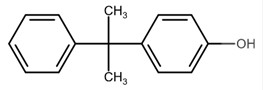 |
| 2772-45-4 | Phenol, 2,4-bis(1-methyl-1-phenylethyl)- | Dimethylstyrenated phenol | 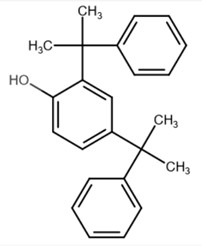 |
| CAS RN | Chemical name | Representative chemical structure |
|---|---|---|
| 3910-35-8 | 2,3-Dihydro-1,1,3-trimethyl-3-phenyl-1H-indene | 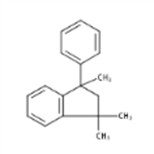 |
| 6258-73-7 | Benzene, 1,1'-(1,3,3-trimethyl-1-propene-1,3-diyl)bis- | 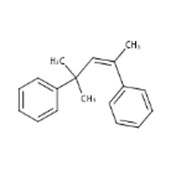 |
6362-80-7 | Benzene, 1,1'-(1,1-dimethyl-3-methylene-1,3-propanediyl)bis- | 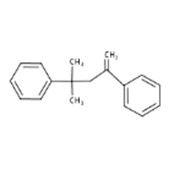 |