
Treasury Board of Canada Secretariat 2026–27 Departmental Plan
Copyright information
© His Majesty the King in Right of Canada, represented by the President of the Treasury Board, 2026,
ISSN: 2371-8919
At a glance
This departmental plan details the Treasury Board of Canada Secretariat’s (TBS’s) priorities, plans and associated costs for the upcoming three fiscal years.
Key priorities
In line with the Prime Minister’s Mandate Letter and with TBS’s mandate, TBS’s key priorities for 2026–27 are:
- reducing regulatory red tape and barriers to trade
- reducing government operating expenditures
- improving digital government and the delivery of digital services, including by leveraging artificial intelligence (AI) responsibly
- improving people management practices
- bargaining in good faith
- greening government operations
Comprehensive Expenditure Review
The government is committed to restraining the growth of day-to-day operational spending to make investments that will grow the economy and benefit Canadians.
As part of meeting the government’s commitments under the Comprehensive Expenditure Review, TBS is planning the following spending reductions:
- 2026–27: $28,883,095
- 2027–28: $38,510,794
- 2028–29 and ongoing: $57,766,191
These spending reductions are expected to involve a decrease of approximately 294 full-time equivalents by 2028–29.
TBS will achieve these reductions by focusing on its priorities, rethinking how it works, and winding down temporary programs.
To support this shift, TBS will reorient initiatives that have achieved their intended goals or where opportunities exist to integrate efforts more effectively. For example, having developed policy, guidance, centralized tools and oversight mechanisms to support the Government of Canada’s Enterprise Cyber Security Strategy, TBS will allow the related temporary funding to wind down and will reorient its role toward strategic coordination and support. It will also recalibrate its involvement in the Low-Carbon Fuel Procurement Program, shifting toward offering technical support to departments that are responsible for reducing greenhouse gas emissions and for adopting low-carbon solutions in their operations.
In addition, TBS will transform its internal operations by consolidating work units, rightsizing management and administrative support, and modernizing key processes. This includes leveraging automation to drive consistency, scalability, and service excellence across the organization.
The figures in this departmental plan reflect these reductions.
Highlights for TBS in 2026–27
In 2026–27, TBS will continue to help implement the government’s priorities. As the secretariat to the Treasury Board, TBS will support the Treasury Board in prioritizing consideration of items related to the government’s agenda, such as investing in Canada’s defence capabilities.
To support government efforts to bring down costs for Canadians and help them get ahead, TBS will drive initiatives that favour a more streamlined, effective and responsive regulatory system. For example, it will advance cross-jurisdictional cooperation to reduce trade barriers within Canada at the same time as it works to deepen Canada’s regulatory alignment with the European Union (EU) through the new Canada-EU Strategic Partnership.
TBS will build on recent work on the red tape review and on discussions with industry, regulators and provinces by advancing several system-wide initiatives. For example, it will:
- complete horizontal reviews to identify opportunities to reduce regulatory burden and streamline processes
- review key regulatory policy instruments and related legislation to make sure they support the government’s economic, affordability and competitiveness priorities
To enable Canadians to invest more in the people and businesses needed to build the strongest economy in the G7, the government has committed to spending less on its operations. To support this commitment, TBS will:
- work with other central agencies to continue to find ways to optimize government resources
- take steps to lower internal administrative burden
- help expand the government’s adoption of artificial intelligence and other new technologies to support employees and improve government programs and services
In addition, TBS will continue to champion diversity, inclusion and respect across the public service by embedding public sector values in workforce planning and in leadership development. At the same time, it will accelerate efforts to make government operations more sustainable, by, for example, coordinating departments’ initiatives to reduce greenhouse gas emissions and climate risks while integrating low-carbon solutions into procurement. These actions will contribute to Canada’s climate objectives and will demonstrate leadership in sustainable public administration.
Together, these initiatives reflect TBS’s plan to deliver on its mandate to enable effective government, foster innovation, and uphold the values that define Canada’s public service.
In 2026–27, total planned spending (including internal services) for TBS is $11,835,071,239 and total planned full-time equivalent staff (including internal services) is 2,231.
Summary of planned results
The following provides a summary of the department’s plans to achieve results in 2026–27 under its main areas of activity, called “core responsibilities.”
Core responsibility 1: Spending oversight
TBS will continue to provide oversight on government spending by:
- reviewing new and existing spending
- improving results-based management
Planned spending: $6,429,613,802
Planned human resources: 284
More information about spending oversight can be found in the full plan.
Core responsibility 2: Administrative leadership
TBS will continue to promote the sound management of the government by:
- leading digital government transformation
- providing strategic direction for managing assets and finances
- leading and coordinating the greening of government operations
- supporting effective communications
Planned spending: $130,115,208
Planned human resources: 649
More information about administrative leadership can be found in the full plan.
Core responsibility 3: Employer
TBS will continue to ensure that the government develops and supports the diverse talent it needs to deliver programs and services efficiently and with integrity while respecting and reflecting the diversity of Canada’s population by:
- modernizing people management in the public service
- bargaining in good faith
- modernizing public service compensation
- reinforcing the values and ethics of the public service
- fostering a diverse, equitable, accessible and inclusive workforce and workplace
- promoting official languages
- supporting occupational health and safety
Planned spending: $5,157,445,342
Planned human resources: 592
More information about employer can be found in the full plan.
Core responsibility 4: Regulatory oversight
TBS will continue to ensure that Canada’s regulatory framework is modern and effective by:
- providing central oversight
- reducing regulatory red tape
- encouraging regulatory cooperation and harmonization
Planned spending: $10,844,529
Planned human resources: 62
More information about regulatory oversight can be found in the full plan.
For complete information on Treasury Board of Canada Secretariat’s total planned spending and human resources, read the Planned spending and human resources section of the full plan.
From the President
I am pleased to present the 2026–27 Departmental Plan for the Treasury Board of Canada Secretariat (TBS).
TBS is at the centre of delivering a modern, efficient and high-functioning government that makes smart investments with tax dollars to deliver better programs and services for Canadians.
The department is using the tools and authorities at its disposal to advance the government’s priorities and support government-wide initiatives in meaningful ways. This includes streamlining the regulatory system and reducing internal administrative burden so that departments can direct more resources toward key priorities for Canadians.
TBS will also continue to guide the government’s responsible and ethical use of artificial intelligence and other new technologies to support efficient and improved services.
To make government more efficient and reduce spending, TBS is winding down temporary programs, streamlining its internal operations, and focusing on priorities that will strengthen the public service for the future while ensuring continued service delivery to Canadians.
These initiatives reflect the department’s plan to deliver on its mandate to enable effective government, foster innovation and uphold the values that define Canada’s public service.
I invite you to read this plan, and I look forward to reporting back on the progress we are making to deliver results for Canadians.
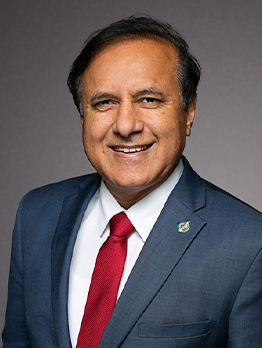
The Honourable Shafqat Ali, P.C., M.P.
President of the Treasury Board
Plans to deliver on core responsibilities and internal services
Core responsibilities and internal services
Core responsibility 1: Spending oversight
In this section
Description
The Treasury Board of Canada Secretariat (TBS) reviews spending proposals, authorities and existing and proposed government programs for efficiency, effectiveness and relevance; and provides information to Parliament and Canadians on government spending.
Quality of life impacts
The activities of this core responsibility contribute to the “good governance” domain of the Quality of Life Framework for Canada and, more specifically, “confidence in institutions.”
Indicators, results and targets
This section presents details on the department’s indicators, the actual results from the three most recently reported fiscal years, the targets and the target dates for 2026–27. Details are presented by departmental result.
Tables 1 and 2 provide a summary of the target and actual results for each indicator associated with the results under spending oversight.
| Departmental result indicators | Actual results | 2026–27 target | Date to achieve target |
|---|---|---|---|
Table 1 Notes
|
|||
| Ministers feel equipped to participate effectively in deliberations at Cabinet and its committeestable 1 note 1 | 2022–23: 79% 2023–24: 77% 2024–25: N/Atable 1 note 2 |
At least 80%table 1 note 3 | |
| Departmental result indicators | Actual results | 2026–27 target | Date to achieve target |
|---|---|---|---|
Table 2 Notes
|
|||
| Availability of actual reported data and targets for departmental indicators (indexed score) | 2022–23: N/A 2023–24: N/A 2024–25: N/Atable 2 note 1 |
At least 91% | |
| Percentage of Programs covered by evaluation in the past five years | 2022–23: N/A 2023–24: N/A 2024–25: N/Atable 2 note 1 |
At least 65% | |
Additional information on the detailed results and performance information for TBS’s program inventory is available on GC InfoBase.
Plans to achieve results
The following section describes the plans to achieve results for spending oversight in 2026–27.
1. Reviewing new and existing programs
In 2026–27, TBS will monitor the implementation of the Comprehensive Expenditure Review. In addition, it will support the government in adopting a more regular and predictable review schedule to make sure resources are optimized. As part of the review, TBS, in collaboration with other central agencies, will explore opportunities to consolidate the administration of programs and to foster the implementation and scale-up of artificial intelligence (AI) in the public service. It will also review innovation and skills programming.
TBS will continue to support the Treasury Board in reviewing and approving submissions from departments. In doing so, it will work with departments to make sure Treasury Board submissions:
- align with Treasury Board policies
- support value for money
- clearly explain the results to be achieved and how they will be measured
- contain clear assessments of risks, including financial risks
2. Improving results-based management
In 2026–27, TBS will continue to support the government’s efforts to improve its productivity by focusing on results over spending, including by:
- updating the Treasury Board Policy on Results to help:
- improve the achievement of results across government
- enhance the understanding of the results achieved and of the resources used to achieve them
- working with departments and key partners to build capability in evaluation and performance measurement, as well as among users of results information
- working with departments to improve reporting on how programs impact different populations in terms of gender and diversity, as required under the Canadian Gender Budgeting Act
- making the spending and results data published on GC InfoBase and the Open Government Portal more accessible and usable
TBS will also continue integrating the Quality of Life Framework into decision-making processes to help make sure investments contribute to Canadians’ well-being. In doing this, it will work with domestic and international experts to refine the framework and strengthen data collection and reporting on quality-of-life outcomes.
Gender-Based Analysis Plus
To measure the impacts of its spending-oversight activities on different populations in terms of gender and diversity, TBS will track the percentage of government programs that have:
- a Gender-Based Analysis Plus data collection plan
- at least one indicator for monitoring the program’s gender and diversity impacts
It also will continue to report annually on these impacts and to post reports on the Impacts of Gender Based Analysis Plus page.
Planned resources to achieve results
Table 3 provides a summary of the planned spending and full-time equivalents required to achieve results.
| Resource | Planned |
|---|---|
| Spending | $6,429,613,802 |
| Full-time equivalents | 284 |
Complete financial and human resources information for TBS’s program inventory is available on GC InfoBase.
Program inventory
Spending oversight is supported by the following programs:
- Expenditure Data, Analysis, Results and Reviews
- Oversight and Treasury Board Support
Additional information related to the program inventory for spending oversight is available on the Results page on GC InfoBase.
Summary of changes to reporting framework since last year
For 2026–27, TBS updated the reporting framework for the core responsibility of spending oversight by adding a new result and indicator to reflect the support TBS provides to the Treasury Board ministers for decision-making.
For the result “Government organizations measure, evaluate and report their performance,” TBS adopted a new indicator of departmental performance measurement practices. The new indicator tracks whether government organizations are meeting their public reporting obligations under the Treasury Board Policy on Results when they report on their planned and achieved departmental results.
In addition, under the same result, TBS added a new indicator that measures the degree to which departments are conducting their program evaluations to periodically cover all federal spending, as required under the Policy on Results.
Core responsibility 2: Administrative leadership
In this section
Description
TBS leads government-wide initiatives, develops policies and sets the strategic direction for government administration related to service delivery and access to government information, as well as the management of assets, finances, information and technology.
Quality of life impacts
The activities of this core responsibility contribute to the “good governance” domain of the Quality of Life Framework for Canada and, more specifically, “confidence in institutions.”
Under this core responsibility, TBS also contributes to the “environment” domain and, more specifically, to reducing “greenhouse gas emissions” and “climate change adaptation,” through the greening of government operations.
Indicators, results and targets
This section presents details on the department’s indicators, the actual results from the three most recently reported fiscal years, the targets and the target dates for administrative leadership. Details are presented by departmental result.
Tables 4 and 5 provide a summary of the target and actual results for each indicator associated with the results under administrative leadership.
| Departmental result indicators | Actual results | 2026–27 target | Date to achieve target |
|---|---|---|---|
Table 4 Notes
|
|||
| Percentage of services standards met for Government of Canada services | 2022–23: 68%table 4 note 1 2023–24: 74%table 4 note 1 2024–25: 73%table 4 note 1 |
80% | |
| Percentage of Government of Canada business applications assessed as healthy | 2022–23: 38% 2023–24: 35% 2024–25: 38% |
39% | |
| Departmental result indicators | Actual results | 2026–27 target | Date to achieve target |
|---|---|---|---|
| Percentage of key financial management processes that are consistently monitored as part of a fully matured internal control system | 2022–23: 65% 2023–24: 93% 2024–25: 94% |
100% |
Additional information on the detailed results and performance information for TBS’s program inventory is available on GC InfoBase.
Plans to achieve results
The following section describes the plans to achieve results for administrative leadership in 2026–27.
1. Rationalizing reporting
To help reduce the operational costs of government, TBS is looking at ways of decreasing administrative burden in the Government of Canada. As part of these efforts, TBS is reviewing the reporting requirements it places on departments. Based on this review, it will eliminate those that are no longer necessary and streamline others wherever possible.
2. Leading digital government transformation
TBS is helping the government meet Canadians’ expectations of simple, secure and efficient delivery of services and benefits through the effective use of modern technology and data.
As part of these efforts, TBS will support the government’s adoption of artificial intelligence (AI) and other new technologies by helping the government establish a new Office of Digital Transformation and by continuing to work with partners to implement the AI strategy for the public service. For example, in 2026–27, it will consult Canadians to gather feedback on the Government of Canada AI Register and will refine its design and usability. The register provides Canadians with information about where and how AI is being used in the federal government. TBS will also continue to oversee major government transformation initiatives that are led by departments to help make sure risks are identified and properly mitigated.
In addition, TBS will continue to take steps to improve the health of government applications and to remediate technological debt. These steps will include working with Shared Services Canada and other federal institutions to achieve the goals set out in the 2024 Application Hosting Strategy:
- to provide robust governance and oversight of application-hosting performance and costs
- to leverage competitive procurements that support long‑term operations
- to drive sustainable funding that is predictable and transparent
- to promote cohesive and consolidated application hosting services to reduce burdens on federal institutions
TBS will continue to implement the Access to Information Modernization Action Plan, including the 2023–2026 Data Strategy for the Federal Public Service. As part of the action plan, TBS will continue to carry out the 2025 review of the Access to Information Act, which is focusing on the following areas:
- enhancing transparency, accountability and public participation
- facilitating access
- declassification and disclosure of historical records
- information management
- Indigenous access to and protection of information
- oversight and compliance
TBS will also review and propose updates to the Policy on Service and Digital to help strengthen service and digital management in the federal government, reduce administrative burden, and support government transparency and transformation initiatives.
Finally, in 2026–27, TBS will finish developing policy, guidance, centralized tools and oversight mechanisms to support the Government of Canada’s Enterprise Cyber Security Strategy. With its temporary funding for this work coming to an end, TBS will shift to providing strategic coordination and support for the strategy.
3. Providing strategic direction for managing assets and finances
i. Asset management
In 2026–27, TBS will continue to work with departments to improve their management and capacity in project management and costing, procurement, and real property. As part of these efforts, TBS will:
- support the implementation of the Buy Canadian Policy
- support efforts to improve government efficiency by:
- providing strategic direction and guidance to functional communities
- advancing risk-based approaches to managing assets and acquired services
- in collaboration with Public Services and Procurement Canada, take steps to simplify procurement by developing harmonized procurement regulations and by continuing to undertake the actions identified in the joint management response to the horizontal internal audit of procurement governance
- continue to improve costing in the government, with a focus on projects and their life-cycle costs
ii. Financial management
In 2026–27, to support sound financial management in a tightening fiscal context, TBS will continue to provide assurance and improve its framework for sound stewardship of the financial management function.
As part of this work, TBS will work with departments to:
- integrate the Buy Canadian Policy into their grants and contributions programs
- improve their established systems of internal controls and adapt them to evolving risks and trends
- strengthen the role of their chief financial officers as strategic advisors and enterprise integrators while making sure they continue to exercise strong financial stewardship
- improve their financial management governance
- monitor their risks and financial positions and communicate proactively with central agencies on key issues
TBS will also continue to coordinate and oversee the preparation of the Government of Canada’s consolidated financial statements and their audit by the Office of the Auditor General of Canada. The goal is to maintain an unmodified audit opinion for the 28th consecutive year, ensuring that statements are timely, accurate and complete. An unmodified opinion confirms that the government’s financial statements are presented fairly and in accordance with generally accepted accounting principles.
In addition, TBS will establish the financial management requirements for the government’s new human resources and pay solution, including requirements for how it integrates with the government’s financial systems. To ensure continued independent oversight of public resources and to assure Canadians of the responsible stewardship of government activities, TBS will lead horizontal internal audits, as well as internal audits in small departments and regional development agencies. In addition, it will continue to strengthen internal audit across government by:
- developing and supporting the application of sound policies, standards and practices
- monitoring departments’ performance
- building and maintaining the internal audit community
4. Leading the greening of government operations
The Government of Canada is committed to making its operations net-zero emissions, climate-resilient and environmentally responsible, in line with global efforts such as the Paris Agreement. The Greening Government Strategy: A Government of Canada Directive sets out the approach for meeting or exceeding national climate objectives in government operations.
In 2026–27, TBS will:
- coordinate federal initiatives to reduce emissions and enhance climate resilience
- share best practices and integrate knowledge from leading organizations
- track and disclose environmental performance centrally
- drive results to meet greening government environmental objectives
- manage the Greening Government Fund, which supports projects that can be replicated within or across departments or to find solutions in areas that are hard to decarbonize
- continue to aid the transition to a circular economy by coordinating government actions on green procurement and materiel management
TBS will also recalibrate its involvement in the Low‑Carbon Fuel Procurement Program by offering technical support to departments that are responsible for reducing greenhouse gas emissions and for adopting low-carbon solutions in their operations. This technical support will facilitate departments’ (including National Defence) ongoing purchases of low-carbon fuels and carbon dioxide removal services to green their operations.
5. Supporting effective communications
In 2026–27, TBS will continue to support departments in implementing the updated Policy on Communications and Federal Identity and the Directive on the Management of Communications and Federal Identity.
Gender-Based Analysis Plus
TBS will measure the impacts of its administrative leadership activities on different populations in terms of gender and diversity, including by collecting and analyzing data on:
- government services, through the Citizens First survey
- contracts awarded to Indigenous businesses
- the representation of employment equity groups in the different functional communities in the public service
Planned resources to achieve results
Table 6 provides a summary of the planned spending and full-time equivalents required to achieve results.
| Resource | Planned |
|---|---|
| Spending | $130,115,208 |
| Full-time equivalents | 649 |
Complete financial and human resources information for TBS’s program inventory is available on GC InfoBase.
Program inventory
Administrative leadership is supported by the following programs:
- Comptrollership
- Digital government
- Communications and federal identity policies and initiatives
- Public service accessibility
Additional information related to the program inventory for administrative leadership is available on the Results page on GC InfoBase.
Summary of changes to reporting framework since last year
For 2026–27, TBS revised the reporting framework for administrative leadership by expanding the coverage of the service delivery indicator under the result “Government service delivery is digitally enabled and meets the needs of Canadians.” The indicator now measures the percentage of all Government of Canada services that are meeting their service standards. Previously, the indicator focused on high-volume services that were meeting service standards, those with 45,000 or more transactions a year. The new approach is expected to produce more consistent and comparable annual reporting.
Core responsibility 3: Employer
In this section
Description
TBS develops policies and sets the strategic direction for people management in the public service, manages total compensation (including pensions and benefits) and labour relations, and undertakes initiatives to improve performance in support of recruitment and retention objectives.
Quality of life impacts
The activities of this core responsibility contribute to the “prosperity” domain of the Quality of Life Framework for Canada and, more specifically, “employment,” “wages,” and “job satisfaction,” through the activities done under this core responsibility.
These activities also contribute to the “good governance” domain and, more specifically, “confidence in institutions” and “representation in senior leadership positions.”
Indicators, results and targets
This section presents details on the department’s indicators, the actual results from the three most recently reported fiscal years, the targets and the target dates for the employer core responsibility. Details are presented by departmental result.
Tables 7 and 8 provide a summary of the target and actual results for each indicator associated with the results under the employer core responsibility.
| Departmental result indicators | Actual results | 2026–27 target | Date to achieve target |
|---|---|---|---|
Table 7 Notes
|
|||
| Percentage of Federal Public Sector Labour Relations and Employment Board (FPSLREB) outcomes that confirm that the Government of Canada is bargaining in good faith | 2022–23: 0%table 7 note 1 2023–24:100% 2024–25: 100% |
100% | |
| Departmental result indicators | Actual results | 2026–27 target | Date to achieve target |
|---|---|---|---|
Table 8 Notes
|
|||
| Percentage of employees who believe their workplace is psychologically healthy | 2022–23: 68% 2023–24: 68%table 8 note 2 2024–25: 59% |
More than 68% | |
| Percentage of employees who responded positively to “My department or agency implements activities and practices that support a diverse workforce” | 2022–23: 79% 2023–24: 79%table 8 note 2 2024–25: 76% |
At least 75% | |
| Percentage of employees who indicate that their organization respects individual differences (for example, culture, workstyles, ideas and abilities) | 2022–23: 75% 2023–24: 75%table 8 note 2 2024–25: 69% |
At least 80% | |
| Percentage of institutions where communications with the public in designated bilingual offices occur in the official language of their choice | 2022–23: 91.6% 2023–24: 87.2% 2024–25: 86.9% |
At least 90% | |
| Percentage of employees who believe that their department or agency does a good job of promoting values and ethics in the workplace | 2022–23: 72% 2023–24: 72%table 8 note 2 2024–25: 68% |
At least 72% | |
Additional information on the detailed results and performance information for TBS’s program inventory is available on GC InfoBase.
Plans to achieve results
The following section describes the plans to achieve results for the employer core responsibility in 2026–27.
1. Modernizing people management in the public service
TBS reviews and adapts workplace policies and processes to help the public service fulfill its mandate.
In 2026–27, TBS will support departments in implementing the results of the Comprehensive Expenditure Review, including any related workforce reductions. This support to organizations will aim to minimize hardship for federal employees; protect diversity in the public service; and ensure a strong, younger generation of public servants.
To manage these reductions as much as possible through attrition and voluntary departures, TBS will support the implementation of the Early Retirement Incentive announced in Budget 2025. Pending parliamentary approval, this temporary program will allow eligible employees to apply to retire with an immediate pension based on their years of service with no reduction for retiring early.
TBS will also implement the Build Canada Exchange program, which was announced in Budget 2025. Through this program, TBS will work with departments to integrate 50 external leaders from technology, finance, science and other sectors into the public service to bring fresh perspectives and expertise to government operations.
In 2026–27, TBS will continue to:
- review the Policy on People Management and its supporting instruments to keep them agile and aligned with government priorities
- provide guidance and support to departments in implementing the Direction on Prescribed Presence in the Workplace
In addition, in partnership with Public Services and Procurement Canada, TBS will continue to:
- provide strategic direction and operational leadership to stabilize the current pay system
- prepare for the next human resources and pay solution by:
- simplifying human resources and pay policies and processes
- reducing the number of human resources systems across government
- improving pay accuracy and timeliness for employees
2. Bargaining in good faith
In 2026–27, TBS will continue to work to maintain collaborative, professional and respectful relationships with public service bargaining agents. It will bargain in good faith with them to achieve fair and sustainable agreements that align with Canada’s budgetary objectives and support a high-performing workforce. As part of these efforts, TBS will negotiate with bargaining agents to harmonize and simplify the language in collective agreements in order to improve the administration of certain terms and conditions of employment and ensure clarity for employees and managers.
TBS will also continue to work with employee-employer committees to develop pay equity plans for the core public administration, the Royal Canadian Mounted Police and the Canadian Armed Forces.
3. Modernizing public service compensation
Pending parliamentary approval, in 2026–27, TBS will work with partners to implement amendments to the Public Service Superannuation Act to extend the operational service early retirement program to additional front-line employees in the public service, specifically, the following:
- firefighters
- paramedics
- border services officers
- parliamentary protection officers
- search and rescue personnel
The amendments will allow these employees to retire with no pension reduction at any age after 25 years of front-line service. Employees of Correctional Service Canada who work in federal correctional institutions already have access to this program.
In addition, as announced in Budget 2025, TBS will consult with key partners to account for enhancements to the Canada Pension Plan and the Quebec Pension Plan to make sure federal employees continue to receive the same pension benefits and don’t contribute more than needed for those benefits. It will also consult with key partners on modifications to the Pensioners’ Dental Services Plan (PDSP) so that employees hired after the policy change implementation date will require six rather than two years of pensionable service to be eligible to participate in the plan. These modifications would align eligibility for the PDSP with that for the Public Service Health Care Plan.
4. Reinforcing the values and ethics of the public service
In 2026–27, TBS will continue to lead efforts to reinforce public service values and ethics, help departments foster a clear understanding of the Values and Ethics Code for the Public Sector and equip public servants to apply it in their daily work.
TBS will also continue its review of the Directive on Conflict of Interest to make sure the requirements are clear and effective.
In addition, TBS will support the government in addressing the results of the Review of the Public Servants Disclosure Protection Act, which was mandated to recommend amendments to the act to further support and protect federal employees who come forward to disclose wrongdoing.
5. Fostering a diverse, equitable, accessible and inclusive workforce and workplace
The government is committed to fostering a safe, healthy and inclusive environment where the workforce reflects the diversity of the Canadian population and where all employees are recognized equally for their contributions and provided every opportunity to succeed.
In 2026–27, TBS will continue to lead efforts to fulfill this commitment, including by:
- implementing the Action Plan for Black Public Servants, which is supporting career development programs and mental health supports for Black public servants through nearly $50 million funding over three years, as announced in Budget 2023
- fulfilling its legislative obligations under the Employment Equity Act, as the employer for the core public administration, including modernizing the collection of self-identification data to provide organizations and TBS with more nuanced, accurate and timely demographic data to improve measurement, reporting and programming
- adjusting business processes, data, forms and digital tools that may pose barriers to equity, diversity, accessibility and inclusion
In addition, TBS will continue to advise departments on:
- fulfilling the requirements of the Accessible Canada Act, with a view to creating a barrier‑free public service by 2040
- implementing the digital GC Workplace Accessibility Passport to help employees get the tools, supports and measures they need to perform at their best and succeed in the workplace
6. Promoting official languages
The Government of Canada is committed to protecting and promoting official languages within federal institutions and across Canadian society.
In 2026–27, TBS will support this commitment by helping federal organizations implement the results of the Official Languages Regulations Reapplication Exercise. As a result of this exercise, 733 additional federal offices across Canada have been designated bilingual. This marks a significant increase in access to services in both official languages, raising the proportion of bilingual federal offices from 34% to 40% among some 10,000 federal points of service.
In addition, TBS will work to finalize the draft regulations for advancing the equality of status and use of English and French. The regulations would:
- prescribe a more consistent, uniform approach to supporting federal institutions in taking positive measures to:
- support official language minority communities
- protect and promote French across the country
- require federal institutions to:
- conduct analyses that assess opportunities for taking positive measures
- avoid or mitigate direct negative impacts of decisions to create or stop policies, programs or initiatives
- clarify how federal institutions must:
- carry out dialogue and consultation activities
- demonstrate that they took the necessary steps to promote the inclusion of official languages clauses in agreements with provinces and territories
In addition, TBS will continue to support the implementation of the modernized Official Languages Act and the measures outlined in English and French: Towards a Substantive Equality of Official Languages in Canada by maintaining the Official Languages Accountability and Reporting Framework, which:
- defines roles and responsibilities of federal institutions subject to the act
- outlines governance mechanisms for official languages at the federal level
- describes administrative, parliamentary and court remedies for non-compliance
- specifies accountability expectations for official languages
7. Supporting occupational health and safety
The government is working to achieve harassment- and violence-free workplaces that treat all employees with respect and dignity. In 2026–27, in support of this goal, TBS will publish enterprise-wide guidance on effective practices and behaviours associated with psychologically healthy and safe work environments.
It will also continue to:
- monitor departmental indicators of performance in the areas of ensuring occupational health and safety, and addressing harassment and violence in the workplace
- provide resources to help departments prevent and address workplace harassment and violence
- help organizations streamline their occupational health and safety operations by integrating the Federal Public Service Workplace Mental Health Strategy into their overall health and safety program
Gender-Based Analysis Plus
TBS will measure how its activities as the employer for the public service impact different populations in terms of gender and diversity by tracking data from a range of data sources, including:
- the Actuarial Report on the Pension Plan for the Public Service
- demographic reports on the public service
- a survey of members of the Public Service Pension and Benefits Plan
- Public Service Health Care Plan data
- Public Service Dental Care Plan data
- the employment equity database
- the Executive Talent Management System
- the Public Service Employee Survey
- the Federal Public Service Workplace Mental Health Dashboard
- the Student Experience Survey
Planned resources to achieve results
Table 9 provides a summary of the planned spending and full-time equivalents required to achieve results.
| Resource | Planned |
|---|---|
| Spending | $5,157,445,342 |
| Full-time equivalents | 592 |
Complete financial and human resources information for TBS’s program inventory is available on GC InfoBase.
Program inventory
Employer is supported by the following programs:
- Employer
- Public Service Employer Payments
Additional information related to the program inventory for the employer core responsibility is available on the Results page on GC InfoBase.
Summary of changes to reporting framework since last year
For 2026–27, TBS revised the reporting framework for its employer core responsibility by adding a new indicator under the result “The public service has good people management practices.” The new indicator measures the degree to which public service employees believe their department or agency does a good job of promoting values and ethics in the workplace.
TBS also revised the wording of three existing indicators under the same result. These revisions align the wording of the indicators with the wording of the questions from the Public Service Employee Survey that are used to measure the indicators.
Core responsibility 4: Regulatory oversight
In this section
Description
TBS develops and oversees policies to promote good regulatory practices, reviews proposed regulations to ensure that they adhere to the requirements of government policy, and advances regulatory cooperation across jurisdictions.
Quality of life impacts
The activities of this core responsibility contribute to the “good governance” domain of the Quality of Life Framework for Canada and, more specifically, “confidence in institutions” and “Canada’s place in the world.”
Indicators, results and targets
This section presents details on the department’s indicators, the actual results from the three most recently reported fiscal years, the targets and the target dates for regulatory oversight. Details are presented by departmental result.
Table 10 provides a summary of the target and actual results for each indicator associated with the results under regulatory oversight.
| Departmental result indicators | Actual results | 2026–27 target | Date to achieve target |
|---|---|---|---|
Table 10 Notes
|
|||
| Ranking of Canada’s regulatory system by the Organisation for Economic Co‑operation and Development for stakeholder engagement | 2022–23: 5th 2023–24: 5th 2024–25: 4th |
At least 5thtable 10 note 1 | |
| Ranking of Canada’s regulatory system by the Organisation for Economic Co‑operation and Development on Regulatory Impact Assessment | 2022–23: 5th 2023–24: 5th 2024–25: 4th |
At least 5thtable 10 note 1 | |
| Ranking of Canada’s regulatory system by the Organisation for Economic Co‑operation and Development for ex‑post evaluation | 2022–23: 6th 2023–24: 6th 2024–25: 7th |
At least 5thtable 10 note 1 | |
Additional information on the detailed results and performance information for TBS’s program inventory is available on GC InfoBase.
Plans to achieve results
The following section describes the plans to achieve results for regulatory oversight in 2026–27.
Given the current global context, a key priority for TBS this year will be to support the government in strategic, broad‑based engagements aimed at building and diversifying regulatory partnerships. Effectively measuring progress in reducing regulatory barriers and increasing efficiency across the federal regulatory system will be essential to assessing the impact of TBS’s efforts in the areas outlined below.
1. Providing central oversight
In 2026–27, TBS will continue to support the Treasury Board, serving as the Governor in Council, in focusing strategically on high‑risk and high‑priority regulatory proposals. For all proposals, TBS will perform a challenge function to make sure regulators conduct impact assessments that meet the requirements of the Cabinet Directive on Regulation and its related policies and directives. This analysis will include examining potential positive and negative effects of a regulatory proposal on the health, safety, security, social and economic well‑being of Canadians, businesses and the environment.
TBS will also continue to:
- oversee compliance with the one‑for‑one rule, as set out in the Cabinet Directive on Regulation, to control the growth of administrative burden on businesses
- apply the small-business lens to regulatory proposals to consider the direct administrative and compliance requirements on small businesses
- work with government partners to use innovative tools to consult the public on federal regulations
2. Reducing regulatory red tape
TBS continues to support Canada’s regulators in maintaining a modern, competitive regulatory system. Regulations are vital for safeguarding the health, safety and security of Canadians and the environment, but over time some requirements pile up or become outdated, creating “red tape.”
The Red Tape Reduction Office will build on the Red Tape Review Progress Reports and on discussions held with industry, regulators and provinces at the Red Tape Reduction Summit. This work will focus on making the regulatory system more efficient, on reducing barriers to innovation and economic growth, and on lowering regulatory costs for Canadians and businesses. In particular, it will:
- work with departments to continue to implement the results of the red tape reviews they conducted in 2025
- continue its horizontal red tape reviews, which are identifying opportunities to cut regulatory red tape to:
- support regulatory efficiency for project reviews
- get products to market faster
- reduce barriers to business productivity
- support international trade and greater efficiency at the border
- enhance regulatory service delivery
- coordinate stakeholder engagement across sectors, which will inform the horizontal reviews and other cross-cutting efforts to reduce red tape
- engage with the provinces and territories to support red tape reduction across jurisdictions
- develop federal red tape reduction legislation to bring forward legislative amendments to speed up regulatory change
- develop and implement a performance measurement strategy to improve the transparency of the regulatory system and give Canadians and businesses clear visibility into cost savings and productivity gains
TBS will continue to work with departments to support the use of regulatory sandboxes to test new products, services and regulatory approaches in a safe and controlled environment.
3. Encouraging regulatory cooperation and harmonization
Regulatory cooperation is key to making it easier for businesses to operate, both domestically and internationally, while maintaining the highest standards for health, safety and environmental protection.
In 2026–27, TBS will advance efforts to reduce regulatory barriers and strengthen cooperation with domestic and international partners, including by:
- building on the success of the Canadian Mutual Recognition Agreement on the Sale of Goods between the federal government, provinces and the Northwest Territories to advance a sustainable, cross-jurisdictional approach to eliminating barriers to internal trade and labour mobility
- driving the new Canada-EU Strategic Partnership priority to deepen regulatory alignment between Canada and the members of the European Union
- supporting Global Affairs Canada with the joint review of the Canada-United States-Mexico Agreement
- developing a global strategy to proactively mitigate trade barriers related to emerging technologies across all sectors
Gender-Based Analysis Plus
TBS will measure the impacts of its regulatory oversight activities on different populations in terms of gender and diversity, including by collecting and analyzing data on:
- the percentage of final in-scope Governor in Council regulations that provided information on Gender-Based Analysis Plus (GBA Plus) in the corresponding regulatory impact analysis statement
- the percentage of final in-scope Governor in Council regulations where the GBA Plus section of the regulatory impact analysis statements indicate that the regulation, and/or its implementation:
- aim to address or mitigate an issue or risk identified through GBA Plus
- create no anticipated impacts relevant to gender
Planned resources to achieve results
Table 11 provides a summary of the planned spending and full-time equivalents required to achieve results.
| Resource | Planned |
|---|---|
| Spending | $10,844,529 |
| Full-time equivalents | 62 |
Complete financial and human resources information for TBS’s program inventory is available on GC InfoBase.
Program inventory
Regulatory oversight is supported by the following programs:
- Regulatory Policy, Oversight and Cooperation
Additional information related to the program inventory for regulatory oversight is available on the Results page on GC InfoBase.
Internal services
In this section
Description
Internal services are the services that are provided within a department so that it can meet its corporate obligations and deliver its programs. There are 11 categories of internal services:
- acquisition management services
- communications services
- financial management services
- human resources management services
- information management services
- information technology services
- legal services
- material management services
- management and oversight services
- real property management services
- security services
Plans to achieve results
In 2026–27, as a result of the Comprehensive Expenditure Review, TBS’s internal services will help the department refocus on core business by consolidating work units, modernizing key processes and right-sizing management and administrative support.
TBS’s internal services will also support the department with:
- creating a diverse, equitable, inclusive and accessible workforce and workplace
- maintaining a culture of integrity, accountability and excellence
- fostering employee well‑being
- preparing for the future with data and artificial intelligence (AI)
1. Creating a diverse, equitable, inclusive and accessible workforce and workplace
Building on progress achieved to date, the Clerk of the Privy Council Office, the Secretary of the Treasury Board and the Deputy Minister of Finance established the Central Agencies Inclusion, Diversity, Equity and Anti-Racism (IDEA) Secretariat in .
In 2026–27, TBS will continue to build a values-based workplace that advances reconciliation and anti-racism and is diverse, equitable, inclusive and accessible by:
- advancing reconciliation with Indigenous people through targeted learning, cultural awareness initiatives and collaborative engagement activities
- implementing TBS’s Inclusion Diversity Equity and Anti-Racism Action Plan for 2026 to 2029 and working toward fulfilling commitments that align with government-wide priorities for reconciliation, anti-racism, diversity, equity, inclusion and accessibility
- embedding inclusive practices in staffing, career and talent development, and decision-making, informed by disaggregated data and strengthened accountability through progress-tracking
- promoting and advancing an inclusive and accessible workplace by implementing the new three-year departmental Accessibility Plan
- enhancing official languages inclusion by making sure employees feel respected, supported and fully integrated no matter which official language they are using
- working with employee networks to support engagement, belonging and continuous improvement of departmental programs and human resources initiatives
2. Maintaining a culture of integrity, accountability and excellence
In 2026–27, TBS will reinforce trust, resilience and ethical leadership by continuing to:
- promote learning about values, ethics and emerging public sector trends through events, training and development programs
- empower employees to act with integrity by encouraging open dialogue on ethics and by recognizing behaviours that exemplify accountability and excellence
- proactively manage ethical risks by assessing vulnerabilities and implementing mitigation strategies
- encourage employees to use emerging technologies responsibly by integrating ethical principles, equity, privacy and impartiality into digital operations and training
3. Fostering employee well-being
In 2026–27, TBS will continue to prioritize mental health, safety and overall well-being by:
- fostering a culture of resilience by offering wellness initiatives, mental health training and accessible resources such as the Employee Assistance Program
- promoting awareness of psychological health and safety in line with the Federal Public Service Workplace Mental Health Strategy, the Canada Labour Code and the National Standard of Canada
- providing training on workplace safety, including harassment and violence prevention
- promoting constructive dialogue on workplace issues
- carrying out campaigns to prevent and mitigate harassment and violence in order to ensure a safe and respectful environment for all employees
4. Preparing for the future with data and artificial intelligence
In 2026–27, TBS will implement the first year of its three-year data and AI strategy by:
- leveraging automation to drive consistency, scalability and service excellence
- strengthening data governance and management to improve decision-making and operational efficiency
- leveraging AI and digital tools to improve the efficiency of TBS’s internal services
- using AI and other digital tools responsibly
- supporting managers and employees with technology-enabled, user-centric processes, policies and tools to improve productivity and service delivery
Planned resources to achieve results
Table 12 provides a summary of the planned spending and full-time equivalents required to achieve results.
| Resource | Planned |
|---|---|
| Spending | $107,052,358 |
| Full-time equivalents | 644 |
Complete financial and human resources information for TBS’s program inventory is available on GC InfoBase.
Planning for contracts awarded to Indigenous businesses
Government of Canada departments are to meet a target of awarding at least 5% of the total value of contracts to Indigenous businesses each year.
In 2024–25, TBS fell short of this target, awarding 4% of the total value of all its contracts to Indigenous businesses.
In 2026–27, TBS will continue to:
- make sure contracting and procurement are part of TBS’s integrated business planning and financial forecasting processes
- make sure the target for Indigenous procurement is kept in mind in all planned procurements
- remind business owners that they need to consider Indigenous vendors
- have procurement officers play a challenge function where an opportunity exists
- require all contracting requests to include a justification if an Indigenous vendor was not considered, put a hold on contracting requests when justifications do not meet a minimum threshold, or where internal capacity exists
- raise awareness in the department about Indigenous vendors, especially about those in TBS’s top commodity and contracting areas
TBS will continue to make sure its procurement officers complete the mandatory training on Indigenous considerations in procurement and engage in ongoing learning to remain compliant and informed.
Table 13 presents the current, actual results with forecasted and planned results for the total percentage of contracts the department awarded to Indigenous businesses.
| 5% reporting field | 2024–25 actual result | 2025–26 forecasted result | 2026–27 planned result |
|---|---|---|---|
| Total percentage of contracts with Indigenous businesses | 4% | 3% | 5% |
Department-wide considerations
Related government priorities
United Nations 2030 Agenda for Sustainable Development and the UN Sustainable Development Goals
In 2026–27, TBS will continue to support Canada’s Federal Implementation Plan for the 2030 Agenda by continuing to help integrate the economic, social, environmental and governance aspects of sustainable development into government decision-making. For example, through its regulatory oversight core responsibility, TBS will , as required under the Cabinet Directive on Regulation, help departments incorporate cost-benefit analyses of regulations on society and on the economy and will help them integrate sustainable development impact analysis into regulatory development processes. In addition, as part of its spending oversight activities, TBS will continue to:
- apply the sustainability and resilience lens of the Quality of Life Framework when reviewing Treasury Board submissions
- work with federal partners to strengthen the use of the Quality of Life Framework in departmental plans and reports
TBS will also provide administrative leadership on Goal 12 (Responsible Consumption and Production) and Goal 13 (Climate Action) by working with Environment and Climate Change Canada and other departments to:
- implement the 2022–26 Federal Sustainable Development Strategy
- develop the 2026–29 Federal Sustainable Development Strategy
This leadership will include:
- supporting the Greening Government Strategy
- promoting green procurement and materiel management
- making sure departmental sustainable development strategies align with the objectives of the Greening Government Strategy
As part of fulfilling its employer core responsibility, TBS will advance Goal 5 (Gender Equality) by:
- continuing to lead the implementation of the Pay Equity Act
- monitoring pension and benefit plans for gender considerations.
It will also contribute to Goal 10 (Reducing Inequalities and Advancing Reconciliation) by:
- addressing employment barriers
- promoting diversity and inclusion
- requiring health and dental plan providers to deliver $4.5 million annually in benefits to Indigenous communities
In addition, it will continue to support Goal 13 by requiring that Canada Life, as the contractor for the public service health care and dental care plan, document and share its greenhouse gas reduction targets.
More information on TBS’s contributions to the Federal Implementation Plan on the 2030 Agenda and the Federal Sustainable Development Strategy can be found in the TBS Departmental Sustainable Development Strategy for 2023 to 2027.
Planned spending and human resources
This section provides an overview of Treasury Board of Canada Secretariat’s planned spending and human resources for the next three fiscal years and of planned spending for 2026–27 with actual spending from previous years.
Spending
This section presents an overview of the department’s planned expenditures from 2023–24 to 2028–29.
Graph 1 presents the department’s planned spending in 2026–27 by core responsibility and for internal services.
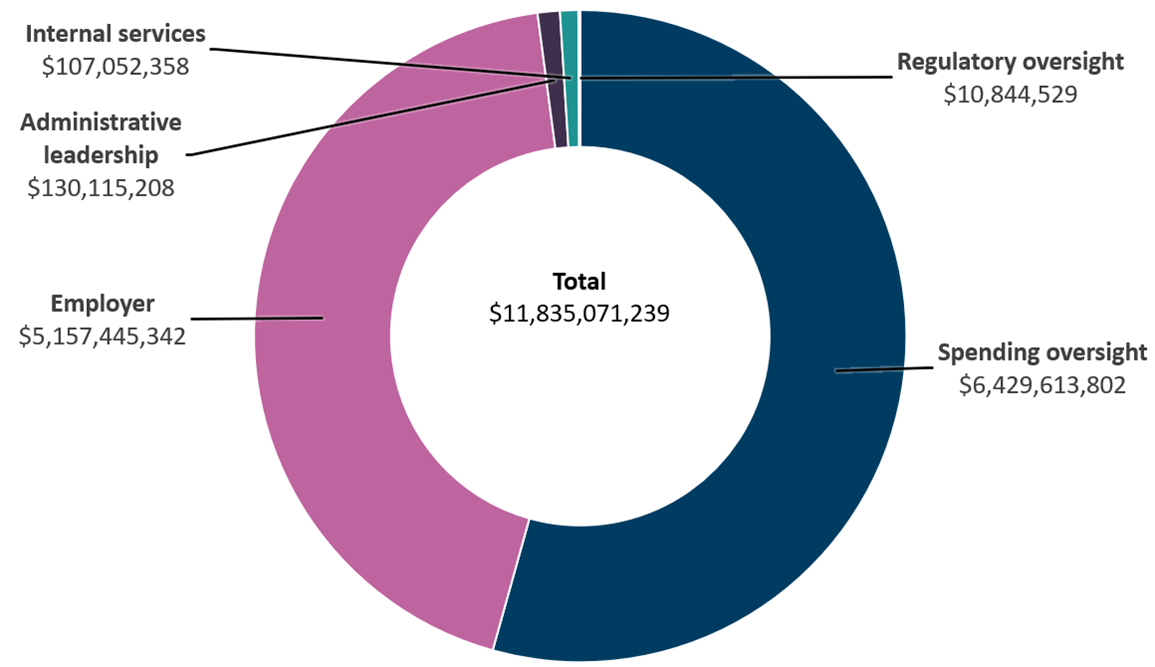
Text description of Graph 1
| Core responsibilities and internal services | 2026–27 planned spending |
|---|---|
| Spending oversight | $6,429,613,802 |
| Employer | $5,157,445,342 |
| Administrative leadership | $130,115,208 |
| Internal services | $107,052,358 |
| Regulatory oversight | $10,844,529 |
| Total planned spending | $11,835,071,239 |
Analysis of planned spending by core responsibility
TBS’s planned spending for 2026–27 is allocated across several core responsibilities:
- Planned spending for the spending oversight core responsibility is primarily intended for central vote funding held in TBS’s reference levels.
- Planned spending for the employer core responsibility is primarily for public service insurance payments related to TBS’s role as the employer of the core public administration.
- Planned spending for the administrative leadership and regulatory oversight core responsibilities, and for internal services, supports TBS’s ongoing operations and the fulfillment of the President’s other mandate-letter commitments.
Graph 2 presents how much the department plans to spend in 2026–27, by vote.
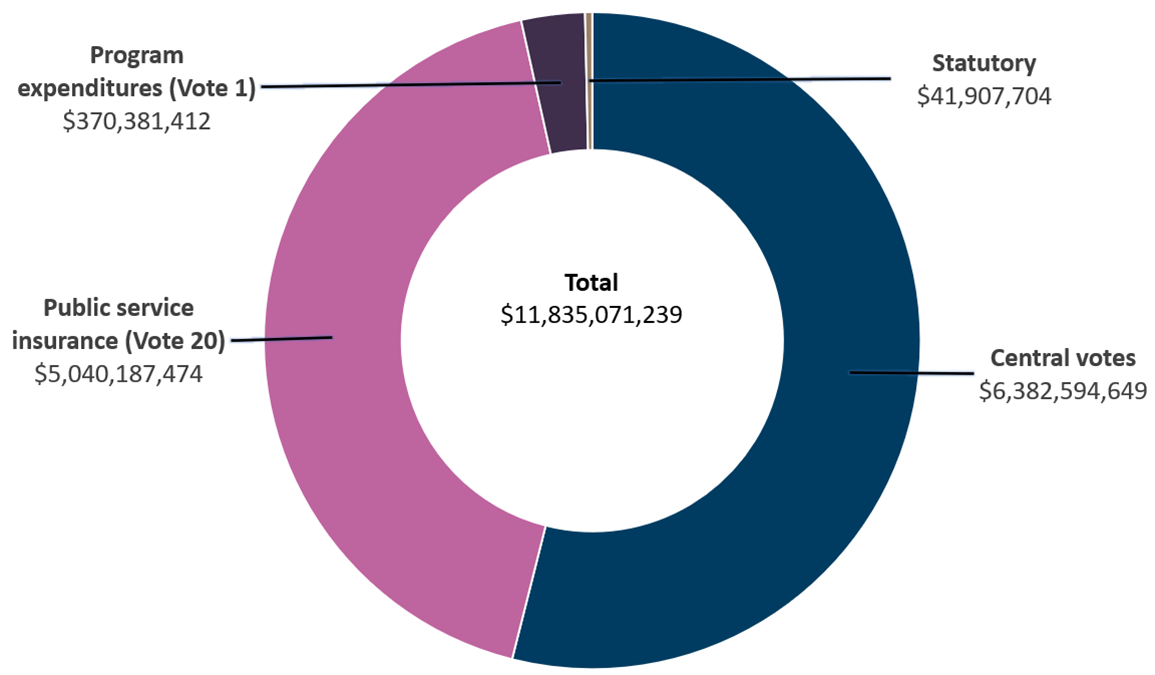
Text description of Graph 2
| Core responsibilities and internal services | 2026–27 planned spending |
|---|---|
| Central votes | $6,382,594,649 |
| Public service insurance (Vote 20) | $5,040,187,474 |
| Program expenditures (Vote 1) | $370,381,412 |
| Statutory authority | $41,907,704 |
| Total planned spending | $11,835,071,239 |
Analysis of planned spending by vote and statutory payment
Planned spending includes departmental votes, central votes, and statutory authorities.
Departmental expenditures are funded through two voted authorities:
- Vote 1 – Program expenditures: Provides salary and operating funding that enables TBS to deliver on its mandate.
- Vote 20 – Public service insurance: As the employer for the core public administration, TBS administers the employer’s share of pension and insurance benefit plans for employees and pensioners, as well as applicable provincial and federal statutory taxes.
TBS also manages seven central votes. Subject to Treasury Board approval, funding from central votes is transferred to other government departments to address government-wide priorities. Funds not allocated lapse at the end of the fiscal year.
Table 14 presents the central votes.
| Vote | Name | Description |
|---|---|---|
| 5 | Government Contingencies | Provides departments with temporary advances for urgent or unforeseen expenditures between Parliamentary supply periods |
| 10 | Government‑Wide Initiatives | Supports the implementation of strategic management initiatives across the federal public service |
| 15 | Compensation Adjustments | Provides funding for adjustments made to terms and conditions of service or employment in the federal public administration as a result of collective bargaining |
| 25 | Operating Budget Carry‑Forward | Allows departments to carry forward unused funds from the previous fiscal year (up to 5% of Main Estimates gross operating vote) |
| 30 | Paylist Requirements | Covers the cost of meeting the government’s legal requirements as employer for items such as parental benefits and severance payments |
| 35 | Capital Budget Carry‑Forward | Allows departments to carry forward unused funds from the previous fiscal year (up to 20% of capital vote) |
| 50 | Defence and Security Initiatives | Provides the Department of National Defence flexibility for unforeseen expenditures related to national defence or national security. |
Statutory authorities are for employee benefit plans, as well as for the President of the Treasury Board’s salary and car allowance.
Budgetary performance summary
Table 15 presents TBS’s spending over the past three years to carry out its core responsibilities and for internal services. Amounts for the 2025–26 fiscal year are forecasted based on spending to date.
| Core responsibilities and internal services | 2023–24 actual expenditures | 2024–25 actual expenditures | 2025–26 forecast spending |
|---|---|---|---|
| Spending oversight | $49,449,330 | $47,083,295 | $1,732,572,335 |
| Administrative leadership | $117,125,327 | $117,812,064 | $160,944,504 |
| Employer | $3,955,557,909 | $10,754,872,273 | $4,717,532,132 |
| Regulatory oversight | $12,660,553 | $12,113,475 | $10,019,785 |
| Subtotal | $4,134,793,119 | $10,931,881,107 | $6,621,068,756 |
| Internal services | $115,540,766 | $104,391,866 | $99,977,886 |
| Total | $4,250,333,885 | $11,036,272,973 | $6,721,046,642 |
Analysis of the past three years of spending
The increase in actual expenditures from 2023–24 to 2024–25 is primarily due to a $6,425‑million increase in statutory Public Service Pension Plan contributions under the employer core responsibility. This increase was to address an actuarial shortfall under the public service superannuation account and was in accordance with the Actuarial Report (20th) on the Pension Plan for the Public Service of Canada as at . The next actuarial report is scheduled for 2027–28.
Total forecast spending for 2025–26 is $4,315.2-million lower than actual expenditures in 2024–25, primarily due to:
- the $6,425‑million in statutory Public Service Pension Plan contributions made in 2024–25, which do not recur in 2025–26, are under the employer core responsibility in Vote 20
- remaining balances in central vote funding that may be transferred to other government departments or agencies under the spending oversight core responsibility
More financial information from previous years is available in the Finances section of GC InfoBase.
Table 16 presents TBS’s planned spending over the next three years by core responsibility and for internal services.
| Core responsibilities and internal services | 2026–27 planned spending | 2027–28 planned spending | 2028–29 planned spending |
|---|---|---|---|
| Spending oversight | $6,429,613,802 | $6,396,992,042 | $5,398,402,616 |
| Administrative leadership | $130,115,208 | $131,105,856 | $114,272,313 |
| Employer | $5,157,445,342 | $5,115,662,821 | $5,111,019,912 |
| Regulatory oversight | $10,844,529 | $11,169,607 | $11,179,190 |
| Subtotal | $11,728,018,881 | $11,654,930,326 | $10,634,874,031 |
| Internal services | $107,052,358 | $91,482,615 | $85,491,052 |
| Total | $11,835,071,239 | $11,746,412,941 | $10,720,365,083 |
Analysis of the next three years of spending
Planned spending decreases from 2026–27 to 2028–29, mainly due to:
- the sunsetting of Vote 50, Defence and Security Initiatives, under the spending oversight core responsibility
- the introduction of the Comprehensive Expenditure Review in Budget 2025, which is aimed at reducing inefficiencies and focusing on core priorities
- the sunsetting of funding for administering human resources and pay for the federal public service
- the sunsetting of funding for implementing proactive pay equity in the federal public service
- the sunsetting of funding for the Action Plan for Black Public Servants
- the sunsetting of funding for the Digital Comptrollership Program
- the sunsetting of Vote 10, Government‑Wide Initiatives, funding for damages related to the Phoenix Pay System
More detailed financial information on planned spending is available in the Finances section of GC InfoBase.
Funding
This section provides an overview of the department’s voted and statutory funding for its core responsibilities and for internal services. For further information on funding authorities, consult the Government of Canada budgets and expenditures.
Graph 3 summarizes the department’s approved Vote 1 (Program expenditures) from 2023–24 to 2028–29.
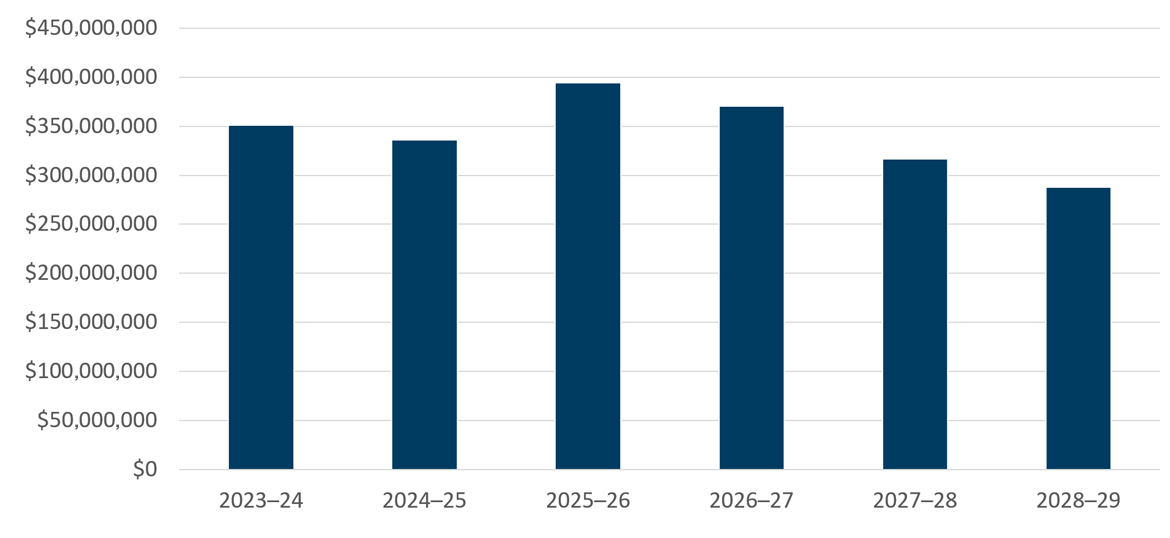
Text description of Graph 3
| Fiscal year | Vote 1 |
|---|---|
| 2023–24 | $350,862,528 |
| 2024–25 | $335,887,845 |
| 2025–26 | $393,994,280 |
| 2026–27 | $370,381,412 |
| 2027–28 | $316,568,699 |
| 2028–29 | $287,675,928 |
Analysis of Vote 1 (Program expenditures) funding over a six-year period
TBS’s program expenditures include salaries, non‑salary costs to deliver programs, and statutory items related to the employer’s contributions to TBS employees’ benefit plans.
Program expenditures in 2024–25 were $15 million less than in 2023–24, mainly due to:
- Phase 1 of the Responsible Government Spending initiative
- the transfer of the Canadian Digital Services program to Employment and Social Development Canada (under Order‑in‑Council 2023‑0784)
Forecast spending for 2025–26 is $58.1 million higher than actual expenditures in 2024–25, mainly due to:
- the Digital Comptrollership Program
- a reprofiling of funds for the Action Plan for Black Public Servants
- compensation adjustments resulting from collective bargaining
- a reprofiling of funds for the implementation of proactive pay equity in the federal public service
Planned spending from 2026–27 to 2028–29 is $82.7 million lower, mainly due to:
- the introduction of the Comprehensive Expenditure Review in Budget 2025, which is aimed at reducing inefficiencies and focusing on core priorities
- the sunsetting of funding for administering human resources and pay for the federal public service
- the sunsetting of funding for implementing proactive pay equity in the federal public service
- the sunsetting of funding for the Digital Comptrollership Program
- the sunsetting of funding for the Action Plan for Black Public Servants
Graph 4 summarizes the department’s approved Vote 20 (Public Service Insurance) from 2023–24 to 2028–29.
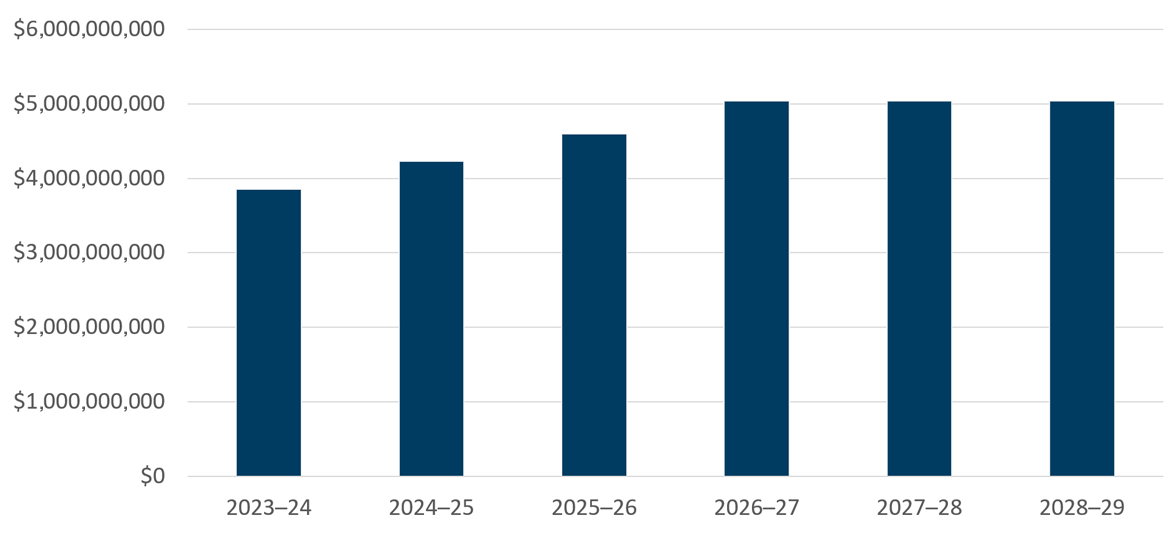
Text description of Graph 4
| Fiscal year | Vote 20 |
|---|---|
| 2023–24 | $3,853,588,562 |
| 2024–25 | $4,232,621,232 |
| 2025–26 | $4,600,808,175 |
| 2026–27 | $5,040,187,474 |
| 2027–28 | $5,040,002,945 |
| 2028–29 | $5,042,097,496 |
Analysis of Vote 20 (Public Service Insurance) funding over a six-year period
TBS’s public service insurance expenditures (expenditures from Vote 20) include the employer’s share of group benefit coverage to employees of the core public service under the various plans, plus salaries and operating costs to deliver the program.
The year-over-year changes in actual expenditures and planned spending between 2023–24 to 2028–29 are mainly attributable to funding requirements for the public service insurance plans and programs.
Graph 5 summarizes the department’s approved statutory funding from 2023–24 to 2028–29.
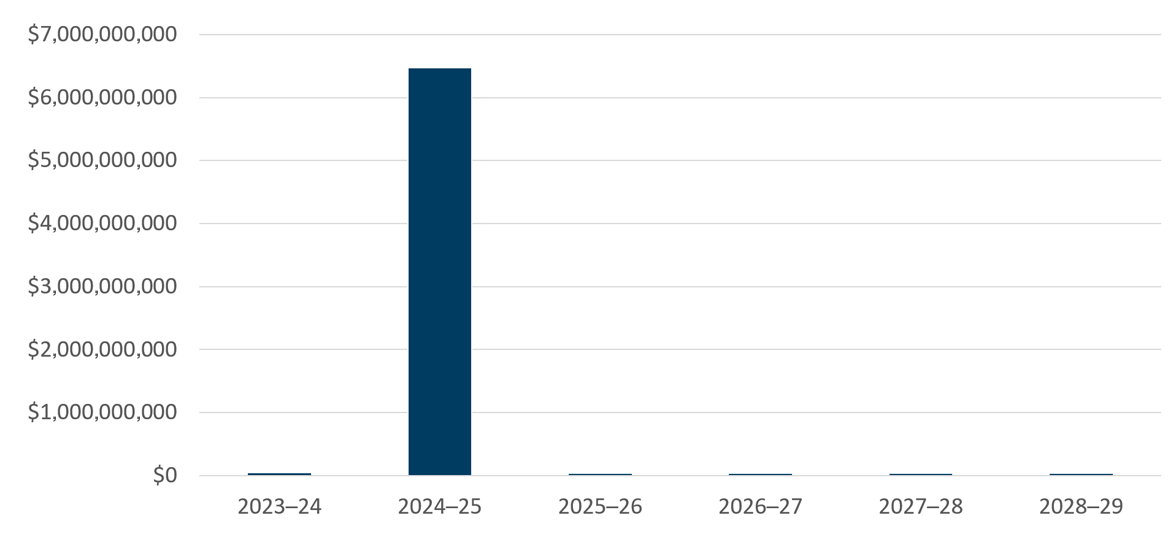
Text description of Graph 5
| Fiscal year | Statutory |
|---|---|
| 2023–24 | $45,882,794 |
| 2024–25 | $6,467,763,896 |
| 2025–26 | $40,503,471 |
| 2026–27 | $41,907,704 |
| 2027–28 | $39,841,297 |
| 2028–29 | $37,398,659 |
Analysis of statutory funding over a six-year period
The 2024–25 increase relates to the employer core responsibility and is primarily due to a $6,425‑million increase in statutory Public Service Pension Plan contributions that addressed an actuarial shortfall under the public service superannuation account and that was in accordance with the Actuarial Report (20th) on the Pension Plan for the Public Service of Canada as at . The next actuarial report is scheduled for 2027–28.
For further information on TBS’s departmental appropriations, consult the 2026–27 Main Estimates.
Future-oriented condensed statement of operations
The future-oriented condensed statement of operations provides an overview of Treasury Board of Canada Secretariat’s operations for 2025–26 to 2026–27.
Table 17 summarizes the expenses and revenues that net to the cost of operations before government funding and transfers for 2025–26 to 2026–27. The forecast and planned amounts in this statement of operations were prepared on an accrual basis. The forecast and planned amounts presented in other sections of the Departmental Plan were prepared on an expenditure basis. Amounts may therefore differ.
| Financial information | 2025–26 forecast results | 2026–27 planned results | Difference (planned results minus forecasted) |
|---|---|---|---|
| Total expenses | 5,171,502,809 | 5,572,457,377 | 400,954,568 |
| Total revenues | 109,770,546 | 99,343,506 | (10,427,040) |
| Net cost of operations before government funding and transfers | 5,061,732,263 | 5,473,113,871 | 411,381,608 |
Analysis of forecasted and planned results
Total expenses comprise public service employer payments ($4.605 billion in 2025–26 and $5.038 billion in 2026–27) and TBS program expenses ($566 million in 2025–26 and $534 million in 2026–27). Public service employer payments are used to fund the employer’s share of the Public Service Health Care Plan, the Public Service Dental Care Plan and other insurance and benefit programs provided to federal public service employees.
Planned public service employer payments for 2026–27 are $433 million (9.4%) more than forecast results for 2025–26 mainly due to:
- an anticipated one-time lump sum payment in 2026–27 under the Royal Canadian Mounted Police Life and Disability Insurance Plan
- higher projected health and dental care benefits claims
- projected increases in disability insurance plan premiums, provincial payroll taxes and Quebec Parental Insurance Plan that result from projected salary increases following the implementation of new collective agreements for the public service
TBS’s planned program expenses for 2026–27 are $31.8 million (5.6%) less than forecast results for 2025–26, mainly because of:
- the 2024–25 operating budget carry‑forward to 2025–26
- higher costs in 2025–26 attributable to the administration of government-wide contracts for software licences
- funding in 2025–26 to support the Digital Comptrollership Program
- higher funding in 2025–26 for proactive pay equity in the federal public service
- a budget reduction in 2026–27 resulting from the Comprehensive Expenditure Review
The decrease in planned program expenses for 2026–27 is partially offset by funding transferred in 2025–26 from TBS to various organizations to support projects that will reduce greenhouse gas emissions in federal government operations.
Total revenues include services provided to other government departments and Crown corporations associated with the administration of government-wide contracts for software licences, as well as the provision of internal support services related to shared financial and human resources management systems, accounting and mail services. Revenues also include the recovery of costs incurred by TBS for the administration of the Public Service Pension Plan.
The decrease of $10.4 million (9.5%) between 2026–27 planned revenues and 2025–26 forecast revenues is mainly due to a planned decrease in 2026–27 in cost recoveries associated with government-wide contracts for software licences following the anticipated transfer of the SAS enterprise licensing agreement to Shared Services Canada in 2026–27. This decrease is partially offset by higher anticipated cost recoveries related to the administration of the Public Service Pension Plan in 2026–27.
A more detailed future-oriented statement of operations and associated notes for 2026–27 , including a reconciliation of the net cost of operations with the requested authorities, is available on TBS’s website.
Human resources
This section presents an overview of the department’s actual and planned human resources from 2023–24 to 2028–29.
Table 18 shows a summary of human resources, in full-time equivalents, for TBS’s core responsibilities and for its internal services for the previous three fiscal years. Human resources for the 2025–26 fiscal year are forecasted based on year to date.
| Core responsibilities and internal services | 2023–24 actual full-time equivalents | 2024–25 actual full-time equivalents | 2025–26 forecasted full-time equivalents |
|---|---|---|---|
| Spending oversight | 298 | 297 | 277 |
| Administrative leadership | 827 | 739 | 703 |
| Employer | 674 | 641 | 623 |
| Regulatory oversight | 70 | 68 | 64 |
| Subtotal | 1,869 | 1,745 | 1,667 |
| Internal services | 696 | 677 | 655 |
| Total | 2,565 | 2,422 | 2,322 |
Analysis of human resources over the last three years
The reasons for the year-over-year changes in full-time equivalents are the same as the reasons for the changes in expenditures.
Table 19 shows information on human resources, in full-time equivalents, for each of TBS’s core responsibilities and for its internal services planned for the next three years.
| Core responsibilities and internal services | 2026–27 planned full-time equivalents | 2027–28 planned full-time equivalents | 2028–29 planned full-time equivalents |
|---|---|---|---|
| Spending oversight | 284 | 292 | 245 |
| Administrative leadership | 649 | 634 | 620 |
| Employer | 592 | 582 | 546 |
| Regulatory oversight | 62 | 63 | 58 |
| Subtotal | 1,587 | 1,571 | 1,469 |
| Internal services | 644 | 648 | 559 |
| Total | 2,231 | 2,219 | 2,028 |
Analysis of human resources for the next three years
Year-over-year variances in full-time equivalents can be explained in a manner consistent with the factors outlined in the Spending section. In particular, the reduction projected between 2026–27 and 2028–29 reflects the anticipated impacts of the Comprehensive Expenditure Review, which is expected to lower staffing levels by 294 full‑time equivalents by 2028–29.
Although the exact annual reductions cannot be confirmed until the outcomes of voluntary departure programs, the Early Retirement Incentive and other workforce measures are known, substantial progress is expected in 2027–28, with the full reduction realized in 2028–29.
Supplementary information tables
The following supplementary information tables are available on TBS’s website:
Information on TBS’s departmental sustainable development strategy can be found on TBS’s website.
Federal tax expenditures
TBS’s Departmental Plan does not include information on tax expenditures.
The tax system can be used to achieve public policy objectives through the application of special measures such as low tax rates, exemptions, deductions, deferrals and credits. The Department of Finance Canada publishes cost estimates and projections for these measures each year in the Report on Federal Tax Expenditures.
This report also provides detailed background information on tax expenditures, including descriptions, objectives, historical information and references to related federal spending programs as well as evaluations and GBA Plus of tax expenditures.
Corporate information
Departmental profile
Appropriate minister
The Honourable Shafqat Ali, President of the Treasury Board
Institutional head
Bill Matthews, Secretary of the Treasury Board
Ministerial portfolio
The Treasury Board portfolio consists of the Treasury Board of Canada Secretariat and the Canada School of Public Service, as well as the following organizations, which operate at arm’s length and report to Parliament through the President of the Treasury Board:
- the Public Sector Pension Investment Board
- the Office of the Commissioner of Lobbying of Canada
- the Office of the Public Sector Integrity Commissioner of Canada
Enabling instrument
The Financial Administration Act established the Treasury Board and gave it powers related to the financial, personnel and administrative management of the public service, and the financial requirements of Crown corporations.
Year of incorporation / commencement
1966
Departmental contact information
Mailing address
Treasury Board of Canada Secretariat
90 Elgin Street
Ottawa, Canada K1A 0R5
Telephone
613 369 3200
Website
Definitions
List of terms
- appropriation (crédit)
- Any authority of Parliament to pay money out of the Consolidated Revenue Fund.
- budgetary expenditures (dépenses budgétaires)
- Operating and capital expenditures; transfer payments to other levels of government, departments or individuals; and payments to Crown corporations.
- core responsibility (responsabilité essentielle)
- An enduring function or role performed by a department. The intentions of the department with respect to a core responsibility are reflected in one or more related departmental results that the department seeks to contribute to or influence.
- Departmental Plan (plan ministériel)
- A report on the plans and expected performance of an appropriated department over a 3-year period. Departmental Plans are usually tabled in Parliament each spring.
- departmental result (résultat ministériel)
- A consequence or outcome that a department seeks to achieve. A departmental result is often outside departments’ immediate control, but it should be influenced by program-level outcomes.
- departmental result indicator (indicateur de résultat ministériel)
- A quantitative measure of progress on a departmental result.
- departmental results framework (cadre ministériel des résultats)
- A framework that connects the department’s core responsibilities to its departmental results and departmental result indicators.
- Departmental Results Report (rapport sur les résultats ministériels)
- A report on a department’s actual accomplishments against the plans, priorities and expected results set out in the corresponding Departmental Plan.
- full-time equivalent (équivalent temps plein)
- A measure of the extent to which an employee represents a full person-year charge against a departmental budget. For a particular position, the full-time equivalent figure is the ratio of number of hours the person actually works divided by the standard number of hours set out in the person’s collective agreement.
- Gender-Based Analysis Plus (GBA Plus) (analyse comparative entre les sexes plus [ACS Plus])
-
Is an analytical tool used to support the development of responsive and inclusive policies, programs, and other initiatives. GBA Plus is a process for understanding who is impacted by the issue or opportunity being addressed by the initiative; identifying how the initiative could be tailored to meet diverse needs of the people most impacted; and anticipating and mitigating any barriers to accessing or benefitting from the initiative. GBA Plus is an intersectional analysis that goes beyond biological (sex) and socio-cultural (gender) differences to consider other factors, such as age, disability, education, ethnicity, economic status, geography (including rurality), language, race, religion, and sexual orientation.
Using GBA Plus involves taking a gender- and diversity-sensitive approach to our work. Considering all intersecting identity factors as part of GBA Plus, not only sex and gender, is a Government of Canada commitment.
- government priorities (priorités gouvernementales)
- For the purpose of the 2026–27 Departmental Plan, government priorities are the high-level themes outlining the government’s agenda in the 2025 Speech from the Throne.
- horizontal initiative (initiative horizontale)
- An initiative where two or more federal departments are given funding to pursue a shared outcome, often linked to a government priority.
- Indigenous business (entreprise autochtones)
- Requirements for verifying Indigenous businesses for the purposes of the departmental result report are available through the Indigenous Services Canada Mandatory minimum 5% Indigenous procurement target website.
- non‑budgetary expenditures (dépenses non budgétaires)
- Non-budgetary authorities that comprise assets and liabilities transactions for loans, investments and advances, or specified purpose accounts, that have been established under specific statutes or under non-statutory authorities in the Estimates and elsewhere. Non-budgetary transactions are those expenditures and receipts related to the government’s financial claims on, and obligations to, outside parties. These consist of transactions in loans, investments and advances; in cash and accounts receivable; in public money received or collected for specified purposes; and in all other assets and liabilities. Other assets and liabilities, not specifically defined in G to P authority codes are to be recorded to an R authority code, which is the residual authority code for all other assets and liabilities.
- performance (rendement)
- What a department did with its resources to achieve its results, how well those results compare to what the department intended to achieve, and how well lessons learned have been identified.
- performance indicator (indicateur de rendement)
- A qualitative or quantitative means of measuring an output or outcome, with the intention of gauging the performance of a department, program, policy or initiative respecting expected results.
- plan (plan)
- The articulation of strategic choices, which provides information on how a department intends to achieve its priorities and associated results. Generally, a plan will explain the logic behind the strategies chosen and tend to focus on actions that lead to the expected result.
- planned spending (dépenses prévues)
-
For Departmental Plans and Departmental Results Reports, planned spending refers to those amounts presented in Main Estimates.
A department is expected to be aware of the authorities that it has sought and received. The determination of planned spending is a departmental responsibility, and departments must be able to defend the expenditure and accrual numbers presented in their Departmental Plans and Departmental Results Reports.
- program (programme)
- Individual or groups of services, activities or combinations thereof that are managed together within the department and focus on a specific set of outputs, outcomes or service levels.
- program inventory (répertoire des programmes)
- Identifies all the department’s programs and describes how resources are organized to contribute to the department’s core responsibilities and results.
- result (résultat)
- A consequence attributed, in part, to a department, policy, program or initiative. Results are not within the control of a single department, policy, program or initiative; instead they are within the area of the department’s influence.
- statutory expenditures (dépenses législatives)
- Expenditures that Parliament has approved through legislation other than appropriation acts. The legislation sets out the purpose of the expenditures and the terms and conditions under which they may be made.
- target (cible)
- A measurable performance or success level that a department, program or initiative plans to achieve within a specified time period. Targets can be either quantitative or qualitative.
- voted expenditures (dépenses votées)
- Expenditures that Parliament approves annually through an appropriation act. The vote wording becomes the governing conditions under which these expenditures may be made.