Scams and fraud - Government of Canada
Protect yourself from scams and identify disinformation intended to trick you.
Signs of a scam
Scammers can use artificial intelligence to create realistic messages, images and websites. They often imitate government services or officials in order to gain access to your personal and financial information. It may be a scam if someone:
- demands immediate payment
- uses threatening language
- sends you a link and asks you to click on it
- requests a payment to release or recover funds
- asks for personal or financial information
- requests payment by cryptocurrency or gift cards
Take a minute to ask yourself why you are being contacted or asked to do something. If you are unsure about a message you received, contact the government department or agency directly.
Scams related to government services
Scammers often pretend to be from the following government departments or agencies. If you were a victim of a scam or fraud relating to any of these departments or agencies, go to their website to report it:
- Service Canada
-
Social insurance number (SIN), employment insurance (EI), Canadian Dental Care Plan (CDCP) and passport-related scams, how to confirm if Service Canada contacted you, information on reporting fraud, abuse or misuse.
- Canada Revenue Agency
-
Tax and benefit-related scams, how to report scams and fraud, how to verify if the CRA contacted you.
- Immigration, Refugees, Citizenship Canada
-
Scams and fraud targeting newcomers, what to do if you are a victim, how to report fraud or abuse.
- Canada Border Services Agency
-
Mail package and courier-related scams, know when the CBSA may contact you.
- Canadian Anti-Fraud Centre
-
Fraudsters target previous victims of fraud and promise to get their money back or may claim to be a “fraud investigator”.
Identify misinformation and disinformation
False and misleading information that looks like it is from the Government of Canada is being used to influence and take advantage of people. Artificial intelligence is making it harder to identify real information. To help keep yourself safe:
- verify information about government programs or services is legitimate by checking official Government of Canada websites
- look for websites that begin with canada.ca or end with .gc.ca
- use a fact-checking website to confirm or debunk claims and check if other reliable news outlets are reporting the same information
For more information:
Notify the Canadian Anti-Fraud Centre
You should report all scams or fraud to the Canadian Anti-Fraud Centre (CAFC), even if you were not a victim.
The CAFC collects and provides information on fraud and identity theft to protect Canadians. This information may help assist law enforcement with their investigations.
How to report:
Protect yourself
Learn how to protect your personal and financial information from scams and fraud.
Be scam smart quiz
Posters
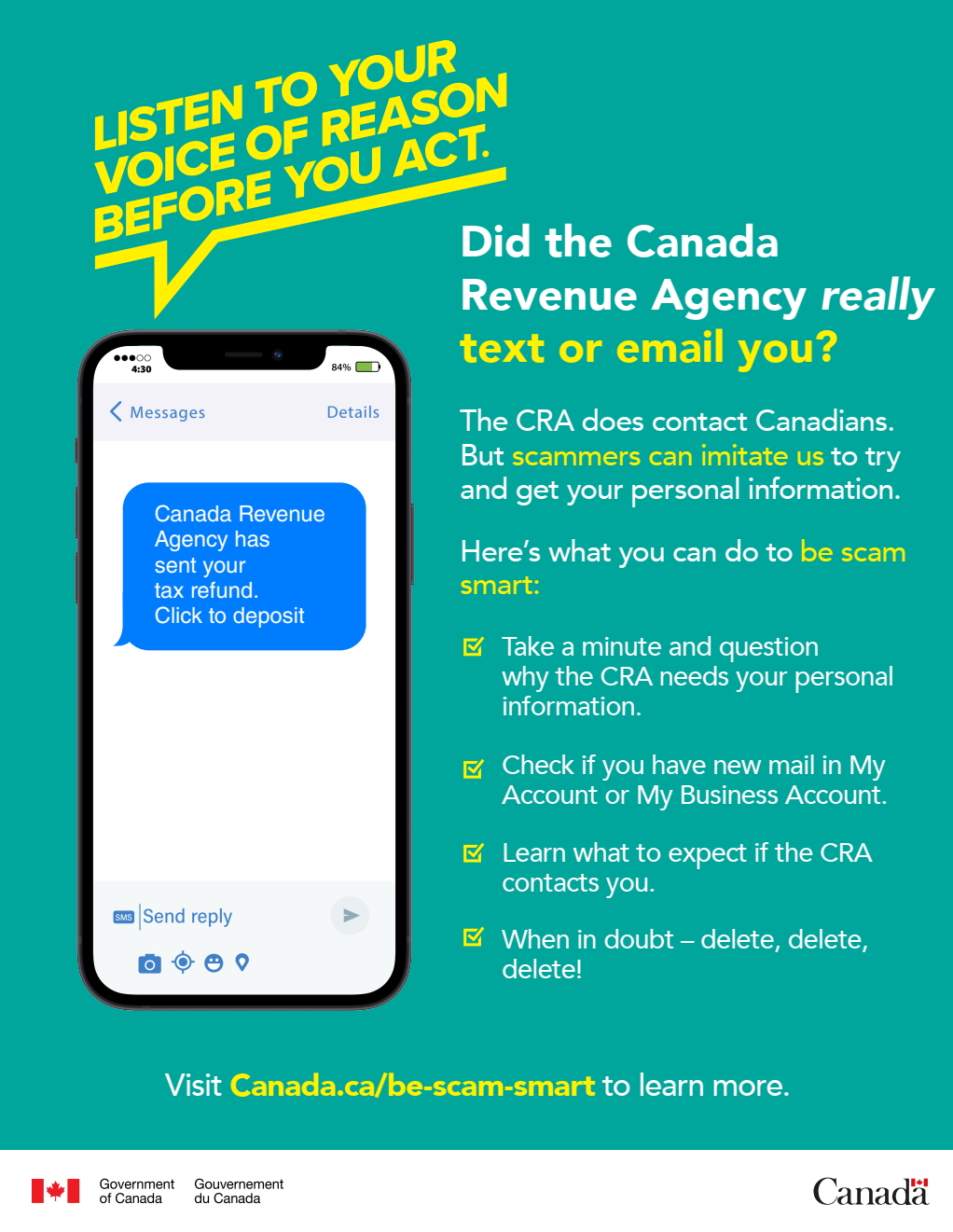
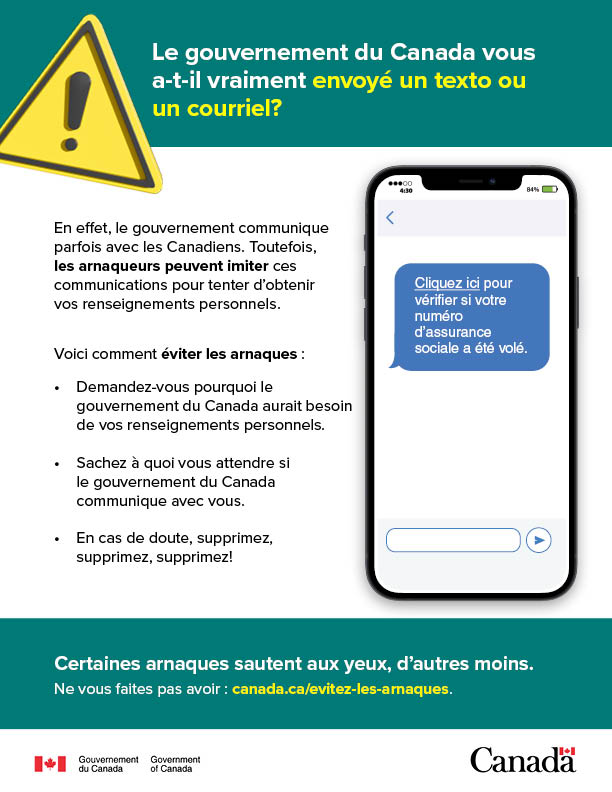
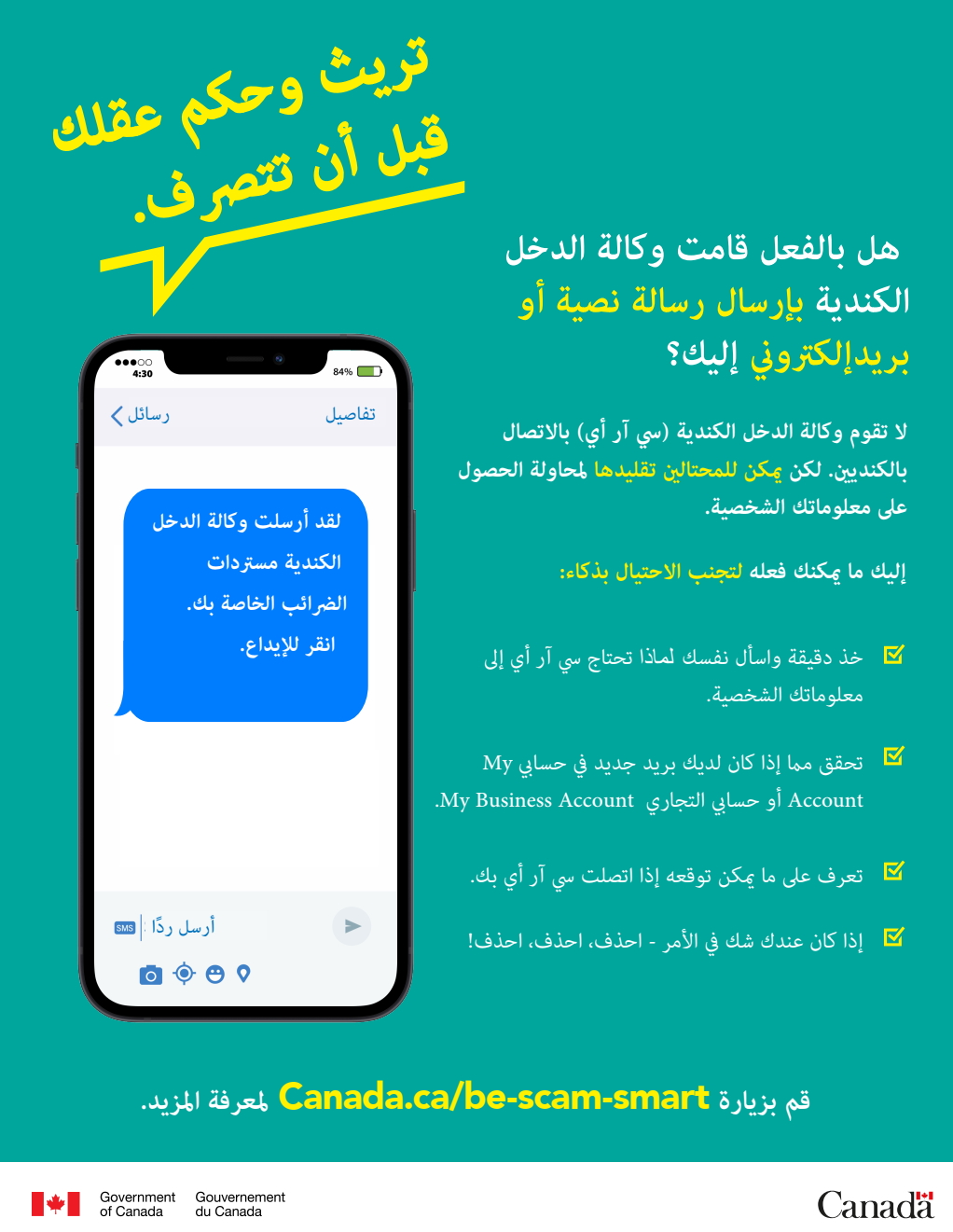
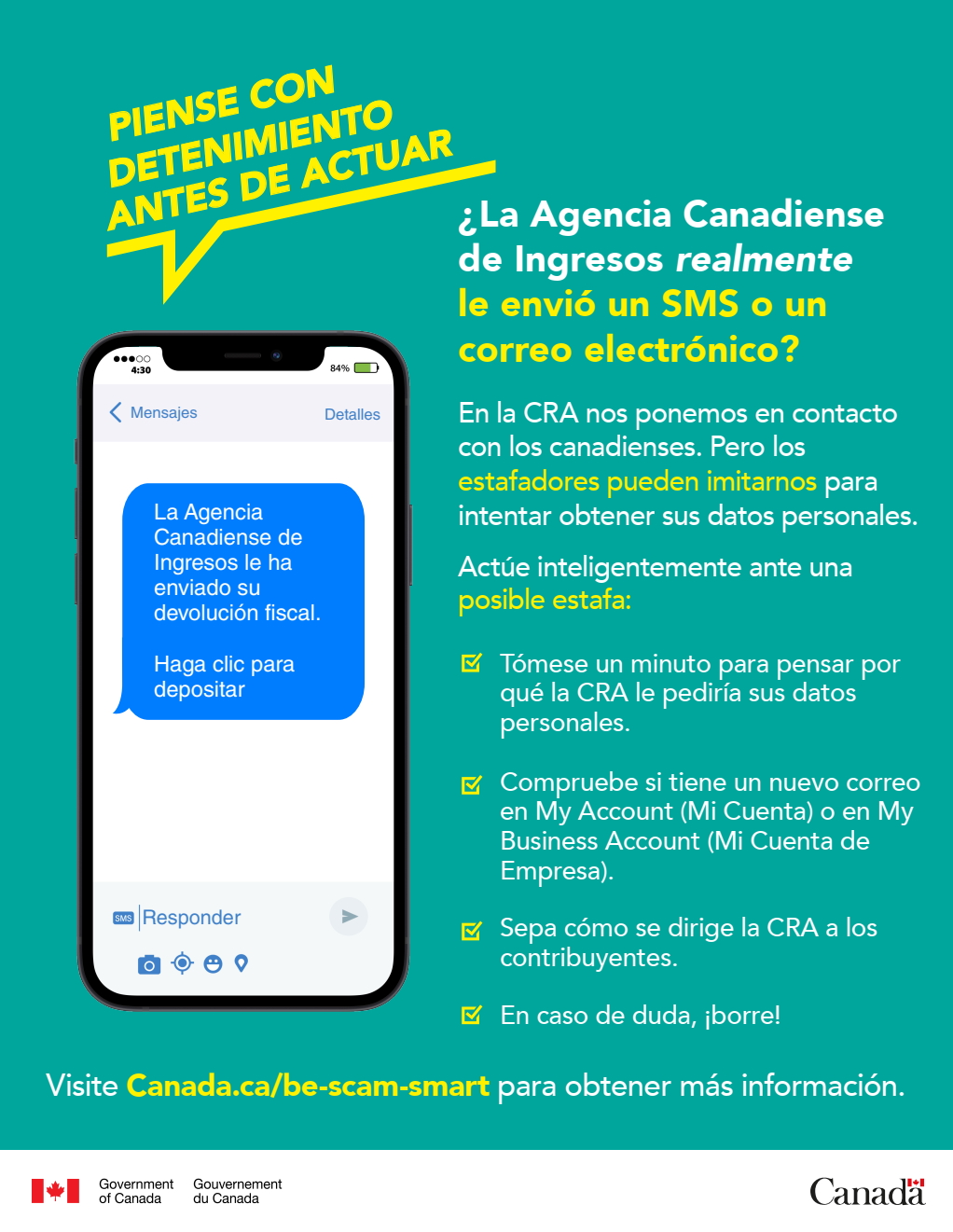
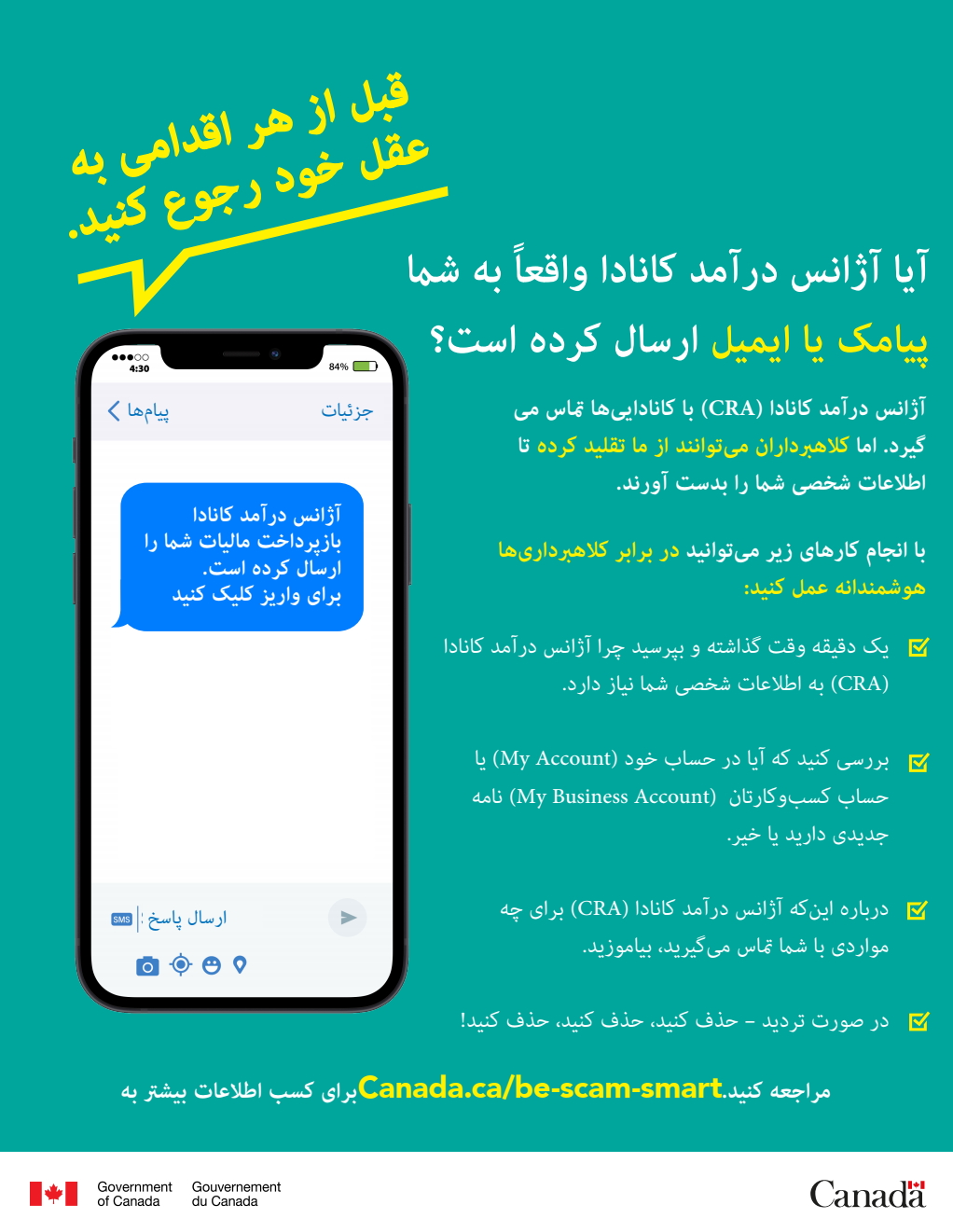
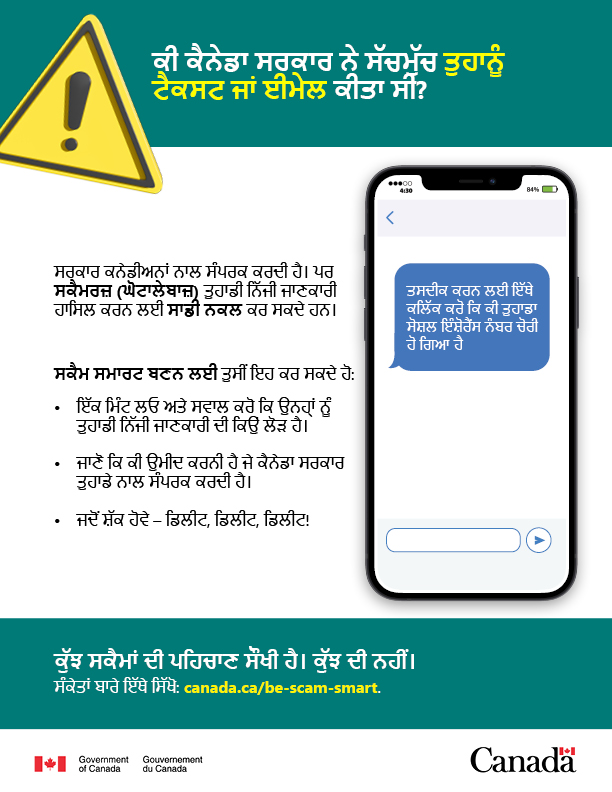
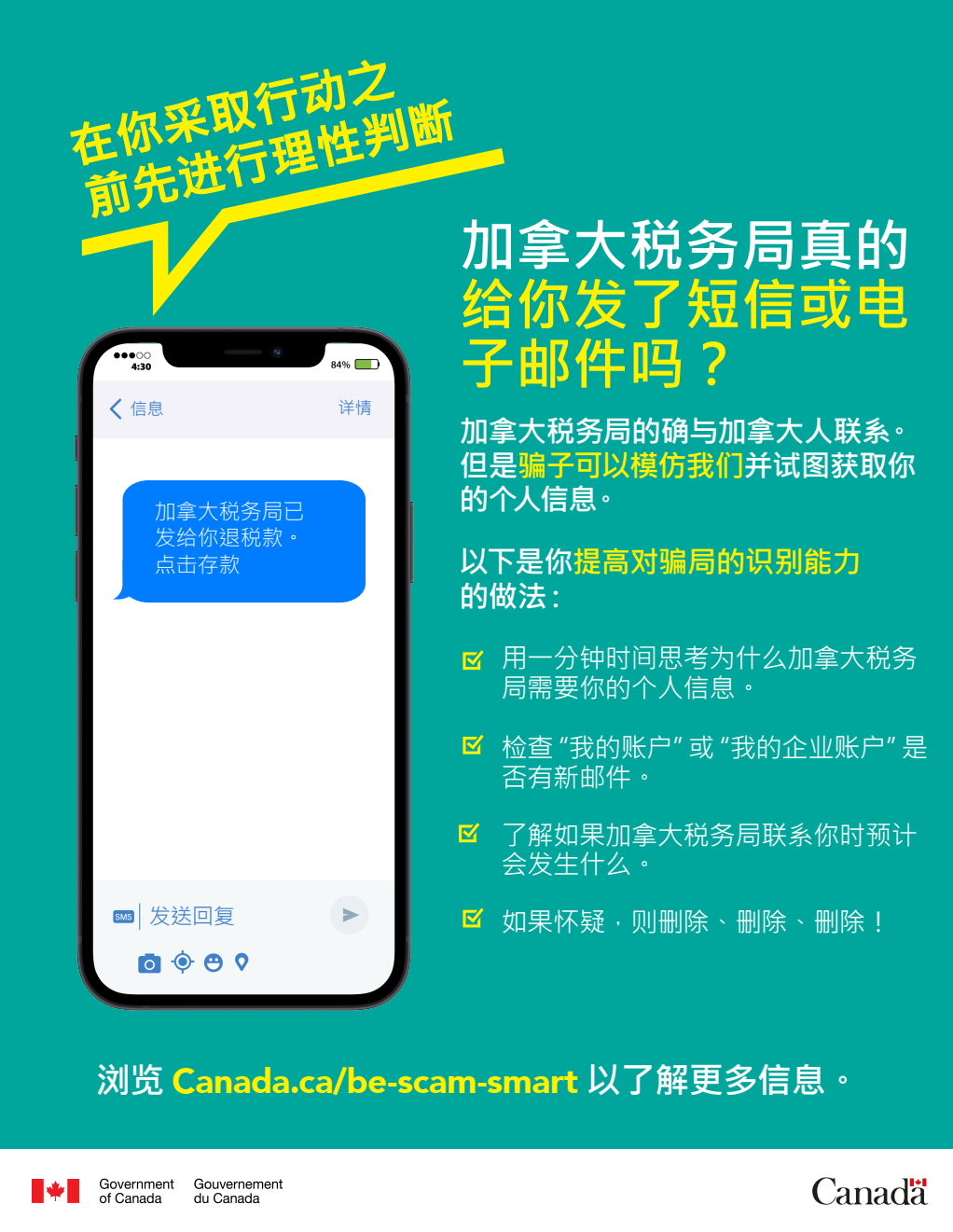
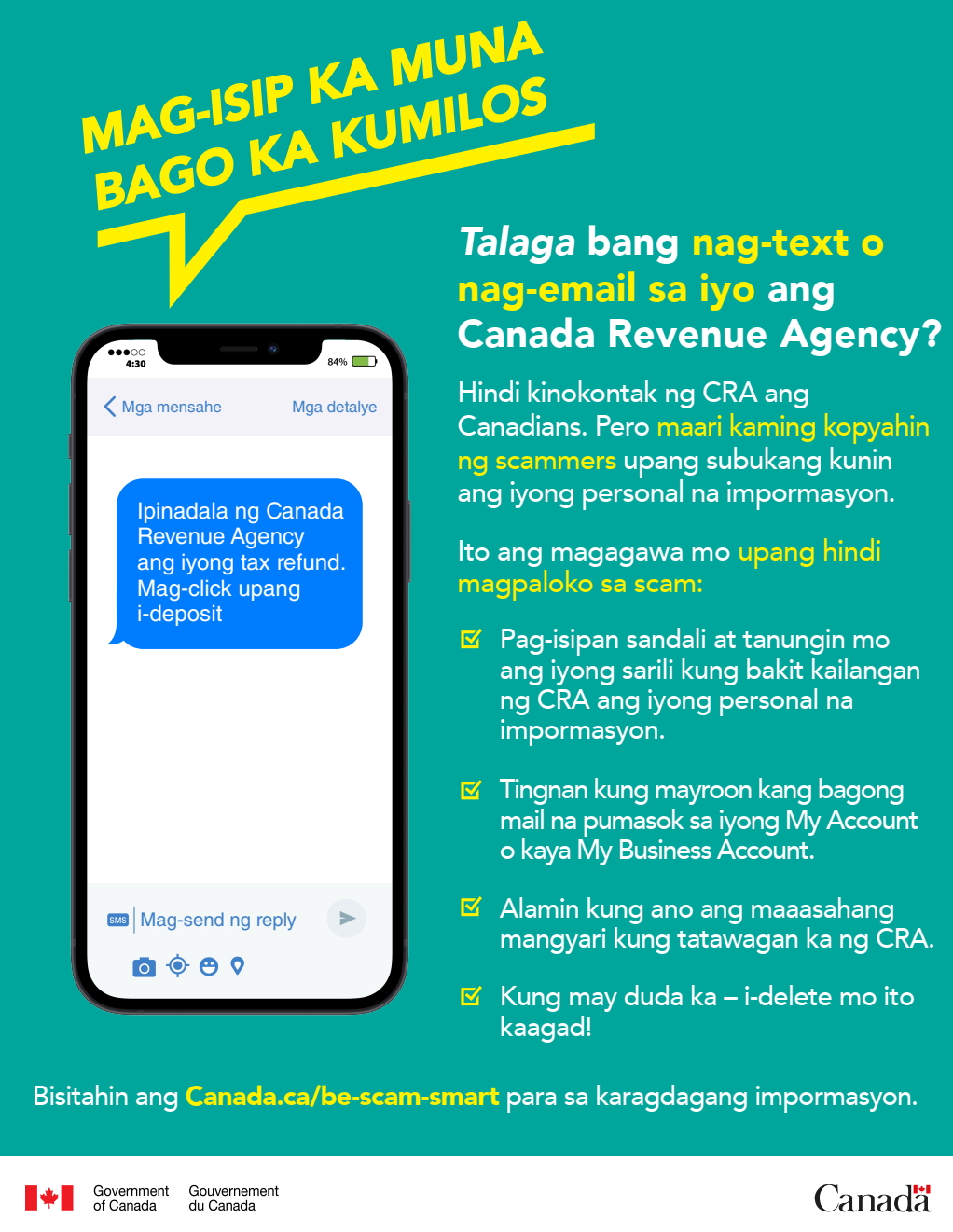
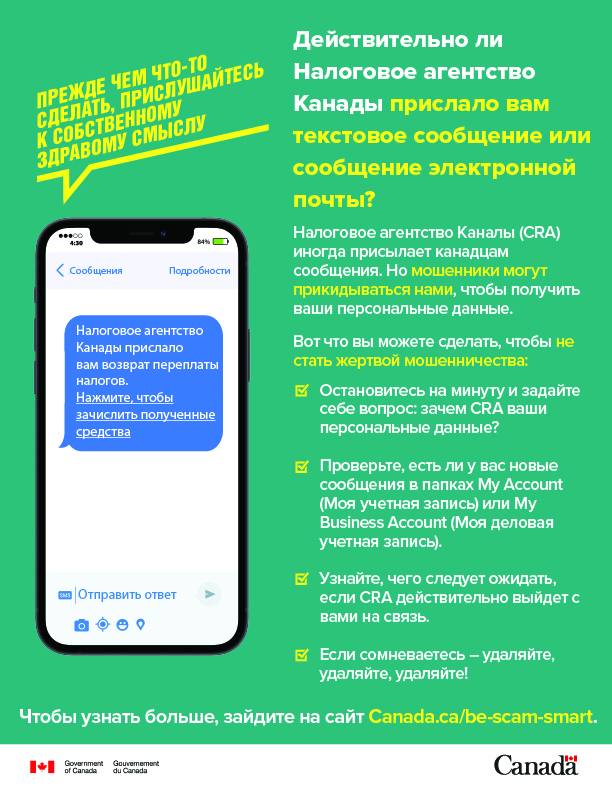
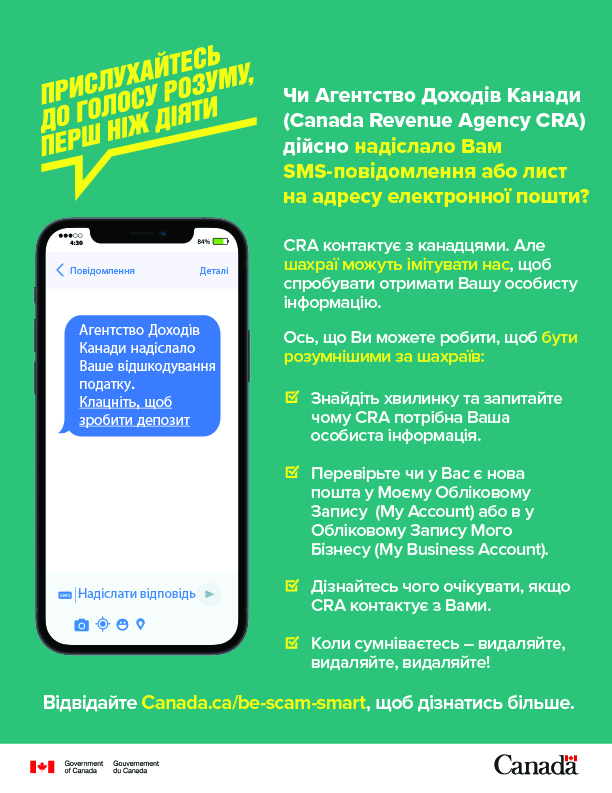
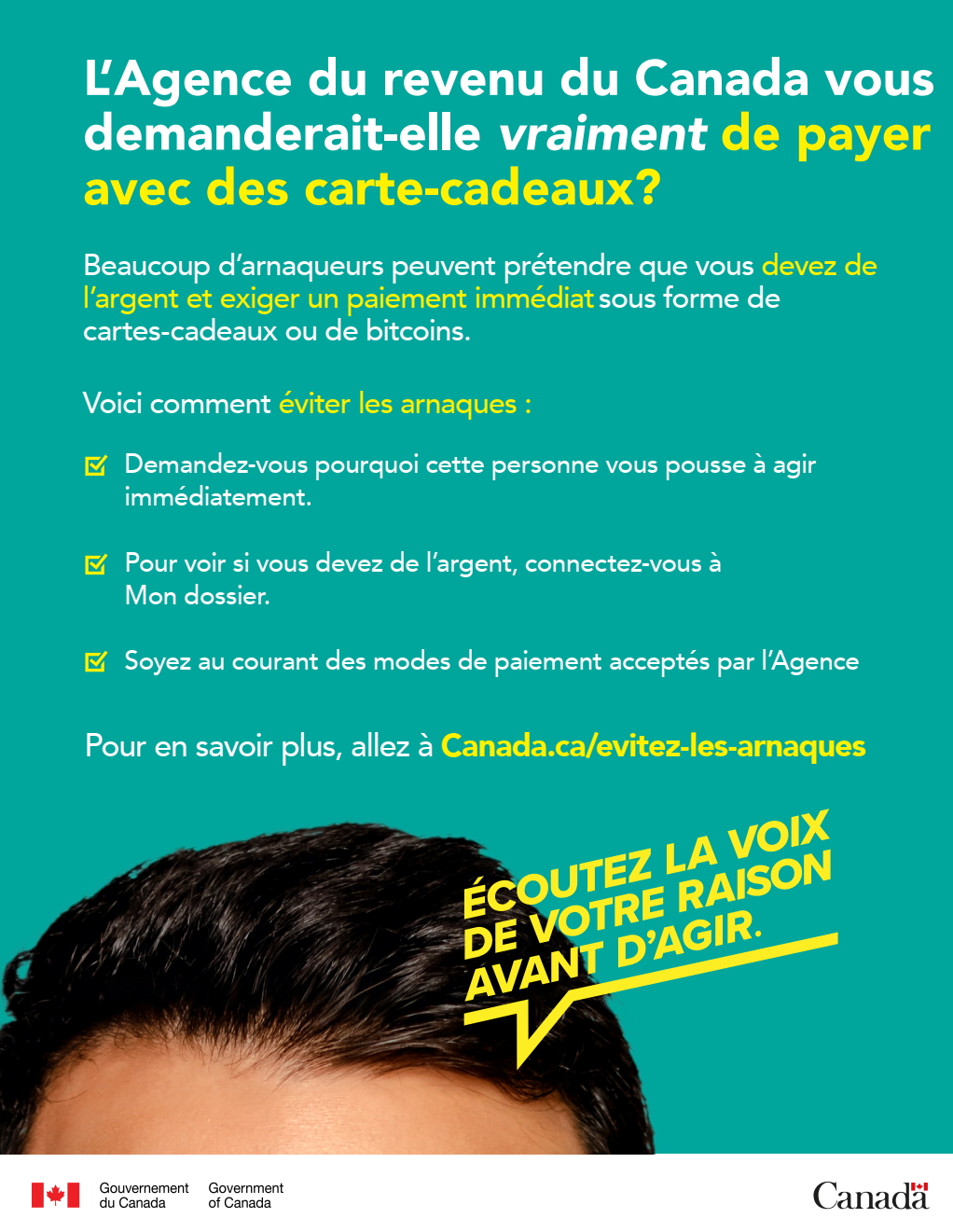
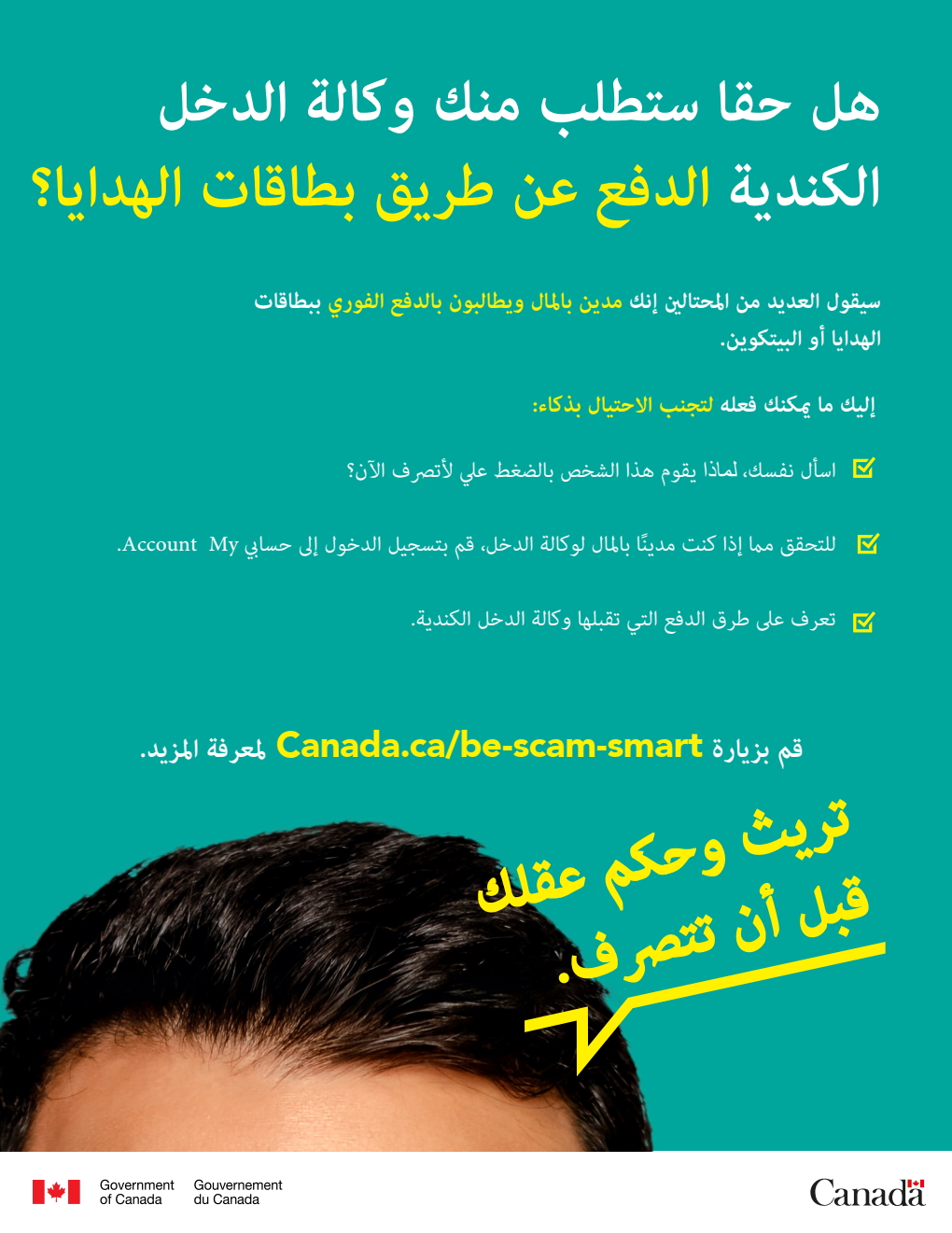
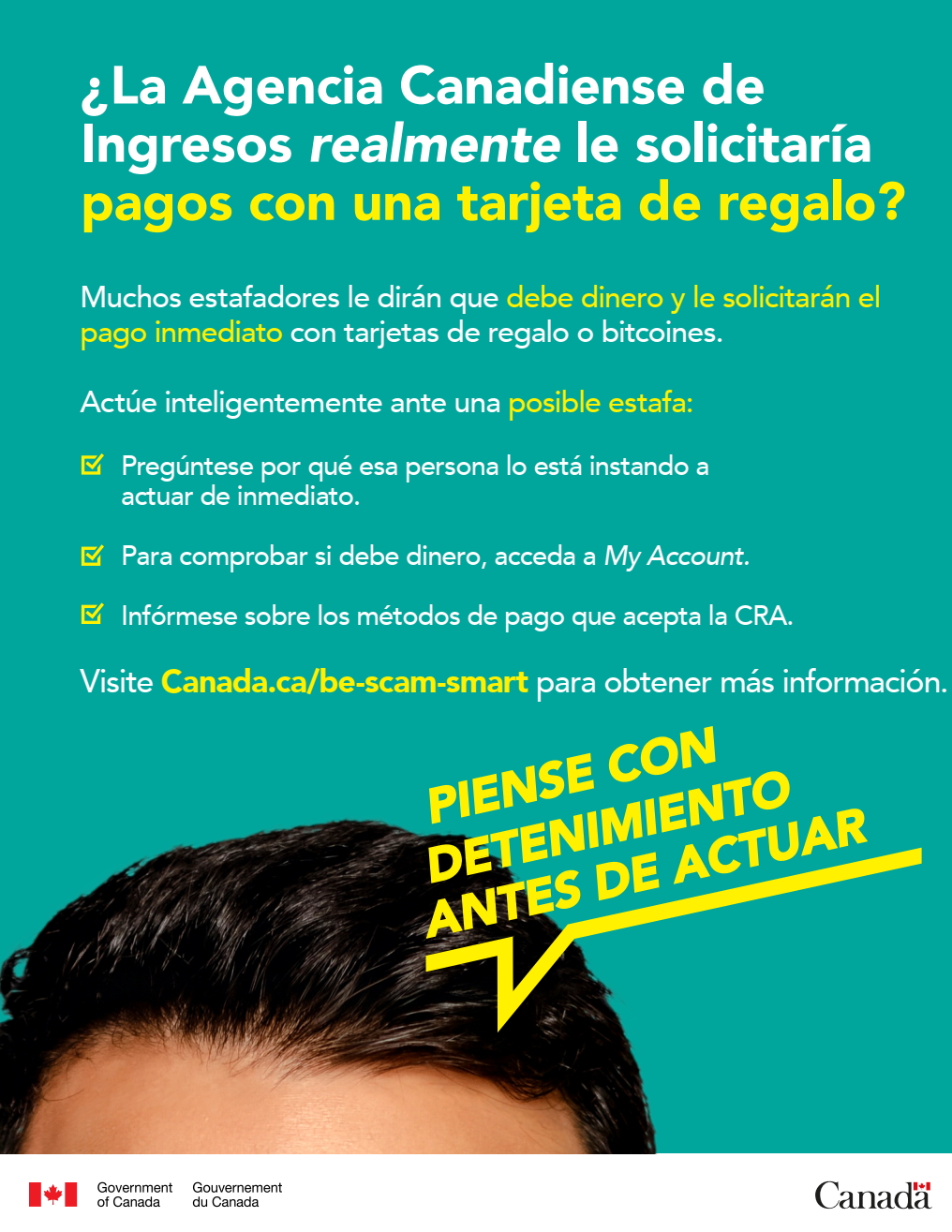
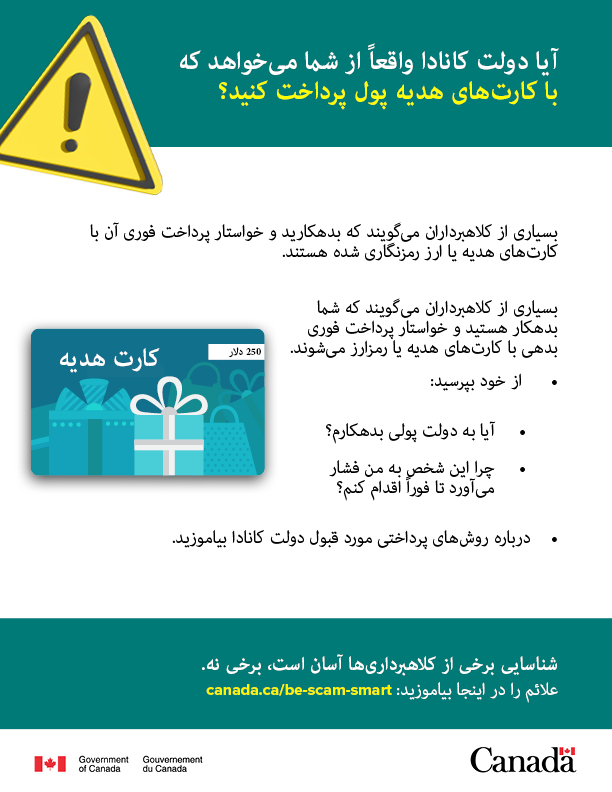
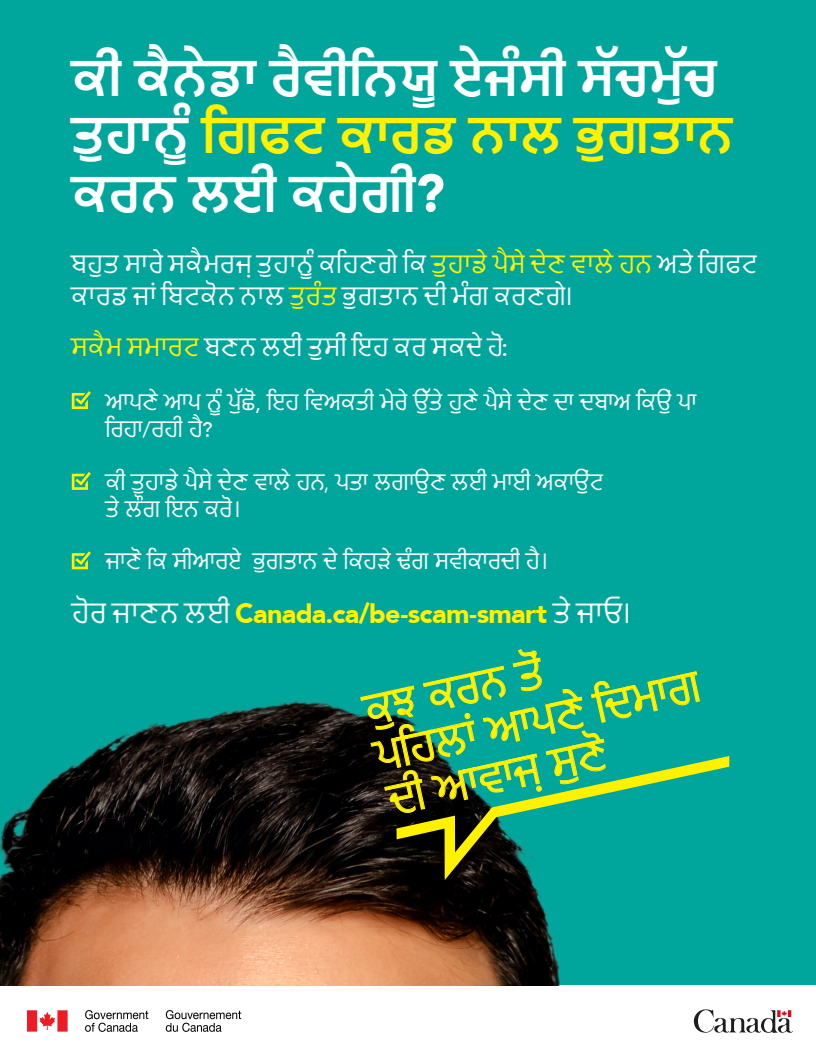
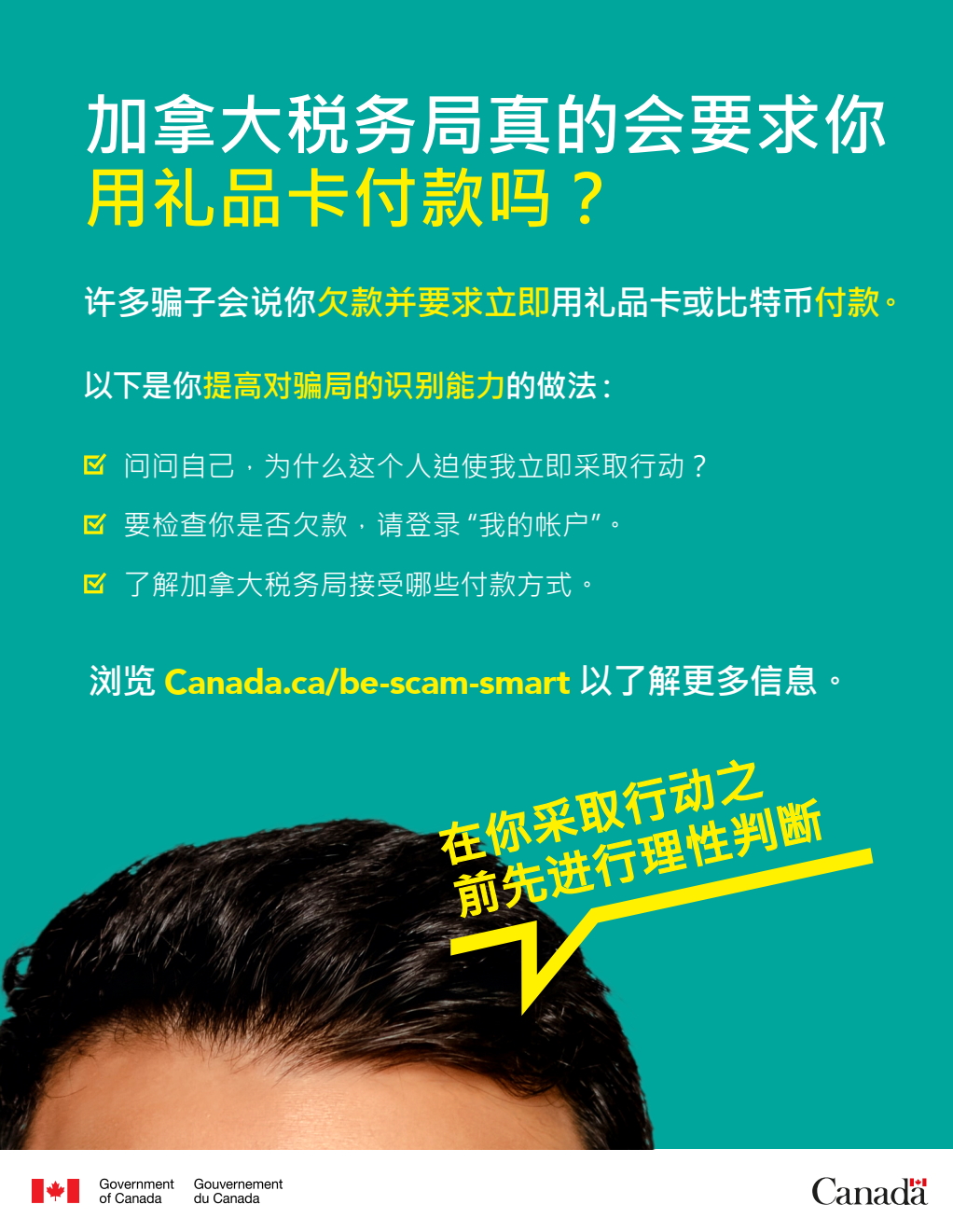
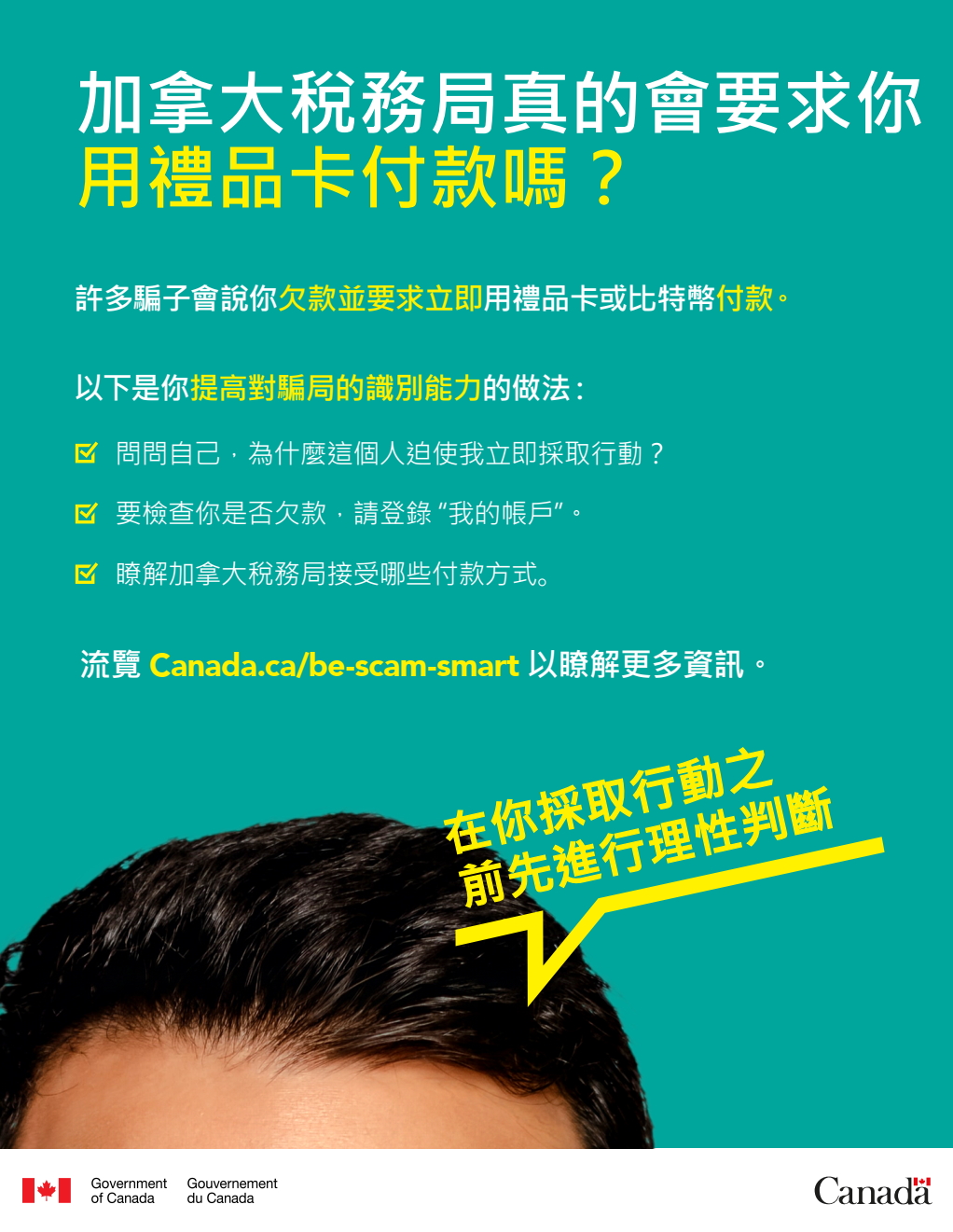
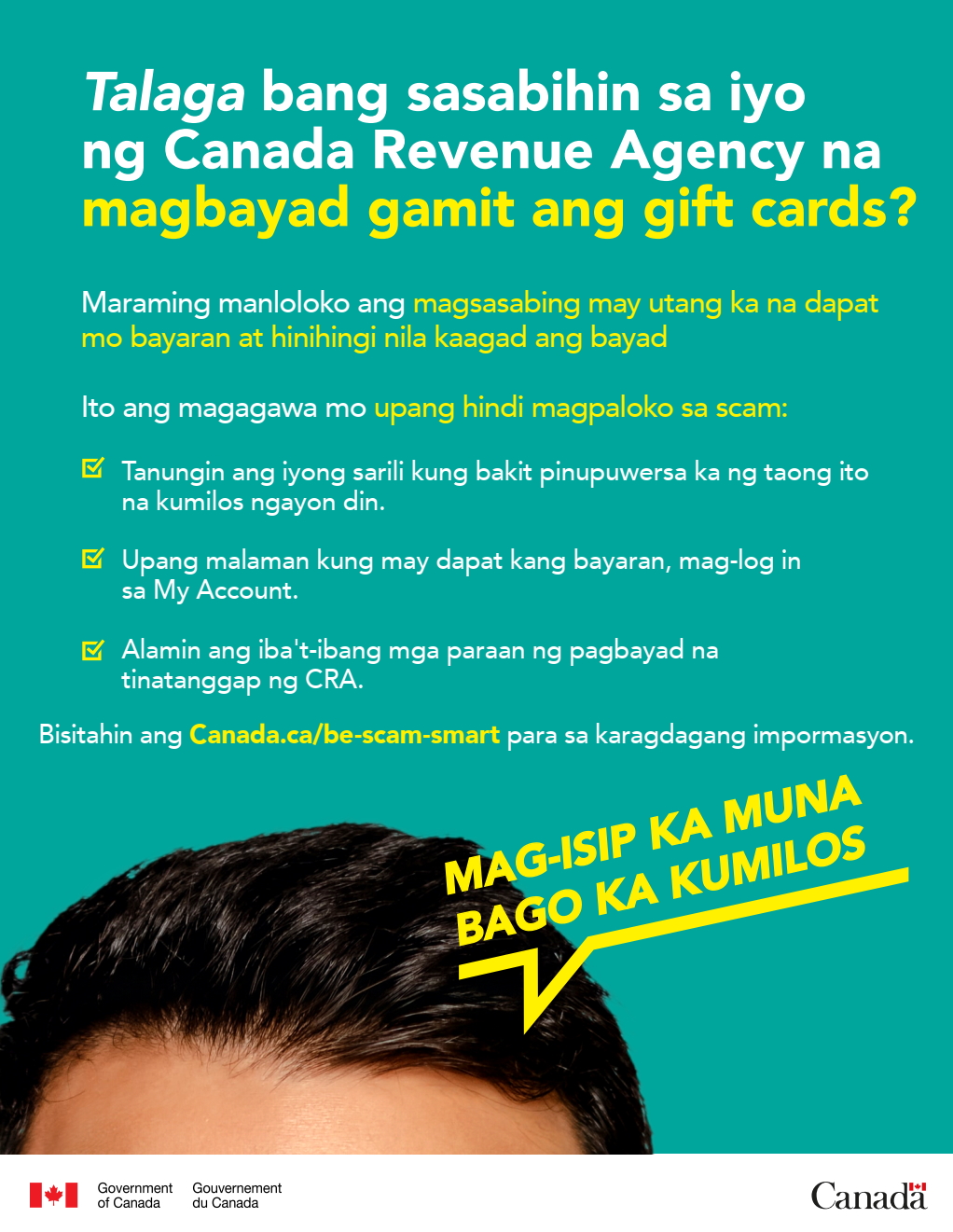
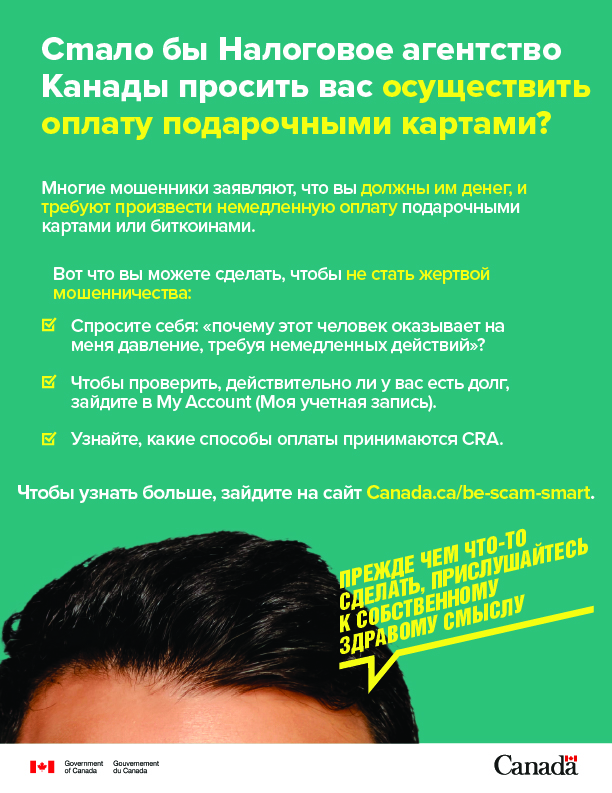
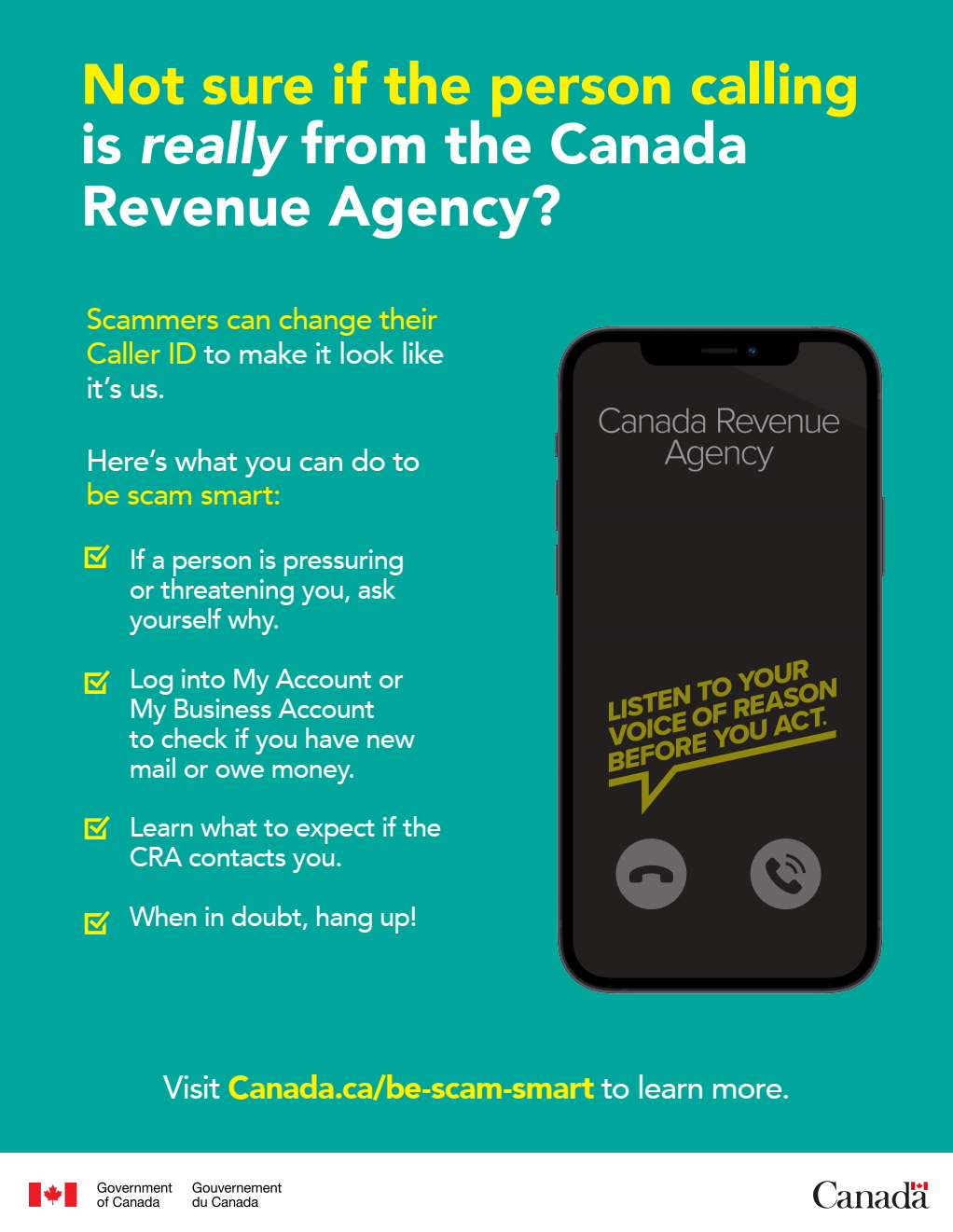
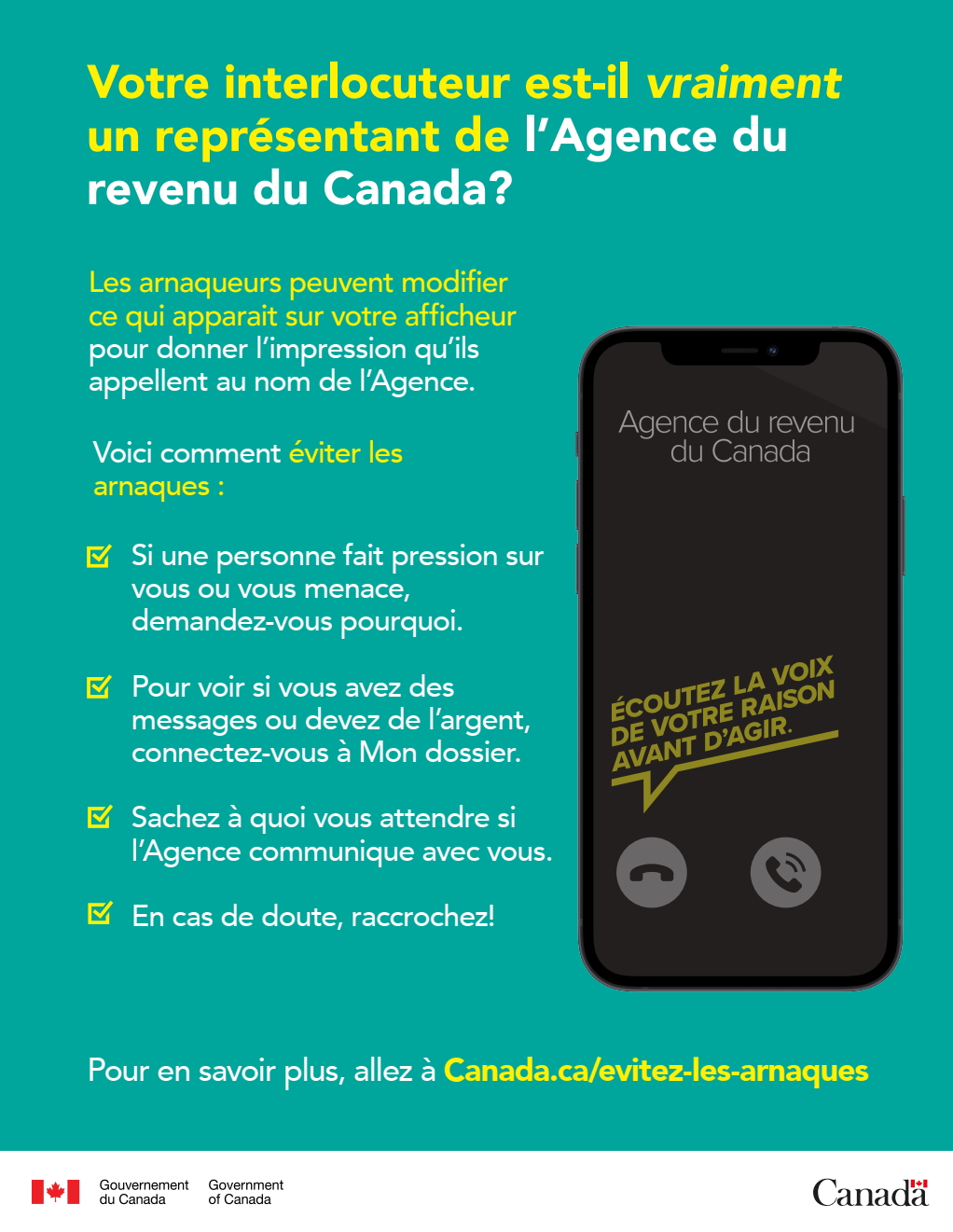
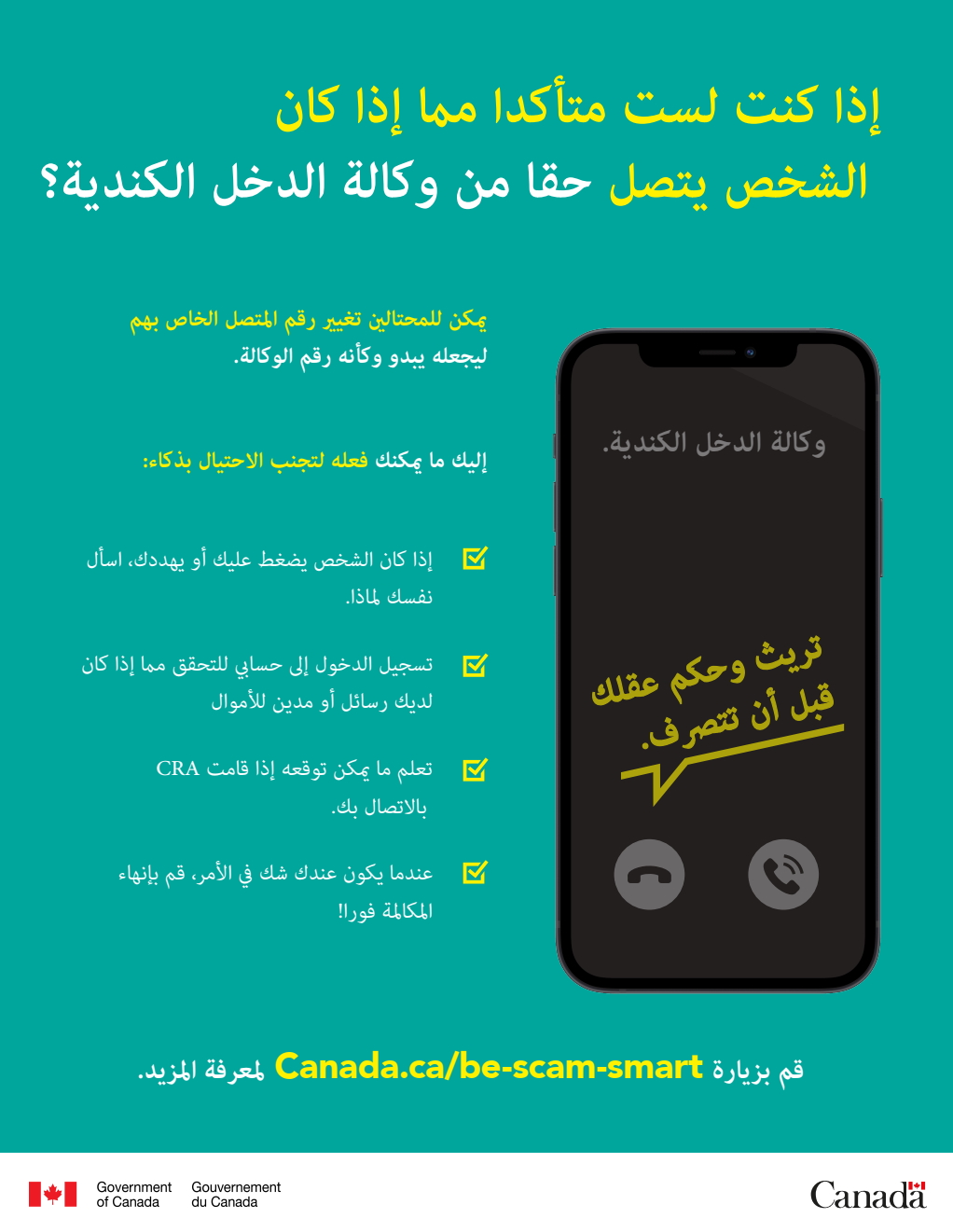
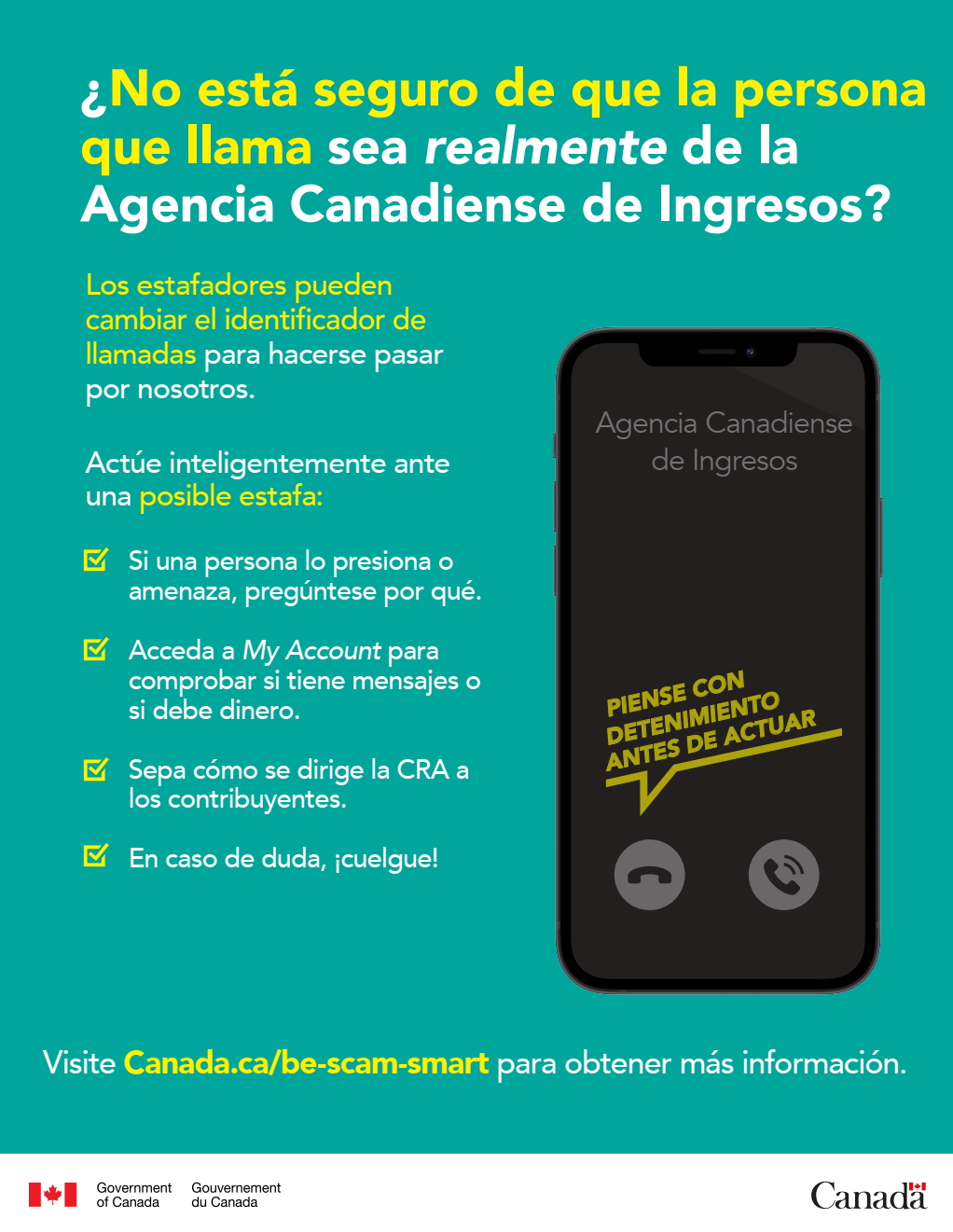
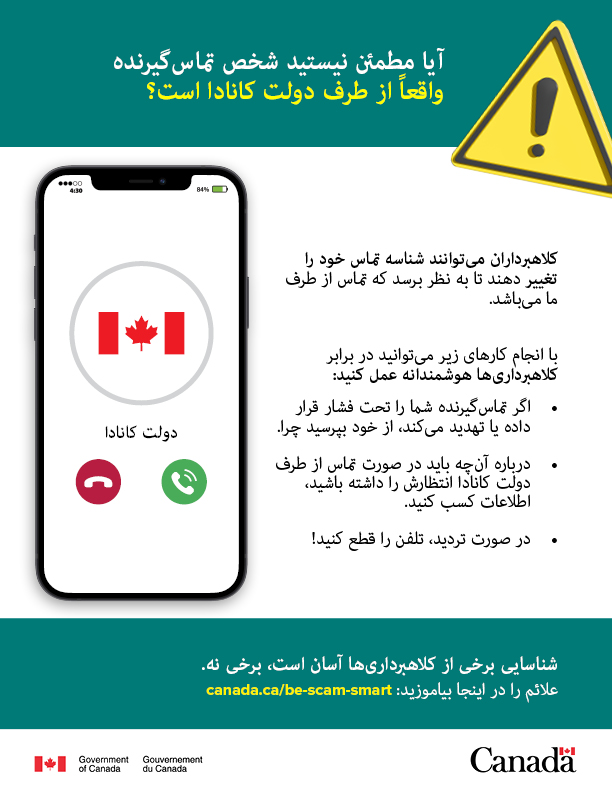
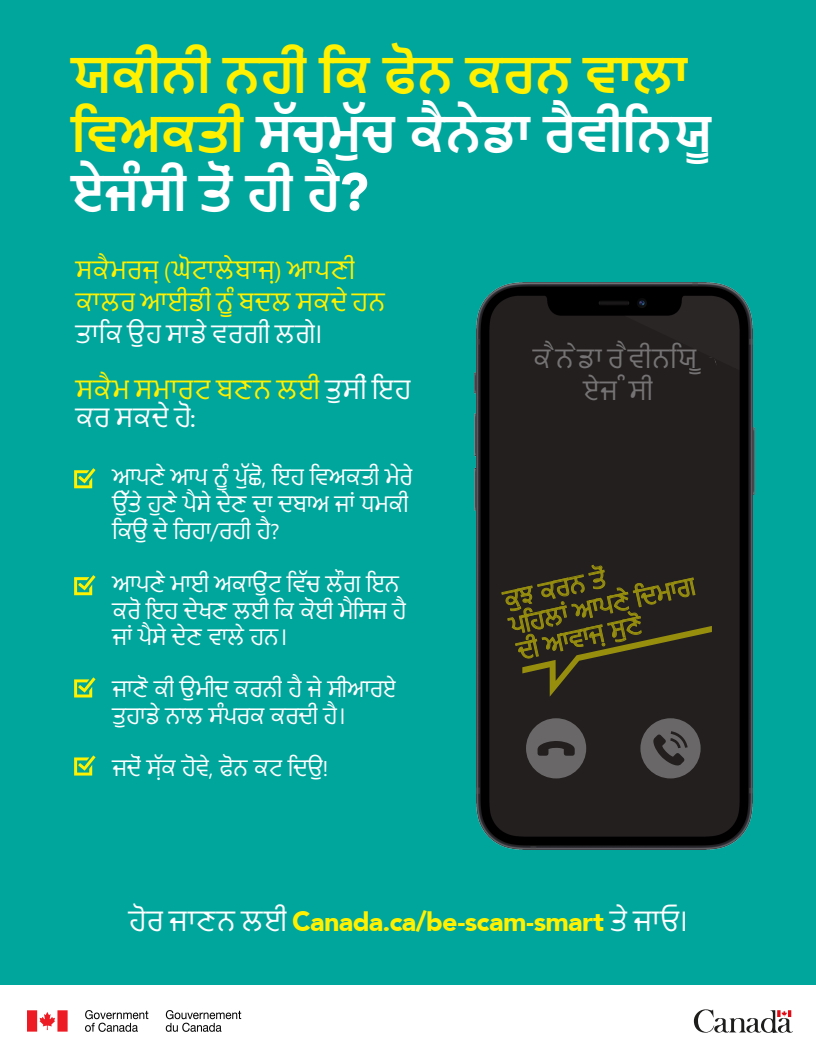
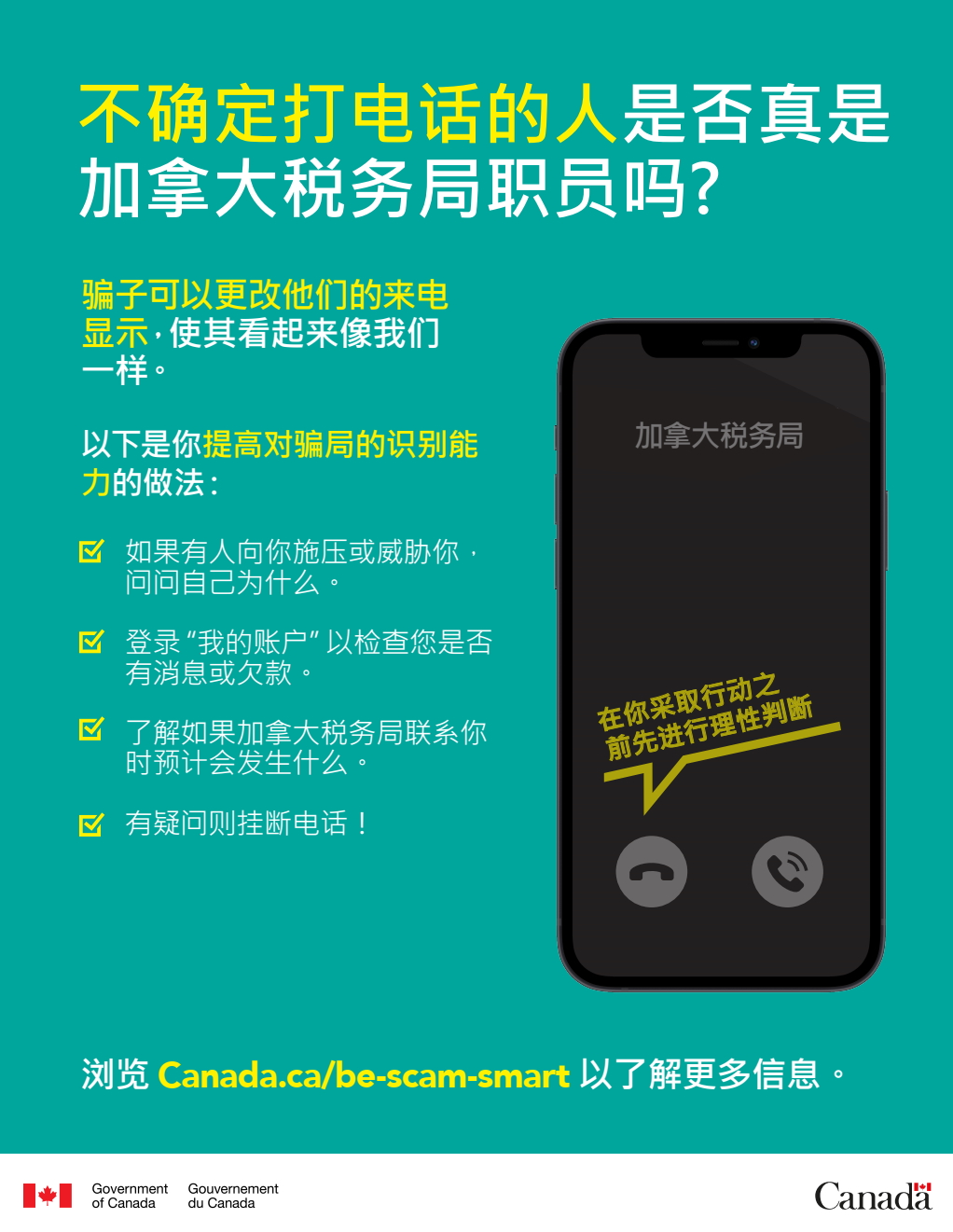
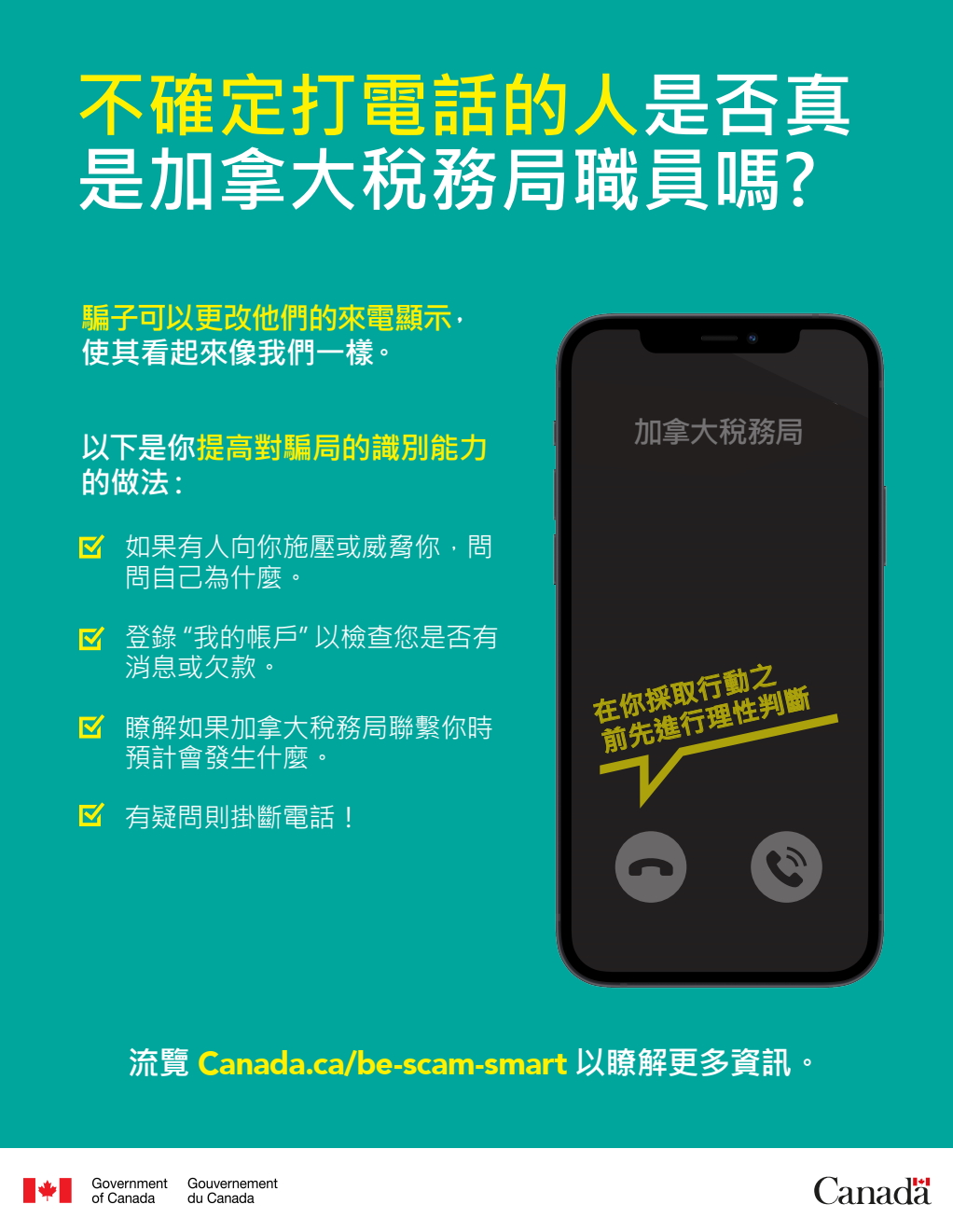
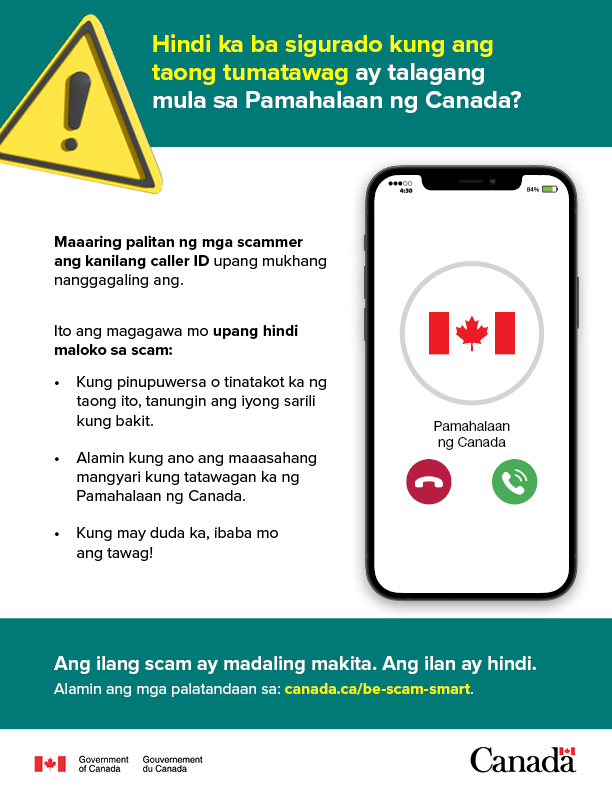
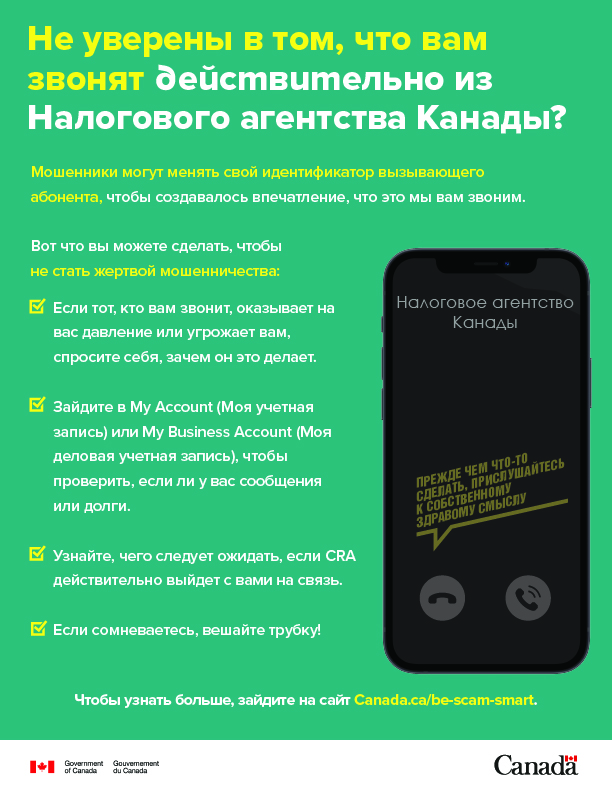
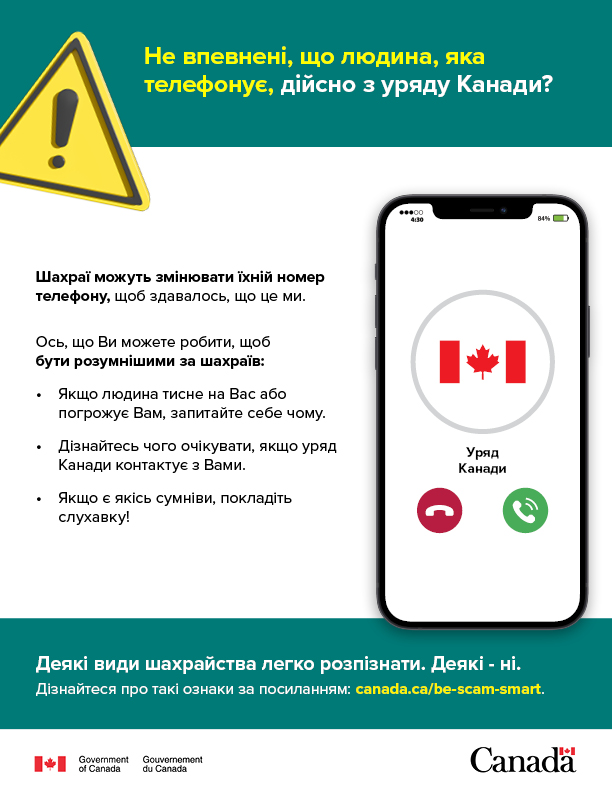
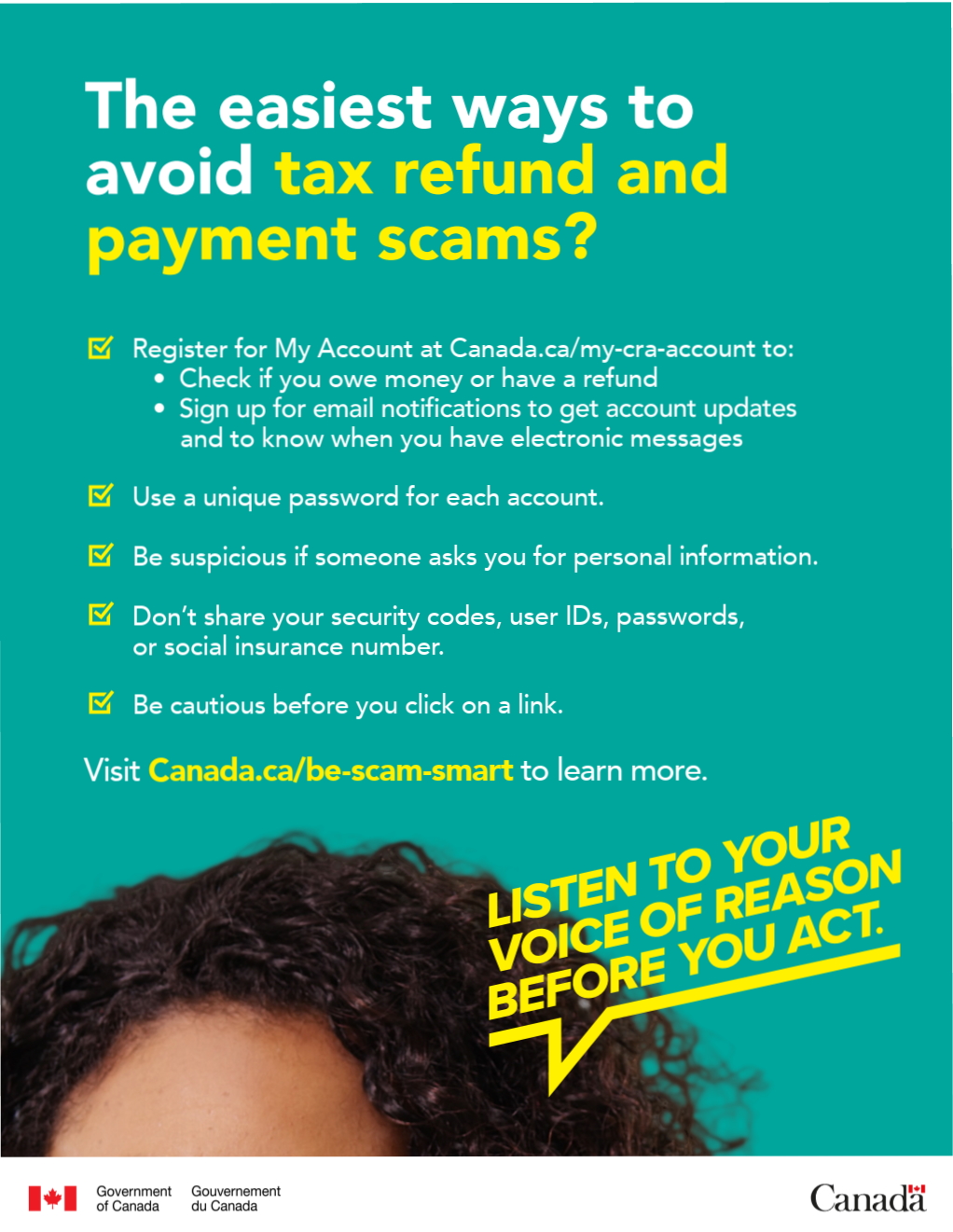
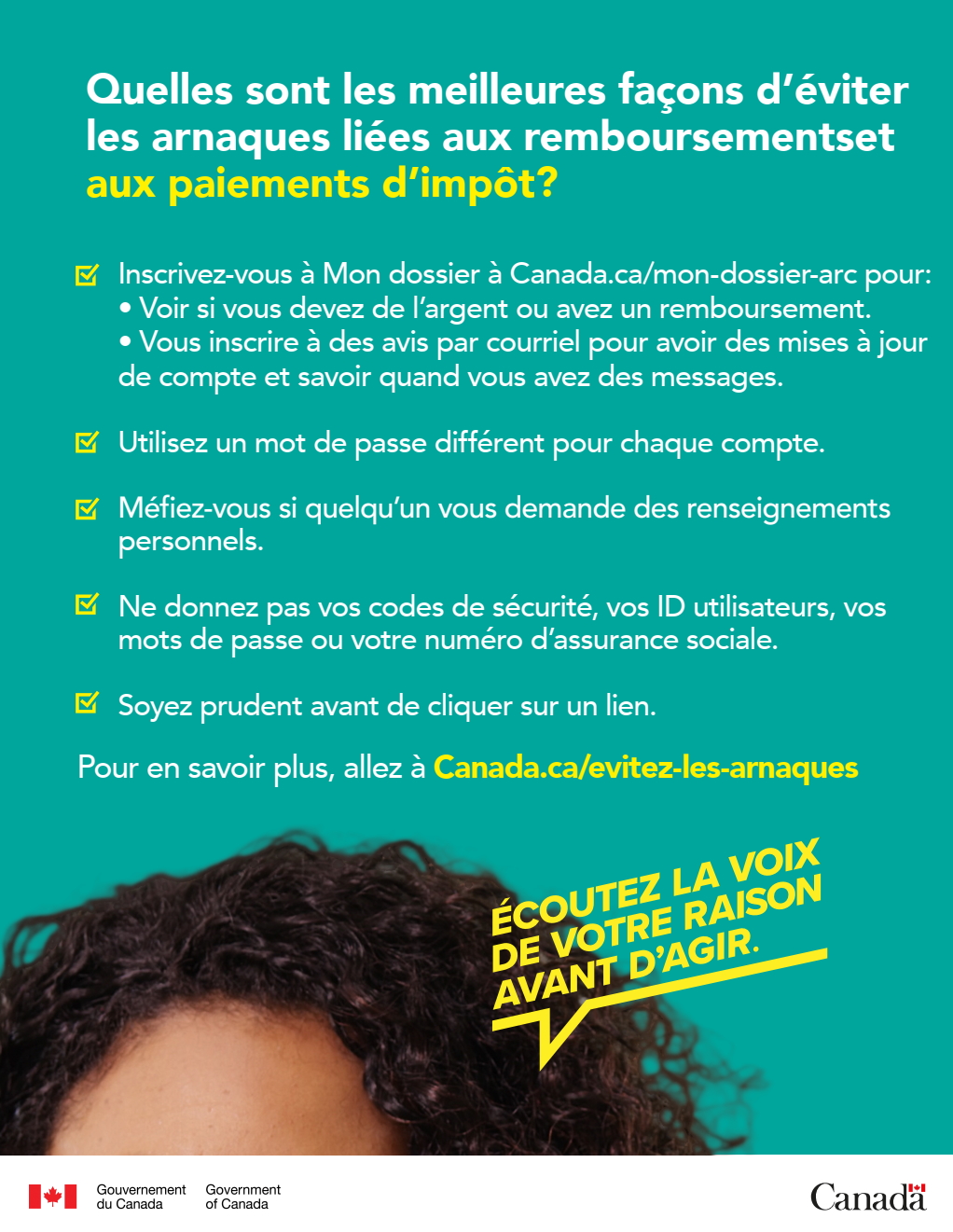
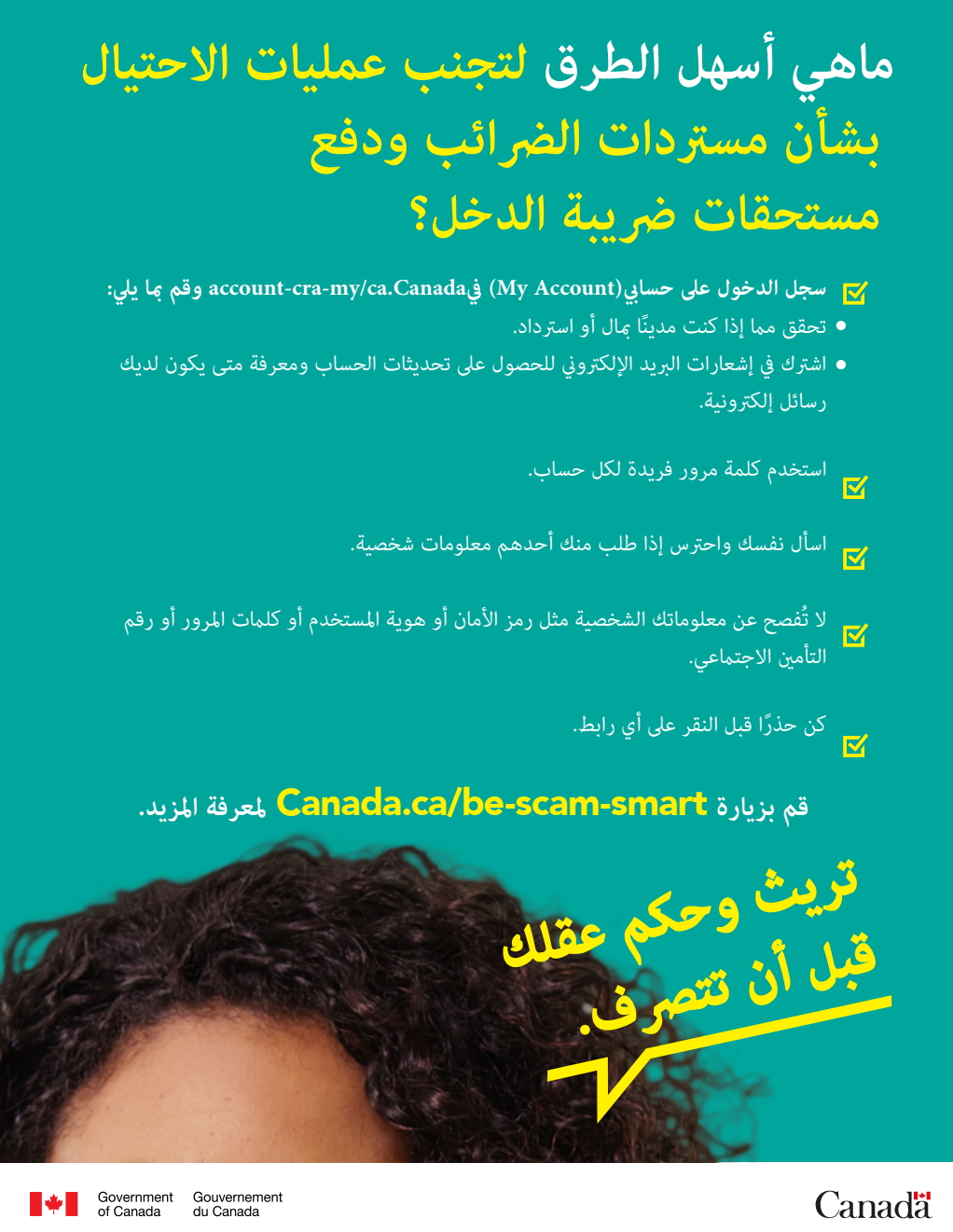
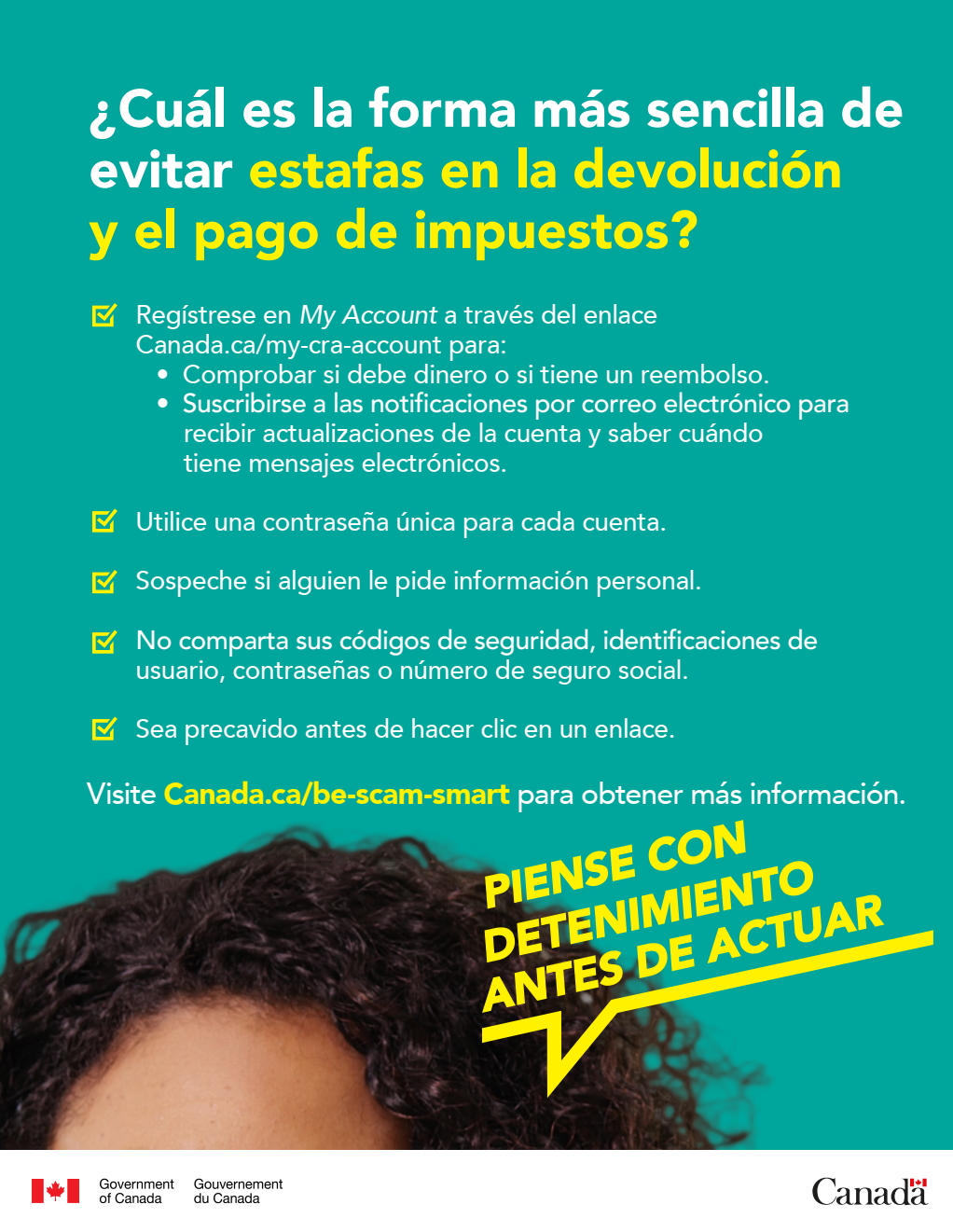
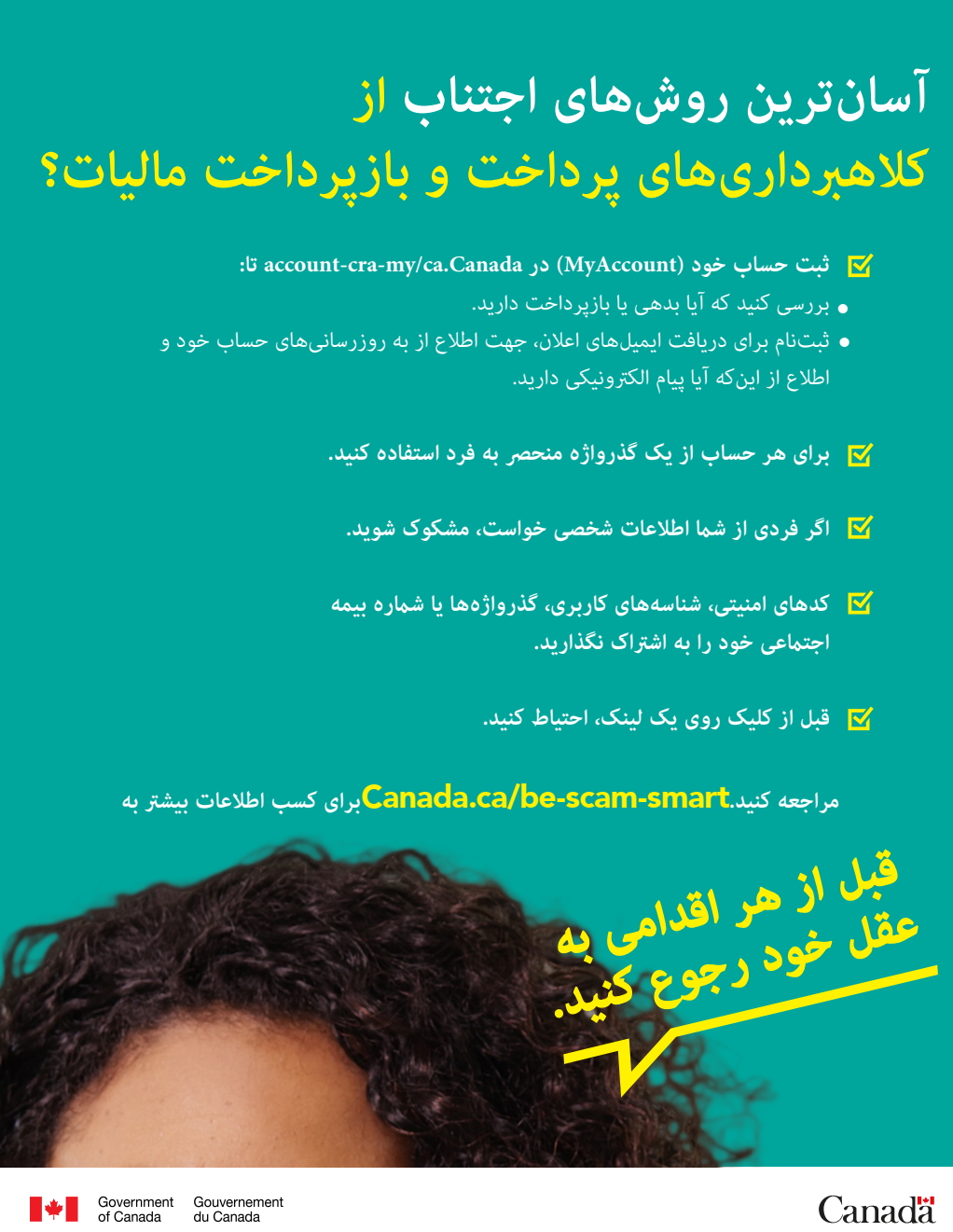
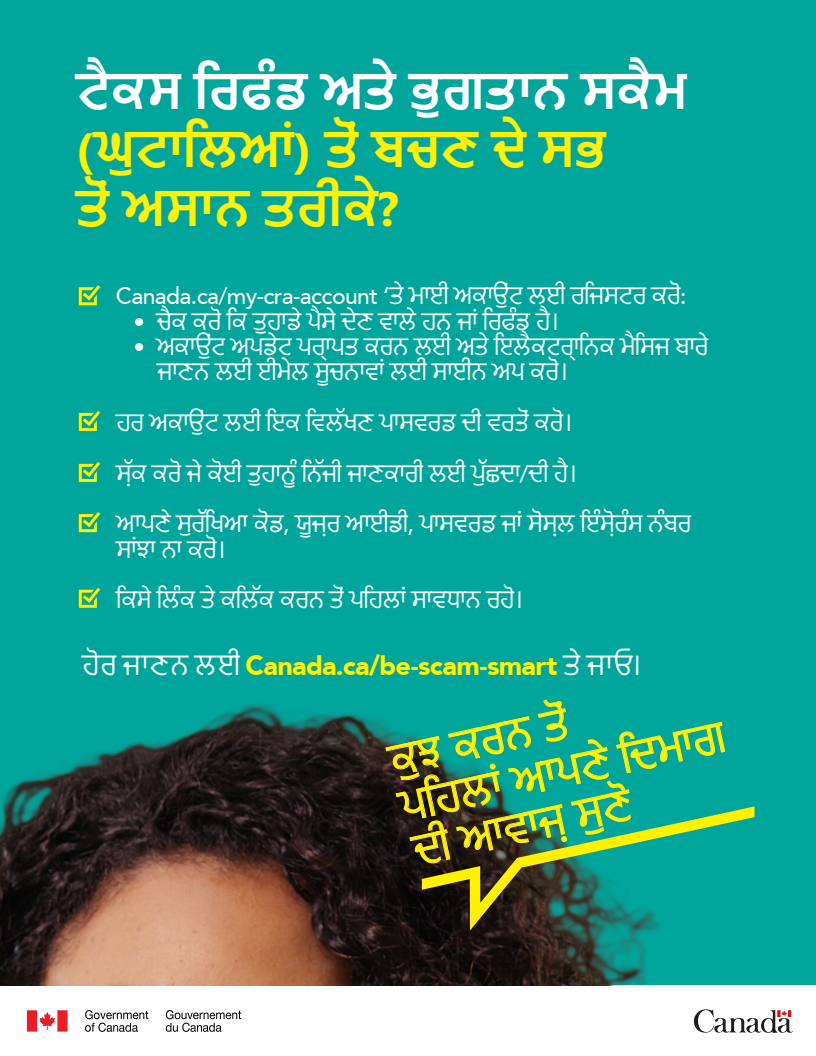
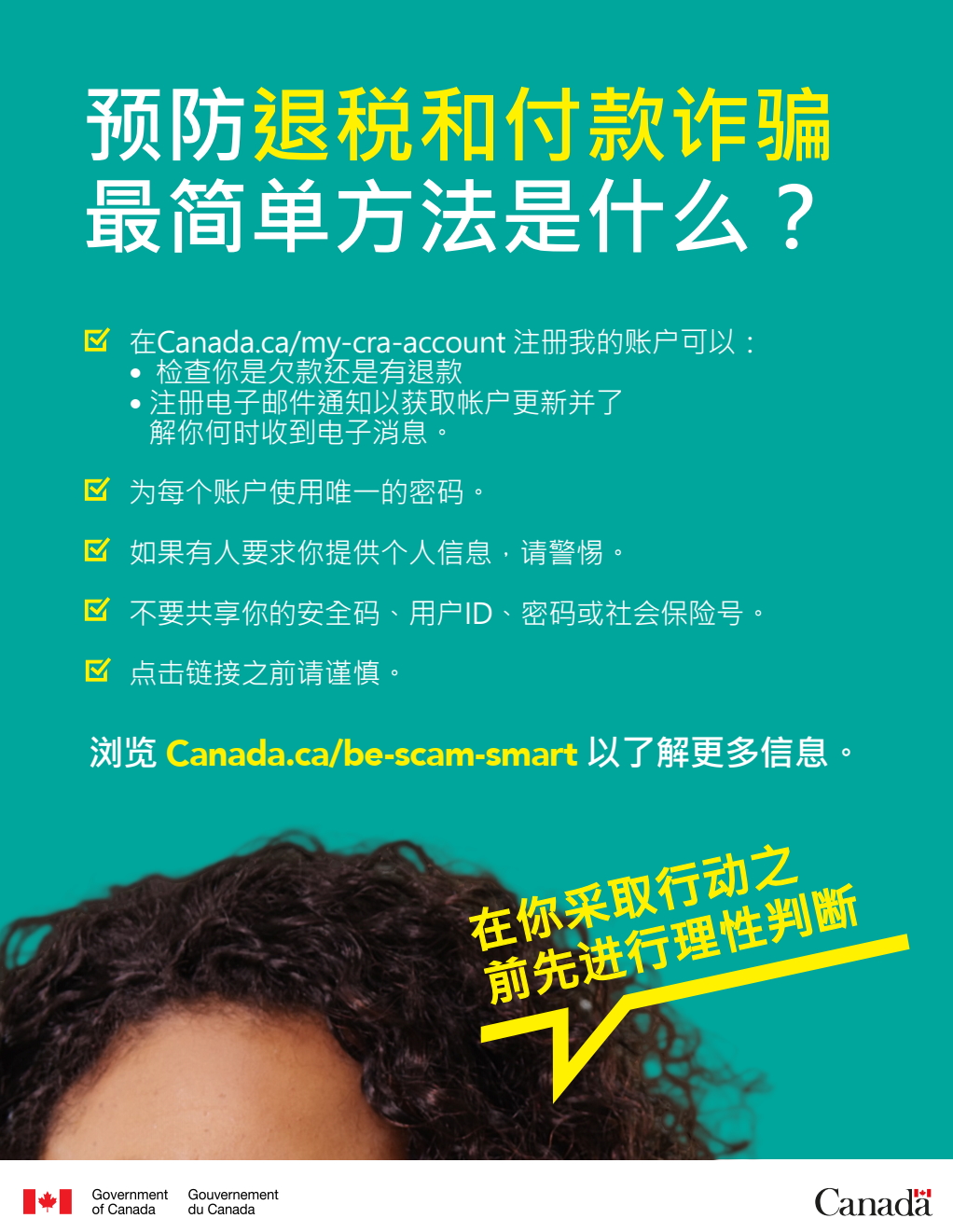
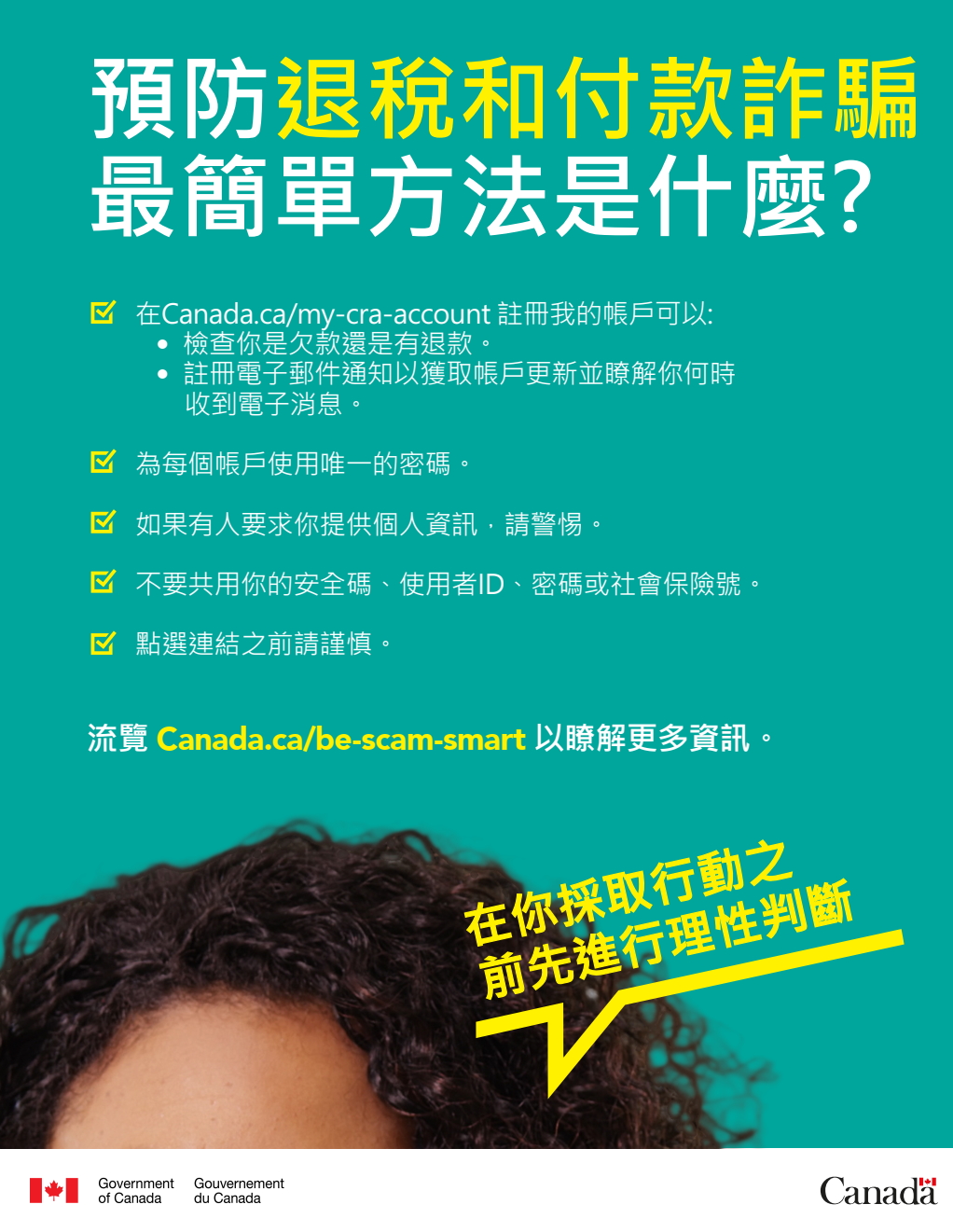
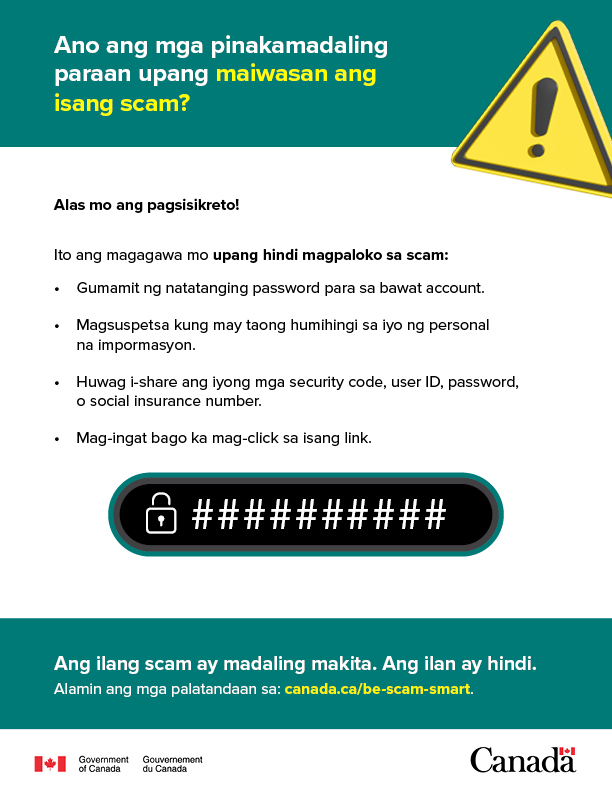
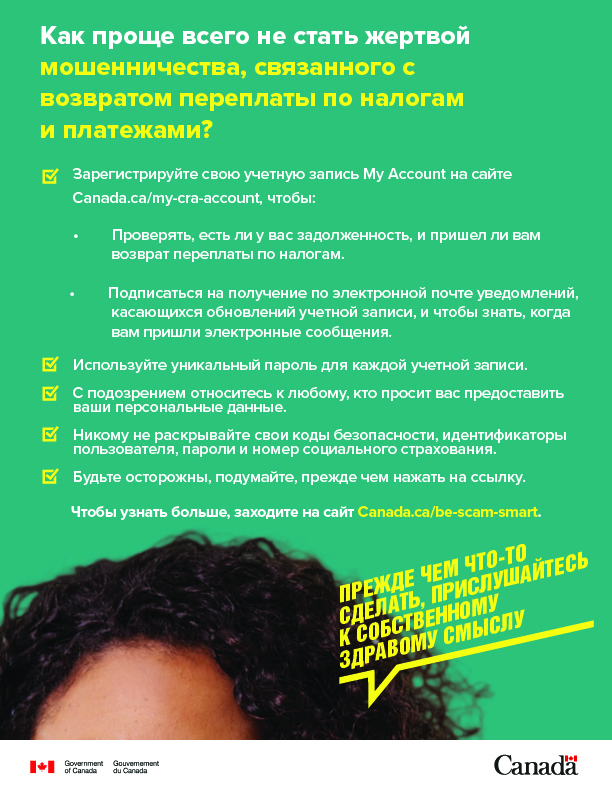
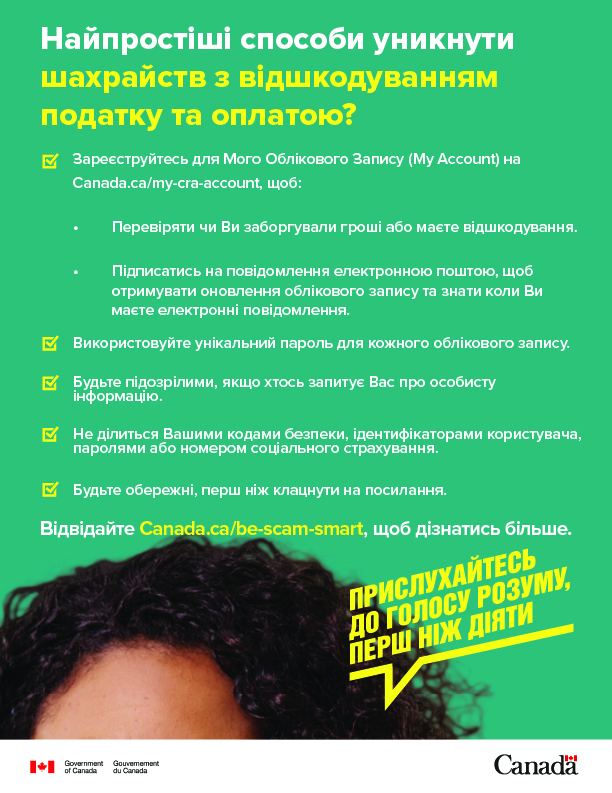
These print-ready posters give some tips on how to be scam smart and are available in 11 languages.



Published: 2025-11-19