
Canada Revenue Agency’s Accessibility Plan 2026–2028
© His Majesty the King in Right of Canada, as represented by the Minister of National Revenue, 2025
Rv1-46E-PDF
ISSN 2818-2367

Submitting feedback about accessibility barriers or the Accessibility Plan
Message from the Commissioner and Deputy Commissioner
We are pleased to share the closeout of the Canada Revenue Agency’s 2023–2025 Accessibility Plan and the launch of its 2026–2028 Accessibility Plan. Guided by the principles of the Accessible Canada Act, this new plan builds on the progress of our first plan and marks another step forward in our journey to become barrier-free by 2040.
We are proud of our progress over the last three years. We made our digital platforms easier to use. We are offering new service options like a direct line for video relay service users. We have established mechanisms to verify the accessibility of our communication material and web content, such as by including persons with disabilities in user testing. We also supported targeted recruitment, onboarding and retention activities which have resulted in a net increase in Canada Revenue Agency (CRA) employees who self-identify as persons with disabilities.
Our new plan continues to focus on inclusive hiring and promotion as well as reducing the time it takes to put employee accommodations in place. The plan lays out our efforts as we strive to continue improving the accessibility of our communications for the benefit of all, and enhancing our service options. We also continue to monitor and evaluate our programs to make sure they meet accessibility standards. In 2026, we will introduce our first accessibility policy, an important milestone in embedding accessibility in all aspects of the CRA. As a service organization, accessibility is central to ensuring full and equal participation in the tax and benefit system and the workplace.
Engaging with persons with disabilities through consultations and feedback allows us to better understand their lived experiences, evaluate whether our actions have fully removed barriers, and identify new barriers. Our consultations have clearly revealed that challenges remain. The analysis of this year’s consultation and feedback enriches our understanding of the barriers still faced by clients and employees alike, which we have extensively compiled over the last three years. We know that efforts to reach our goal by 2040 require continued attention and action.
In setting the path for the next plan, we have considered the current environment and the challenges it will bring, including changing client needs and expectations, the use of new technologies, and continuing to deliver in a period of increased fiscal restraint. As such, the 2026–2028 plan takes a more targeted approach, with fewer actions but a greater focus on measurement to ensure real progress. We will strive to continue to steadily remove barriers while being accountable to Canadians, especially to the more than one in four who identify as having a disability.
Bob Hamilton
Commissioner of the Canada Revenue Agency
Jean-François Fortin
Deputy Commissioner of the Canada Revenue Agency
1.0 General
Important: Alternate formats for the CRA’s Accessibility Plan and its accessibility feedback process description can be ordered online or by phone at 1-800-959-8281 for individuals, or 1-800-959-5525 for business owners.
The Canada Revenue Agency values feedback from its clients, including feedback on accessibility. Accessibility feedback is client-initiated information about their experiences with the accessibility of our services, or it is feedback about the CRA’s accessibility plans or accessibility progress reports.
Accessibility feedback helps the CRA identify, address and remove accessibility barriers to its programs and services. We acknowledge and respond to all feedback related to accessibility, except for anonymous submissions where this is not possible. Internal processes are in place to monitor, report on and incorporate feedback related to accessibility barriers and the accessibility plan into future accessibility plans and progress reports.
Our designate for accessibility feedback is the Assistant Commissioner of the Service, Innovation and Integration Branch. For more information on our feedback process, including how to submit accessibility-related service feedback, go to the Send CRA accessibility feedback web page.
You can submit accessibility feedback in the following ways.
Online form
You can submit your accessibility feedback electronically using Service feedback – RC193 online form. This form allows individuals, businesses or authorized representatives to provide identified or anonymous feedback.
Online account
To submit accessibility feedback online, you must first download, complete and save the PDF version of Form RC193 before signing in to your secure account:
After you complete the form, submit it by using the Submit documents service, selecting the “Collections, Relief and Feedback” topic.
To provide feedback about an accessibility barrier or the accessibility plan by mail, please send a letter or Form RC193 to:
Assistant Commissioner, Service, Innovation and Integration Branch
c/o CRA Service Feedback
National Intake Centre
4695 Shawinigan-Sud Boulevard
Shawinigan QC G9P 5H9
CANADA
If you prefer to submit your feedback anonymously, you do not have to complete sections 1 or 2 of Form RC193 or include identifying information in your letter. However, please remember that we are unable to acknowledge or reply to anonymous feedback.
Telephone
To provide feedback, including anonymous feedback about accessibility barriers or the accessibility plan by phone, you can call one of the following numbers:
- from all of Canada except Yukon, the Northwest Territories and Nunavut: 1-800-959-8281
- from Yukon, the Northwest Territories and Nunavut: 1-866-426-1527
- from outside Canada and the U.S., call collect: 1-613-940-8495
Once you connect with a service representative, please tell them you are calling to give feedback on accessibility or on the accessibility plan. They will collect your feedback and share it with the right area for follow-up.
Teletypewriter
If you use a teletypewriter (TTY), you can also share your feedback by calling 1-800-665-0354.
If you use another operator-assisted relay service or require assistance navigating CRA’s online applications, please call our regular telephone numbers.
Video relay service
To give accessibility feedback, register with Canada video relay service (VRS) to download the app and call the VRS line.
If you use another operator-assisted relay service other than Canada VRS or TTY, please call our regular telephone numbers instead.
To send accessibility feedback by email, you can write to the Assistant Commissioner of the Service, Innovation and Integration Branch, c/o CRA Service Feedback, at asf-ras@cra-arc.gc.ca.
Important: Please do not send any protected or personal information by email. The security of your information is our top priority. Although email is a widely used communication method, it does not meet the security requirements necessary to fully protect confidential information.
Also, do not include any confidential information (for example, a social insurance number or tax return information) in your feedback. We strongly recommend using alternate methods for sending your feedback, such as the online form.
Fax
To send feedback by fax about accessibility barriers or about the accessibility plan, please write a letter (or fill out Form RC193) and send it by fax to the Assistant Commissioner of the Service, Innovation and Integration Branch, c/o CRA Service Feedback, at:
- 1-866-388-7371 from Canada or the United States
- 1-819-536-0701 from outside Canada and the United States
Please note that we are unable to acknowledge or reply to feedback received by fax, because of security and privacy measures.
Employee feedback
CRA employees can submit their accessibility feedback directly to their management. They can also use the “Contact the Commissioners” form available on InfoZone, the CRA’s internal website, to share ideas, raise concerns and make suggestions to the Commissioner and the Deputy Commissioner. Whenever employees share their feedback through this form, their input is directed to the right team for follow-up and action.
2.0 Executive summary
American Sign Language (ASL) version of the Executive summary (no audio) (Transcript)
The CRA’s 2026–2028 Accessibility Plan builds on lessons from our first plan and sets out practical, measurable actions to remove barriers for persons with disabilities. Each initiative includes outcomes and timelines with a stronger focus on tracking progress to ensure accountability.
The plan targets 18 barriers through 28 actions across the CRA’s operations.
- Employment efforts are focused on inclusive hiring and promotion, streamlining accommodation processes, and providing quality accessible tools and resources to support the creation of accessible learning products.
- Built environment modernization is focused on adjustable furniture, improved signage and wayfinding technologies and enhanced accommodation zones.
- Information and communication technologies efforts are focused on becoming more accessible by embedding accessibility in the IT development process and improving testing tools and adaptive technologies.
- Communications are simplified by using plain language for client communications, and our commonly used pages and forms are user-friendly with improved readability and navigation. As well, we are improving the accessibility of our internal documents.
- Procurement includes directives and guidelines that fully integrate accessibility considerations, and establishes a consultation process involving persons with disabilities, wherever possible, to inform contracting decisions.
- Programs and services target simplified design by streamlining processes, enhancing accessibility training for contact centre agents, and improving the accessibility of online platforms and services like the chatbot and document submission portals.
The CRA engaged persons with disabilities, through consultations involving organizations who support persons with disabilities, the Disability Advisory Committee and the CRA's Persons with Disabilities Network to inform this accessibility plan. Through these consultations with those with lived experience, the CRA can better understand the most pressing accessibility barriers that people face with its services, programs, and workplaces.
Overall:
- external participants highlighted challenges with contacting the CRA, including understanding communications from the CRA and verifying their identity when reaching a contact centre
- external participants also noted accessibility barriers while using digital services and applying for the disability tax credit
- internal participants (employees) said the process to get workplace accommodations is slow and complicated and highlighted the need for better awareness, better training, and more accessible tools and spaces
- internal participants also recommended investing in accessibility and involving them in decisions about accessibility
The CRA also actively collects feedback from clients, employees and organizations about their experiences to identify and remove accessibility barriers.
This year, three key themes stood out in the accessibility feedback we received from the public:
- It’s still hard to reach us: Clients reported long wait times, repeated calls, and inconsistent or unclear information when trying to contact the CRA. Some also felt a lack of empathy during these interactions.
- Our communication needs to be more clear: Many clients said CRA letters and agent explanations are hard to understand. Confusing or conflicting information can lead to missed benefits, delays and added stress.
- Accessing services isn’t easy for everyone: Clients without Internet access or those needing help from others, like support persons, often face barriers when trying to access their accounts or verify their identity.
Through internal feedback mechanisms, such as feedback provided through program areas and the Contact the Commissioners tool, CRA employees with disabilities are asking for smoother accommodations processes, better tools and workspaces, clearer guidance, and more inclusive hiring and career development opportunities.
The CRA’s 2026–2028 Accessibility Plan builds on the foundation of the first plan, and the action items strive to move us closer to the goal of becoming barrier-free by 2040. This document reflects the challenges that the current environment presents and outlines practical actions with measurable outcomes.
As the CRA moves forward, it remains committed to listening to lived experiences and looking for ways to improve how it serves and supports clients and employees with disabilities.
3.0 Accessibility Statement
Providing products and services that are accessible to all is more than a legislative obligation; it is simply the right thing to do. In our efforts to deliver upon the Accessible Canada Act, the CRA is committed to providing barrier-free services that are accessible to all clients and employees by:
- adopting an accessible-by-design approach to shape our programs and services
- building a culture of accessibility by increasing understanding and reducing stigma about accessibility and persons with disabilities
- ensuring that persons with disabilities are meaningfully consulted as part of the CRA’s ongoing accessibility agenda, including during the development of the CRA’s accessibility plans and accessibility progress reports
- adapting the CRA’s internal governance, corporate policies and management practices so that accessibility is fully embedded in how the CRA operates
- providing CRA employees with the skills and knowledge they need to apply an accessibility lens in all they do
The CRA’s 2026–2028 Accessibility Plan identifies key accessibility barriers faced by clients and employees with disabilities, along with the actions we will take to address them, under the seven areas outlined in the Accessible Canada Act.
- Employment: Actions under this area are focused on improving the recruitment, retention, and promotion of persons with disabilities.
- Built environment: Actions related to this area call for enhancing the accessibility in all CRA-occupied buildings, facilitating both employee use of physical workspaces and public access to CRA-occupied sites.
- Information and communication technologies (ICT): Actions under this area are intended to help create a barrier-free, digital environment accessible to all CRA employees and clients.
- Communications other than ICT: This area is focused on addressing barriers related to plain language, public communications and the availability of diverse communications options.
- Procurement of goods, services, and facilities: Actions related to this area will address barriers related to acquiring goods, services or other items.
- Design and delivery of programs and services: Actions linked to this area are aimed at removing accessibility barriers across the programs and services offered by the CRA.
- Transportation: This area will consider workplace accommodations to support employees’ ability to access the workplace in accordance with limitations and restrictions and available accessible transportation infrastructure.
4.0 Consultations
Consultations are essential to ensuring that the perspectives and lived experiences of persons with disabilities shape the CRA’s approach to accessibility. Since publishing its first accessibility plan, the CRA has built on insights from multiple years of consultations and feedback from clients and employees. These conversations help us understand barriers more deeply, identify emerging issues, and learn more about the diverse needs of persons with disabilities. By continuing to listen and learn year after year, we build on what works well and make changes that reflect the evolving needs and experiences of persons with disabilities.
Infographic 1: Approach to addressing barriers
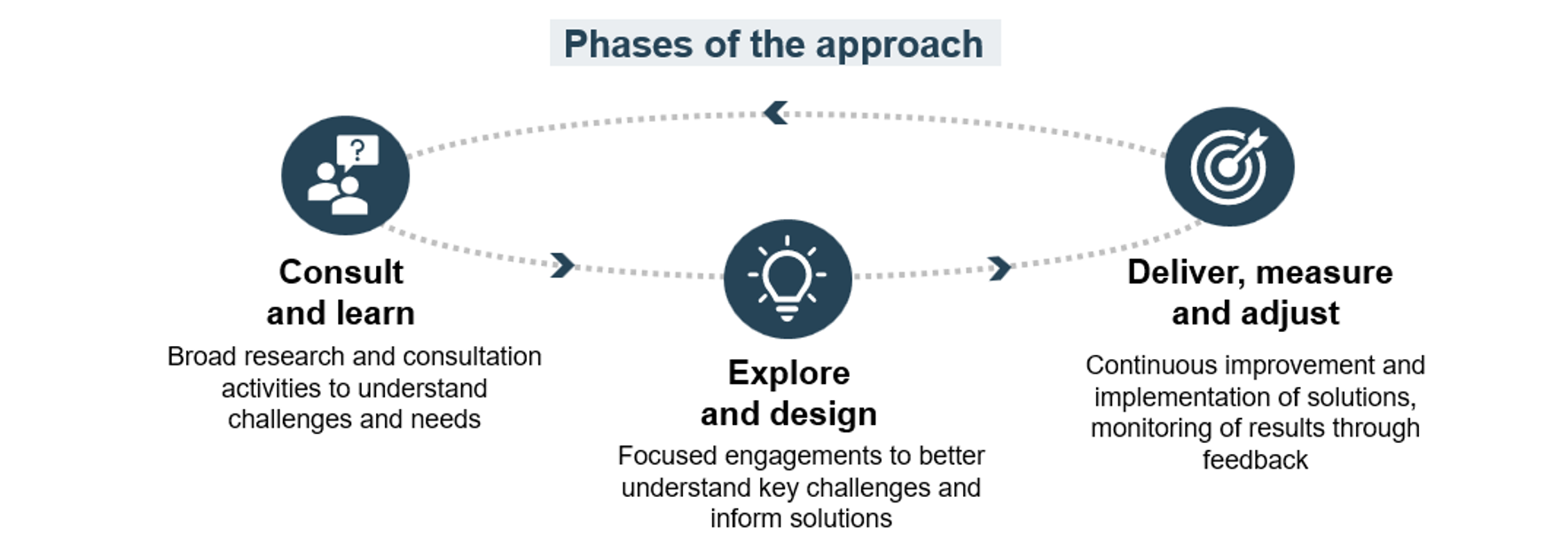
Image description
The infographic illustrates the phases of the approach, which includes three sequential stages, each represented by an icon and accompanied by descriptive text.
1. Consult and learn:
- Icon: Two people with a question mark above them, symbolizing discussion and inquiry.
- Description: Broad research and consultation activities to understand challenges and needs.
2. Explore and design:
- Icon: A light bulb, symbolizing ideation and innovation.
- Description: Focused engagements to better understand key challenges and inform solutions.
3. Deliver, measure, and adjust:
- Icon: A target with an arrow hitting the center, symbolizing goal achievement.
- Description: Implementation of solutions, monitoring of results through feedback, and continuous improvement.
The stages are connected by a dotted arrow that flows in a circular manner, indicating an iterative process. The flow starts at “Consult and learn,” moves to “Explore and design,” and continues to “Deliver, measure, and adjust,” looping back to the first stage.
Many program and service delivery areas at the CRA conduct engagements on accessibility as they introduce new initiatives and make enhancements to existing programs. These consultations can be with the CRA’s Persons with Disabilities Network or external stakeholders. Some of the participants to our consultations have called for greater consistency in these engagements moving forward. Regular consultation guides initiatives across the Agency, informs the commitments in the plan, and helps embed accessibility from the start.
The CRA also conducts dedicated accessibility consultations each year. From June to July 2025, the CRA held targeted consultations to inform its 2026-2028 Accessibility Plan, which explored both services provided by the CRA and the experiences of CRA employees. The consultations took place through virtual group discussion sessions. There was a total of 35 participants who either identified as a person with a disability or had an advocacy or support role.
The CRA invited 49 community organizations supporting persons with disabilities to participate, of which 9 sent representatives. The CRA also invited all members of the Minister’s Disability Advisory Committee and representatives of the CRA’s Persons with Disabilities Network, as identified by the network, to participate in sessions. The number of participants met recommended standards for qualitative research, ensuring a diversity of perspectives. Many participants also shared feedback on behalf of others during the consultations.
4.1 Factors influencing accessibility
Participants shared a range of experiences that reflect the complex realities of interacting with the CRA as a person with a disability. They expressed that there is a general lack of understanding of the challenges and broader experience that they encounter, as well as how multiple factors can intensify barriers.
For example, several participants shared that:
- periods of reduced capacity, income changes, and health challenges can affect how and when tasks are completed
- navigating administrative processes can require a lot of energy, leaving some individuals with less capacity to focus on everyday responsibilities
- having lower income limits access to support, technology and essential resources
- certain client groups, such as Indigenous peoples, newcomers, and those living in remote or rural areas, can face additional challenges due to intersecting barriers
Overall, participants expressed the need for more inclusive, flexible and client-centred service. Their recommendations offer valuable insights on how the CRA can improve services to better meet the needs of persons with disabilities.
4.2 External consultations
This section reflects input from representatives of community organizations that support persons with disabilities and members of the CRA’s Disability Advisory Committee.
Relevant feedback from the CRA service consultations 2024 is also included in this analysis. While these consultations focused broadly on service experiences and were not held specifically to inform the plan, 18% of the 2,369 participants self-identified as having a disability. Their input also led to important accessibility-related insights.
4.2.1 Contacting the CRA
One of the most common challenges raised by participants was reaching the CRA by phone. Long wait times, lack of callback options, and the inability to book appointments with the CRA made it difficult for them to get timely support. Wait times can also cause greater discomfort and distress for persons with mobility and neurological disabilities.
Several representatives from community organizations highlighted that they often have limited appointment time with clients. When the CRA is unreachable, their clients must return later, which can delay tasks and reduce the organization’s capacity to help more individuals.
As well, many participants valued the ability to interact directly with a CRA agent to resolve issues. They highlighted the limited availability of in-person options as a barrier and expressed the need for more communication options. This included a callback feature, appointment scheduling, video calls, email communications, expanded in-person options, and assisted support services.
4.2.2 Disability awareness and accommodation
Some participants felt that communicating with the CRA was challenging. For example, individuals may need more time to process information and respond or may find it hard to communicate their needs. This was especially true for those with less visible or widely understood disabilities, such as cognitive, deafblindness, episodic or neurodivergent disabilities.
In some cases, CRA agents were perceived as lacking the patience, understanding or disability awareness needed to support clients who required more time or help. Some of the consultation participants said they had to frequently explain their disability-related needs, which was both time consuming and draining. Others also shared that there is a sense of fear towards the CRA.
To create a more empathetic experience, some participants recommended the following:
- allowing clients to store their accommodation preferences in their files to avoid explaining their needs each time
- providing disability awareness training to help CRA staff improve communication and support
- including prompts at key moments during interactions, such as asking “how can I make this call more accessible for you?”
4.2.3 Identity verification and authorization
The phone identity verification process was mentioned several times as being a source of stress. Some individuals with cognitive or memory challenges had difficulty recalling information, following steps, and responding promptly. Some participants who support a person with a disability shared that they sensed mistrust in their calls with CRA agents, who refused to speak with them unless authorizations were in place.
Some participants also shared the following challenges:
- One-time authorization was described as limiting because individuals with a disability must first validate their identity on their own and then grant permission. Individuals may experience barriers related to speech, comprehension or communication, which can make this task difficult without support.
- Formal authorization was noted as burdensome, especially for community organizations that may only provide support for a single interaction or that help multiple individuals daily.
Many participants highlighted the critical role that community organizations and support workers play in enabling access to CRA services. They suggested allowing trusted community organizations to be pre-authorized on behalf of clients, supported by a dedicated phone line to reduce delays. Others also suggested improving awareness about the authorization processes available for ongoing caregivers, including tools like Represent a Client.
4.2.4 Digital access and inclusion
Some consultation participants had difficulties using digital services, particularly when navigating CRA web pages and accessing online accounts. Common challenges included complex registration processes, sign-in issues, and trouble navigating documents and forms.
Several participants expressed concern about the growing focus on digital services, noting major barriers for individuals who lack Internet access, digital literacy, or the ability to use online platforms. For example, Parkinson’s disease can hinder hand coordination, making digital navigation difficult. Others shared frustration with being directed to digital services, knowing they needed other forms of support. Also, assistive technology, such as keyboard or speech options, was mentioned by some as being expensive or hard to learn.
These challenges highlight the need for alternative channels, including expanded in-person services or paper-based options. For those who use digital services, participants stressed the need for accessible and alternative formats, such as videos in sign language, and ensuring that CRA web pages follow accessibility guidelines. Participants strongly encouraged the continued use of plain language to make information easier to understand.
4.2.5 Disability tax credit
Many participants spoke about the disability tax credit (DTC) during the sessions. These participants mentioned that the DTC application forms are lengthy, unclear and lack guidance, often requiring support or discouraging individuals from applying altogether. They also found the eligibility criteria confusing and noted that it does not reflect all disabilities, particularly episodic or non-visible disabilities.
The DTC process was often described as being overwhelming and difficult to navigate alone. Some applicants turn to tax promoters or consultants to help complete DTC applications; these services can be costly, sometimes taking more than a third of the applicant’s refund. Several participants expressed the need for dedicated CRA support to help individuals understand eligibility criteria, prepare forms and documents, and manage follow-up communications. They also raised concerns about the need to reapply for the credit, especially in cases of lifelong disabilities.
For participants who were approved for the DTC, they were often unaware that the CRA letter is official proof of DTC status and must be kept. Other participants experienced delays or denied applications despite having what they felt to be clear disabilities. They expressed frustration with the lack of information and complex language in decision letters. Some participants also mentioned that CRA letters do not clearly explain the reasons for denial, which makes it hard to support an appeal.
Some individuals highlighted challenges with the requirement for medical professionals to certify the disability and the limited recognition of other qualified professionals. While doctors can diagnose medical conditions, they may not be familiar with evaluating how those conditions affect daily life or with the DTC eligibility criteria. Some participants noted that some medical professionals were hesitant to support applications or refused to complete the forms altogether. However, one participant shared a positive example where a doctor was able to gain a better understanding of their patient’s situation with support from a social worker. This helped the patient successfully access the DTC.
Finally, the cost of obtaining medical documentation for the DTC was cited as a barrier. Some participants reported having to pay significant fees for doctors to complete the required forms or for assessments, such as autism diagnoses. They noted that these amounts are unaffordable for many individuals and expressed growing concern, as the DTC is becoming a prerequisite for other benefits and funding supports.
To reduce burden, participants recommended improving guidance and resources, communication and transparency, and support throughout the process.
4.3 Internal consultations
This section summarizes findings from the consultations with CRA employees belonging to the Persons with Disabilities Network.
4.3.1 Navigating accommodation processes
Many participants described the accommodation process as complex, experiencing multiple layers of approval, significant delays, and extensive requirements for medical documents. The lengthy assessment forms were seen as burdensome for both employees and healthcare providers. Frustration with having to repeatedly disclose one’s disability was also expressed, especially when changing roles or managers.
As well, some individuals felt that current processes reflect an outdated view of disability that emphasizes limitations rather than identifying supports for full participation in the workplace. They added that there is a general lack of understanding of cognitive and neurological disabilities, which can make communicating needs more difficult.
Participants recommended the following improvements:
- adopt the digital GC Workplace Accessibility Passport to reduce the need for repeated disclosure
- allow direct managers to approve requests and remove the need for medical notes
- implement ways to provide feedback on the accommodation process
4.3.2 Fostering awareness and inclusion
Many described a lack of awareness around disability, which contributes to stigma and leads to missed opportunities for support. They stressed the need for a cultural shift that promotes dignity, equity and meaningful participation for all employees.
Several participants recommended mandatory accessibility training for all employees, with additional courses for managers and executives focused on inclusive leadership and the duty to accommodate. They also called for awareness campaigns and activities that normalize conversations about disability and help reduce stigma across the organization.
As well, some participants noted that some staffing practices, such as stress-based testing scenarios, are not designed for persons with disabilities and can create disadvantages. They recommended modernizing assessment tools, consistently offering and providing accommodations, and designing staffing processes to reflect diverse needs.
4.3.3 Digital and physical barriers
Digital and physical accessibility are key concerns. Some participants noted that many digital tools and platforms are not accessible, and limited access to assistive technology also restricts employees’ ability to work effectively. Physical barriers in buildings, including the absence of automatic door openers, inaccessible key pass readers, and inadequate signage were ongoing challenges.
In response, the following improvements were raised:
- transitioning to more accessible formats for documents and training materials
- conducting accessibility testing early on to prevent products or services from being developed in an inaccessible format
- enhancing the accessibility of buildings
4.3.4 Building a more accessible CRA
Several participants shared concerns that the significant changes taking place in the broader operating environment, including efforts to refocus government spending, are slowing progress towards the CRA’s goal of becoming fully accessible. They expressed frustration that funding constraints have reduced access to assistive technology and training and highlighted the need for sustained investment in accessibility.
Some participants recommended setting up a dedicated area within the CRA to oversee accessibility initiatives, ensure consistent directives, and provide greater visibility on ongoing improvements. They also stressed the importance of listening to and learning from persons with disabilities, as their lived experience is essential to designing inclusive systems and avoiding unintended barriers. They recommended ensuring that persons with disabilities are continuously involved in discussions about accessibility planning and related policies.
4.4 Additional research completed in 2024 related to accessibility
This section summarizes findings from other research and consultations that were done over the past year with CRA clients who identified as persons with disabilities. While this work was not specifically undertaken to inform the plan, these lived experiences were shared with the CRA and were very helpful in identifying barriers.
4.4.1 My Account portal exit survey
The CRA continues to collect feedback through the My Account exit survey to better understand the experiences and needs of users who self-identify as persons with disabilities. According to the 2025 survey data, those who identified as persons with disabilities reported similar levels of overall satisfaction with My Account compared to those who did not identify as being a person with a disability (83% vs. 87%).
The specific issues that respondents with disabilities reported encountering include:
- problems logging in or verifying their identity on the portal
- difficulty navigating the layout and finding information
- feelings of anxiety and being overwhelmed by too much information
- challenges with reading, processing information and understanding instructions
- limited accessibility features, like contrast options and the ability to enlarge text
- difficulty understanding complex processes and requirements
- technical problems, such as slow loading times and system errors
- a lack of accessible support options when they need help
To help address these barriers, survey respondents suggested that the CRA:
- improve the user interface to make navigation easier and clearer
- provide clearer updates about application statuses
- provide better tools to help users track their application status
- enhance accessibility features, including high-contrast options, ability to enlarge font and simpler language
- expand support options to make it easier to get help from the CRA
- streamline processes for specific applications, like the disability tax credit
5.0 Feedback
Feedback is an important way for the CRA to learn, assess and improve the accessibility of the programs and services it offers. Through accessibility feedback, we can adapt to clients’ concerns and provide the best possible experiences for CRA clients and employees with disabilities.
In this context, accessibility feedback refers to input shared by clients or employees through established accessibility feedback channels regarding their experiences using CRA products, services, or spaces. The CRA receives accessibility feedback both internally and externally, including from clients, employees, members of Parliament, and non-profit organizations. These diverse perspectives and lived experiences give us valuable insights that guide our efforts to identify, address, and eliminate accessibility barriers.
We review feedback on a case-by-case basis. After we review the feedback, we send it to the appropriate subject matter experts within the relevant program areas to address and resolve the issues efficiently.
5.1 Feedback received from the general public
Our Service Feedback Program acts as the primary method for the public to share accessibility feedback on our programs and services. Between October 1, 2024, and September 30, 2025, we received 462 cases related to accessibility through this program. The feedback we collect gives us practical insight to help eliminate accessibility barriers our clients face.
Figure 1: Accessibility cases by delivery method, from October 1, 2024 to September 30, 2025. The data used in accessibility reporting incorporates active service feedback cases. Please note that figures and statistics are subject to change and may vary as files come to resolution.
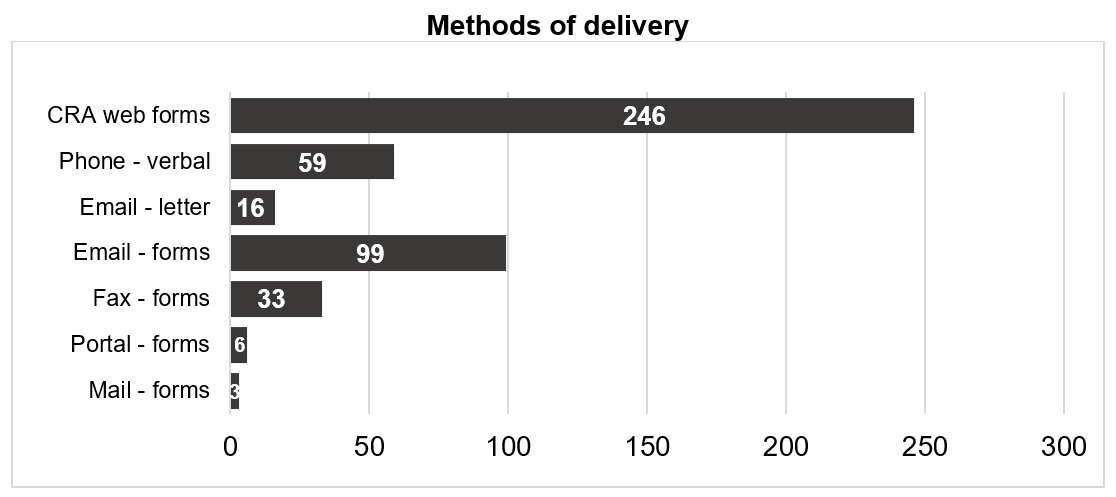
Image description
Figure 1: Accessibility cases by delivery method, from October 1, 2024 to September 30, 2025
- CRA web forms: 246
- Phone – verbal: 59
- Email – letter: 16
- Email – forms: 99
- Fax – forms: 33
- Portal – forms: 6
- Mail – forms: 3
Figure 2: Accessibility cases by barrier type, from October 1, 2024 to September 30, 2025. The data used in accessibility reporting incorporates active service feedback cases. Please note that figures and statistics are subject to change and may vary as files come to resolution.
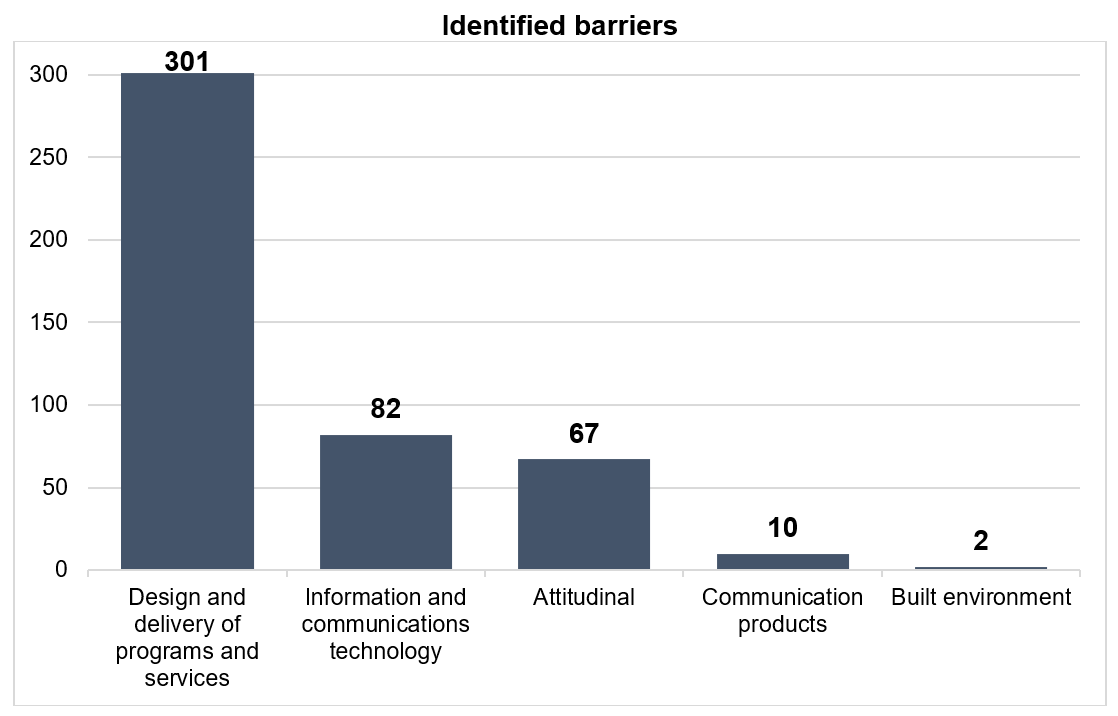
Image description
Figure 2: Accessibility cases by barrier type, from October 1, 2024, to September 30, 2025
- Barriers related to the design and delivery of programs and services: 301
- Barriers related to information and communications technology: 82
- Attitudinal barriers: 67
- Barriers related to communication products: 10
- Barriers related to the built environment: 2
Descriptions of barrier types
- Design and delivery of programs and services: Barriers related to the design and delivery of programs and services, whether internal or external, include policies, procedures, and practices that prevent individuals from participating fully in a situation.
- Information and communications technology: These barriers include gaps in functionality, usability, or robustness of CRA information technology (IT) solutions. The digital environment must be accessible and usable by all CRA employees and clients.
- Attitudinal: Attitudinal barriers are behaviours, perceptions, and assumptions that can be perceived as being discriminatory.
- Communications: These barriers include instances where published material is unclear, unusable, outdated, misleading or incompatible with assistive technology. Published material includes web pages, letters and forms.
- Built environment: The built environment refers to all CRA-occupied buildings. Built environment barriers relate to how employees use physical workspaces and how the public accesses these buildings when needed.
- Other barriers: This category is for barriers that cannot be categorized using the previous options.
When analyzing this year’s accessibility feedback cases, three overarching themes emerged, and these themes align closely with those in the CRA’s consultations.
First, contacting and communicating with the CRA is still difficult for many clients. They have reported experiencing long wait times when attempting to reach call centre agents and are making multiple calls to resolve their issues. Some clients also reported being redirected and receiving inaccurate information, which makes it difficult for them to complete their intended tasks. Others reported a lack of empathy that compounds the difficulties they face when contacting the CRA.
Some clients reported requiring multiple calls to complete their intended task because they needed to follow up on their files or because there was missing or unclear information during their previous call. When they were making multiple calls, different CRA call centre agents could give them conflicting information, leading to clients having to determine which advice truly applied to their specific case.
Some clients also shared that they often find it difficult to understand CRA correspondence and communications. For example, some clients shared that they have difficulty understanding CRA programs, which has led to unclaimed benefits they may be eligible for, delays in processing and overall confusion about their tax obligations.
Second, clients have shared that they experienced difficulties applying for benefits and credits because of unclear instructions or processes. Feedback on the disability tax credit (DTC) revealed challenges navigating the application process, completing forms, and transferring credits to eligible family members. Clients also reported delays in the CRA’s processing of DTC applications. This is especially an issue when previous years’ tax returns require reassessment which can lead to substantial delays, often prolonging the overall timeline. Clients highlighted the need to improve communication about DTC applications, including giving clear reasons why an application is denied and explaining how to address the causes of the denial.
Third, clients continue to ask for more options for accessing CRA accounts and services, authenticating their identity and authorizing representatives. Certain clients have reported having difficulties gaining or regaining access to their accounts following failed attempts to pass security verification or authorize their representatives. In addition, clients without Internet access have trouble interacting with the CRA.
Clients expressed the need to account for instances where support persons are assisting individuals living in separate locations, as well as when support persons are helping them regain access to My Account. There are also instances where clients are locked out because they are using a support person to translate or help them understand information, which the CRA can treat as suspicious. This creates a situation where the account owner must:
- reauthenticate themself online, which adds stress because they must complete this process by themself, despite requiring support
- end the call, thereby not receiving what they need from the CRA
- attempt to carry out the call on their own which leads to misunderstanding, anxiety and confusion
Clients have suggested that the CRA allow support persons to be remote so they can help clients more effectively understand and fulfill their tax obligations while still respecting security protocol. Clients also suggested that the CRA offer a variety of ways to access accounts and services that don’t rely on technology.
On a positive note, some clients shared feedback thanking CRA agents who have gone above and beyond to assist clients in completing their tasks. These clients were happy to have an agent who was compassionate, patient, knowledgeable, dedicated to delivering exceptional services while understanding their accessibility needs. Clients shared that these agents took the time to understand them, then tailored their delivery to best guide them through the process, clarify misunderstandings and resolve issues.
5.2 Feedback received from CRA employees
The CRA also gathers feedback directly from employees with disabilities. CRA employees can provide their feedback informally to their management teams, or through a recently implemented channel to share feedback directly with the commissioners. This input is essential to making the CRA is a fully accessible workplace. A review of the information from the various internal feedback mechanisms has uncovered the following needs.
The CRA has received feedback that it needs a more streamlined accommodations process that offers personalized supports focused on eliminating accessibility barriers. Employees have reported that there is too much red tape, no personalized support, and that the process is overly complicated, leading some employees to avoid seeking accommodations altogether. Others suggested that accommodation requests be processed in three categories: short-term, long-term, and permanent. They also suggested that the CRA organize and handle requests by the level of priority so the CRA can resolve them without a lengthy approval process.
Some employees have also stressed that the CRA needs centralized guidance on accessibility to better help employees understand how to apply accessibility principles within their specific roles and responsibilities. They add that not having this in place has led to inconsistencies across the CRA on how accessibility is applied, making it difficult for some teams to know if they are getting it right. It has also led to employees having to rely on self-directed research to learn how to apply accessibility principles to their daily duties.
The CRA needs fully accessible spaces and facilities to make sure all persons, regardless of ability, can safely use, occupy, and navigate them. Some employees said there is a lack of all-access washrooms, as well as some missing tactile signs for washrooms in CRA spaces. Employees suggested that the CRA address these gaps, as well as install quiet spaces and variable lighting spaces to address sound and light sensitivities.
It was also noted that the CRA needs a broader range of readily accessible software, hardware, and tools with consideration for specific operational contexts to help employees with disabilities fully perform their duties. Employees continue to request hands-on training for their adaptive technology products. To address their needs, they requested that the CRA expand the peer-support groups and establish a mechanism through which they can get training. Employees have also expressed difficulties with font readability in correspondence generated by certain systems and applications, highlighting a need for internal communications to be properly formatted for adaptive technology readers.
Finally, some employees have raised that the CRA needs more accessibility training and learning opportunities to increase awareness about accessibility in the workplace. They suggested that the CRA promote existing accessibility resources, increase available educational materials, and create more opportunities for open dialogue around accessibility.
6.0 Areas under the Accessible Canada Act
This section specifies the barriers that the CRA’s 2026–2028 Accessibility Plan is targeting and its planned actions to address them. While the plan highlights our priority actions to address accessibility barriers, we are also working to help make the CRA barrier-free through ongoing day-to-day actions.
As actions are completed, the CRA will consult persons with disabilities to re-evaluate how well we addressed the barriers identified in this plan.
6.1 Employment
Actions under the Employment section will improve how we recruit, retain, and promote persons with visible and non-visible disabilities.
Barrier 1: CRA managers and supervisors have a limited understanding of what accessibility means in a staffing context, often resulting in staffing processes that are not accessible for persons with disabilities.
Action 1: We will include additional accessibility considerations into the cyclical review of the staffing corporate policy instruments (CPI). We will also develop learning content to make managers aware of accessibility responsibilities that are introduced within the staffing corporate policy instruments. This means:
- adding additional accessibility content into the staffing CPIs by the cyclical review deadline of September 2027
- delivering bilingual learning content to managers in all branches and regions by March 31, 2028
Timeline: March 2028
Barrier 2: The process to accommodate for injury, illness, medical condition, or disability is complex and lengthy. There is a lack of awareness of the support available for employees and their managers during the accommodation process.
Action 2: We will become more efficient through our workplace accommodation support process and put methods in place to reduce response times for the workplace accommodations processes. This means:
- reviewing the Better Accommodation Project material as well as our workplace accommodations process to identify efficiencies
- reducing response times for accommodation requests
- setting up methods to measure the performance of the revised process to inform future changes for continued improvements, as necessary
Timeline: March 2028
Action 3: We will continue to encourage the use of the Word version of the GC Workplace Accessibility Passport. We will also assess key considerations to make a decision regarding onboarding the CRA onto the newly launched digital version on Treasury Board Secretariat’s Application Portal (TAP).
Timeline: December 2026
Barrier 3: Visible and invisible disabilities can be misunderstood, stigmatized, and inconsistently recognized, which can lead to biases.
Action 4: To normalize conversations about disability and to reduce stigma, we will invite leaders to self-identify as having disabilities and to share their stories with employees to promote inclusivity. We will use awareness campaigns and organized events related to commemorative dates, such as the Disability Employment Awareness Month event. This means:
- identifying leaders willing to share stories about their disabilities to promote inclusivity
- tracking the impact and progress through indicators related to inclusion and a sense of belonging for persons with disabilities in the equity, diversity and inclusion (EDI) Performance Measurement Framework
Timeline: March 2028
Barrier 4: Policy changes, such as the new bilingual CBC language requirement for positions supervising employees in bilingual regions, can pose barriers for persons with disabilities and hinder their career advancement.
Action 5: We will educate resourcing advisors on the medical grounds exemption to meet the language requirements for permanent appointments of persons with disabilities. We will increase the awareness of employees and managers about the availability of accessible second language learning tools. We will help employees and managers request accommodations for the second official language training (SOLT) and second language evaluation (SLE). This means:
- developing products to raise awareness about the medical grounds exemption for persons with disabilities
- promoting accessible second language learning tools and accommodations for SOLT and SLE
- monitoring exposure to awareness products
Timeline: March 2027
Action 6: We will seek fair, accessible and inclusive standardized assessments during staffing processes by working with assessment providers and the Persons with Disabilities Network (PWDN) to better understand accessibility barriers and possible improvements. This means:
- reviewing standardized assessments for accessibility and inclusiveness by working with assessment providers to address or reduce barriers where identified
- consulting the PWDN to get a better understanding of the barriers that persons with disabilities face during assessments
- updating guidance on assessment accommodations within staffing processes to better reflect the social model, instead of the medical model
Timeline: December 2028
6.2 The built environment
The built environment refers to all CRA-occupied buildings and includes how employees use physical workspaces and how the public accesses these buildings.
Barrier 5: Some office spaces do not adequately support all employee accommodation needs.
Action 7: We will strengthen accommodation solutions that reduce physical, auditory, and visual barriers. We will conduct a pilot for enhanced accommodation solutions, and deliver targeted strategies to address identified accessibility barriers. We will also evaluate and report on the effectiveness of the implemented strategies in improving accessibility. To measure our progress, we will track:
- the average ratio of daily users and total workstations in enhanced accommodation zones
- the percentage of e-Concierge and Real Property Service Agreement (RPSA) documents converted to accessible formats
- the number of adjustable desks from one year to the next
Timeline: Identify accommodation solutions and strategies by December 2027 and complete this work by December 2028.
Barrier 6: Signage is insufficient to help with wayfinding in CRA spaces.
Action 8: We will make sure that there is braille signage to identify all washrooms in all CRA spaces. We will also explore the feasibility of introducing new technologies to help with wayfinding in CRA spaces. These technologies include quick response (QR) codes, near-field communication (NFC) tags and radio frequency identification (RFID). We are committed to:
- installing 86 braille signs across CRA buildings
- conducting a feasibility report that outlines the CRA’s position on the use of QR codes, NFC tags, and RFID technologies as wayfinding solutions within CRA spaces
Timeline: Install braille signage by March 2026 and complete the feasibility report by December 2028.
6.3 Information and communication technologies
The information and communication technologies (ICT) section is working to create a barrier-free digital environment that all CRA employees and clients can access and use.
Barrier 7: Employee and public-facing dynamic ICT solutions are not accessible to all users.
Action 9: We will add project gating frameworks for accessibility into information technology (IT) solution repositories, update the software certification process to include accessibility assessments, develop accessibility statement with guidelines for IT solutions, and make sure we include persons with disabilities in the process whenever possible.
Timeline: December 2028
Action 10: We will add accessibility automated testing rules in IT development (DevSecOps pipelines) to determine the CRA’s baseline accessibility issues. Once established, we will create regular compliance reports on accessibility rules for projects and share findings with project owners and senior leadership. We will track the:
- percentage of projects that we have identified as accessibility rule violations
- reduction in accessibility rule violations that DevSecOps pipelines find
- percentage of accessibility rule violations resolved within the recommended timelines based on issue importance
Timeline: Add accessibility testing rules in the development pipelines by December 2026. Make compliance reports by December 2027.
Action 11: We will increase the use of existing accessibility testing tools available at the CRA. We will deliver training sessions about accessibility testing with partners (Shared Services Canada, Canada School of Public Service, and third-party training platforms). We will also implement accessibility development training programs through partnerships, including with the Accessibility, Accommodation and Adaptive Computer Technology (AAACT) program. We will track progress through the:
- percentage of IT employees who have actively requested and use accessibility testing tools
- percentage of IT employees who complete accessibility training courses through the various avenues
Timeline: Increase the use of existing accessibility testing tools by December 2026. Deliver accessibility awareness and testing training sessions by December 2028.
Action 12: We will work with Shared Services Canada’s AAACT program to strengthen adaptive technology offerings, including the Lending Library and training programs. We will also work with the AAACT to explore more enhancements to the Workplace Accommodations Process, focusing on improved service delivery. This means:
- tracking the number of CRA employees using various AAACT services
- tracking the number of CRA employees reporting satisfaction with AAACT services
Timeline: Work with the AAACT to enhance adaptive technology offerings by December 2026 and explore enhancements to the workplace accommodations process by December 2027.
6.4 Communications
Communications, other than ICT, focuses on applying plain language, mailing letters, and communicating with the public.
Barrier 8: Some internal and public communications materials are not written in plain language or lack accessible options.
Action 13: We will use plain language in public communications by prioritizing highly accessed content and services, such as tax and benefits publications, in our plain language review of communications products. We will track our progress by measuring the:
- percentage of internal and public communications we have reviewed and revised for plain language
- readability scores (for example, Flesch-Kincaid) of revised communications
- clarity and accessibility of communications for both internal staff and the public
Timeline: December 2028
Barrier 9: Some CRA forms and web pages are inaccessible, making it difficult for persons with disabilities to navigate the CRA’s website and complete tax forms.
Action 14: We will make sure our commonly used pages and forms are user-friendly for persons with disabilities. We will do this by improving readability, simplifying navigation, and enhancing compatibility with assistive technologies, such as screen readers and keyboard-only navigation. We will measure the:
- percentage of commonly used forms we review and update to meet accessibility standards
- reduction in reported accessibility issues related to form usability (for example, screen reader compatibility)
- satisfaction scores from accessibility testing or feedback surveys
- number of accessibility and usability improvements we implemented, such as layout adjustments, simplified navigation and enhanced compatibility with assistive technologies
Timeline: December 2028
Barrier 10: Not all internal documents are accessible.
Action 15: We will continue to improve the accessibility of our internal documents, such as all-staff messages, presentation documents, locally developed training, SharePoint communications site content and meeting materials. We will take steps to make sure employees are trained using the available resources on how to create accessible documents. This means:
- taking steps to verify internal documents do not have accessibility barriers before distribution or use
- analyzing employee feedback to determine the ongoing impact of the barrier
Timeline: December 2028
6.5 The procurement of goods, services, and facilities
The procurement of goods, services, and facilities refers to how the CRA acquires and purchases goods, services, or other items.
Barrier 11: There is limited knowledge when it comes to accessibility in CRA procurements and contracts, leading to instances where accessibility considerations are not fully applied.
Action 16: We will implement targeted messaging and awareness campaigns to promote the new Directive on Corporate Social Responsibility in Procurement and Asset Management. This new directive includes roles and responsibilities designed to integrate accessibility in planned procurements within CRA contracts for goods and services. We will measure progress by tracking the:
- number of participants who attended awareness sessions
- percentage of participants who attended awareness sessions and report an increase in confidence and comfort in applying accessibility considerations in planned procurements
- number of employee interactions (user clicks and views) with promotional material
Timeline: November 2028
Action 17: We will develop and implement a formal and mandatory review process for specific planned procurements to make sure they include accessibility considerations. As part of this action, we will identify the specific parameters and criteria that will determine which procurements are subject to this mandatory review. We will measure progress by tracking the:
- percentage of contracts reviewed as part of the mandatory review process
- percentage of reviewed procurements that have accessibility criteria successfully integrated following the review
- percentage increase in awarded contracts that include accessibility requirements
Timeline: Share the new mandatory review process and its scope with contracting authorities by August 2026 and start reviews in September 2026.
We will measure and report on progress starting one year after the initial implementation, in December 2027 and December 2028.
Action 18: We will set up a structured consultation process centred on the “Nothing Without Us” principle to enhance inclusivity by using direct feedback from those with lived experience. Central to this, we will collaborate with the CRA’s Persons with Disabilities Network (PWDN) to review and propose additional accessibility considerations for selected procurements. This includes consulting the PWDN on how to define parameters for selecting contracts that will benefit most from their insights and review. We will:
- measure the percentage of procurements that use feedback from PWDN consultations
- gather feedback from the PWDN on the effectiveness of the consultation process
Timeline: March 2028
Barrier 12: There is a lack of oversight to make sure that procured ICT products are truly accessible.
Action 19: We will work with colleagues at Shared Services Canada’s AAACT Program to find ways to make sure that we check the accuracy and the completeness of accessibility roadmaps and accessibility conformance reports from vendors in ICT procurement. As a result, we will:
- measure the percentage of vendor-provided conformance reports and associated roadmaps we found to be accurate and complete
- improve the integrity and reliability of the procurement process to make sure vendor accessibility claims are valid, which will make sure we meet established ICT accessibility standards
Timeline: March 2027
6.6 The design and delivery of programs and services
The design and delivery of internal and external programs and services must be fully accessible to all.
Barrier 13: The disability tax credit (DTC) application is complex, and there is no formal training for medical practitioners on how to complete the forms.
Action 20: We will increase healthcare providers’ awareness of how to complete DTC forms and how eligibility assessments work. We will do so by delivering information sessions through their organizations and associations, so they are better equipped to complete DTC application forms. We will also use medical practitioners’ feedback to improve the DTC process. We will measure the improvement of the DTC application process by:
- hosting training information sessions beginning in Spring 2026 and tracking feedback shared with the CRA evaluating the session
Timeline: December 2028
Barrier 14: Some contact centre service representatives lack accessibility awareness and empathy training.
Action 21: We will provide accessibility awareness and empathy training for all contact centre service representatives, so they are better equipped to provide accessible services to clients. We will:
- enhance the existing onboarding training for new staff to include accessibility awareness and empathy training
- launch a new accessibility awareness and empathy training for existing service representatives that will be included as part of their professional development training
- require all contact centre service representatives to take a supplementary awareness and empathy training in addition to the existing Canada School of Public Service’s course, Addressing Disability Inclusion and Barriers to Accessibility
Timeline: December 2028
Barrier 15: Not all CRA learning products are accessible.
Action 22: We will provide quality accessible tools and resources for those creating learning products and for those accessing learning products. This means:
- reporting on learning-related accessibility feedback and the number of inquiries we get and resolve annually
Timeline: December 2028
Barrier 16: Online platforms and services are not fully accessible. This creates technological barriers preventing persons with disabilities from accessing CRA programs and services.
Action 23: We will improve the tracking, reporting and implementation systems and processes to regularly track accessibility issues related to our service portals. We will summarize the feedback we get from various channels and the actions we take to resolve them. We will report on:
- the percentage of services meeting accessibility standards
- user satisfaction scores
Timeline: December 2028
Action 24: We will identify self-service improvements to the chatbot by:
- addressing identified accessibility gaps and improving the chatbot functions where applicable
- conducting semi-annual check-ins to make sure it is meeting the most recent accessibility standards
- creating monthly dashboards to review survey feedback for any accessibility-related issues or comments
Timeline: December 2028
Action 25: We will make sure the submit documents service meets accessibility standards. We will update its functions to make the service easier to use, including revising text for plain language and consistency. To mark progress, we will:
- track the number of complaints about accessibility issues related to submit documents service
- track the percentage of users with disabilities who report that they are able to easily submit their documents to the CRA
Timeline: October 2026
Barrier 17: Persons with disabilities can face challenges when trying to independently file tax returns using alternate formats. The existing system relies heavily on PDF forms, which often lack the flexibility and accessibility features critical to users with diverse needs.
Action 26: We will develop a tool that will help persons with disabilities independently complete and submit tax forms in alternate formats. The tools will reduce reliance on static PDFs and offer flexible, user-centred solutions that are compatible with assistive technologies.
Persons with disabilities can request tax forms and correspondence in alternate formats (such as braille, audio and large print), but they are often unable to file their tax returns using these formats. To address this gap, we will do the following:
- Phase 1: Research and explore accessible options. Then we will design and build tools that address the needs of persons with disabilities when they complete and submit tax forms using alternate formats.
- Phase 2: Test solutions in collaboration with persons with disabilities to make sure the solutions are usable and effective.
- Phase 3: Revise and refine tools based on user feedback and accessibility standards.
To measure success, we will track the:
- number of tools (such as enhanced PDFs, web-based forms and voice-to-text interfaces) we developed and tested for alternate format tax filing
- percentage of usability issues we resolved based on feedback from persons with disabilities during testing phases
- compliance rate with recognized accessibility standards
- user satisfaction scores from accessibility testing and pilot feedback
Timeline: December 2028
Action 27: We will review PDF forms to make sure they are available in multiple accessible formats, including digital audio, electronic text, braille and large print. We will make sure that individuals with disabilities have equitable access to forms. We will report on:
- the percentage of PDF forms we converted
- the percentage of PDF forms that are available in accessible formats
Timeline: December 2028
Barrier 18: There is a need for clearer guidance on how to effectively integrate accessibility into the planning, decision-making and service delivery processes.
Action 28: We will introduce a CRA accessibility policy in March 2026, which will outline roles, responsibilities and expectations for all CRA employees in delivering the Accessible Canada Act. We will follow with an accessibility directive, which we will write by December 2028
Timeline: December 2028
6.7 Transportation
Transportation at the CRA mainly refers to the vehicles it owns, leases or rents that run between its offices, tax centres and other buildings. These vehicles are known as fleet. Examples of a CRA fleet are the trucks that the CRA uses to deliver mail between tax centres and offices.
Taking stock of the Chief Accessibility Officer’s 2024 report titled Getting to Work: Accessible Employment in Canada, the CRA recognizes that the various priority areas of accessibility are connected. The CRA’s mandate and authority limit its ability to contribute to a more accessible transportation infrastructure across Canada. However, we recognize that the lack of reliable, accessible transportation options can negatively affect the CRA’s workforce.
As a result, the CRA has reviewed its current approach to workplace accommodations. It has made changes to simplify and speed up its processes to help remove barriers more efficiently and effectively for its employees. Managers and supervisors are encouraged to make accommodations decisions at the lowest possible level and to work with employees to find effective solutions.
If an employee has limitations and restrictions related to their commute to work due to an injury, illness, medical condition, or disability, the CRA will consider workplace adjustments that help them do their job. These adjustments could include:
- allowing the employee to work from a location closer to home
- allowing flexible or reduced work hours
- considering alternate job options
- providing part-time or full-time teleworking arrangements
The CRA will continue to proactively find and remove the new barriers that are within its control to promote and support a more accessible workplace and inclusive workforce.
Annex A: Status of the 42 action items from the CRA’s 2023–2025 Accessibility Plan
The 2023–2025 Accessibility Plan included 23 barriers and 42 action items. Of the 42 action items, the CRA:
- completed 79% (33) of them
- closed 14% (6) of them
- carried over 7% (3) of them into the 2026–2028 Accessibility Plan
Action 1
Make our recruitment activities more inclusive through various means, including but not limited to participating in recruitment activities targeted for persons with disabilities and raising awareness of CRA representatives in recruiting persons with disabilities.
Status
Completed
Progress update
Consult the 2024 Accessibility Progress Report for the Canada Revenue Agency for a full update.
Action 2
Deliver and update yearly a strategy for recruitment, onboarding, and retention of persons with disabilities.
Status
Completed
Progress update
The CRA has successfully met the Government of Canada’s hiring objective for persons with disabilities over the plan’s three-year period.
At its peak, the CRA significantly exceeded the target of 750 net new hires with a cumulative net new hire total of 1,167 as of March 31, 2024.
The impacts of fiscal constraint measures implemented in the second half of 2024–2025 fiscal year significantly affected overall hiring at the CRA, which was reduced by 66.5%. This impacted the cumulative net hires for the period ending March 31, 2025 with a cumulative total of 619 net new hires of persons with disabilities.
Action 3
Build awareness in employees and managers on supporting accommodations, including but not limited to compliance with accessibility technology requirements, promoting the Informal Conflict Resolution Program and the Employee Assistance Program, and creating efficiencies and reducing wait times for workplace accommodations processes.
Status
Completed
Progress update
The CRA has revised its internal Adaptive Technology Directive, so that roles and responsibilities for employees and supervisors are clearer. The CRA is now working with Shared Services Canada to make sure employees have access to accessibility tools, services and solutions through their Accessibility, Accommodation and Adaptive Computer Technology (AAACT).
While awareness has been raised since 2022, the CRA will continue to strengthen awareness of accommodation measures and how to support employees with disabilities. This includes promoting the CRA’s Workplace Accommodations Support Program and undertaking further action in the
2026–2028 Accessibility Plan.
Action 4
Implement best practices in assessment accommodations, such as promoting the use of inclusive language, accessible documents and universal design in candidate assessment, and expanding guidelines for administering assessment tests to make them more inclusive.
Status
Completed
Progress update
Consult the 2024 Accessibility Progress Report for the Canada Revenue Agency for a full update.
Action 5
Support the use of fair and inclusive standardized assessments during staffing processes through various means, through working with assessment providers and consulting with the Persons with Disabilities Network (PWDN).
Status
Completed
Progress update
We have designed new alternative testing options to help address barriers experienced by those taking standardized assessments and created a resource guide to help candidates using assistive technology (including a step-by-step guide for users of certain tools, such as text-to-speech) during testing sessions.
Action 6
Ensure that accommodations follow employees when they move to a new position.
Status
Completed
Progress update
Consult the 2024 Accessibility Progress Report for the Canada Revenue Agency for a full update.
Action 7
Determine how to integrate the Government of Canada Accessibility Passport in our accommodation process.
Status
Completed
Progress update
We fully integrated the Word version of the Government of Canada Workplace Accessibility Passport into our accommodations process. Employees can choose to use the passport to start the conversation with their supervisor. Employees who join the CRA from another department can choose to share their existing passport with their new CRA supervisor.
If an employee chooses not to use the passport, they can use their individual accommodation plan.
Action 8
Replace compensation-based web forms and processes through the Compensation Digital Modernization Project to ensure full accessibility.
Status
Completed
Progress update
Through the Compensation Digital Modernization Project, we have made all 14 compensation‑based web forms and processes fully accessible for users using adaptive technology in the process.
Action 9
Evaluate the built environment to ensure that they meet accessibility standards, and determine where enhancements can be made, in consultation with the Persons with Disabilities Network as well as Public Services and Procurement Canada.
Status
Completed
Progress update
Consult the 2024 Accessibility Progress Report for the Canada Revenue Agency for a full update.
Action 10
Plan short-and medium-term improvements to the built environment, such as installing automatic door openers, touchless equipment in washrooms, wayfinding systems, sensory elements such as visual alarms, re-evaluating lighting, and reviewing how to improve circulation space in new projects.
Status
Completed
Progress update
Consult the 2024 Accessibility Progress Report for the Canada Revenue Agency for a full update.
Action 11
Upgrade the Agency’s fit-up standards to include accessibility items that are over and above minimum requirements, through consultations with the Persons with Disabilities Network.
Status
Closed
Progress update
We developed and internally shared recommendations on accessibility improvements in March 2024, followed by a concrete action plan in March 2025. The plan identified accessibility improvements that were supposed to be implemented in 2025–2026. However, as the plan was adjusted, it was determined that these elements do not need to be included in the CRA fit-up standards, because they are not over and above the minimum requirements. For that reason, this action has been closed.
The CRA continues to work with Public Services and Procurement Canada to implement the CRA fit-up standards (including automatic door openers, visual alarms, and touchless equipment) and integrate these elements during major projects where possible.
Action 12
Acquire and deploy a new mass-notification system that is fully accessible for all employees, so that employees will not need to rely on colleagues or management to get information and building status.
Status
Closed
Progress update
Following the December 2023 launch of the CRA Notification System (CNS), we tested for accessibility from March 2024 to March 2025.
The tests resulted in 54 accessibility issues being identified, 51 of which have been resolved. We have accommodation measures in place to address the three remaining accessibility issues and continue to work with the vendor to resolve them and maintain the accessibility of the CNS.
Action 13
Review existing applications to identify barriers and work to remove them; get accessibility tools to enable information technology (IT) developers to build accessible information and communication technologies (ICT) solutions; get enterprise-wide automated accessibility testing solutions to better identify barriers in ICT solutions; and, work to make 60% of internal‑facing dynamic ICT accessible to all users by 2025 and making all ICT accessible to all users by December 2029.
Status
Closed
Progress update
We determined that around 20% of internal-facing and 80% of external-facing ICT solutions are accessible and have highlighted opportunities for improving accessibility. We continue to pursue decentralized, CRA-wide, automated accessibility development and testing solutions to support our efforts to improve the accessibility of existing dynamic ICT.
We tested over 70 IT solutions (external- and internal‑facing) over the 2024–2025 fiscal year. We are continuing work to procure, certify, and develop accessibility testing and training tools to improve accessibility and foster a more inclusive digital environment for both the CRA and the public.
Action 14
We will develop and implement an accessibility compliance, auditing, and tracking system to give CRA employees, IT solution owners, and senior management a single point of entry to report, prioritize, and address accessibility barriers found in our IT solutions.
Status
Closed
Progress update
Due to fiscal constraints, there are no longer dedicated resources available for implementing and maintaining this system. For that reason, this action item has been closed.
Action 15
Review accessibility testing and development tool requirements, and update and purchase testing and development tools to ensure we can create accessible ICT.
Status
Completed
Progress update
We continually review accessibility testing and development tools to make sure they are current with industry standards and determine if there are new tools that could better help us identify, prevent, and remove barriers within our ICT solutions.
The CRA has developed plans to stay updated with industry trends and standards and explore new tools that can help us identify, prevent, and remove accessibility barriers within our ICT solutions.
To support all CRA employees, the CRA has also launched an accessibility training platform that includes an artificial intelligence assistant tool which can be consulted for information on accessibility-related topics.
Action 16
Incorporate accessibility into ICT governance and corporate policy instruments, in line with an agency-wide approach, ensuring we include persons with disabilities into the process whenever possible.
Status
Completed
Progress update
We have fully integrated accessibility in the CRA’s ICT governance and corporate policy instruments, including incorporating the Persons with Disabilities Network into review processes. We have also established a director and director general-level ICT accessibility steering committees.
Action 17
Add project gating frameworks for accessibility in IT solution repositories and software certifications and develop accessibility statement guidelines for IT solutions, ensuring we include persons with disabilities into the process whenever possible.
Status
Carried over to 2026–2028 Accessibility Plan. Refer to Action Item 9.
Progress update
To make sure accessibility needs are considered from the onset, we have begun making accessibility a key part of how we plan and approve IT projects. We have equipped project managers and procurement teams with tools and guidance to make sure accessibility is built into their plans, activities and purchasing decisions. These tools include standardized templates, checklists and language they can use when working with vendors.
We continue working to make sure teams are using these tools and resources effectively.
Action 18
Complete our review of existing static ICT solutions to identify and remove barriers, such as by setting accessibility baselines, creating a process for IT audits, expanding user experience methodology to test with persons with disabilities, and ensure accessibility is considered at every step.
Status
Carried over to 2026–2028 Accessibility Plan. Refer to Action Item 10.
Progress update
We have completed our review of existing static ICT solutions and we have addressed identified accessibility barriers by:
- creating a process for IT accessibility audits as part of the onboarding guide for web developers
- expanding user experience methodologies to include persons with disabilities using various assistive technologies
- testing all content optimization projects and new design patterns for accessibility compliance through this platform
- ensuring accessibility is considered at every step by highlighting accessibility requirements, proactively testing our templates and design patterns for accessibility compliance, and including accessibility guidance in the User Centred Design Guide.
We are working to procure a large-scale accessibility testing and monitoring tool that will allow us to set reliable accessibility metrics by March 2027.
Action 19
Put a process in place to ensure new static content design patterns are accessible by design.
Status
Completed
Progress update
All new static content design patterns are accessible; all new and updated public-facing web content goes through a mandatory accessibility audit before going live.
New templates and content design patterns are tested directly by persons with disabilities using various assistive technologies before deployment.
Action 20
Ensure that accessibility is integrated into our guidance materials for static content design and user-experience (UX) research and testing.
Status
Completed
Progress update
We have integrated accessibility guidance for static content design, user-experience (UX) research, and testing into the User-Centred Design Guide.
We also incorporated accessibility-checking mechanisms to flag barriers when the content is submitted for publishing.
We have expanded our user testing methodology to include testing by persons with disabilities. Additionally, our testing platform allows individuals using assistive technologies to test the content for accessibility.
Action 21
Improve the accessibility of internal and external communications materials through various means, such as by reviewing existing materials, co-creating new materials with persons with disabilities, and providing accessible options such as sign language interpretation.
Status
Completed
Progress update
This action item was considered complete, as indicated in the 2024 Accessibility Progress Report for the Canada Revenue Agency.
The CRA recognizes that this is an area that can be further improved. It is taking further action (refer to Action 15 in the 2026–2028 Accessibility Plan).
Action 22
Ensure we use plain language in internal and public communications, such as by ensuring we write speeches in plain language, and making sure we prioritize content for highly accessed services in our plain language review of communications products.
Status
Completed
Progress update
We have embedded plain language principles across all communications. For example, we have updated:
- the instructions for the account sign-in process for My Account and My Business Account
- the instructions on how to file personal income taxes
- the instructions for submitting service feedback to the CRA online
- web content about scams and fraud.
Further, we provide plain language training and leverage tools to help CRA employees generate clear, concise content and maintain plain language standards.
While this action item has been completed, efforts to strengthen the use of plain language have also been incorporated into this accessibility plan.
Action 23
Conduct a review of external consultations and stakeholder engagement exercises and identify actionable items for improvement, such as offering sign language interpretation.
Status
Completed
Progress update
Consult the 2024 Accessibility Progress Report for the Canada Revenue Agency for a full update.
Action 24
Strengthen the information available to employees and vendors about accessible procurement by communicating obligations under the Accessible Canada Act to vendors, acquisition and credit card holders, and sending letters to active vendors specifying our accessibility obligations.
Status
Completed
Progress update
Consult the 2024 Accessibility Progress Report for the Canada Revenue Agency for a full update.
Action 25
Provide direction to acquisition card holders and cost centre managers to consider accessibility when renting facilities by sending communications and cyclical reminders.
Status
Completed
Progress update
Consult the 2024 Accessibility Progress Report for the Canada Revenue Agency for a full update.
Action 26
Ensure all procurement documents are provided in accessible formats, including internal and external procurement templates and documents.
Status
Completed
Progress update
Consult the 2024 Accessibility Progress Report for the Canada Revenue Agency for a full update.
Action 27
Make the Disability Tax Credit (DTC) application process digital, making sure applicants and medical practitioners can complete their parts of the application online and measuring client satisfaction for future development through a feedback mechanism.
Status
Completed
Progress update
Since making the DTC application process digital in May 2023, we rolled out feedback mechanisms for both applicants and medical practitioners to inform us of their experiences.
We have seen a large increase in feedback since we began delivering notices of determination to applicants through My Account. The CRA received 4,340 completed feedback surveys in 2024–2025, compared to 514 surveys two years ago
As a result of the feedback, we will launch disability awareness training for CRA employees, and increase healthcare providers’ awareness of the DTC form.
Action 28
Start reviewing the channels used by clients to contact us to better identify accessibility barriers and address gaps as part of our work on the modernization of contact centres and prioritization of service improvements.
Status
Completed
Progress update
We completed our accessibility review of the existing communications channels. While there are accessibility issues, the current contact centre platform model is very rigid. It limits the potential for improvements. The CRA is transitioning into a new, more agile system to better support accessibility needs. For example, it will offer speech‑enabled menu options and the ability to change hold music. The new system will still support the CRA’s teletypewriter (TTY) and video relay service (VRS) services.
Action 29
Identify accessibility barriers related to the individual and business tax and benefit enquiries contact centres, with the support of an external contractor, and develop a report and roadmap to remedy issues.
Status
Completed
Progress update
Consult the 2024 Accessibility Progress Report for the Canada Revenue Agency for a full update.
Action 30
Strengthen online service offerings through various means, such as by introducing chat services, identifying accessibility features to remedy barriers, recruiting testers with disabilities, and dedicating information technology (IT) accessibility testing teams to it.
Status
Completed
Progress update
We successfully launched an authenticated online chat service and made various accessibility improvements in the online chat widget in MyAccount, including changing screen sizes, dark and light modes and saturation settings.
Action 31
Find other accommodation measures to serve external clients who are unable to sign forms or represent themselves using our current approaches.
Status
Closed
Progress update
We conducted accessibility testing with the Persons with Disabilities Network to review accessibility options for those who are unable to sign forms or represent themselves. Through this testing, there were no identified accessibility gaps with current approaches to authorize a representative.
For that reason, this action item has been closed.
However, the CRA will continue to monitor client feedback on this topic and will address accessibility issues as they arise.
Action 32
Ensure that the Service Complaints and the Service Feedback Program are available and accessible to all.
Status
Completed
Progress update
Consult the 2024 Accessibility Progress Report for the Canada Revenue Agency for a full update.
Action 33
Make the service complaints and feedback process and its associated forms fully accessible, including internal procedure manuals.
Status
Completed
Progress update
The service complaints and feedback forms are now fully accessible. We have also updated our external pages and made them more accessible, notably the Send feedback about CRA service and Send CRA accessibility feedback pages.
Action 34
Review all our corporate policies and decision-making processes to identify and address accessibility gaps.
Status
Closed
Progress update
We reviewed the majority of CRA corporate policies and identified accessibility gaps that have been addressed (or are being addressed). We have also designed a process through which accessibility experts review all corporate policies and decision-making processes on an ongoing basis.
This work will continue into the coming months and years. However, the date by which all accessibility gaps will be addressed is uncertain at this time. For this reason, this action item has been closed.
Action 35
Deliver our Integrated Service Strategy, which establishes accessibility for everyone as a principle in whole-of-agency service improvements.
Status
Completed
Progress update
Consult the 2024 Accessibility Progress Report for the Canada Revenue Agency for a full update.
Action 36
Ensure that all documents and resources are fully accessible through various means, such as by reviewing forms and processes to find solutions, making sure we test user-experience content for accessibility, and using accessible infographics.
Status
Carried over to 2026–2028 Accessibility Plan. Refer to action item 14.
Progress update
We have established accessible templates and design patterns to make sure that all new and future content is fully accessible when published. We continue to make sure that all previously generated content is also fully accessible, and we continue to review forms and procedures, test user content, and update documents for accessibility on an ongoing basis.
Action 37
Create accessible tools and resources to manage our fleet by updating forms and tools, integrating accessibility considerations, and making sure documents are accessible.
Status
Completed
Progress update
Consult the 2024 Accessibility Progress Report for the Canada Revenue Agency for a full update.
Action 38
Improve the service provided to persons with disabilities by identifying ways to include accessibility awareness training and using accessible online or group training tools.
Status
Completed
Progress update
We developed an empathy training course and continue to work with the CRA’s Persons with Disabilities Network to develop and promote accessibility awareness initiatives.
We are also offering guidance to employees relating to disability inclusion, understanding the lived experiences of persons with disabilities, and developing strategies to help remove accessibility barriers through an accessibility hub and by promoting external accessibility training courses.
Action 39
Provide all employees with relevant accessibility knowledge and tools to provide services to persons with disabilities through various means, including but not limited to creating an accessibility hub, and creating specialized training for compensation centre employees.
Status
Completed
Progress update
We launched the accessibility hub in October 2024. The accessibility hub is a one-stop portal for accessibility information and resources available to all CRA employees.
We will continue to promote the hub across the CRA.
Action 40
Launching resources, tools and guidance for information technology (IT) employees on IT accessibility and giving them the resources they need to make IT solutions accessible through various means, such as by developing a centralized knowledge base on IT accessibility.
Status
Completed
Progress update
Consult the 2024 Accessibility Progress Report for the Canada Revenue Agency for a full update.
Action 41
Launch resources, tools, and guidance for our employees on how to create accessible communications through various means, such as making training available to all employees.
Status
Completed
Progress update
The CRA has developed a suite of guides and resources to help employees make communications and documents easy to access and understand. We also added links to external accessibility training on our internal Learning Products homepage. Going forward, we will:
- continue sharing accessibility guidelines with all employees
- provide training and support for creating accessible communications for everyone
- update internal system settings for all employees (such as default accessible fonts)
Action 42
Review existing training offered at the CRA on all topics to assess the degree to which they are accessible and identify solutions.
Status
Completed
Progress update
We have reviewed all corporate training for all employees and have begun implementing solutions, accommodations and alternatives. We continue to convert and redesign in-class and e-learning courses to accessible versions.
Update on Foundations of Accessibility actions
The 2023–2025 CRA Accessibility Plan included a section identifying internal structures, mechanisms, and strategies to help us succeed in meeting the requirements of the Accessible Canada Act. Below is a list denoting the progress related to this section.
Accountability and Governance Action 1
Establish a senior executive sponsor for accessibility in the CRA.
Status
Completed
Progress update
The senior executive sponsor for accessibility at the CRA is the Assistant Commissioner of the Service, Innovation and Integration Branch (who is also the Chief Data Officer and the Chief Service Officer).
Accountability and Governance Action 2
Embed accessibility requirements into policy review mechanisms so that all future reviews of CRA policies, directives, programs, service delivery channels, and operational procedures are in line with the Accessible Canada Act.
Status
Completed
Progress update
Internal processes have been updated so that all future reviews of CRA corporate policy instruments are assessed for alignment with the Act.
Accountability and Governance Action 3
Incorporate accessibility into our planning, decision-making, and implementation processes, such as in our major project investments.
Status
Moved to 2026–2028 Accessibility Plan. Refer to Action 28.
Progress update
We continue to incorporate accessibility into internal processes, including by updating CRA policies and procedures.
The CRA will implement the Accessible Agency Policy in March 2026, which will embed accessibility into the roles and responsibilities for all CRA employees.
By December 2028, the CRA will implement an accessibility directive, which will formally outline how CRA programs are expected to deliver on their accessibility obligations.
Accountability and Governance Action 4
Develop a feedback mechanism to collect internal feedback on accessibility and strengthen existing external feedback channels.
Status
Completed
Progress update
As of August 2025, CRA employees can provide their accessibility feedback directly to the Commissioner and Deputy Commissioner using an internal web form.
Accountability and Governance Action 5
Allocate the funding to deliver on the commitments in this plan and establish a permanent capacity to oversee the CRA’s Accessibility program.
Status
Completed
Progress update
Permanent capacity to oversee the CRA’s accessibility program has been established within the Chief Service Officer Directorate.
Accountability and Governance Action 6
Develop a performance measurement framework for accessibility to measure and report on CRA’s progress in removing barriers.
Status
Closed
Progress update
After consultations, we determined that embedding accessibility into existing performance measurement mechanisms would be more effective at assessing accessibility outcomes than creating an independent framework. For that reason, this action item has been closed.
Annex B: Glossary
Accessible Canada Act
Purpose
The purpose of the Accessible Canada Act is to make Canada barrier-free by January 1, 2040. This involves identifying, removing and preventing barriers in federal jurisdiction in the following priority areas:
- employment
- the built environment (buildings and public spaces)
- information and communication technologies
- communication, other than information and communication technologies
- the procurement of goods, services and facilities
- the design and delivery of programs and services, and
- transportation (airlines, as well as rail, road and marine transportation providers that cross provincial or international borders)
Principles
The Act is to be implemented in recognition of, and in accordance with, the following principles:
- everyone must be treated with dignity
- everyone must have the same opportunity to make for themselves the life they are able and wish to have
- everyone must be able to participate fully and equally in society
- everyone must have meaningful options and be free to make their own choices, with support if they desire
- laws, policies, programs, services, and structures must take into account the ways that different kinds of barriers and discrimination intersect
- persons with disabilities must be involved in the development and design of laws, policies, programs, services, and structures, and
- accessibility standards and regulations must be made with the goal of achieving the highest level of accessibility
Application
The Act applies to organizations under federal responsibility, including:
- the Government of Canada, including government departments, agencies and Crown corporations
- parts of the private sector that the Government of Canada regulates, such as:
- banks
- the federal transportation network, including:
- airlines
- rail, road and marine transportation providers that cross provincial or international borders
- the broadcasting and telecommunications sectors
- the Canadian Forces and the Royal Canadian Mounted Police
The Act also applies to parliamentary entities, with a tailored approach to respect parliamentary privilege. Parliamentary entities include the:
- House of Commons
- Senate
- Library of Parliament, and
- Parliamentary Protective Service
Source: Summary of the Accessible Canada Act
Accessibility plans
The Act requires that organizations:
- prepare and publish accessibility plans:
- make accessibility plans to identify, remove and prevent barriers in the priority areas in their:
- policies
- programs
- practices
- services
- update their plans every 3 years or as specified in regulations, and
- consult persons with disabilities when creating and updating their plans
- make accessibility plans to identify, remove and prevent barriers in the priority areas in their:
- set up a feedback process: have a way to receive and deal with feedback about their accessibility
- prepare and publish progress reports:
- make regular progress reports that describe the actions the organization has taken to implement their accessibility plans
- include information in their reports on feedback received and how the organization took the feedback into consideration, and
- consult persons with disabilities when preparing their reports
Source: Summary of the Accessible Canada Act
Accessibility
The degree to which a product, service, program or environment is available to be accessed or used by all.
Source: Glossary: Accessibility Strategy for the Public Service of Canada
Accommodation
The process and implementation of changes to a job, tasks, and/or to the environment in which the job is accomplished that enable employees to perform job duties productively and maximize participation in the workplace. Accommodation options generally fall under three main categories: adjustments to the work schedule, adjustments to the job duties/activities, and adjustment to the work environment.
Sources: Workplace Management – Glossary of Definitions; Employee accommodation process
Assistive or adaptive device/technology
A device or system designed to help a person to perform a task, including assistive equipment (for example, canes, crutches, walkers, wheelchairs, hearing aids and personal emergency response systems) as well as IT-related items (for example, computer screen-reading software).
Source: Glossary: Accessibility Strategy for the Public Service of Canada
Barrier
Anything that hinders the full and equal participation in society of persons with an impairment, including a physical, mental, intellectual, cognitive, learning, communication or sensory impairment or a functional limitation. Barriers can be physical, architectural, technological or attitudinal.
Source: Glossary: Accessibility Strategy for the Public Service of Canada
Clients
Individuals, businesses or their representatives served by or using services provided by a government department.
Source: Glossary: Accessibility Strategy for the Public Service of Canada
Consultations
Consultation involves communicating with stakeholders to gather comments, opinions, and other information. Stakeholders are the people affected by a policy, program, practice, or service.
Source adapted from: Guidance on the Accessible Canada Regulations – Consulting persons with disabilities
Canada Revenue Agency
CRA mission
Administer tax, benefits, and related programs, and ensure compliance on behalf of governments across Canada, thereby contributing to the ongoing economic and social well-being of Canadians.
CRA vision
Trusted, fair, and helpful by putting people first.
CRA values
Integrity: We establish and preserve trust with all stakeholders by applying the law fairly and upholding our standards.
Professionalism: We are knowledgeable, accurate, conscientious, innovative, and service-oriented.
Respect: We interact with people in a way that makes them feel heard and valued. We listen and respond judiciously.
Collaboration: We recognize and act on opportunities to work together to deliver the Agency’s mandate. We consult, and share ideas, fostering innovation to improve the service experience, both internally and externally.
Source: About the Canada Revenue Agency
Department
Any of:
- the departments named in Schedule I of the Financial Administration Act
- the divisions or branches of the federal public administration set out in column I of Schedule I.1 of the Financial Administration Act
- a commission under the Inquiries Act that is designated by order of the Governor in Council as a department for the purposes of this Act
- the staffs of:
- the Senate
- the House of Commons
- the Library of Parliament
- the Office of the Senate Ethics Officer
- the Office of the Conflict of Interest and Ethics Commissioner
- the Parliamentary Protective Service
- the Office of the Parliamentary Budget Officer
- any departmental corporation named in Schedule II of the Financial Administration Act
Source: Glossary: Accessibility Strategy for the Public Service of Canada
Designated groups
Groups defined by the Employment Equity Act, including: women, Aboriginal peoples, persons with disabilities and members of visible minorities.
Source: Glossary: Accessibility Strategy for the Public Service of Canada
Disability
Any impairment, including a physical, mental, intellectual, cognitive, learning, communication or sensory impairment, or a functional limitation, whether permanent, temporary or episodic in nature, or evident or not, that, in interaction with a barrier, hinders a person’s full and equal participation in society.
Source: Accessible Canada Act
Disability severity
The extent of a physical, mental, intellectual, cognitive, learning, communication or sensory or other limitation.
Statistics Canada’s 2017 Canadian Survey on Disability calculated for each person the level of difficulty experienced in performing certain tasks and the frequency of activity limitations. To simplify the concept of severity, four severity classes were established: mild, moderate, severe or very severe
Source: Glossary: Accessibility Strategy for the Public Service of Canada
Disability type
A form of limitation, be it physical, mental, intellectual, cognitive, learning, communication or sensory or other.
In its 2017 Canadian Survey on Disability, Statistics Canada used screening questions to identify the following 10 types of disability:
- seeing
- hearing
- mobility
- flexibility
- dexterity
- pain-related
- learning
- developmental
- mental health-related
- memory
The screening questionnaire also contained a question concerning any other health problem or condition that has lasted or is expected to last for six months or more. This question was meant to be a catch-all in case the 10 disability types did not cover the respondent’s situation. This question is associated with an 11th “unknown” disability type.
Source: Glossary: Accessibility Strategy for the Public Service of Canada
Discrimination
Treating someone differently or unfairly because of a personal characteristic or distinction, which, whether intentional or not, has an effect that imposes disadvantages not imposed on others or that withholds or limits access that is given to others.
There are 13 prohibited grounds of discrimination under the Canadian Human Rights Act (that is, based on race, national or ethnic origin, colour, religion, age, sex, sexual orientation, gender identity or expression, marital status, family status, genetic characteristics [including a requirement to undergo a genetic test or disclose the results of a genetic test], disability or conviction for an offence for which a pardon has been granted or in respect of which a record suspension has been ordered).
Source: Glossary: Accessibility Strategy for the Public Service of Canada
Diversity
The inclusion of different types of people. A diverse workforce in the public service is made up of individuals who have an array of identities, abilities, backgrounds, cultures, skills, perspectives and experiences that are representative of Canada’s current and evolving population.
Duty to consult
Under the Accessible Canada Act, a regulated entity must consult persons with disabilities in the preparation of its accessibility plan and every updated version of its accessibility plan.
Source: Accessible Canada Act
Employee
Any person employed by a regulated entity described in paragraph 7(1)(e) or (f) of the Accessible Canada Act and includes a dependent contractor as defined in subsection 3(1) of the Canada Labour Code, but excludes:
(a) a person employed under a program designated by the employer as a student employment program; and
(b) a student employed solely during the student’s vacation periods.
Source: Accessible Canada Regulations
Feedback
A process for receiving feedback about the following and for dealing with that feedback:
(a) the way the regulated entity is implementing its accessibility plan; and
(b) the barriers encountered by persons that deal with the regulated entity.
Source: Accessible Canada Act, Part 4, subsection 43(1)
Hiring
Appointments that added to the employee population in the past fiscal year that involve:
- permanent and term employees
- terms of three months or more
- students
- term employees whose employment status has changed to permanent
Staffing measures the flow of employees into the public service and may include more than one appointment per person per year.
Source: Human Resources Branch, CRA
Inclusion
The act of including someone or something as part of a group. An inclusive workplace is fair, equitable, supportive, welcoming and respectful.
Inclusion recognizes, values and leverages differences in identities, abilities, backgrounds, cultures, skills, experiences and perspectives that support and reinforce Canada’s evolving human rights framework.
Source: Glossary: Accessibility Strategy for the Public Service of Canada
Medical grounds exemption for persons with disabilities
An exemption granted to employees diagnosed with a long-term or recurring physical, mental or learning impairment that makes them unable to attain, through language training, the official language proficiency required for a bilingual position.
Source: Adapted from Public Service Official Languages Exclusion Approval Order
Neurodivergent
“Neurodivergent” can describe persons on the autism spectrum and anyone who experiences neurologically different patterns of thought or behaviour. “Neurodiversity” refers to how thought patterns and behavioural traits vary in humans. “Neurotypical” individuals do not generally have autistic or other atypical neurological thought patterns or behaviours.
Source: A way with words and images: guide for communicating with and about persons with disabilities
“Nothing Without Us”
A key principle of the Accessible Canada Act, which means that persons with disabilities should be consulted when developing laws, policies and programs that impact them. In keeping with this principle, the Government of Canada works with persons with disabilities and organizations who advocate on their behalf, to better understand the full diversity of the community it serves.
Source: Guidance on the Accessible Canada Regulations – Consulting persons with disabilities
Persons with disabilities
Persons who have a long-term or recurring physical, mental, sensory, psychiatric or learning impairment and who a) consider themselves to be disadvantaged in employment by reason of that impairment, or b) believe that an employer or potential employer is likely to consider them to be disadvantaged in employment by reason of that impairment.
Persons with disabilities include persons whose functional limitations owing to their impairment have been accommodated in their current job or workplace, as well as clients engaging with Canada Revenue Agency programs and services.
Source adapted from: Glossary: Accessibility Strategy for the Public Service of Canada
Note: For the purposes of the CRA’s Accessibility Plan a person with a disability is anyone who identifies as having a disability based on the definition in the Accessible Canada Act.
Persons with Disabilities Network
The CRA’s Persons with Disabilities Network plays an important role in shaping accessibility at the CRA. The Network is comprised of employees with disabilities that have lived experience with accessibility barriers, have insights and experiences to share in helping remove barriers, and are also taxpayers themselves.
Project gating
A way to check if a project is on track and worth continuing. It helps decide if the project should keep getting time, money, and effort. This is done by using project gates, which are checkpoints during the project where its progress and health are reviewed.
A project gate is a key moment in the project where leaders look at how things are going and make decisions. At each gate, the team can:
- manage risks
- check for changes in the project’s scope
- get feedback from important stakeholders
- keep people interested and supportive
- share updates and improve communication
A project gate works the same way as a real gate: it can open or close to let you through or stop you. If the gate is “open,” the project moves forward. If it’s “closed,” the project stops. This decision is called a go/no-go decision.
Source: Guide to Project Gating – Canada.ca
Promotions
An appointment to a position at a higher pay level, either within the same occupational group or subgroup or in another group or subgroup.
Source: Glossary: Accessibility Strategy for the Public Service of Canada
Public service positions
Positions that are in or under:
- the departments named in Schedule I to the Financial Administration Act
- the organizations named in Schedule IV to the Financial Administration Act
- the separate agencies named in Schedule V to the Financial Administration Act
Source: Glossary: Accessibility Strategy for the Public Service of Canada